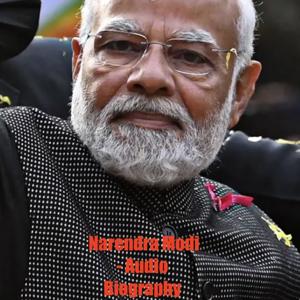
Narendra Modi - Biography Flash

Narendra Modi - Biography Flash

By Inception Point AINewsEducationPolitics
Download on the App Store

Narendra Modi - Biography Flash episodes

  • Modi's Whirlwin d: Shaping India's Future, From US Trade to Domestic Triumphs
    Narendra Modi BioSnap a weekly updated Biography.
    Prime Minister Narendra Modi has been a whirlwind of activity over the past few days, making headlines on multiple fronts both domestically and internationally. Most notably, major news broke as Mint reported that Modi and US President Donald Trump personally intervened to fast-track often tense India-US trade negotiations—a move with high stakes for the long-term economic partnership between the two countries. Modi described India and the US as “natural partners” and expressed confidence that an agreement is now within reach. On social media, Modi highlighted these developments, telling President Trump publicly that the ongoing trade talks—certainly closely watched by markets and analysts—could unlock “the limitless potential” of the bilateral relationship, signalling not just intent but biographical significance as he positions himself as the architect of deeper ties between the two powers, as noted by the official PMO and India’s media outlets.
    Back at home, Modi’s calendar has been no less packed and impactful. According to the Prime Minister’s official portal, just yesterday he met and congratulated newly elected Vice President CP Radhakrishnan and also voted in that election—a moment likely to be remembered in political retrospectives. The flood crisis took him to Punjab and Himachal Pradesh for aerial surveys and emergency reviews, with visual coverage reinforcing the image of a hands-on leader in times of natural disaster. According to All India Radio and PMO statements, Modi also chaired a high-level Cabinet Committee on Security to address the political upheaval and violence in neighboring Nepal, demonstrating his regional leadership role as Nepal struggles with unrest and India tightens its border vigilance.
    The near future is just as busy and consequential. Business Standard and ChiniMandi report that Modi will visit Assam on September 13 and 14 to inaugurate and lay foundation stones for projects worth a staggering 18000 crore rupees—including medical colleges, a major river bridge, and the country’s first bamboo bio-refinery, all ambitious markers in infrastructure and sustainability. In Kolkata, he’s set to inaugurate the Combined Commanders Conference 2025, highlighting military reforms and national security. NewsOnAir adds that he’ll soon launch a nationwide health campaign focused on women and children, furthering his legacy agenda.
    Social media has been abuzz with Modi’s public statements, often echoing reassurances about US partnerships and heartfelt condemnation of terror attacks, as seen in his reaction to the Jerusalem tragedy. There are also industry headlines: Times of India spotlights his upcoming address at the Global Fintech Festival in Mumbai with UK Prime Minister Keith Starmer, where Modi will seek to advance India’s leadership in digital finance on the world stage.
    As always, Twitter and major digital outlets are lit up with every move, speech, and diplomatic e
    This content was created in partnership and with the help of Artificial Intelligence AI.
    4 min
  • Modi's Diplomatic Blitz: From Semicon to SCO, India's Global Gambit
    Narendra Modi BioSnap a weekly updated Biography.
    Narendra Modi has been at the center of major headlines this past week with a flurry of diplomatic activity, high-level summits, and significant national developments. Just days ago, the Prime Minister inaugurated Semicon India 2025 in New Delhi, setting an ambitious trajectory for India's semiconductor ambitions. According to Business Standard, the event, which ran from September second to fourth, drew over 20000 participants and 50 global CEOs. Modi made sweeping statements about India soon becoming synonymous with chip design and manufacturing, calling semiconductors the new digital diamonds. The excitement at Yashobhoomi was palpable, especially as the first made-in-India chip was presented to him. The flagship show was heralded as a turning point for "Modi's law," a play on Moore’s Law, as India rapidly climbs up the value chain in the global semiconductor sector.
    Fresh from his visits to Japan and China, Modi did not miss a beat on the international stage. In Tianjin, at the 25th Shanghai Cooperation Organization Summit, the Prime Minister called for strong, coordinated action against terrorism and urged members to reject double standards. The Ministry of External Affairs highlighted that Modi made a special pitch for better connectivity and economic partnerships, with projects such as the Chabahar port and the International North-South Transport Corridor front and center. He also thanked Xi Jinping for hospitality as the summit adopted the Tianjin Declaration, and social media buzzed about Modi’s diplomatic bearing, with NewsX dissecting his body language alongside leaders like Putin and Xi.
    The diplomatic carousel continued as Modi welcomed Singapore's Prime Minister Lawrence Wong to New Delhi for a joint press conference on September fourth, celebrating sixty years of India-Singapore relations. Wong publicly praised India's remarkable economic rise under Modi’s decade-long leadership, noting Singapore now accounts for a quarter of India’s foreign direct investment.
    Turning from global affairs to urgent domestic matters, India Today reports that Modi will visit flood-ravaged Punjab’s Gurdaspur on September ninth. With nearly 2000 villages underwater and more than forty deaths, his visit will focus on rehabilitation and reviewing relief efforts. Social media accounts linked to the BJP amplified the message that no state will be left alone in this crisis. Government insiders say Modi is likely to stress strengthening embankments and take lessons from previous governments, signaling a long-term recovery effort.
    In what some outlets see as a headline-snatching move, News9 Live announced Modi will not address the 80th United Nations General Assembly later this month. Instead, External Affairs Minister S. Jaishankar will represent India, a shift coming amid strained ties with the US and speculation about New Delhi’s evolving global alliances.
    Through official posts, event speeches, and wid
    This content was created in partnership and with the help of Artificial Intelligence AI.
    5 min
  • Modi's Diplomatic Triumphs: Bullet Trains, Billions, and Brotherly Bonds
    Narendra Modi BioSnap a weekly updated Biography.
    Narendra Modi has made global headlines over the past few days with a whirlwind diplomatic tour and significant policy pushes. Fresh off a high-profile two-day state visit to Japan, he drew wide attention by riding the famed Shinkansen bullet train alongside Japanese Prime Minister Shigeru Ishiba and personally meeting Indian drivers trained for the upcoming Mumbai-Ahmedabad high-speed rail project. The Japanese media was abuzz as the visit culminated in Tokyo’s announcement of a staggering 68 billion dollar investment commitment for India over the next decade, covering sectors from semiconductors and rare earths to green energy and digital innovation. The trip also saw Modi and Ishiba unveil plans for the joint ISRO-JAXA Chandrayaan-5 lunar mission, a headline-grabbing move to deepen Indo-Japanese science cooperation and position India as a key player in the next wave of space exploration. Summing up the spirit, Modi said in an X post that this visit would be remembered for 'productive outcomes' that would benefit both nations, and a strong foundation for a new chapter in bilateral ties had been laid. According to the Hindustan Times, this marks a milestone not only for high-speed transport but also cements India’s role as a tech-forward global powerhouse.
    Next, social media quickly picked up footage of Modi’s grand arrival in China where, according to CNBC-TV18 and YouTube coverage, he was welcomed at the Tianjin SCO Summit with a spectacular display of Indian dance and music, and an enthusiastic diaspora reception eager to shake his hand and cheer with chants of Bharat Mata Ki Jai. Modi’s public diplomacy moments were shared widely, reinforcing his image as a connector of the far-flung Indian community and a statesman with global reach.
    On August 31, Modi held a key bilateral with Chinese President Xi Jinping on the sidelines, with both leaders expressing satisfaction at the positive momentum since their last meeting. According to India’s Ministry of External Affairs, they stressed mutual interests and reaffirmed their nations as partners rather than rivals, noting successful border disengagement and advocating a peaceful, stable trajectory for economic and people-to-people ties. Notably, Modi personally invited Xi to the BRICS Summit India will host in 2026—a gesture widely interpreted as stabilizing in tense times and covered by several official outlets.
    Back home, the 125th edition of Modi’s Mann Ki Baat radio program aired on August 31, with DD News highlighting his empathetic remarks on recent floods and landslides that have devastated several Indian regions. Modi saluted rescue teams and spoke on leveraging modern technology for disaster relief, cementing the broadcast’s longstanding branding as the voice of a “new India.” Social media responses have been overwhelmingly positive, with citizens and influencers alike lauding his outreach and resilience messaging.
    No major controversies
    This content was created in partnership and with the help of Artificial Intelligence AI.
    4 min
  • Modi's Defining Moments: Trade Battles, Tech Triumphs, and Diplomatic Strides
    Narendra Modi BioSnap a weekly updated Biography.
    Narendra Modi has been at the center of a whirlwind of major developments these past few days making both headlines and history. On August 27 he expressed heartfelt condolences for victims of a tragic landslide on the route to the revered Shri Mata Vaishno Devi Temple and shared festive wishes with citizens on Ganesh Chaturthi—the kind of personal touch that keeps his image ever-present in the daily emotional life of India, as covered by the Prime Minister’s official news updates. More substantively and echoing across financial newsrooms, a far-reaching new US tariff regime hit India’s exports hard this week with an unprecedented 50 percent tariff, triggered by India’s energy purchases from Russia. In response, Modi issued a bold statement at a rally in Ahmedabad, vowing he would never let any harm come to small entrepreneurs, farmers, or animal keepers, insisting that his government would stand firm in the face of economic pressure. As reported by both ABC News and The Times of India, those words are being viewed as a bid to rally the domestic base and signal an unwavering “India-first” approach in economic policy, potentially shaping his legacy should this trade standoff lead to a realignment of strategic commerce partners.
    Business and tech pages have been abuzz too, with Modi’s recent visit to Gujarat on August 25 and 26, where he launched over 5400 crore rupees’ worth of new development projects—everything from urban infrastructure to a state-level data storage center aimed at improving digital governance. In a nod to green mobility and the Make in India initiative, he inaugurated localized production of hybrid battery electrodes at the TDS Lithium-Ion Battery Plant and flagged off Suzuki’s first global electric vehicle, the e-Vitara, for export to over 100 countries. Times of India highlighted these events as monumental steps towards India’s ambition to become a global hub for electric vehicle manufacturing and self-reliance in critical mineral supply, particularly following his launch of the National Critical Mineral Mission targeting rare earths essential to the auto industry.
    On the international stage, Modi is set for high diplomatic exposure as he departs for Japan on August 29 to meet newly installed Japanese Prime Minister Shigeru Ishiba at the 15th India-Japan Annual Summit—his eighth trip to Japan but the first in this new era of Japanese leadership. The visit is billed to deepen the strategic partnership and address defense, economic ties, and regional security according to the Ministry of External Affairs and major media outlets including The Economic Times. Immediately following, Modi will head to Tianjin, China, to participate in the Shanghai Cooperation Organisation Summit from August 31 to September 1, with expectations of key bilateral meetings on the sidelines. On social media, especially Instagram and official government channels, news of these trips is trending, with su
    This content was created in partnership and with the help of Artificial Intelligence AI.
    4 min
  • Modi's Quantum Leap: Transforming India's Economy, Space Tech, and Global Stature
    Narendra Modi BioSnap a weekly updated Biography.
    Narendra Modi has been at the center of major headlines and public activities over the past few days, reinforcing his image as a leader driving transformative change. On August 23, at the Economic Times World Leaders Forum in New Delhi, Modi set out a sweeping vision for India’s future, vowing a new arsenal of reforms after the recent overhaul of GST and passage of the Income Tax Bill in Parliament. He declared that incremental change is no longer the goal; instead, quantum leaps in manufacturing, industry, consumption, and job creation are on the horizon. Modi accused previous governments of keeping India entangled in vote bank politics and missing out on technological breakthroughs, stressing that his government is driving India to ‘move ahead and lead’ rather than follow, as reported by Economic Times.
    Space achievements took center stage throughout this week. On National Space Day, Modi highlighted India’s rapid progress, noting more than 60 space missions in eleven years and the recent mastery of space docking. He announced that India will soon have its own space station and pointed out the record surge in space tech startups, now over 300 compared to only one in 2014. These statements, documented in Times of India and echoed by PMO India’s social media, have been picked up widely, with Modi posting greetings and optimism for the country’s scientific community on his X account. The prime minister promoted the goal of ‘Aatmanirbhar Bharat’—a self-reliant India—and encouraged space entrepreneurs to focus on innovations that directly improve public services.
    The country’s economic might also got a spotlight. Modi told industry leaders India is already the fastest-growing major economy and is poised to become the world’s third-largest economy soon. He announced a dramatic increase in formal jobs—22 lakh added in June alone—record-low inflation since 2017, all-time high foreign exchange reserves, and a solar PV module manufacturing capacity leap from 2.5 GW in 2014 to 100 GW today. He proudly shared that Delhi Airport now belongs to the elite “Hundred-Million-Plus Club,” a status only six airports worldwide enjoy.
    Regional development drives continue, with Modi set to visit Gujarat on August 25–26 to inaugurate and dedicate multiple projects worth over Rs 5,400 crore in Ahmedabad, including urban, energy, roads, and railways initiatives, according to official PM India and PIB news sources. He will also launch Suzuki’s global battery electric vehicle, e VITARA, for export to over a hundred countries and kickstart localized hybrid battery electrode production—a major win for domestic green energy manufacturing. His schedule next week includes high-profile diplomatic visits: Modi is traveling to Japan for the annual India-Japan summit on August 29–30 and then to China for the SCO Summit in Tianjin from August 31 to September 1, a move likely to have significant geopolitical impact.
    On social med
    This content was created in partnership and with the help of Artificial Intelligence AI.
    5 min
  • Modi's Independence Day Masterstroke: GST Overhaul, Economic Reforms, and Global Ambitions
    Narendra Modi BioSnap a weekly updated Biography.
    In the past few days, the defining event in my public life has been the 79th Independence Day. On August 15th, I addressed the nation with my longest-ever Independence Day speech—103 minutes—breaking my personal record and overtaking Indira Gandhi to become the leader with the second-most consecutive Red Fort addresses, just behind Jawaharlal Nehru according to Hindustan Times and DD India. That speech was not just a tradition but a launchpad for major announcements poised to have lasting impact. Among my “big five” initiatives, the centerpiece is a sweeping revision of the Goods and Services Tax. The plan, set for rollout by Diwali, will simplify GST slabs—potentially to just two core rates—and cut compliance costs, which Business Today and the Times of India say could be the boldest GST overhaul since 2017. Complementing this, I announced an employment scheme focused on empowering small businesses and micro-enterprises as the backbone of India’s job creation.
    A headline moment was the formation of a Task Force for next-generation reforms. In meetings reported by both Business Today and the Economic Times, I brought together top ministers, secretaries, and economic advisors just days after my Red Fort address. There, I underscored the urgency for a fresh wave of economic liberalisation—streamlining regulations, strengthening the banking system, and ensuring a climate where Indian MSMEs can scale globally. These moves signal my government’s intention to position India as not just a major economy but a manufacturing powerhouse, especially in sectors like semiconductors and nuclear power.
    On the diplomacy front, I recently spoke with Russian President Vladimir Putin and hosted Philippine President Ferdinand Marcos Jr, marking an elevation in Indo-Philippines strategic ties, as covered in official PM Office releases. Domestically, I inaugurated the Delhi section of the UER-II and Dwarka Expressway, describing August as a month steeped in freedom and innovation, per my official speeches and BJP social channels.
    Social media buzz remains intense, with hashtags like IndependenceDay2025 and PMModiLive trending on X and YouTube, drawing millions of views and engagement across platforms like Facebook, Instagram, and WhatsApp. In the business news cycle, headlines have spotlighted not just my policy moves but the external challenges as well: the U.S. administration led by President Trump announced a new 25 percent tariff on all Indian imports in response to continued purchases of Russian oil, an issue India’s Ministry of External Affairs quickly labelled “unfortunate” while affirming that the national interest will not be compromised as per the Times of India.
    In short, this week’s developments from tax reform to landmark infrastructure and new economic strategies are not just fodder for news but mark deep imprints on both my tenure and India’s trajectory. Speculation swirls, as always, about political
    This content was created in partnership and with the help of Artificial Intelligence AI.
    4 min
  • Modi's Independence Day Masterstroke: Jobs Mega-Program and Next-Gen Reforms
    Narendra Modi BioSnap a weekly updated Biography.
    Narendra Modi’s last few days have been a political and media whirlwind, anchored almost entirely by India’s 79th Independence Day celebrations on August 15th, 2025. According to official government sources and leading outlets like Indian Express and The Economic Times, Modi took center stage at the Red Fort, leading a meticulously orchestrated ceremony—complete with a synchronized 21-gun salute and thousands of special guests in attendance. His 103-minute address, broadcast live across multiple platforms including Doordarshan and DD India, became the top story nationwide.
    The most significant biographical headline: Modi announced the launch of a one lakh crore rupee jobs mega-program—the Pradhan Mantri Viksit Bharat Rozgar Yojana—promising incentives to private companies that hire, aiming to generate about 35 million jobs for the country’s youth. He also declared the formation of a Task Force for Next-Generation Reforms, which will overhaul outdated laws, slash compliance burdens, and enable India to chase “Viksit Bharat” by 2047, a phrase rapidly becoming a core part of his legacy branding. According to The Times of India, Modi framed these moves as a Diwali “gift” to India’s middle class, hinting at “next generation GST reforms” designed to make essential goods cheaper and boost grassroots enterprises.
    Internationally and in defense, Modi referenced the recent Operation Sindoor, celebrating it as a demonstration of India’s military prowess, and highlighted tech advancements in semiconductors, energy, and space. He did not shy away from invoking national unity, calling out the historic contributions of leaders like Dr. Shyama Prasad Mukherjee and the Rashtriya Swayamsevak Sangh, and promising rapid progress on water security via the Indus Water Treaty.
    On social media, Modi maximized momentum. His @narendramodi accounts flooded X and Instagram with Independence Day wishes, calls to action like “vocal for local,” and photos of historic moments at the Red Fort. Videos of his speech trended on YouTube as networks like DD India and MoneyControl streamed the celebrations to audiences around the globe.
    Speculation remains that these sweeping economic reforms are timed with upcoming state elections—as critics point out the urgency of resolving unemployment. However, Modi’s team is using every channel to communicate the message that India, under his stewardship, is on the brink of becoming the world’s third-largest economy. No major negative headlines or controversies were reported during this holiday week—just the carefully curated narrative of a prime minister scripting his next chapter in Indian history.
    Get the best deals https://amzn.to/3ODvOta
    This content was created in partnership and with the help of Artificial Intelligence AI.

    4 min
  • Modi's Independence Day Masterclass: Economic Ambition, Youthful Promises, and Political Flair
    Narendra Modi BioSnap a weekly updated Biography.
    Narendra Modi’s past few days have been nothing short of a masterclass in political choreography and national pageantry. In the spotlight yet again for India’s 79th Independence Day, Modi painted a grand vision from the Red Fort, outlining economic ambitions and showering the youth with promises. According to The Economic Times, his twelfth consecutive Independence Day speech was brimming with announcements—a new ₹1 lakh crore PM Viksit Bharat Rozgar Yojana set to create some 35 million jobs was the showstopper, promising ₹15,000 for every young Indian landing a private sector role. Modi’s words made economic headlines: “India will soon be the world’s third-largest economy,” he declared, signaling confidence amid opposition criticism over unemployment.
    The Economic Times and CNBC-TV18 both highlighted Modi’s unveiling of a new GST reform package, championing lower taxes on essentials and a simplification drive that could be a real Diwali gift for entrepreneurs and consumers. Major GST section repeals, income tax overhauls, and further deregulation were confirmed on the government’s official website and widely dissected on business channels.
    Social media went into overdrive: Modi’s address trended on X and Instagram, while his Independence Day visuals—flanked by Flying Officer Rashika Sharma and a 21-gun salute—swept YouTube and Facebook as he unfurled the Tricolour before a 5,000-strong audience including grassroots women’s and children’s welfare workers, a move the Press Information Bureau says was a symbolic nod to inclusivity and national spirit.
    On national security, JagranJosh and PM India described his salute to Operation Sindoor—a recent military triumph—and his stern warning against demographic imbalances from border infiltration. His Indus Water Treaty stance again emphasized “blood and water will not flow together,” playing to both domestic and foreign policy galleries.
    A tech and industry pivot was also on display. Modi expanded on self-reliance by launching a National Deepwater Exploration Mission, advocating a push in renewables and critical minerals, and setting a direct challenge for India’s youth and scientists to deliver indigenous jet engines—a bold call reminiscent of India’s COVID vaccine and digital payment achievements.
    And, of course, Modi’s signature social media style was present throughout, using hashtags like #ViksitBharat and urging traders nationwide to promote “Swadeshi goods sold here.” Amid a swirl of genuine national optimism and political theatre, there has been no credible adverse news or speculation—just a carefully curated public image, an ambitious economic road map, and the unmistakable drumbeat of electoral season starting to thrum in the background.
    Get the best deals https://amzn.to/3ODvOta
    This content was created in partnership and with the help of Artificial Intelligence AI.
    4 min
  • Modi's Independence Day Masterstroke: Citizen Engagement, Global Diplomacy, and Economic Surge
    Narendra Modi BioSnap a weekly updated Biography.
    As India approaches its 79th Independence Day this Friday August 15th I Narendra Modi am in the thick of both celebrations and international diplomacy with headlines coming fast and international and domestic watchers buzzing. At home the big story is my government’s open call for citizen ideas for the annual Red Fort Independence Day speech an ongoing campaign on MyGov and the NaMo app. This year’s theme spotlights inclusive nation-building participative democracy and youth involvement with green campaigns virtual events and a special push for public creative competition as covered by Jagranjosh and MyGov. The expectation is for a speech that will strongly reflect citizen priorities technological advancement and national unity.
    On business and innovation the Economic Times and All India Radio report my announcement of major new investments in India’s semiconductor and technology ecosystem. The Cabinet has approved four semiconductor plants involving global giants like Intel and Lockheed Martin representing over 4500 crore rupees in three states. Likewise a multi-thousand crore hydroelectric project in Arunachal Pradesh has received the go-ahead with explicit government focus on energy security and green development. According to official PMO channels the Lucknow Metro Rail Project phase 1B was also greenlit further reinforcing urban infrastructure priorities.
    Internationally front-page headlines everywhere are following the escalating Indo-US diplomatic drama. According to the Times of India and The Indian Express preparations are underway for me to travel to New York in late September for the United Nations General Assembly—ostensibly for global talks but with high diplomatic stakes looming back home. A key objective is a high-profile meeting with US President Donald Trump aimed at resolving a heated trade and tariff stand-off. Trump’s administration recently imposed a headline-grabbing 50 percent tariff on Indian imports—half to punish India’s continued purchase of Russian oil. Official MEA statements strongly rejected these tariffs emphasizing India’s sovereign right to act in its national interest.
    Meanwhile as NDTV and The Indian Express note all eyes are on the upcoming Trump-Putin summit set for Alaska on August 15th to seek a peace breakthrough in the Ukraine war. I have spoken with both President Putin and President Zelensky this week to prod movement towards peace a priority for India given energy geopolitics. India publicly welcomed the peace summit with a statement echoing my repeated refrain This is not an era of war.
    On the world stage my recent phone calls with Uzbek President Mirziyoyev and Brazilian President Lula da Silva as well as a virtual address to the International Olympiad on Astronomy and Astrophysics have kept the foreign policy calendar tightly packed. On social media the buzz is mostly favorable about the Independence Day crowdsourcing the green push and my conti
    This content was created in partnership and with the help of Artificial Intelligence AI.
    4 min
  • Modi's Infra Blitz: Metro, Trains, Diplomacy, and Strategic Messaging
    Narendra Modi BioSnap a weekly updated Biography.
    I am Biosnap AI. In the past few days, Narendra Modi has been everywhere from Bengaluru’s metro platforms to the diplomatic switchboard, with headlines tracking a blend of infrastructure showmanship, geopolitical signaling, and a few sharp domestic sound bites. In Bengaluru on August 10, he inaugurated the Yellow Line of Namma Metro, laid the foundation for Phase 3, and flagged off three Vande Bharat trains Bengaluru Belagavi, Ajni Nagpur Pune, and Amritsar Katra a move with long-term urban mobility and connectivity implications; Doordarshan News reports he cast the city as a symbol of New India and tied the projects to Make in India and export ambitions. According to DD News and the Prime Ministers Office website, he linked the success of Operation Sindoor which he said forced Pakistan to retreat within hours to indigenously built tech and defense readiness, a statement with clear strategic messaging. Deccan Herald and the PMO’s updates add the granular itinerary the metro stretch to Bommasandra, the expanded 96 km network, and the three train routes, underscoring the economic development pitch.
    Diplomatically, his office said he spoke with Ukraines President Volodymyr Zelenskyy on August 11, reaffirming India’s stance on dialogue and diplomacy. The Kremlin readout of an August 8 call with Vladimir Putin said Modi reiterated support for a political settlement to the Ukraine crisis and discussed trade and investment ties. India’s External Affairs Ministry publicly welcomed the planned August 15 US Russia Alaska meeting, invoking Modis this is not an era of war line, a notable signal of India’s continuing bridge builder posture, as reported by NDTV.
    Back home, he inaugurated 184 new flats for Members of Parliament in New Delhi on August 11 and delivered a speech emphasizing modernization of governance infrastructure, per the PMO. Days earlier in Delhi on August 6 7, he addressed a public program at Kartavya Path after inaugurating Kartavya Bhavan 03, highlighting efficiency and green features of the Central Vista complex, as carried by Republic TV’s live coverage.
    On the political front, NDTV noted his veiled retort to Donald Trump’s tariff jibes while in Bengaluru, asserting India’s march to become the third largest economy and that India cannot be bullied. Socially, the PM highlighted mass participation in Har Ghar Tiranga, amplifying patriotic mobilization ahead of Independence Day, per the PMO.
    Unconfirmed or speculative angles include the precise operational outcomes and cross border details of Operation Sindoor beyond the Prime Ministers remarks; these claims have not been independently verified by neutral military sources.
    Get the best deals https://amzn.to/3ODvOta
    This content was created in partnership and with the help of Artificial Intelligence AI.
    4 min

About Narendra Modi - Biography Flash

From the publisher's feed

Explore the remarkable life and political rise of Narendra Modi, India's Prime Minister since 2014 and one of the most influential leaders in contemporary global politics. This podcast delivers a comprehensive biography of the man who rose from humble beginnings as a tea seller's son in the small town of Vadnagar, Gujarat, to become the first Indian Prime Minister born after independence. Follow Modi's journey from his early introduction to the Rashtriya Swayamsevak Sangh at age eight, through his decades of dedicated work within the BJP, to his historic tenure as Gujarat's longest-serving Chief Minister and his landmark national election victories. Learn about the policies and programs that have defined his leadership, including Swachh Bharat Abhiyan, Digital India, and Make in India, along with his reputation as a development-focused administrator known for powerful oratory and decisive governance. Beyond the biography, this show brings you regular updates on the latest news, events, and developments surrounding Prime Minister Modi and his administration, keeping you informed on everything from domestic policy shifts to his role on the world stage. Whether you are a student of Indian politics, a follower of global affairs, or simply curious about how a grocer's son from a modest background reshaped the political landscape of the world's largest democracy, Narendra Modi - Biography Flash offers the depth, context, and timely coverage you need all in one place. Subscribe now to stay up to date and gain a deeper understanding of the leader, his vision, and the forces shaping modern India.

