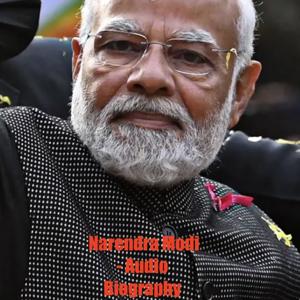
Narendra Modi - Biography Flash

Narendra Modi - Biography Flash

By Inception Point AINewsEducationPolitics
Download on the App Store

Narendra Modi - Biography Flash episodes

  • Modi's Diplomatic Blitz: SCO Summit, I-Day Buzz, & Global Influence | News Roundup
    Narendra Modi BioSnap a weekly updated Biography.
    In the past several days Narendra Modi has been at the center of diplomatic, economic, and public engagement headlines both in India and on the international stage. Most prominent is his upcoming diplomatic tour to Japan and China for the 2025 Shanghai Cooperation Organization Summit that will place India at the heart of strategic Indo-Pacific negotiations. Republic TV has reported that Modi’s meetings with Asian leaders and participation in peace talks are set to define India’s regional influence for years, emphasizing economic partnership and geopolitical stability across Asia.
    Domestically, anticipation is building for India’s 79th Independence Day. The Prime Minister has personally called on citizens to submit ideas for his landmark Red Fort address via the NaMo App and MyGov platform. According to The New Indian Express and Jagran Josh, this year’s festivities will focus on inclusivity, sustainability, and youth engagement—including virtual events, nation-wide competitions, and a strong push for public participation in setting policy priorities. Amid trade tensions with the US, Modi is being urged to use his address to support Make-in-India and farmer welfare, and there’s political buzz that he could announce major initiatives associated with Jammu and Kashmir’s statehood or sweeping reforms for youth and women. Sources within the government suggest the speech may be historic and could set new policy directions, though these remain unconfirmed.
    Infrastructure and connectivity continue to be Modi’s business focus. The Press Information Bureau has confirmed that on August 10th he will be in Bengaluru to inaugurate three new Vande Bharat Express trains and the opening of the ambitious Yellow Line metro expansion—projects valued at over Rs 7,160 crore and set to transform urban mobility for millions. He’ll also lay the foundation for Bangalore Metro Phase-3, a Rs 15,610 crore investment in future transit capacity. These appearances reinforce Modi’s image as a leader focused on modernization and regional development.
    On the international front, NDTV and the Kremlin have chronicled India’s strong endorsement of the upcoming US-Russia summit in Alaska, citing Modi’s repeated calls for peace and diplomacy in Ukraine. In a recent phone conversation with Vladimir Putin, Modi reiterated India’s dedication to resolving the ongoing crisis through political means, signaling his stance on global peace and multilateral dialogue.
    Looking forward, Modi is slated as keynote speaker at the Economic Times World Leaders Forum in New Delhi, where his remarks will be watched closely by over 400 top business leaders, entrepreneurs, and policymakers. Economic Times reports that the summit will navigate topics from AI to infrastructure growth, reflecting Modi’s economic priorities amid challenging international headwinds.
    On social media, Modi’s invitations for Independence Day suggestions and Mann Ki Baat partic
    This content was created in partnership and with the help of Artificial Intelligence AI.
    4 min
  • Modi's Whirlwind Week: Global Diplomacy, Transformative Projects, and Unifying Festivities
    Narendra Modi BioSnap a weekly updated Biography.
    Within an action-packed week, Narendra Modi has been everywhere, from the halls of power to the digital town square, and the headlines are brimming. On August 9, Modi observed World Sanskrit Day by reiterating his commitment to promoting the ancient language, while also paying reverent tributes to those who participated in the Quit India Movement. His greetings on Raksha Bandhan lit up social media, reflecting his knack for weaving tradition and politics together, and there was an unmistakable patriotic current running through all his public messages, according to the Prime Minister’s Office.
    Just days ago, Modi met with farmers from Tamil Nadu in Parliament, highlighting his active engagement with core demographics. In a major administrative spectacle on August 6, he inaugurated the new Kartavya Bhavan on Kartavya Path, a flagship project under the Central Vista redevelopment. This ambitious new complex, spanning 1.5 lakh square meters and housing key ministries, reflects India’s thrust toward efficient, modern governance. Modi’s public address at the event was all about “kartavya”—meaning duty—positioning his government as the architect of a forward-looking, citizen-centric administration and aligning the moment with the larger “Viksit Bharat 2047” vision, as reported by Republic TV and India Today. The green features of Kartavya Bhavan, from solar panels to zero-discharge waste management, tick points both for environmental sustainability and high-tech governance symbolism.
    On the international front, Modi kept lines hot with global leaders. He spoke with Russian President Vladimir Putin on August 8, where the two discussed the Ukraine situation and reaffirmed the India-Russia strategic partnership. According to India’s Ministry of External Affairs and direct posts on Modi’s social platforms, he invited Putin to India for the upcoming annual bilateral summit. The day before, Modi took a call from Brazil’s President Lula da Silva, building on last month’s state visit and the commitment to bolster India-Brazil ties across trade, tech, and energy.
    Cabinet action was brisk: Modi green-lit special development funds for Assam and Tripura, endorsed a substantial compensation package for domestic LPG losses, and approved a continued subsidy for beneficiaries under the Ujjwala Yojana. Meanwhile, the new MERITE Scheme for enhancing technical education and research received a funding boost—moves that together reinforce Modi’s developmental and welfare agenda.
    Looking forward, Independence Day preparations are in full swing. The prime minister has crowdsourced ideas for his Red Fort speech, putting public participation at the forefront, as featured across Jagran Josh and government channels. National themes of citizen engagement, sustainability, and unity are being boosted through virtual events and youth competitions—expect this to echo strongly in Modi’s oratory on August 15.
    On the business and so
    This content was created in partnership and with the help of Artificial Intelligence AI.
    4 min
  • Modi's Diplomatic Triumphs, Kartavya Bhavan Unveiling, and Independence Day Outreach
    Narendra Modi BioSnap a weekly updated Biography.
    Narendra Modi has been at the center of several major developments, headline events, and active public engagement in the past few days that reflect both strategic milestones and his distinctive style of participatory governance. On August 5, Modi hosted Philippine President Ferdinand Marcos Jr. for a state visit in New Delhi, culminating in the elevation of India-Philippines ties to a full-fledged Strategic Partnership. The ceremonial welcome at Rashtrapati Bhavan, complete with a 21-gun salute and tributes at Raj Ghat, underscored the historic significance as the two leaders signed new agreements covering defense, infrastructure, technology, and especially agriculture. According to the Indian government’s official statement, a key move was India lifting its export ban on non-basmati rice, a decision warmly received by the Philippines in light of global food security pressures. Both countries announced measures to boost connectivity, digital governance, direct flights, and people-to-people exchanges, raising Modi’s stature as a regional dealmaker and reinforcing his “Act East” vision for Indian foreign policy. NDTV and Indian government releases described the visit as marking the high point of 75 years of diplomatic relations between the two nations.
    On August 6, all eyes turned to Modi’s high-profile inauguration of the Kartavya Bhavan in the heart of the capital. This ultra-modern, eco-conscious government complex is the latest showcase in the Central Vista Project, a massive ongoing upgrade to the administrative core of Delhi. Modi’s address at Kartavya Path highlighted the building’s zero-discharge sustainability features, solar power, and digital integration, symbolizing what he called a “new era of governance” dedicated to citizen-centric policies, efficiency, and responsible administration. The India Today broadcast teased Modi’s vision of Viksit Bharat 2047 and headlined this as “PM Modi to Inaugurate Kartavya Bhavan on August 6. Know Key Features,” signaling the long-term significance for national governance and green policy.
    Meanwhile, as Independence Day preparations accelerate, Modi went viral with his annual invitation to citizens to submit ideas and stories for his upcoming Red Fort speech. This outreach, announced on his social media and the MyGov and NaMo platforms, is typical Modi—directly soliciting grassroots input to shape the national conversation, encouraging unity, innovation, and a forward-looking agenda. This participatory gesture has become a hallmark of his public persona and is widely reported by NDTV and the official PM channels online.
    No major negative headlines, controversies, or unconfirmed speculation have dominated Modi’s news cycle in the past few days. The narrative, as popular on social media and covered by platforms like India Today and government-released videos, is one of nation-building, diplomatic agility, and deliberate efforts to keep Modi’s governa
    This content was created in partnership and with the help of Artificial Intelligence AI.
    4 min
  • Modi's Diplomatic Balancing Act: Navigating Alliances, Trade, and Tributes in a Turbulent World
    Narendra Modi BioSnap a weekly updated Biography.
    Narendra Modi has headlined another round of high-voltage diplomacy and domestic politics this week. The most notable development has been the state visit of Philippine President Ferdinand Marcos Jr. to India, where Modi played host with all the requisite pomp, from a 21-gun salute at Rashtrapati Bhavan to a ceremonial welcome alongside President Droupadi Murmu. This visit capped the 75th anniversary of India-Philippines diplomatic relations, resulting in the formal announcement by both leaders of a new strategic partnership—a significant elevation with implications for defense, maritime cooperation, and broader Indo-Pacific alignments, as covered by Economic Times and the official Ministry of External Affairs press release. In the spirit of friendlier Indo-Pacific ties, Modi highlighted expanding defense and maritime ties in his joint appearances and emphasized exploring fresh opportunities in technology and trade.
    The bilateral grandeur coincided with Modi’s busy slate at home. On August 6, according to DD News and the PMO, he will inaugurate Kartavya Bhavan, a sprawling new secretariat at Kartavya Path in Delhi that aims to modernize and streamline India’s central administration—a headline event in his ongoing bid to reengineer the machinery of government for the next generation. Just days earlier, Modi paid last respects and issued a public condolence note on the passing of veteran leader Shibu Soren, hailing his legacy in championing tribal and underserved communities, per the PM’s official site and news updates.
    On the policy front, Modi has been at the center of a brewing trade storm, defiantly responding to the Trump administration’s imposition of 25 percent tariffs on Indian goods. Refusing to budge under US pressure to end Indian oil imports from Russia, Modi doubled down on his ‘Make in India’ pitch at a major Uttar Pradesh rally last Saturday, urging Indians to choose locally made products and pledging support for farmers and small enterprises, as reported by The Times of India and amplified by The New York Times. That message has echoed on Modi’s social media, where he has lauded innovations that fast-track India’s net-zero ambitions and celebrated diplomatic wins like the UK-India trade deal concluded in July, as seen on his official Instagram and at the PMO.
    Meanwhile, the contours of the US-India relationship are being shaped as much by Modi’s defiant stance as by Trump’s increasingly pointed social media posts accusing India of reselling Russian oil and threatening further tariffs. These political tensions are playing out on global and social platforms and have introduced a note of uncertainty into bilateral trade and diplomatic calculations, a shift that ABC News and The Asia Group’s Malik describe as potentially historic.
    While Modi continues to crisscross a demanding domestic and diplomatic landscape, every handshake, condolence, and hashtag radiates his signature blend of
    This content was created in partnership and with the help of Artificial Intelligence AI.
    4 min
  • Modi's Whirlwind Week: Varanasi Blitz, Global Spotlight, and Independence Day Prep
    Narendra Modi BioSnap a weekly updated Biography.
    Narendra Modis last few days have been a whirlwind of high-profile appearances, policy maneuvers, and major headlines. The Prime Minister continues to ride a wave of national and international attention, as he readies his landmark Independence Day address. According to NDTV, Modi has invited citizens across India to share their ideas and themes for his August 15 speech, urging participation through MyGov and the NaMo App—a ritual he has turned into a hallmark of participatory governance since 2014, consistently using crowd-sourced feedback to shape his most-watched national addresses.
    Last week in Varanasi, Modi made a high-voltage public appearance, inaugurating and laying foundation stones for a staggering Rs 2200 crore worth of development projects, spanning everything from road, rail and electricity upgrades to the restoration of historic temples, new school upgradations, and state-of-the-art cancer treatment centers. DD News detailed how this blitz of infrastructure, health, education, and heritage boosters is designed to cement Varanasis reputation as a model constituency—and, not coincidentally, further burnish Modis grassroots credentials ahead of milestone anniversaries and elections.
    Meanwhile, social media has buzzed with Modis rapid-fire posts and responses, especially as he applauded sustainable innovation efforts supporting Indias Net Zero emissions vision, with posts from both the PMO and his personal handle breaking through to trend on X and Instagram. On the diplomatic front, attention is now turning to New Delhi, as the Prime Minister prepares to host Philippine President Ferdinand Marcos Jr. and delegation for a major state visit from August 4 to 8. The India-Philippines dynamic, per the Ministry of External Affairs, will see both leaders deep-dive into trade, security, maritime, and digital sectors, marking the 75th anniversary of bilateral relations and strengthening Modis flagship Act East policy.
    Not shying away from global controversies, The Times of India and Bloomberg have highlighted Modis defiant stance against US President Donald Trumps 25 percent tariffs and penalty threats relating to India buying Russian oil. At a rally in Uttar Pradesh, Modi doubled down on his Make in India agenda and reaffirmed his intention to protect Indian interests, making it clear that Indias energy policy will not bow to foreign pressure, even as the West eyes stronger sanctions and trade penalties.
    Looking ahead, all eyes will be on August 6 when Modi inaugurates the iconic Kartavya Bhawan the new Central Vista building—set to become a nerve center for government ministries. As reported by India Today, the project is another major milestone in the ongoing Central Vista redevelopment, further cementing Modis vision for a modern Indian power corridor.
    Speculation and unconfirmed leaks have hinted at subtle policy tweaks in trade and digital sovereignty, but as of now, every public move
    This content was created in partnership and with the help of Artificial Intelligence AI.
    4 min
  • Modi's Whirlwind Week: Trade Tussles, Tributes, and Triumphs
    Narendra Modi BioSnap a weekly updated Biography.
    Narendra Modi has had a characteristically high-profile and eventful few days. Making headlines right off, the Prime Minister lauded a major sustainability initiative, spotlighting Indias push towards its Net Zero emissions goal and applauding innovation that drives this environmental commitment, as posted by him on social media. Tragedy struck in Uttar Pradesh’s Gonda, and Modi swiftly expressed his condolences for the victims of a local accident, demonstrating his routine responsiveness to domestic crises as covered by the official PM’s office.
    Ahead of the 79th Independence Day, Modi turned to the people, taking to X and his NaMo app to invite citizens to participate in shaping his address from the Red Fort on August 15. The inclusive outreach is in line with his tradition of crowdsourcing speech themes and ideas; media outlets like India TV News and Jagran Josh quickly picked up this invitation, reflecting the ongoing emphasis on “Jan Bhagidari”—people’s participation.
    Business and global affairs have buzzed with major developments. Donald Trump, in his return to the US presidency, unceremoniously dashed hopes for a US-India trade deal by announcing sweeping 25 per cent tariffs on Indian imports. This announcement was very public, with Trump labeling India’s trade barriers as among the world’s most arduous and dismissing both India and Russia as “dead economies.” Indian media and the government’s own statement signaled the seriousness with which New Delhi is studying the impact, while Modi himself—just a day later at a major rally in his Varanasi stronghold—countered Trump’s remarks by vigorously reaffirming India’s economic resilience and claiming that India is firmly on track to become the third-largest economy in the world. He made a stirring call for swadeshi—that is, buying only Indian made products—urging unity across political divides for the economic good, as reported by India Today and Awaz the Voice.
    On the domestic front, Modi inaugurated and laid foundation stones for development projects totaling nearly 2200 crore rupees in Varanasi, including major road and infrastructure upgrades, all part of his ongoing efforts to showcase development in his parliamentary constituency.
    A significant diplomatic engagement looms, with President Ferdinand Marcos Jr. of the Philippines beginning a State Visit to India at Modi’s invitation. Scheduled to meet Modi and other Indian leaders, this visit marks a milestone in Indo-Philippines ties and comes as both countries celebrate 75 years of diplomatic relations—a signal event enriched by Modi’s personal touch on bilateral relations.
    Social media has featured both Modi’s outreach for his Independence Day speech and his praise for sustainability initiatives. Speculation regarding further American trade penalties lingers, but the Indian government maintains a stance of cautious optimism. All told, it has been a week of high-stakes diplomacy, jost
    This content was created in partnership and with the help of Artificial Intelligence AI.
    4 min
  • Narendra Modi - Audio Biography
    Narendra Damodardas Modi, born on September 17, 1950, in Vadnagar, Gujarat, India, is the current Prime Minister of India, serving since 2014. His rise to power and leadership style have made him one of the most influential and controversial figures in Indian politics.
    Early Life and Education: Modi was born into a humble family of grocers belonging to the Other Backward Class (OBC) community. As a child, he helped his father sell tea at the Vadnagar railway station. Despite the financial challenges, Modi completed his secondary education and pursued a Bachelor's degree in Political Science from the University of Delhi through distance learning. He later earned a Master's degree in Political Science from Gujarat University.
    Involvement with the RSS and Early Political Career: From a young age, Modi was drawn to the Rashtriya Swayamsevak Sangh (RSS), a right-wing Hindu nationalist organization. He became a full-time worker for the RSS in 1971 and rose through the ranks, eventually becoming a key organizer. His association with the RSS shaped his political ideology and helped him develop a strong network within the organization.
    In 1987, Modi joined the Bharatiya Janata Party (BJP), the political wing of the RSS. He quickly proved his mettle as a skilled organizer and played a significant role in the party's growth in Gujarat. His efforts were recognized, and he was appointed as the National Secretary of the BJP in 1995.
    Chief Minister of Gujarat (2001-2014): Modi's political career took a significant turn when he was appointed as the Chief Minister of Gujarat in 2001, following the resignation of Keshubhai Patel. He won the subsequent state assembly elections in 2002, 2007, and 2012, cementing his position as a popular and influential leader.
    During his tenure as Chief Minister, Modi focused on economic development and attracting investments to Gujarat. He launched several initiatives, such as the Vibrant Gujarat Global Investor Summit, to promote the state as a business-friendly destination. Gujarat witnessed significant industrial growth and infrastructure development under his leadership.
    However, Modi's tenure was also marked by controversy, particularly the 2002 Gujarat riots, which claimed the lives of over 1,000 people, mostly Muslims. Modi faced criticism for his alleged role in the riots and for not doing enough to prevent the violence. Although he was cleared of any wrongdoing by the Supreme Court of India, the incident remains a contentious issue in his political career.
    Rise to National Prominence and Prime Ministership: Modi's success in Gujarat and his growing popularity within the BJP propelled him to the national stage. In 2013, he was appointed as the party's prime ministerial candidate for the 2014 general elections. Modi ran a high-energy campaign, promising economic development, good governance, and a strong national security stance.
    The BJP, under Modi's leadership, won a landslide victory in the 2014 general elections
    This content was created in partnership and with the help of Artificial Intelligence AI.

    16 min

About Narendra Modi - Biography Flash

From the publisher's feed

Explore the remarkable life and political rise of Narendra Modi, India's Prime Minister since 2014 and one of the most influential leaders in contemporary global politics. This podcast delivers a comprehensive biography of the man who rose from humble beginnings as a tea seller's son in the small town of Vadnagar, Gujarat, to become the first Indian Prime Minister born after independence. Follow Modi's journey from his early introduction to the Rashtriya Swayamsevak Sangh at age eight, through his decades of dedicated work within the BJP, to his historic tenure as Gujarat's longest-serving Chief Minister and his landmark national election victories. Learn about the policies and programs that have defined his leadership, including Swachh Bharat Abhiyan, Digital India, and Make in India, along with his reputation as a development-focused administrator known for powerful oratory and decisive governance. Beyond the biography, this show brings you regular updates on the latest news, events, and developments surrounding Prime Minister Modi and his administration, keeping you informed on everything from domestic policy shifts to his role on the world stage. Whether you are a student of Indian politics, a follower of global affairs, or simply curious about how a grocer's son from a modest background reshaped the political landscape of the world's largest democracy, Narendra Modi - Biography Flash offers the depth, context, and timely coverage you need all in one place. Subscribe now to stay up to date and gain a deeper understanding of the leader, his vision, and the forces shaping modern India.