
Sign up to save your podcasts
Or

By Vanessa Scammell
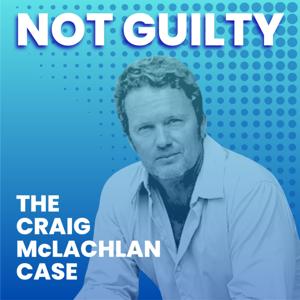
NOT GUILTY – The Craig McLachlan Case is a factual true-crime podcast hosted by Vanessa Scammell, examining the criminal case heard in the Melbourne Magistrates’ Court and the
... more

The podcast currently has 18 episodes available.
The most played episodes among Podcast App listeners.
Watch the Unfiltered companion interview in which Craig McLachlan sits down with journalist Michael Cain to go beyond the headlines and unpack the story behind Not Guilty: The Craig McLachlan Case Podcast. https://youtu.be/Ap-wyeksXJo?si=pqPYByBJb7ZN91VX NOT GUILTY – The Craig McLachlan Case is a factual true-crime podcast hosted by Vanessa Scammell, examining the criminal case heard in the Melbourne Magistrates’ Court and the events that unfolded around it. Through interviews, a detailed discussion of public court records, and a close examination of evidence, the series explores aspects of the story that were obscured, neglected or misunderstood in much of the original press coverage. With a calm and considered approach, the podcast invites listeners to engage openly with the full complexity of the case, and to reflect on the consequences of “page one guilt” — when public judgement is formed before a matter is tested in court, and when allegations reach the media before the police. Eight years on, the case continues to exact a heavy personal cost, raising difficult questions about justice, truth, rehabilitation and the enduring impact of accusation beyond a verdict of Not Guilty. Hosted on Acast. See acast.com/privacy for more information.

In this episode, listeners are taken backstage of the 2014 Rocky Horror Show, examining the culture behind the curtain and the community standards and accepted practices of the time. The episode also explores what criminal charges mean in legal terms, including the threshold police must meet, and the methods and evidence required before charges can be laid. Vanessa invites listeners to consider whether those who go to the press before approaching police should be granted anonymity and court protections, and, as the title suggests, examines the courtroom processes that reduce a person to the court-imposed label of The Accused Man. Watch the Unfiltered companion interview in which Craig McLachlan sits down with journalist Michael Cain to go beyond the headlines and unpack the story behind Not Guilty: The Craig McLachlan Case Podcast. https://youtu.be/jtRd5c_7Ero?si=NGrTNywyFT8PpJ0V Hosted on Acast. See acast.com/privacy for more information.
Hosted on Acast. See acast.com/privacy for more information.
In this compelling episode of Not Guilty - The Craig McLachlan case Vanessa examines the details of the criminal charges laid against Craig McLachlan for the first time. The discussion focuses on the evidence provided by the first understudy, including a charge referenced in court as the “ankle tickle,” and considers how such a charge could have been laid in the first place. The episode also closely examines key Magistrates’ rulings and asks how certain decisions could have been presented and sustained within the courtroom process. Watch the accompanying Unfiltered episode in which Craig McLachlan is interviewed by Michael Cain: https://youtu.be/GHjLmXbrNlY?si=_TuzrSN6RjM-UtFW Hosted on Acast. See acast.com/privacy for more information.
Host Michael Cain takes a deep dive into the Craig McLachlan case, cutting through the myths surrounding one of Australia's most high-profile legal battles. This episode explores questions relating to Episode 2 of the NOT GUILTY series, the unique culture of the theatre industry, the shock of charges being laid against McLachlan, court room language and the anxiety he experienced throughout the criminal proceedings. Craig speaks candidly about what it's like performing in a stage show like Rocky Horror — and whether it rivals the intensity of a grand final football match. He also weighs in on the significant outcome of Victorian police paying half a million dollars in costs related to the case. With insights shared for the very first time, this is a must-listen episode straight from the man at the centre of it all. Not to be missed. You can watch the original video version of this episode here: https://www.youtube.com/watch?v=jtRd5c_7Ero Hosted on Acast. See acast.com/privacy for more information.
The podcast currently has 18 episodes available.