
Sign up to save your podcasts
Or



Based on Podcast App listening data
Not Just the Tudors’ special month-long look at Queenship continues with an exploration of the popular perception of those foreign Queens who came to England in the 16th and 17th centuries.
Catherine of Aragon, Anne of Cleves, Anne of Denmark, Henrietta Maria and Catherine of Braganza have all become part of our national fabric, and yet when they arrived on English shores to be wed, they were very much foreigners. The strong sense of difference that surrounded them even featured in the plays that were written and performed for the thriving theatre culture of the time.
In this edition of Not Just the Tudors, Professor Suzannah Lipscomb talks to Dr. Mira 'Assaf Kafantaris, a specialist in early modern literature, about the works of literature that explored ideas of queenship and cultural mixing, which proliferated from the late 1500s onwards.
For more Not Just The Tudors content, subscribe to our Tudor Tuesday newsletter here >
If you'd like to learn even more, we have hundreds of history documentaries, ad free podcasts and audiobooks at History Hit - subscribe today!
To download, go to Android > or Apple store >
Hosted on Acast. See acast.com/privacy for more information.
Throughout this month, every episode of Not Just the Tudors is honouring Queen Elizabeth II's Platinum Jubilee by focussing on some aspect of Queenship in the Early Modern period.
In this first exploration, Professor Suzannah Lipscomb looks at Queens Consort - those wives of Kings so well-known to us - to whom we tend to ascribe a passive role. Today's guest Dr. Michelle Beer wants us to rethink that notion. Her work on Margaret Tudor, Queen of Scotland, and Catherine of Aragon suggests that Queens Consort also wielded power in ways that we have not recognised.
For more Not Just The Tudors content, subscribe to our Tudor Tuesday newsletter here >
If you'd like to learn even more, we have hundreds of history documentaries, ad-free podcasts and audiobooks at History Hit. Subscribe today >
To download, go to Android > or Apple store >
Hosted on Acast. See acast.com/privacy for more information.
From the early Middle Ages to the present day, travellers have been bewitched by the peerless beauty of Granada. From 1230 until 1492, it was ruled by the Nasrids - Spain's last Islamic dynasty - from their fortress palace of the Alhambra. After capturing Granada to complete the Christian Reconquista, the monarchs Ferdinand and Isabella made the Alhambra the site of their royal court. But what became of the Jews, the Muslims and the Gitanos who were displaced?
In this edition of Not Just the Tudors, Professor Suzannah Lipscomb talks to Dr. Elizabeth Drayson about this complex and fascinating city and Spain's deep obsession with erasing historical and cultural memory.
For more Not Just The Tudors content, subscribe to our Tudor Tuesday newsletter here >
If you'd like to learn even more, we have hundreds of history documentaries, ad free podcasts and audiobooks at History Hit - subscribe today!
To download, go to Android > or Apple store >
Hosted on Acast. See acast.com/privacy for more information.
Pietro Torrigiano is credited with introducing Renaissance art to England in the early years of the 16th century and designed the tomb of Henry VII, but he is best remembered for breaking the nose of Michelangelo in a fight. Torrigiano's tumultuous life took him from Florence to Rome, through Mechelen and London, to Seville, where he finally died in an Inquisition jail.
In this episode of Not Just the Tudors, Professor Suzannah Lipscomb talks to Professor Felipe Pereda about this arrogant, proud, but nonetheless important, artist.
For more Not Just The Tudors content, subscribe to our Tudor Tuesday newsletter here. If you'd like to learn even more, we have hundreds of history documentaries, ad free podcasts and audiobooks at History Hit - subscribe today! To download, go to Android or Apple store.
Hosted on Acast. See acast.com/privacy for more information.
Facing persecution in Elizabethan England, some Catholics chose exile over conformity. Some even cast their lot with foreign monarchs rather than wait for their own rulers to have a change of heart. These so-called “Spanish Elizabethans,” used the most powerful tools at their disposal — paper, pens, and printing presses — to incite war against England, from the years leading up to the Grand Armada until Philip II of Spain's death in 1598.
In this episode of Not Just the Tudors, Professor Suzannah Lipscomb talks to Professor Freddy Cristóbal Domínguez whose groundbreaking research is making an important contribution to the study of religious exile in early modern Europe.
Keep up to date with everything early modern, from Henry VIII to the Sistine Chapel with our Tudor Tuesday newsletter >
If you would like to learn more about history, we have hundreds of history documentaries, ad-free podcasts and audiobooks at History Hit >
To download, go to Android > or Apple store >
Hosted on Acast. See acast.com/privacy for more information.
There are so many myths about Anne Boleyn - among them that she had six fingers, that she was a murderess, even that she was Henry VIII's own daughter. In this episode of Not Just the Tudors, released on 19 May to mark the anniversary of the day of Anne Boleyn's execution in 1536, Professor Suzannah Lipscomb sets out to bust some myths with Natalie Grueninger, founder and editor of the On the Tudor Trail website and author of In the Footsteps of Anne Boleyn.
Keep up to date with everything early modern, from Henry VIII to the Sistine Chapel with our Tudor Tuesday newsletter >
If you would like to learn more about history, we have hundreds of history documentaries, ad-free podcasts and audiobooks at History Hit >
To download, go to Android > or Apple store >
Hosted on Acast. See acast.com/privacy for more information.
The Civil War was the most traumatic conflict in British history, pitting friends and family members against each other, tearing down the old order.
Award-winning historian Jessie Childs plunges the reader into the shock of the struggle through one of its most dramatic episodes: the siege of Basing House. To the parliamentarian Roundheads, the Hampshire mansion was a bastion of royalism, popery and excess. Its owner was both a Catholic and staunch supporter of Charles I. His motto Love Loyalty was etched into the windows. He refused all terms of surrender.
As royalist strongholds crumbled, Loyalty House, as it became known, stood firm. Over two years, the men, women and children inside were battered, bombarded, starved and gassed. Their resistance became legendary. Inigo Jones designed the fortifications and the women hurled bricks from the roof. But in October 1645, Oliver Cromwell rolled in the heavy guns and the defenders prepared for a last stand.
Drawing on exciting new sources, Childs uncovers the face of the war through a cast of unforgettable characters: the fanatical Puritan preacher who returns from Salem to take on the king; the plant-hunting apothecary who learns to kill as well as heal; the London merchant and colonist who clashes with Basing's aristocratic lord; and Cromwell himself who feels the hand of God on his sword. And we hear too the voices of dozens of ordinary men and women caught in the crossfire.
The Siege of Loyalty House is a thrilling tale of war and peace, terror and faith, friendship and betrayal - and of a world turned upside down.
Keep up to date with everything early modern, from Henry VIII to the Sistine Chapel with our Tudor Tuesday newsletter >
If you would like to learn more about history, we have hundreds of history documentaries, ad-free podcasts and audiobooks at History Hit >
To download, go to Android > or Apple store >
Hosted on Acast. See acast.com/privacy for more information.
415 years ago this month, 104 English men and boys landed in North America and established a settlement they called Jamestown in Virginia. Over the course of the 17th Century, a third of a million people left England for the "New World". But in Virginia, it all started from very small beginnings and there was every chance that this venture - like every previous attempt to settle in America would fail. In fact it almost did.
To learn about the first few years of Jamestown - which includes the true story of Matoaka (better known as Pocahontas) and her marriage to the tobacco cultivator John Rolfe - Professor Suzannah Lipscomb talks to Dr. Misha Ewen, author of the forthcoming book, The Virginia Venture: American Colonization and English Society, 1580-1660.
Keep up to date with everything early modern, from Henry VIII to the Sistine Chapel with our Tudor Tuesday newsletter >
If you would like to learn more about history, we have hundreds of history documentaries, ad-free podcasts and audiobooks at History Hit >
To download, go to Android > or Apple store >
Hosted on Acast. See acast.com/privacy for more information.
To mark Mental Health Awareness Week, Not Just the Tudors casts a 21st century eye over "one of the most perplexing, elusive, attractive, and afflicting diseases of the Renaissance" - melancholy - and how it was addressed in "largest, strangest and most unwieldy self-help book ever written": Robert Burton's The Anatomy of Melancholy of 1621.
So what did people in the 17th century think were the causes, symptoms and cures for melancholy? In this episode, Professor Suzannah Lipscomb talks to Dr Mary Ann Lund - author of A User's Guide to Melancholy, an accessible guide to Burton's work that reveals the Stuart era's approach to mental health.
Keep up to date with everything early modern, from Henry VIII to the Sistine Chapel with our Tudor Tuesday newsletter >
If you would like to learn more about history, we have hundreds of history documentaries, ad-free podcasts and audiobooks at History Hit >
To download, go to Android > or Apple store >
Hosted on Acast. See acast.com/privacy for more information.
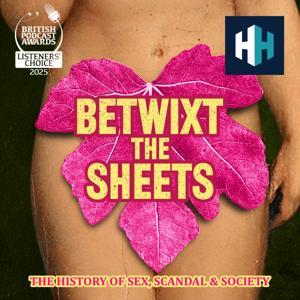
There’s not an infinite number of ways that humans can act on sexual desire. Human bodies haven’t changed, but the cultural landscape around sex has. What people believed about it, the morality surrounding it, and the paraphernalia concerning it have all changed a lot. Sex has a history, and History Hit has launched a new podcast to explore it called Betwixt the Sheets.
In this episode of Not Just the Tudors, Professor Suzannah Lipscomb talks to Dr. Kate Lister, host of Betwixt the Sheets, to discuss sex, desire, witches, impotence, condoms and syphilis in the 16th and 17th centuries.This episode contains sexually explicit content.
Keep up to date with everything early modern, from Henry VIII to the Sistine Chapel with our Tudor Tuesday newsletter
If you would like to learn more about history, we have hundreds of history documentaries, ad-free podcasts and audiobooks at History Hit
To download, go to Android or Apple store
Hosted on Acast. See acast.com/privacy for more information.
From the publisher's feed
Professor Suzannah Lipscomb talks about everything from the Aztecs to witches, Velázquez to Shakespeare, Mughal India to the Mayflower. Not, in other words, just the Tudors, but most definitely also the Tudors.
Each episode Suzannah is joined by historians and experts to reveal incredible stories about one of the most fascinating periods in history, new releases every Wednesday and Sunday.
A podcast by History Hit, the world's best history channel and creators of award-winning podcasts Dan Snow's History Hit, The Ancients, and Betwixt the Sheets.
Sign up to History Hit for hundreds of hours of original documentaries, with a new release every week and ad-free podcasts. Sign up at https://www.historyhit.com/subscribe.
History Hit is part of Little Dot Studios, a Certified B Corp™
Hosted on Acast. See acast.com/privacy for more information.
Ranked by our users in the last 21 days
3,199 Listeners
4,758 Listeners
229 Listeners
754 Listeners
743 Listeners
472 Listeners
3,219 Listeners

113 Listeners
3,377 Listeners

532 Listeners
15,674 Listeners
1,893 Listeners
179 Listeners

262 Listeners
1,391 Listeners

1,601 Listeners
1,760 Listeners
1,136 Listeners