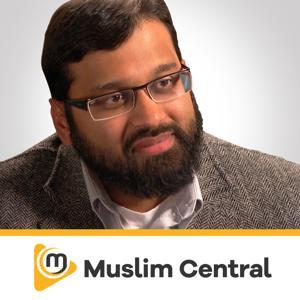
Nouman Ali Khan

Nouman Ali Khan

Download on the App Store
  • Ranking

    2nd

    on Islam

  • Favorites

    952

    Followers

  • Typical duration

    24 min

    per episode

  • If it hooks

    58%

    finish an episode

Based on Podcast App listening data

Nouman Ali Khan episodes

  • Study Of Surah Al-Baqarah
    Ustadh Nouman Ali Khan delves into an in-depth analysis of Surah Al Baqarah.
    He begins his lecture with how there was always a Battle of Adam AS on one side and the angels and Shayateen on either side of Adam AS. Also, he delves into the long history of Bani Israel mentioned in Surah Al Baqarah and how they were also given a similar choice as Adam AS to follow Allah or Shayateen and how they did not eventually obey Allah and deviated from the right path. Our essence as Muslims is illustrated in the points below:
    We are a continuation of the battle that began with Adam AS and Shayateen.
    We see ourselves as the practicers of the religion of Ibrahim AS. The five pillars of Islam all trace back to Ibrahim AS.
    We are not the first ones to be chosen as an Ummah to uphold the religion of Islam. The nations before us had been replaced because they have not obeyed the religion of Allah and deviated considerably.
    It is mandatory upon us a Muslim Ummah to uphold the religion of Islam and carry it responsibly without showing any traces of anger, ego, and frustrations. The people deserve mercy and we need to follow the footsteps of Ibrahim AS and adopt his way to propagate Islam and bring it to the fore.
    1 hr 47 min
  • Difficult Challenges
    Ustadh Nouman Ali Khan delves into an in-depth analysis of the challenges facing the Muslim Ummah in present times.
    He begins with the concept of Tasbeeh. He talks about the worry and concern of the angels regarding the behavior of the humans once they step on the earth. They discuss with Allah to devise a solution of Dhikr of Tasbeeh for humans in order to avoid those problems.
    How do we rectify the Muslim Ummah whose hearts are dying when it comes to the Deen and its pillars? How do we make the Muslim Ummah come closer to Deen and have a genuine love for it? We need to restore our connection with the Qur'an. We need to follow the Prophet ﷺ where he would recite on his people the Ayat of the Qur'an. We should acknowledge the advice, wisdom, and teachings in the Qur'an for us to imbibe them wholeheartedly in order for it to change the way we think about ourselves, our near and dear ones and the members of our community. It starts our purification from greed, jealousy, hatred and many such predicaments.
    The floor opens for a Q & A session next and a plethora of interesting questions with equally valid answers come to the fore.
    1 hr 11 min
  • Calling To The Path Of Your Master
    Ustadh Nouman Ali Khan delves into an Ayat which contains in it, volumes of wisdom. There are two ways of extrapolating from this Ayat. what is unique about this Ayat? Listen intently to fully fathom the beauty of it.
    There are different groups in society. According to this Ayat, one can categorize them as the leaders or the intellectual people of society. And then there are the general masses who form the majority of the population. Hence, we should address the people or give Dawah based on the category. The language and the style of our Dawah are entirely dependent on the group we address and hence, it should be done with extreme clarity and caution.
    Hikmah is treating different people in a different manner because we need to psychologically understand the audience and then address them effectively and suitably. The advice that we give can change the heart of the receiver and hence, it is of paramount importance that we use this power of Dawah to the best of our knowledge with effective Hikmah.
    50 min
  • In Depth Study Of Surah Al Bakarah
    Ustadh Nouman Ali Khan delves into an in-depth study of Surah Al Baqarah.
    We as Muslims see ourselves as the continuation of the battle of Adam AS and Shaytan. We are the final soldiers in this battle and hence, it is our responsibility to uphold the religion of Islam and ensure its propagation no matter what. Otherwise, we need to be prepared for being replaced as Allah will have no problem doing that. We don't own Islam rather it is the other way around. We are the followers of the religion of Ibrahim AS. the idea of Islam comes from Ibrahim AS and is his legacy. 
    What is important is guidance. Guidance is just not about which direction we shall face when praying but it is what we should do and not do when it comes to our Shariah.
    Similar such facets about our Deen come to the fore and deserve a fair listen if you wish to be mesmerized.
    1 hr 29 min
  • Ask With Humility
    Khutbah By Nouman Ali Khan - Ask With Humility
    This Khutbah was recorded at Southern Methodist University in Dallas on September 23rd, 2016
    While Aya 108 of Surat Al-Baqarah seems to condemn asking too many questions, says Nouman Ali Khan, it must be analyzed in context to reconcile it with the fact that throughout the Quran, Allah not only encourages Muslims to ask, but also acknowledges and honors the questioners.
    29 min
  • The Need For Civic Engagement
    Ustadh Nouman Ali Khan looks into the need for civic engagement in our Muslim society and the repercussions of failing to do so.
    The fragile nature of our community is a stark reality in the modern world and hence, the need for civic engagement becomes a necessity by leaps and bounds. Our loyalty and allegiance is only to Allah alone and His beloved Prophet ﷺ. We should realize this fact asap so that we can live as complete Muslims following our religion freely without any apprehensions meted out to us by the conflicting factors all around us.
    Listen intently to note down points that would enrich our understanding on the propagation of Deen.
    26 min
  • Surat Al-Baqarah - Part 40
    Ustadh Nouman Ali Khan continues his lecture on the topic of Naskh (Abrogation) in the Qur'an and acquaints us with a type of Naskh that if not understood appropriately can result in dire consequences.
    Ayat number 5 and Ayat number 29 of Surah At Tawbah are the examples chosen in this lecture to deal with the examples of abrogation in the Qur'an. The Ayat in Surah Tawbah is up for discussion in the initial part of the lecture. The verse states:
    “And when the sacred months have passed, then kill the polytheists wherever you find them and capture them and besiege them and sit in wait for them at every place of ambush. But if they should repent, establish prayer, and give zakah, let them [go] on their way. Indeed, Allah is Forgiving and Merciful.” 
    Some people have unfortunately propagated that this verse allows Muslims to fight with all Non-Muslims until they convert to Islam. The truth of the matter is that this verse only applies to the polytheistic Arabs who lived during the time of the Prophet ﷺ who had broken multiple peace treaties and were at war with the Muslims.
    We are also familiarised with the concept of the absence of Bismillah at the beginning of Surah At Tawbah and the reason for the same.
    58 min
  • Surat Al-Baqarah - Part 39
    Ustadh Nouman Ali Khan delves into Ayat 106 of the magnificent Surah Al Baqarah. The Abrogation of the Ayaat and the Wisdom behind it forms the core of this amazing lecture.
    Allah is describing the authenticity of the Book of Allah - the Qur'an to the Israelites who refuse to accept it citing that they already had the Tawrah as their religious scripture.
    The Ayah declares that if Allah SWT chooses to abrogate a command in a certain Ayah while retaining the Ayah itself as a part of the Qur’an, or chooses to remove an Ayah, there is nothing objectionable in it. Allah SWT alone knows the Wisdom that lies in His choice. Allah SWT being Omnipotent and Omniscient possesses the authority to change His commandments as He likes.
    What is Naskh? The meaning of Naskh in the case of commandments is removing the commandment and replacing it by another. Why change a command? Allah SWT says, “We bring forth [one] better than it or similar to it…” The scholars explained that better means better in terms of the benefits that it offers or something that is easier in implementation.
    We are also acquainted with 5 different types of Naskh in the Qur'an and what went into it. Listen intently to fully comprehend the nuances of Abrogation.
    49 min
  • Surat Al-Baqarah - Part 38
    Ustadh Nouman Ali Khan delves into Ayat 104 - 106 of the esteemed Surah Al Baqarah.
    Allah SWT revealed these Ayaat and forbade the believers from imitating the Jews in their intentional disrespect for the Prophet ﷺ by playing mischiefs in the meanings of Arabic words. The Ayah also announces dire punishment for whoever claims to be a believer and does not watch his speech, especially in the respect of the Prophet ﷺ.
    A question might arise about why the Jews adopted such behavior? It was because of their jealousy and prejudice that the Prophet ﷺ had been chosen from the Arabs and not them. Listen intently for an in-depth analysis of the Ayats 104 105.
    The Abrogation of the Ayaat and the Wisdom behind it forms the bone of discussion in Ayat 106 of Surah Al Baqarah. At first, the Muslims used to pray with their faces turned towards the Bayt Al-Maqdis (Jerusalem), later Allah SWT commanded them to turn towards the Ka’bah. But the Jews claimed that these changes were made by the Prophet ﷺ himself and not by Allah SWT. They argued that if everything that Allah revealed was good why should one command be replaced by another? 
    The purpose of such taunts and arguments was to sow the seed of doubt in the hearts of the Muslims. It was appropriately nullified by Allah SWT in the Ayats that follow.
    1 hr 20 min
  • Surat Al-Baqarah - Part 37
    Ustadh Nouman Ali Khan begins his lecture with an explicit elaboration on Ayats 103 and 104 of the magnificent Surah Al Baqarah.
    Regarding Ayat 103, the Ustadh explains that If the jews had followed the principles of Islam, instead of following Shaytan and practising sorcery, they would have got its reward from Allah.
    The Jews had believed in the Deen without a doubt, but they did not guard themselves against evil and did not take a detour from the things forbidden by Allah. Henceforth, Allah did not attach any importance to their belief and they were called the disbelievers and were abstained from the rewards and profits that Allah would have given them rather than what they tried to seek through sorcery.
    Elucidating about Ayat number 104 of Surah Al Baqarah, Ustadh Nouman Ali Khan says that during the time of the Prophet Muhammad ﷺ, some of the Bani Israel invented a new way to make fun of the Prophet ﷺ as is said in the Ayat,
    "O you who believe, do not say Ra'ina, but say Unzurna, and listen. And for the unbelievers, there is a grievous punishment."
    "Ra'ina" in Arabic means "be mindful of us", but in Hebrew, the word is a curse. The Arabs and Muslims, not knowing the double intention of the Bani Israel, also began to address the Prophet ﷺ with this word, much to the great glee of the Bani Israelis. Therefore, Allah (SWT) commands Muslims to address the Prophet ﷺ by using the word Unzurna. What did the word mean? Listen intently to find out.

    26 min

About Nouman Ali Khan

From the publisher's feed

Nouman Ali Khan is the founder and CEO of Bayyinah and serves as a lead instructor for several programs including Dream, traveling seminars and Bayyinah TV. His serious Arabic training began in the U.S. in 1999 under Dr. Abdus-Samie, founder and former principal of Quran College in Faisalabad, Pakistan.

Best of Nouman Ali Khan

Ranked by our users in the last 21 days

More shows like Nouman Ali Khan

Qalam Institute Podcast by Qalam Institute

Qalam Institute Podcast

850 Listeners

Mufti Menk by Muslim Central

Mufti Menk

2,071 Listeners

Yasir Qadhi by Muslim Central

Yasir Qadhi

979 Listeners

Yasmin Mogahed by Muslim Central

Yasmin Mogahed

386 Listeners

 by

0 Listeners

Bilal Assad by Muslim Central

Bilal Assad

336 Listeners

Abdur-Raheem McCarthy by Muslim Central

Abdur-Raheem McCarthy

6 Listeners

Shady Alsuleiman by Muslim Central

Shady Alsuleiman

17 Listeners

Omar Suleiman by Muslim Central

Omar Suleiman

1,993 Listeners

Abu Abdissalam by Muslim Central

Abu Abdissalam

9 Listeners

Yaqeen Podcast by Yaqeen Institute

Yaqeen Podcast

398 Listeners

Ali Albarghouthi by Muslim Central

Ali Albarghouthi

14 Listeners

The Thinking Muslim by Muhammad Jalal

The Thinking Muslim

200 Listeners

Seerah of Prophet Muhammad (sws) - Yasir Qadhi by Supporting Yasir Qadhi

Seerah of Prophet Muhammad (sws) - Yasir Qadhi

564 Listeners

Ashraf Schneider by Muslim Central

Ashraf Schneider

10 Listeners

The Firsts by Yaqeen Institute

The Firsts

317 Listeners

The Digital Sisterhood by The Digital Sisterhood

The Digital Sisterhood

2,413 Listeners

Learn About Islam by LK

Learn About Islam

117 Listeners

Haifaa Younis by Muslim Central

Haifaa Younis

85 Listeners

Belal Assaad by Belal Assaad

Belal Assaad

168 Listeners

Saleem Chagtai by Muslim Central

Saleem Chagtai

0 Listeners

Nazim Mangera by Muslim Central

Nazim Mangera

0 Listeners

Altaf Husain by Muslim Central

Altaf Husain

0 Listeners

Hisham Abu Yusuf by Muslim Central

Hisham Abu Yusuf

11 Listeners

Yasir Khan by Muslim Central

Yasir Khan

1 Listeners

Mufti Menk Podcast by Mufti Ismail Menk

Mufti Menk Podcast

38 Listeners

Muhammad Adeyinka Mendes by Muslim Central

Muhammad Adeyinka Mendes

0 Listeners

Haroon Moghul by Muslim Central

Haroon Moghul

0 Listeners

Muhammad Ibn Muneer by Muslim Central

Muhammad Ibn Muneer

0 Listeners

Main Alqudah by Muslim Central

Main Alqudah

0 Listeners

Salar Rasoul by Muslim Central

Salar Rasoul

0 Listeners

Yasir Fahmy by Muslim Central

Yasir Fahmy

0 Listeners

Khalid Yahya Blankinship by Muslim Central

Khalid Yahya Blankinship

0 Listeners

Abdul Rahman Waheed by Muslim Central

Abdul Rahman Waheed

0 Listeners

Francesca Bocca-Aldaqre by Muslim Central

Francesca Bocca-Aldaqre

2 Listeners