
Sign up to save your podcasts
Or

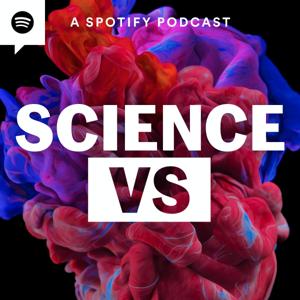

Fukushima. Chernobyl. Three Mile Island. There’s been some big nuclear accidents over the past few decades, but how dangerous is nuclear power really? We take you inside the core of America’s biggest nuclear power plant and trace what went wrong at Fukushima to try to figure out: when will the next meltdown happen? And what our chances are of getting cancer from it? This week we talk to Dr. Spencer Wheatley, Dr. Jonathan Samet, and Jack Cadogan, an executive at the Palo Verde Nuclear Generating Station.
UPDATE! We’ve made a couple of small changes to this episode, thank you to all the listeners who picked up on them. 1. We called the energy that comes from nuclear power a chemical reaction… it’s not. It’s a nuclear reaction. Chemical reactions involve the electrons in an atom. Nuclear reactions involve the nucleus. 2. We said that the Joker became The Joker After falling into a vat of radioactive waste. This is disputed. It seems it was a vat chemicals.. But what those chemicals were , that’s unclear. 3. A clarification: We said that the waste that nuclear power produces in the US… 2200 metric tons per year… was like 323 male African Elephants. That was a weight comparison. They weigh roughly the same… It wasn’t a three dimensional size comparison. Nuclear waste is much denser than an elephant, and so it takes up much less room. And if you want to read the most amazing calculation from an academic of how much bigger 323 African Elephants are in 3D space you’ve got to sign up to our brand spanking new newsletter! To do that head to https://gimletmedia.com/newsletter/ And FINALLY! We got a lot of feedback from that episode that listeners really wanted to hear how nuclear power compares to other energy sources: like coal, solar and wind! Now we decided that to do a fair comparison that really needs it’s own episode - it wasn’t as simple as just throwing out some numbers. So we’re working on that episode for next season.
Our Sponsors:
Cloudflare - To learn more visit cloudflare.com/sciencevs
Credits:
This episode has been produced by Heather Rogers, Ben Kuebrich, Shruti Ravindran and Wendy Zukerman.Kaitlyn Sawrey is our senior producer. We’re edited by Annie-Rose Strasser. Fact checking by Ben Kuebrich and Heather Rogers. Original music and mixing by Bobby Lord. Extra thanks to Leo Rogers, Joseph Lavelle Wilson as well as Prof. Steven Biegalski, Prof. Mark Jacobson, Jussi Heinonen, and Dr. Eric Grant.
Selected References:Radiation Basics Primer from the U.S. Nuclear Regulatory CommissionDr. Spencer Wheatley’s paper ‘Reassessing the safety of nuclear power’National Research Council Report on Health Risks from Low Levels of Ionizing Radiation
Learn more about your ad choices. Visit podcastchoices.com/adchoices
 View all episodes
 By Spotify Studios

4.4
1178311,783 ratings
Fukushima. Chernobyl. Three Mile Island. There’s been some big nuclear accidents over the past few decades, but how dangerous is nuclear power really? We take you inside the core of America’s biggest nuclear power plant and trace what went wrong at Fukushima to try to figure out: when will the next meltdown happen? And what our chances are of getting cancer from it? This week we talk to Dr. Spencer Wheatley, Dr. Jonathan Samet, and Jack Cadogan, an executive at the Palo Verde Nuclear Generating Station.
UPDATE! We’ve made a couple of small changes to this episode, thank you to all the listeners who picked up on them. 1. We called the energy that comes from nuclear power a chemical reaction… it’s not. It’s a nuclear reaction. Chemical reactions involve the electrons in an atom. Nuclear reactions involve the nucleus. 2. We said that the Joker became The Joker After falling into a vat of radioactive waste. This is disputed. It seems it was a vat chemicals.. But what those chemicals were , that’s unclear. 3. A clarification: We said that the waste that nuclear power produces in the US… 2200 metric tons per year… was like 323 male African Elephants. That was a weight comparison. They weigh roughly the same… It wasn’t a three dimensional size comparison. Nuclear waste is much denser than an elephant, and so it takes up much less room. And if you want to read the most amazing calculation from an academic of how much bigger 323 African Elephants are in 3D space you’ve got to sign up to our brand spanking new newsletter! To do that head to https://gimletmedia.com/newsletter/ And FINALLY! We got a lot of feedback from that episode that listeners really wanted to hear how nuclear power compares to other energy sources: like coal, solar and wind! Now we decided that to do a fair comparison that really needs it’s own episode - it wasn’t as simple as just throwing out some numbers. So we’re working on that episode for next season.
Our Sponsors:
Cloudflare - To learn more visit cloudflare.com/sciencevs
Credits:
This episode has been produced by Heather Rogers, Ben Kuebrich, Shruti Ravindran and Wendy Zukerman.Kaitlyn Sawrey is our senior producer. We’re edited by Annie-Rose Strasser. Fact checking by Ben Kuebrich and Heather Rogers. Original music and mixing by Bobby Lord. Extra thanks to Leo Rogers, Joseph Lavelle Wilson as well as Prof. Steven Biegalski, Prof. Mark Jacobson, Jussi Heinonen, and Dr. Eric Grant.
Selected References:Radiation Basics Primer from the U.S. Nuclear Regulatory CommissionDr. Spencer Wheatley’s paper ‘Reassessing the safety of nuclear power’National Research Council Report on Health Risks from Low Levels of Ionizing Radiation
Learn more about your ad choices. Visit podcastchoices.com/adchoices

90,994 Listeners
78,636 Listeners

43,898 Listeners

32,100 Listeners

43,528 Listeners

27,371 Listeners
26,197 Listeners
7,865 Listeners

3,654 Listeners

6,435 Listeners
4,413 Listeners

3,375 Listeners
24,554 Listeners
2,531 Listeners
2,184 Listeners
1,632 Listeners

352 Listeners
1,972 Listeners
385 Listeners
1,144 Listeners

6,564 Listeners

858 Listeners
2,306 Listeners
565 Listeners

4,614 Listeners
47 Listeners
8 Listeners
12 Listeners

2 Listeners

29 Listeners

8 Listeners

9 Listeners
714 Listeners