
Sign up to save your podcasts
Or



LISTEN TO US:
https://open.spotify.com/show/5MIgoW7NJhRUGaZASsz7km?si=168b3b9803524372
https://podcasts.apple.com/us/podcast/occasionally-philosophical/id1840541668
https://www.iheart.com/podcast/269-occasionally-philosophical-327614173/episode/1067-lite-fm-1477?app=listen
https://occasionallyphilosophical.riverside.com/
https://link.deezer.com/s/32WkpWjEjCnag4xhhq06x
https://open.spotify.com/show/5MIgoW7NJhRUGaZASsz7km?si=678e43fc3caf41f2
https://www.youtube.com/channel/UCgho72ma1VJJstHAG-ArMSA
SUPPORT THE MERCH STORE
https://www.redbubble.com/people/HellaDopeOrca/shop?asc=u
DONATE
https://gofund.me/9ad0b2313
SUPPORT US ON PATREON
https://www.patreon.com/15080075/join
What happens when the happiest person in Springfield barely understands what is happening—while the smartest person can’t stop seeing everything that is wrong?
In Episode 45 of Occasionally Philosophical, we use The Simpsons to explore how television, comedy, and pop culture quietly help construct our worldview.
Mark grew up identifying with Lisa Simpson: intelligent, skeptical, concerned about injustice, and frequently frustrated by people who don’t seem to understand what she sees. Homer, meanwhile, pursues donuts, beer, television, and whatever makes him feel good in the moment. He may not understand the world, but he often seems much happier living in it.
So, is ignorance really bliss? Is intelligence sometimes a burden?
We also discuss:
• The difference between happiness and pleasure
• Why Lisa Simpson’s intelligence often isolates her
• “Dental Plan!” and The Simpsons’ commentary on labor and healthcare
• Punching up versus punching down in comedy
• Why Springfield’s authority figures are usually incompetent or corrupt
• How television taught a generation to question authority
• Whether The Simpsons actually predicted the future
• How satire functions as a pressure-release valve
• Whether capitalism can safely absorb criticism directed against it
• How our philosophy comes from television, music, work, family, and everyday life—not only from Plato, Aristotle, or Kant
The books we read matter, but so do the cartoons we watched, the music we listened to, the jobs we worked, and the jokes that stayed with us.
What happens when a computer gives you the answer to life, the universe, and everything—but nobody understands the question?
Episode 44 is our special Hitchhiker’s Guide to the Galaxy episode. Using Douglas Adams’ absurd science-fiction universe as our guide, we explore some surprisingly serious questions about modern life.
Why do bureaucratic systems keep moving even when nobody inside them seems evil? Are we searching for ultimate answers without understanding the questions? Is AI becoming our version of Deep Thought? And what is the difference between possessing information, having knowledge, and actually becoming wise?
We also discuss:
• The Vogons and the absurdity of bureaucracy
• Why complicated systems do not require an evil mastermind
• Money and the shared fictions that organize society
• The meaning—and meaninglessness—of the answer “42”
• How The Hitchhiker’s Guide anticipated the internet
• Why AI can construct equally persuasive opposing arguments
• The difference between facts, knowledge, and practical wisdom
• Why “Don’t Panic” may be genuinely useful life advice
• Bringing a towel, questioning authority, and enjoying the ride
The universe may not make sense. Everything may not be fine. But panicking usually makes the situation worse.
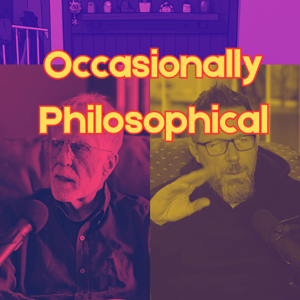
Occasionally Philosophical is a father-and-son podcast in which Mark and Doug sit down with two microphones and way too many questions about philosophy, society, technology, books, and the stories shaping how we understand the world.
👕 Occasionally Philosophical merchandise:
https://www.redbubble.com/people/HellaDopeOrca/shop?asc=u
❤️ Support Doug’s GoFundMe:
https://gofund.me/9ad0b2313
🧠 Support the show on Patreon:
https://www.patreon.com/15080075/join
🎧 Listen to Occasionally Philosophical:
Spotify:
https://open.spotify.com/show/5MIgoW7NJhRUGaZASsz7km?si=168b3b9803524372
Apple Podcasts:
https://podcasts.apple.com/us/podcast/occasionally-philosophical/id1840541668
Deezer:
https://link.deezer.com/s/32WkpWjEjCnag4xhhq06x
Riverside:
https://occasionallyphilosophical.riverside.com/
What piece of advice from The Hitchhiker’s Guide has stayed with you? Let us know in the comments—and remember: Don’t Panic.
#HitchhikersGuide #DouglasAdams #Philosophy #DontPanic #OccasionallyPhilosophical
Is it easier to imagine the end of the world than the end of capitalism?
In this episode of Occasionally Philosophical, Mark and Doug pick up the thread from Ishmael, anti-capitalism, and the stories we live inside. Mark talks about how Ishmael first sparked his anti-capitalist instincts, and Doug pushes the conversation toward building a stronger foundation underneath those feelings.
The conversation moves through affordability, paycheck-to-paycheck life, private school costs, Capitalist Realism by Mark Fisher, healthcare, COVID, mental health, ADHD, pathologizing normal reactions to abnormal conditions, algorithmic narrowing, social media bubbles, and how hard it is to know what is true online.
Then things get practical: candles, small businesses, Walmart, Amazon, economies of scale, profit, labor, and why “just start your own business” is not nearly as simple as people make it sound.
At the center of the episode is one big question: why does capitalism keep showing us the rare success stories while ignoring the millions of people who get crushed, exhausted, or quietly give up?
If you like thoughtful father-and-son conversations about capitalism, philosophy, media, technology, mental health, and the stories that shape our lives, like, subscribe, and join us for more.
LISTEN TO US:
https://open.spotify.com/show/5MIgoW7NJhRUGaZASsz7km?si=168b3b9803524372
https://podcasts.apple.com/us/podcast/occasionally-philosophical/id1840541668
https://www.iheart.com/podcast/269-occasionally-philosophical-327614173/episode/1067-lite-fm-1477?app=listen
https://occasionallyphilosophical.riverside.com/
https://link.deezer.com/s/32WkpWjEjCnag4xhhq06x
https://open.spotify.com/show/5MIgoW7NJhRUGaZASsz7km?si=678e43fc3caf41f2
https://www.youtube.com/channel/UCgho72ma1VJJstHAG-ArMSA
SUPPORT THE MERCH STORE
https://www.redbubble.com/people/HellaDopeOrca/shop?asc=u
DONATE
https://gofund.me/9ad0b2313
SUPPORT US ON PATREON
https://www.patreon.com/15080075/join
Episode 42. The answer to life, the universe, and everything… apparently includes toxic masculinity, school lunches, AI chatbots, and taking a walk without headphones.
In this episode of Occasionally Philosophical, Mark and Doug start with a conversation about the manosphere and the strange pride some men take in emotional repression — including the idea that not crying at your own father’s funeral is somehow a masculine achievement.
From there, the conversation moves into radicalization, free school lunches, Christianity, shame, the attention economy, and why simple stories like “women hate men” or “poor people are lazy” spread so easily online.
The second half turns toward AI: chatbots, sycophancy, emotional mirroring, premature coherence, and the danger of treating a statistical text generator like a real thinking partner. We talk about why AI can feel validating, why that can be dangerous, and why young people may be especially vulnerable when they bring insecurity, anger, or confusion into these systems.
And eventually, as always, we end up asking a bigger question: what happens to human attention when every platform, every algorithm, and now every chatbot is designed to keep us engaged?
If you like thoughtful father-and-son conversations about philosophy, culture, technology, capitalism, masculinity, and the weird world we’re all trying to survive, like, subscribe, and join us for more.
Listen on Spotify, Apple Podcasts, or wherever you get podcasts.
LISTEN TO US:
https://open.spotify.com/show/5MIgoW7NJhRUGaZASsz7km?si=168b3b9803524372
https://podcasts.apple.com/us/podcast/occasionally-philosophical/id1840541668
https://www.iheart.com/podcast/269-occasionally-philosophical-327614173/episode/1067-lite-fm-1477?app=listen
https://occasionallyphilosophical.riverside.com/
https://link.deezer.com/s/32WkpWjEjCnag4xhhq06x
https://open.spotify.com/show/5MIgoW7NJhRUGaZASsz7km?si=678e43fc3caf41f2
https://www.youtube.com/channel/UCgho72ma1VJJstHAG-ArMSA
SUPPORT THE MERCH STORE
https://www.redbubble.com/people/HellaDopeOrca/shop?asc=u
DONATE
https://gofund.me/9ad0b2313
SUPPORT US ON PATREON
https://www.patreon.com/15080075/join
What does it actually mean to be “self-made”?
In this episode of Occasionally Philosophical, Mark and Doug talk through the myth of the self-made person, the idea of the self-made billionaire, and why success is almost never as individual as the story makes it sound.
We get into hard work, luck, family support, public infrastructure, education, invisible labor, early childhood investment, Amazon, Jeff Bezos, Head Start, media stories, bootstraps, poverty, and why the myth of being self-made can make people less willing to help others.
Nobody is saying choices do not matter. Nobody is saying effort does not matter. But maybe the bigger question is: why are we so attached to the story that anyone who succeeds did it alone, and anyone who struggles must have failed alone?
If you enjoy slower, more thoughtful conversations about philosophy, culture, capitalism, media, and the stories we live inside, like, subscribe, and join us for more.
Listen on Spotify, Apple Podcasts, or wherever you get podcasts.
https://open.spotify.com/show/5MIgoW7NJhRUGaZASsz7km?si=168b3b9803524372
https://podcasts.apple.com/us/podcast/occasionally-philosophical/id1840541668
https://www.iheart.com/podcast/269-occasionally-philosophical-327614173/episode/1067-lite-fm-1477?app=listen
https://occasionallyphilosophical.riverside.com/
https://link.deezer.com/s/32WkpWjEjCnag4xhhq06x
https://open.spotify.com/show/5MIgoW7NJhRUGaZASsz7km?si=678e43fc3caf41f2
https://www.youtube.com/channel/UCgho72ma1VJJstHAG-ArMSA
SUPPORT THE MERCH STORE
https://www.redbubble.com/people/HellaDopeOrca/shop?asc=u
DONATE
https://gofund.me/9ad0b2313
SUPPORT US ON PATREON
https://www.patreon.com/15080075/join
Episode 40 of Occasionally Philosophical starts with a simple question: what kind of world are young people growing up inside?
Mark and Doug talk about the media environment, hopelessness, school shootings, online rage, projection, trauma, capitalism, healthcare, AI, and the broken promises of the American dream. The conversation moves from the information ecosystem young men and women are living in, to the way real economic pressure gets redirected toward scapegoats, to the deeper problem of trying to survive inside a system that often seems built against ordinary people.
Along the way, they get into anti-capitalism, pro-capitalist arguments, neoliberalism, universal healthcare, medical bills, AI “premature coherence,” hunter-gatherer societies, work schedules, eating habits, and why even success can come with a hidden cost.
This is also Episode 40, which means Occasionally Philosophical has officially been wandering through philosophy, culture, books, politics, capitalism, mental health, and modern life for 40 episodes.
Occasionally Philosophical is a father and son podcast about trying to think out loud in a world that usually wants us to react before we understand.
If you enjoy the conversation, please like, subscribe, and leave a comment. It really does help the channel.
#OccasionallyPhilosophical #Capitalism #PhilosophyPodcast
LISTEN TO US:
https://open.spotify.com/show/5MIgoW7NJhRUGaZASsz7km?si=168b3b9803524372
https://podcasts.apple.com/us/podcast/occasionally-philosophical/id1840541668
https://www.iheart.com/podcast/269-occasionally-philosophical-327614173/episode/1067-lite-fm-1477?app=listen
https://occasionallyphilosophical.riverside.com/
https://link.deezer.com/s/32WkpWjEjCnag4xhhq06x
https://open.spotify.com/show/5MIgoW7NJhRUGaZASsz7km?si=678e43fc3caf41f2
https://www.youtube.com/channel/UCgho72ma1VJJstHAG-ArMSA
SUPPORT THE MERCH STORE
https://www.redbubble.com/people/HellaDopeOrca/shop?asc=u
DONATE
https://gofund.me/9ad0b2313
https://www.patreon.com/15080075/join
In Episode 39 of Occasionally Philosophical, Mark and Doug start with the image of the Ouroboros — the snake eating its own tail — and use it as a way into a larger conversation about the internet, commentary culture, algorithms, outrage, and attention.
What happens when YouTubers comment on YouTubers commenting on other YouTubers? What happens when young men and young women are being fed completely different pictures of each other online? And what happens when the attention economy learns that anger is one of the easiest ways to keep us watching?
This conversation moves from the manosphere and online gender narratives to Nicholas Carr, Clay Shirky, Bowling Alone, internet noise, silence, mindfulness, public spaces, consumerism, and the simple but difficult act of actually seeing another human being.
We also talk about the pressure to constantly produce, the way online platforms fragment our attention, the disappearance of places where people can just exist together, and why sometimes the most philosophical question is: Where are you? What time is it? Is there anything that needs doing?
Occasionally Philosophical is a father and son podcast about philosophy, culture, books, media, modern life, and trying to think a little more clearly in a world designed to keep us reacting.
If you enjoy the conversation, please like, subscribe, and leave a comment. It really does help the channel.
#OccasionallyPhilosophical #AttentionEconomy #PhilosophyPodcast
LISTEN TO US:
https://open.spotify.com/show/5MIgoW7NJhRUGaZASsz7km?si=168b3b9803524372
https://podcasts.apple.com/us/podcast/occasionally-philosophical/id1840541668
https://www.iheart.com/podcast/269-occasionally-philosophical-327614173/episode/1067-lite-fm-1477?app=listen
https://occasionallyphilosophical.riverside.com/
https://link.deezer.com/s/32WkpWjEjCnag4xhhq06x
https://open.spotify.com/show/5MIgoW7NJhRUGaZASsz7km?si=678e43fc3caf41f2
https://www.youtube.com/channel/UCgho72ma1VJJstHAG-ArMSA
SUPPORT THE MERCH STORE
https://www.redbubble.com/people/HellaDopeOrca/shop?asc=u
DONATE
https://gofund.me/9ad0b2313
https://www.patreon.com/15080075/join
In this episode of Occasionally Philosophical, Mark and Doug continue the conversation around the manosphere, toxic masculinity, and the stories young men are being handed about what it means to be a man.
But the conversation quickly becomes bigger than Andrew Tate, red pill content, or online masculinity influencers. It becomes a conversation about the world young people are growing up in: economic uncertainty, student debt, AI anxiety, disappearing career paths, social isolation, algorithm-driven outrage, and the collapse of the old “go to college, get a good job, build a life” story.
Doug reflects on growing up in a different cultural atmosphere, surrounded by music, television, and social stories that still seemed to point toward a better future. Mark compares that with the world younger generations inherited, where the future feels less certain and the internet is constantly offering someone to blame.
Along the way, we talk about masculinity, femininity, emotional vocabulary, social construction, nostalgia, capitalism, AI, bowling alleys, loneliness, and the question underneath the whole thing:
If the old stories are broken, what kind of story can help people not give up hope?
We do not have clean answers, but we try to think the problem through out loud.
Content warning: This episode includes discussion of sexual violence, suicide, hate, misogyny, political violence, and mental health.
LISTEN TO US:
https://open.spotify.com/show/5MIgoW7NJhRUGaZASsz7km?si=168b3b9803524372
https://podcasts.apple.com/us/podcast/occasionally-philosophical/id1840541668
https://www.iheart.com/podcast/269-occasionally-philosophical-327614173/episode/1067-lite-fm-1477?app=listen
https://occasionallyphilosophical.riverside.com/
https://link.deezer.com/s/32WkpWjEjCnag4xhhq06x
https://open.spotify.com/show/5MIgoW7NJhRUGaZASsz7km?si=678e43fc3caf41f2
https://www.youtube.com/channel/UCgho72ma1VJJstHAG-ArMSA
SUPPORT THE MERCH STORE
https://www.redbubble.com/people/HellaDopeOrca/shop?asc=u
DONATE
https://gofund.me/9ad0b2313
https://www.patreon.com/15080075/join
In this episode of Occasionally Philosophical, Mark and Doug pick up from last week’s difficult conversation and try to understand the manosphere, toxic masculinity, and the stories young men are being sold online.
The conversation moves from workout videos and dating advice into something much deeper: the pressure on men to be providers, the role of capitalism and economic insecurity, the way algorithms reward anger, and the question of what positive masculinity could actually look like.
Is strength just physical? Is being a “protector” the same thing as control? Why does vulnerability get framed as weakness? And what happens when a belief system teaches people to treat others like objects?
We do not pretend to have clean answers, but we try to think through the roots of the problem instead of just yelling at the symptoms.
Content warning: This episode includes discussion of sexual violence, abuse, suicide, misogyny, and toxic masculinity.
If this conversation gave you something to think about, leave a comment. We would genuinely like to hear how other people are thinking through this.
LISTEN TO US:
https://open.spotify.com/show/5MIgoW7NJhRUGaZASsz7km?si=168b3b9803524372
https://podcasts.apple.com/us/podcast/occasionally-philosophical/id1840541668
https://www.iheart.com/podcast/269-occasionally-philosophical-327614173/episode/1067-lite-fm-1477?app=listen
https://occasionallyphilosophical.riverside.com/
https://link.deezer.com/s/32WkpWjEjCnag4xhhq06x
https://open.spotify.com/show/5MIgoW7NJhRUGaZASsz7km?si=678e43fc3caf41f2
https://www.youtube.com/channel/UCgho72ma1VJJstHAG-ArMSA
SUPPORT THE MERCH STORE
https://www.redbubble.com/people/HellaDopeOrca/shop?asc=u
DONATE
https://gofund.me/9ad0b2313
https://www.patreon.com/15080075/join
In this episode of Occasionally Philosophical, we talk about Lee Siegel’s 2008 book Against the Machine: Being Human in the Age of the Electronic Mob and why it feels strangely relevant in the age of AI, TikTok, YouTube, and algorithm-driven life.
The internet promised to give everyone a voice. But what happens when giving everyone a voice also makes it harder to hear the people who actually know what they’re talking about?
We get into conspiracy theories, flat earth videos, AI-generated arguments, the decline of trust in expertise, online anonymity, comment section behavior, “performing authenticity,” the attention economy, and the strange pressure for creators to slowly become what the algorithm wants them to be.
As always, we’re not experts or gurus. We’re just a father and son with microphones, too many questions, and a habit of trying to figure the world out loud.
Content note: toward the end of the episode, the conversation briefly turns to sexual violence, online misogyny, and men’s treatment of women.
If you enjoy the conversation, like, comment, subscribe, and tell us what you think: did the internet make us more connected, or just louder?
LISTEN TO US:
https://open.spotify.com/show/5MIgoW7NJhRUGaZASsz7km?si=168b3b9803524372
https://podcasts.apple.com/us/podcast/occasionally-philosophical/id1840541668
https://www.iheart.com/podcast/269-occasionally-philosophical-327614173/episode/1067-lite-fm-1477?app=listen
https://occasionallyphilosophical.riverside.com/
https://link.deezer.com/s/32WkpWjEjCnag4xhhq06x
https://open.spotify.com/show/5MIgoW7NJhRUGaZASsz7km?si=678e43fc3caf41f2
https://www.youtube.com/channel/UCgho72ma1VJJstHAG-ArMSA
SUPPORT THE MERCH STORE
https://www.redbubble.com/people/HellaDopeOrca/shop?asc=u
DONATE
https://gofund.me/9ad0b2313
https://www.patreon.com/15080075/join
From the publisher's feed
Occasionally Philosophical is what happens when a father and son (Doug and Mark) sit down with microphones and way too many questions about life. We’re not professors, we’re not gurus — we’re just…