
Sign up to save your podcasts
Or



Based on Podcast App listening data
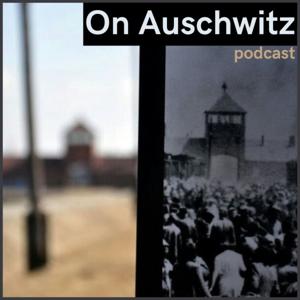
The Auschwitz camp did not have a homogeneous character and was constantly changing during its operation. Dr Jacek Lachendro of the Auschwitz Museum Research Centre talks about what everyday life was like for Auschwitz prisoners, from the morning roll-call, through the hunger that accompanied them all the time, to working beyond their strength.
Voiceover: Ian Manger, Tom Vamos
If you find value in the "On Auschwitz" podcast, please consider subscribing on your favorite platform, leaving a rating to help others discover the podcast, and sharing it on social media.
Your support makes a difference.
The Auschwitz Memorial covers nearly 200 hectares of land and includes about 300 ruins and 155 buildings, but also a huge number of historical objects, primary traces of Victims of Auschwitz: shoes, suitcases, brushes, or kitchen utensils.
Nel Jastrzębiowska and Andrzej Jastrzębiowski from the Conservation Laboratories of the Auschwitz Museum explain how these priceless items are preserved and talk about the philosophy of conservation of the Memorial today.
=====
We wish to thank Kate Weinrieb, Greg Littlefield, and Mike Skagerlind, who recorded the voiceover for this podcast.
If you find value in the "On Auschwitz" podcast, please consider subscribing on your favorite platform, leaving a rating to help others discover the podcast, and sharing it on social media.
Your support makes a difference.
Holocaust denial is nothing more than a conspiracy theory built on lies and hatred. Although it resembles flat-Earth claims in its approach to facts, it is, in reality, a dangerous and vile vehicle for antisemitism and hatred. Deniers ignore or manipulate facts solely to attack the memory of the Victims.
Dr. Piotr Setkiewicz and Dr. Igor Bartosik delve into the strategies employed by Holocaust deniers to spread misinformation and falsehoods about the history of Auschwitz.
---
We wish to thank Greg Littlefield, Mike Skagerlind, and Grey Stafford, who recorded the voiceover for this podcast.
Some 7,500 prisoners of the German Nazi camp Auschwitz, including over 500 children, were liberated on January 27, 1945 by Red Army soldiers.
Listen about the last days of the camp's operation and the moment of liberation. The podcast includes testimonies of:
Anna Tytoniak
Kazimierz Smoleń
Lea Shinar
Irena Konieczna
Józef Tabaczyński
Wanda Błachowska-Tarasiewicz
Louis Posner
Jakub Wolman
Zofia Jankowska-Palińska
Anna Chomicz
Zofia Lutomska-Kucharska
Wanda Dramińska
Edward Czempiel
Jakub Gordon
Andrzej Kozłowski
Tadeusz Mleko
Garnier (first name unknown)
Alfred Fiderkiewicz
Aleksander Vorontsov
Wilhelm Wazdrąg
=====
(English voiceovers: Mary Castillo, Toon Dreessen, Greg Littlefield, Ian Manger, Therese McLaughlin, Calum Melville, Mike Skagerlind, Grey Stafford, Michael Takiff, Tom Vamos, Kate Weinrieb, Sarah Weinstein Edwards).
Soviet prisoners of war are the fourth largest group of victims of the German Auschwitz camp, after Jews, Poles and Roma. A total of 11,964 prisoners of war were registered at the camp. In addition, according to estimates, at least 3,000 Red Army soldiers were deported to the camp and murdered without being entered into the camp records.
Dr. Jacek Lachendro of the Museum's Research Center talks about the history and fate of Soviet POWs at Auschwitz.
Upon admission to the camp, prisoners underwent a registration process, during which various documents related to the individual were filled out. Dr. Wojciech Płosa, head of the Auschwitz Museum Archives, talks about the details of this process.
We wish to thank Toon Dressen for recording the English voiceover.
Josef Mengele was a doctor of medicine and philosophy, an assistant to Prof. Otmar von Verschuer in the Institute for Hereditary Biology and Racial Hygiene in Frankfurt, member of the Nazi Party and the SS.
In Auschwitz, he was the chief physician in the Roma and Sinti Family Camp in Birkenau, and from August to December 1944, he was also the chief physician of the entire Birkenau camp.
Mengele was responsible for the experiments on human heredity. He was never punished for his crimes. Dr Agnieszka Kita from the Archives of the Muzeum talks about Josef Mengele.
English voiceover: Therese McLaughlin
---
Online lesson on medicine in Auschwitz: https://lekcja.auschwitz.org/2022_medycyna_en/
Listen to the podcast about medicine in Auschwitz: https://open.spotify.com/episode/2s2Jb91u55L6s80XUlq5JW?si=8kHYPgQXS1mIwabnrRaNqg
The podcast on experiments: https://open.spotify.com/episode/2Ij4icZ6kicc96gWL3f3y0?si=_VwpbejMRiOOhvmIxmBdUA
Prisoners of Auschwitz were able to send various types of illegal messages—both within the camp and outside the barbed wire fences. Some were short letters addressed to family members; others were messages and reports for underground resistance organizations. Dr. Wojciech Płosa, the head of the Auschwitz Museum Archives, discusses this unique collection of documents.
The expansion of the Auschwitz camp established during world war two on the outskirts of the town of Oświęcim also meant changes for the local community. Dr. Agnieszka Kita from the Museum Archives talks about the functioning of the town during the German occupation.
We wish to thank Kate Weinrieb for her help in the production of the English version of the podcast.
Nazi Germany deported some 1,3 million people to Auschwitz. Only a little above 400 thousand were registered in the camp as prisoners. Some could conduct correspondence with the outside world, however it had a unique character.
Dr. Wojciech Płosa, the head of the Archives of the Museum talks about official prisoners’ correspondence: letters and postcards sent out from the camp and sent to the camp by their relatives.
From the publisher's feed

3,982 Listeners

4,779 Listeners

37,583 Listeners
183 Listeners

1,431 Listeners

2,826 Listeners

1,174 Listeners

151 Listeners
74 Listeners
448 Listeners
10 Listeners
3 Listeners
443 Listeners
805 Listeners
248 Listeners