
Sign up to save your podcasts
Or



Based on Podcast App listening data
Bogdan Bartnikowski was born in Warsaw in 1932. During the Warsaw Uprising, he and his mother were expelled from their home. The Germans initially sent them to a transit camp in Pruszków, and then deported them to Auschwitz where they were separated.
On January 11, 1945, both were evacuated to Berlin-Blankenburg, where they were imprisoned until their liberation on April 22, 1945. After this, they returned to Warsaw.
Bogdan Bartnikowski is the author of memoirs, including "Childhood Behind Barbed Wire.”
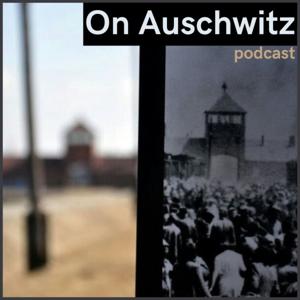
In the „On Auschwitz" podcast, we invite you to listen to an interview with Bogdan Bartnikowski about his wartime experiences.
In August and September 1944 - after the outbreak of the Warsaw Uprising - almost 13,000 inhabitants of the occupied capital city and surrounding towns: men, women, the elderly, children, even infants, were deported to Auschwitz by the German authorities. Dr. Wanda Witek-Malicka of the Auschwitz Museum Research Centre talks about their fate in the camp.
---
We wish to thank Kate Weinrieb for her help in the production of the English version of the podcast.
In the picture: Jadwiga and Aleksander Bogdaszewski with their children, photograph taken in 1944, in Warsaw. Apart from two-year-old Basia, who was in hospital when the Uprising broke out, the rest of the family were expelled from Warsaw and then, on 12 August, deported to Auschwitz. Aleksander was next transferred to Flossenbürg, where he died in 1944, whereas Jadwiga was transferred in a women’s transport to another camp in Germany. Their children, Zdzisława, aged 10, and Stanisław, aged 6, were liberated in Auschwitz.
The first publications about Auschwitz were published during the war, while the camp was still in operation. The immediate postwar years also abounded in numerous publications by witnesses-Survivors of those events. Dr. Wanda Witek-Malicka of the Auschwitz Museum Research Center discusses the advantages of literature written by direct witnesses over literary fiction inspired by the subject of Auschwitz.
---
Books Published before 1950:
ZAREMBINA Natalia, Auschwitz. The Camp of Death (ENG).
SZMAGLEWSKA SEWERYNA, Smoke over Birkenau 1947, (ENG).
ŻYWULSKA Krystyna, I survived Auschwitz (ENG).
BOROWSKI Tadeusz, SIEDLECKI Janusz Nel, OLSZEWSKI Krystyn, We were in Auschwitz, (ENG).
FRANKL Victor, Ein Psycholog Erlebt das Konzentrationslager, 1946 (GER).
NYISZLI Miklos, Dr. Mengele boncoló orvosa voltam az auschwitzi krematóriumban, 1947, (HUN).
NYISZLI Miklos, Auschwitz: A doctor’s Eyewitness Account, 1947; I was Doctor Mengele’s Assistant.
MILLU Liana, Il fumo di Birkenau (IT), 1947.
Published after 1950:
BOROWSKI Tadeusz, This Way for the Gas, Ladies and Gentlemen (ENG)
ZIĘBA Adam, A Piece of Bread (ENG).
GAWALEWICZ Adolf, Reflections in the Gas Chamber’s Waiting Room: From the Memoirs of a Muselmann.
SOBOLEWICZ Tadeusz, But I survived.
BARTNIKOWSKI Bogdan, Childhood Behind Barbed Wire.
DUNICZ-NIWIŃSKA Helena, One of the girls in the band (ENG).
DUNICZ-NIWIŃSKA Helena, Les chemins de ma vie (FRA).
DUNICZ-NIWIŃSKA Helena, Los caminos de mi vida (ESP).
DUNICZ-NIWIŃSKA Helena, Wege meines Lebens (GER)
LEVI Primo, If This Is a Man.
LEVI Primo, The Truce.
WIESEL Elie, Night.
FRANKL Victor, Men’s Search for Meaning.
LAKS Szymon, Music of Another World.
AMERY Jean, At the Mond’s Limits.
LIBLAU Charles, I kapo di Auschwitz (IT).
LIBLAU Charles, Les kapo d’Auschwitz (FRA).
MELMERSTEIN Mel, By Bread Alone: The Story of 4685.
KERTESZ Imre, Fateless.
BUERGENTHAL Thomas, A Lucky Child: A Memoir of Surviving Auschwitz as a Young Boy.
CLING Maurice, Vous qui entrez ici (FRA).
LENGYEL Olga, Five Chimneys.
KORNREICH-GELISSEN Rena, Rena’s Promise.
ROSENBERG Otto, A Gypsy in Auschiwtz.
DELBO Charlotte, None of Us Will Return.
HANAK Vladimir, Mrtwy se vratil (CZECH)
Sonderkommando:
VENEZIA Szlomo, Inside the Gas Chambers.
MULLER Filip, Eyewitness Auschwitz: Three Years in the Gas Chambers.
Children:
BIRENBAUM Halina, Hope is the Last to Die.
ZYSKIND Sara, The Stolen Years (ENG).
KLUGER Ruth, Still Alive: A Holocaust Girlhood Remembered (ENG).
MULLER-MADEJ Stella, A girl From Chindlers List (ENG).
Escapes:
ALBIN Kazimierz, Warrant of Arrest (ENG).
BIELECKI Jerzy, Wer ein Leben rettet… (GER).
KOWALCZYK August, A Barbed Wire Refrain.
About SS men:
Auschwitz Seen by the SS.
The Private Lives of the Auschwitz SS, red. Piotr SETKIEWICZ.
In the German concentration camps, including Auschwitz, there was a group of so-called ‘functionary’ prisoners, responsible for supervising other prisoners. They were mainly in charge of supervising the work units, keeping order in the blocks or barracks, but also distributing food among the prisoners.
Being a lageraeltester, a block leader, or a kapo meant almost unlimited power over the prisoners. Sometimes the functionary prisoner became the master of life and death.
Dr. Piotr Setkiewicz, the head of the Auschwitz Muzeum Research Centre, talks about the complex history of this group of prisoners at Auschwitz.
Auschwitz was the only German concentration camp where tattooing of numbers was applied to prisoners. Dr. Wanda Witek-Malicka of the Auschwitz Museum Research Center talks about why and when such a system was introduced, and whether all prisoners of Auschwitz were tattooed.
We wish to thank Kate Weinrieb for her help in the production of the English version of the podcast.
Polish soldier, Witold Pilecki was imprisoned in Auschwitz on 22 September 1940.
Pilecki undertook the mission to infiltrate the camp in order to create a conspiracy network there, organize communications, send reliable data about German crimes in the camp, and possibly prepare the camp's prisoners for a possible fight.
In April 1943, Witold Pilecki escaped with two fellow inmates. He wrote reports in which he described the camp terror and the tragic fate of the prisoners, as well as the progressive development of the extermination of the Jewish people in Auschwitz.
Dr. Adam Cyra, the author of his biography, talks about the life, work, and tragic death of Witold Pilecki.
On 15 February 2024, the Polish premiere of the film 'The Zone of Interest,' directed and written by Jonathan Glazer, was held at the Auschwitz Museum. The film, depicting the family life of Auschwitz camp commandant Rudolf Höss, was awarded the Grand Prix at the Cannes Film Festival last year. It also received two Oscars.
Director Jonathan Glazer, production designer Chris Oddy, and producers Jim Wilson, Ewa Puszczynska, and Bartosz Rainski participated in the post-screening discussion moderated by the director of the Auschwitz Museum Dr. Piotr M. A. Cywiński..
We invite you to listen to extensive fragments of the meeting.
---
We wish to thank Kate Weinrieb who recorded the women's voiceover in the podcast.
The Auschwitz camp was established in June 1940 for male prisoners. The first groups of women were incarcerated by the Germans more than a year and a half later - at the end of March 1942. Dr. Wanda Witek-Malicka and Teresa Wontor-Cichy of the Museum Research Centre talk about the reasons for the creation of the women's camp in Auschwitz and the circumstances surrounding it.
We wish to thank Jonathan Jetter from the Right Angle Productions & Brooke Stocken as well as Kate Weinrieb for their help in production of the English version of the podcast.
The Auschwitz camp was liberated on January 27, 1945, by soldiers of the Red Army. Well-known are the scenes captured by Soviet cameramen, which, although not showing the exact moment of liberation, are important documents revealing the crimes committed by the Germans in Auschwitz.
It is essential to remember that some of the film material was created for propaganda purposes. Edyta Chowaniec from the Film Archive of the Museum explains the circumstances of the creation of the so-called Auschwitz Liberation Chronicle
---
We wish to thank Jonathan Jetter from the Right Angle Productions & Brooke Stocken for their help in production of the English version of the podcast.
On January 17, 1945, SS men began the evacuation of the Auschwitz camp. Approximately 56,000 prisoners – men and women marched, under armed escort, from different parts of the Auschwitz camp complex, towards Wodzisław Śląski and Gliwice. Thousands of people, during the so-called Death Marches, lost their lives. Dr. Jacek Lachendro and Teresa Wontor-Cichy from the Research Center of the Auschwitz Museum talk about details of those tragic events.
We wish to thank Jonathan Jetter from the Right Angle Productions & Brooke Stocken for their help in production of the English version of the podcast.
From the publisher's feed

3,982 Listeners

4,779 Listeners

37,583 Listeners
183 Listeners

1,431 Listeners

2,826 Listeners

1,174 Listeners

151 Listeners
74 Listeners
448 Listeners
10 Listeners
3 Listeners
443 Listeners
805 Listeners

248 Listeners