
Sign up to save your podcasts
Or

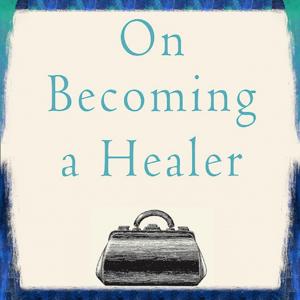


There is a widely held perception that being able to complete a test quickly is an indication of mastery when compared with those who need more time. As a result, it is often difficult to obtain accommodations on high stakes examinations, including the USMLE exams. Many students who request extra time because of a disability are denied accommodations and many other students who need it aren't eligible (e.g., English is a second language) or are inhibited from applying (e.g., Veterans, students from certain cultural backgrounds). But what does the evidence show? In this episode we interview an expert on the topic about a paper she authored titled Four Empirically Based Reasons Not to Administer Time-Limited Tests. The implications are profound because this is a problem we can fix, significantly improving high stakes assessment, equity, and inclusivity.
Stefan interviews co-host Saul about his experiences becoming a doctor with a learning disability.
This episode, first run in 2020, sets the stage for two that will follow – in August and September, with experts on the science of student learning assessment and its implications for the USMLE examinations. These will address questions such as: Does struggling with multiple-choice tests under time pressure predict anything about future performance in the clinical setting? Do time limits make tests more or less valid and reliable? What are implications of denying so many students accommodations on the USMLE examinations? And, most importantly, what can we do about the documented perverse effects of our current system of assessment on equity and inclusion and, ultimately on the quality and diversity of our physician workforce?
A recent New York Times article, titled "When Doctors Use a Chatbot to Improve Their Bedside Manner," should raise questions about why physicians are turning to artificial intelligence for help talking with other humans. While GPTChat can generate things to say, what comes out of AI is impersonal, as it knows nothing about the individuality of the doctor asking them, or of their patient, or of the relationship between the two.
Much of the joy of being a physician is forming personal, healing connections with patients. Are physicians unprepared to cultivate them? US Medical schools now teach physician-patient communication, with the help of standardized patients and various acronyms like "PEARLS" and "SPIKES," that are designed to guide clinician-patient interactions. But are we failing to help physicians find their own voice -- specifically, to form personal, relationship centered connections that they can draw on, especially during challenging times?
The narrative that getting patients with chronic pain off opioids makes them safer was reinforced by a recent paper that got substantial media attention showing an association with reduced suicide rates at the population level -- But other data, at the patient level, shows an increased rate of suicide.
Which is closer to the truth? And, if there's an answer, how does it apply to the individual patient? Is it ever okay to taper a patient when it's not a shared decision?
How do you talk about it, and does the power dynamic between doctor and patient affect such conversations? Are patients with opioid dependence too impaired "to know what's good for them"?
How does one navigate what can feel like a minefield: legal risks, angry patients, moral injury and, above all, wanting to do the right thing? Do the answers to these questions have broader implications for the physician-patient relationship and good doctoring?
(This episode refers several times to "engagement" and "boundary clarity." Check out episode #15 for an exploration of these concepts.)
We might assume that a patient who is chained to their hospital bed must be restrained for good reason, but our guest challenges that assumption in a published account of a man in shackles who is intubated, sedated, and paralyzed in the ICU. He and his co-author write that "Over-policing and mass incarceration have led to Black prisoners being disproportionately represented in jails and prisons. Those of us in positions of power may disregard the shackle, or not question its purpose, or even propose that it is justified." But how often do incarcerated patients actually try to escape while receiving medical care? Should a physician ask the guards to take off the shackles? What are the legal and ethical consequences of doing so? What is the right thing to do? What are the implications of not speaking up? We explore these questions and more.
In this second of a two-episode series on medical student mistreatment, we discuss its impact on burnout with a colleague who is working to change the culture of medical education and practice through research and leadership.
How is it that a healing profession -- medicine -- has such a deeply ingrained culture of harming its own? And what can we do about it? In this first of two back-to-back episodes on medical student mistreatment we consider the scope of the problem and attempts to confront it. We hear from one medical school that, with external funding, developed a program with online resources available to any school that are designed to foster discussion and self-reflection among all stakeholders: attendings, residents, students, and other health care professionals in the ecosystem.
We share here links to resources and papers discussed in the episode:
#MDsToo: A student mistreatment prevention curriculum for faculty members and residents - PubMed (nih.gov)
To access the UC Irvine video series
JAMA IM paper
Eradicating medical student mistreatment: a longitudinal study of one institution's efforts - PubMed (nih.gov)
Simon Auster, MD, was a family physician, psychiatrist, and medical educator who had extraordinary insight about practicing medicine but absolutely zero interest in drawing attention to himself. His students and patients had the good fortune of having him as their teacher or doctor but far too few have benefited from his wisdom. Today we discuss some of Simon's saying's -- "Simonisms" -- that are remarkable because they are not the usual cliches one hears. Some challenge us to reconsider our assumptions. We share and discuss them because we believe they can help many doctors, those in training, and those who train them find more joy and meaning in their work. You can learn about Simon in an online (open access) essay about his life, published in The Pharos, the journal of the AOA medical honor society.
Medical training and practice habituates physicians to a culture that narrows the possibilities we see for finding joy and meaning in our work. We often become efficient task completers, stuck in routines, and prone to burnout. Saul and Stefan discuss a set of questions that challenge physicians to look at their work and themselves in fresh ways, can be used for mentoring or teaching purposes, as prompts for reflective writing exercises, or to engage thoughtful colleagues (perhaps over a beer).
10 Questions (selected from On Becoming a Healer: The Journey from Patient Care to Caring about Your Patients)
Saul J. Weiner, MD; [email protected]
In October, the New York Times published the first of several articles about an eminent professor at NYU who was dismissed after his students complained that his organic chemistry class, essential to medical school admission, was too hard. Thousands of comments were unsympathetic saying, essentially, that students who couldn't hack it shouldn't be doctors. But is that really true? Saul and Stefan debate not only whether organic chemistry should be a gateway into medicine, but what else is questionable in how we train physicians -- and why it matters. Are medical students spending massive amounts of time jumping through hoops when they could be acquiring vital skills? What are some indicators that medical education needs substantial redesign?
From the publisher's feed
Ranked by our users in the last 21 days
90,529 Listeners
6,806 Listeners
43,324 Listeners
10,713 Listeners

8,424 Listeners

111,708 Listeners
56,380 Listeners
32,256 Listeners
598 Listeners
1,887 Listeners
16,310 Listeners
389 Listeners
6,339 Listeners

16,072 Listeners
8,478 Listeners