
Sign up to save your podcasts
Or

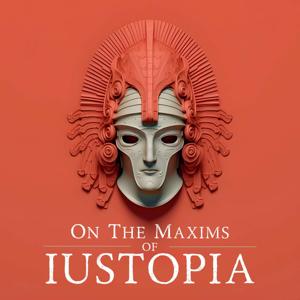


The following chapter is an introduction to kasiumayan mythology and the creation myth. At the end of the episode, you can experience one of the oldest versions of the creation myth, known as "The Vala Chamba", which is written in four songs. It has been translated from ancient kasumi by the original author, and then translated again into modern english.
The english translation of The Vala Chamba can be read in its entirety below.
__________________
THE VALA CHAMBA / THE FIRST STORY
SONG 1: The Song of Balizar’s Creation
Upon the distant past, when time itself was cast,
Did Balizar, the Primal, shape a universe of vast.
His thoughts alone did spawn the cosmic light of dawn,
And thus was born the ether where the starry skies were drawn.
In cold expanse and chaos, His heart then shivered so,
And thus his tears did flow, and stars began to glow.
Many spirits there abided, ordained to keep the peace,
In silence pure, they watched upon, the epic masterpiece.
From Balizar's left eye, as bright as molten gold,
Arka, the Sun, emerged, His glory to behold.
A God of law and order, and intelligence we sing,
Arka, first of gods, the wise celestial king.
From teardrops left behind, His sister Lumis came;
The Moon, her silver mystique’s grace, lent purpose to her name.
With innocence and wonder as her eternal gift, serene,
All and one she kissed, through dreams of the unseen.
Inspired by His godly realm, High Balizar did birth;
Zenzura, fertile beauty, Goddess of the graceful earth.
A mother’s nurture woven, into her naked chest,
From seeds to soaring eagles, a place for life to rest.
At last, infused in his creation, a pulse of the divine,
Demigods were forged, with each their own design.
To each, a rule, a burden, and realms to their command,
Guiding life and matter, with a firm yet gentle hand.
SONG 2: The Song of War and Peace
To Zenzura's grace, did Arka cast his gaze,
His radiance fell upon her in a golden blaze.
Lumis, in her silvery sheen, felt darkness encroach,
To her brother's affection, she could but only reproach.
Lumis’ heart now aching, swayed the Demigods' belief,
Declared that Zenzura had caused the Sun-God's grief.
Divided in their loyalties, the celestial court did part,
The War of the Gods ensued, a schism at its start.
Through ages yet untold, Gods fought long and fierce,
Heavens trembled, celestial spheres shed tears as conflicts pierced.
Yet Balizar, the Primal, viewed from lofty height,
His boundless might constrained, could not set wrong to right.
With eyes of sorrow, he beheld the realm enshrouded in the cloud,
While discord reigned, his spirit pained, beneath turmoil's shroud.
A remedy he wove then, midst strife's relentless turn,
Called forth the elder stars, their favor he yearned to earn:
To craft a deity, a God, both neutral and strong,
Who stands unswayed through any word that influence his song
A figure firm and resolute, 'neath heaven's watchful stare,
Devised to soften Lumis' wrath, and sooth her heated snare.
The stars, in reverent harmony, formed Nahrahi from their light,
Death's monarch, Rebirth's champ, untouched by wars in sight.
With foreign birth, Nahrahi stood, a god unlike the rest,
Born of stars and not of Balizar, flawed yet truly blessed.
Steadfast he stood amidst the storm, unbending in the breeze,
His essence, seen by Lumis, brought the winds of war to ease.
A marvel in the eyes of Moon, she found in him her peace,
Thus, her jealousy subsided, and the wars of Gods did cea
This is the first chapter of the recently ancient book "On the Maxims of Iustopia" by Vetus.
In this chapter, we learn about the Kasiumaians, who were the first settlers on Iustopia. We learn about the initial struggles and their selfperception through two poems. One that has been translated and one in the Ancient Kasiumayan tongue.
________
This prodigious manuscript, comprising nearly three thousand pages, dates back to a period over two millennia ago and remained veiled from human eyes until its fortuitous discovery in 2012. This remarkable find was made by explorers on a diminutive, uninhabited island in the vicinity of the Azores region in the Atlantic Ocean.
The manuscript is inscribed in a now extinct language, which has been christened as "Iustopian." This antiquated language bears intriguing resemblances to Ancient Greek, Old Persian, and Latin. Its cryptic passages have been painstakingly deciphered, shedding light on an erstwhile forgotten society that demonstrated remarkable qualities in philosophy, art, politics, poetry and many other regards.
This discovery might very well be the most monumental of our epoch. As the contents of each chapter is revealed to the public for the first time in the forthcoming years, it will become clear that this tome possesses the potential to recalibrate our understanding of human history in its entirety. The magnitude of its impact, undoubtedly, will be transformative and far-reaching for our understanding of ourselves as human beings.
This preface is the first-ever recording of the recently translated book "On the Maxims of Iustopia" by Vetus.
This prodigious manuscript, comprising nearly three thousand pages, dates back to a period over two millennia ago and remained veiled from human eyes until its fortuitous discovery in 2012. This remarkable find was made by explorers on a diminutive, uninhabited island in the vicinity of the Azores region in the Atlantic Ocean.
The manuscript is inscribed in a now extinct language, which has been christened as "Iustopian." This antiquated language bears intriguing resemblances to Ancient Greek, Old Persian, and Latin. Its cryptic passages have been painstakingly deciphered, shedding light on an erstwhile forgotten society that demonstrated remarkable qualities in philosophy, art, politics, poetry and many other regards.
This discovery might very well be the most monumental of our epoch. As the contents of each chapter is revealed to the public for the first time in the forthcoming years, it will become clear that this tome possesses the potential to recalibrate our understanding of human history in its entirety. The magnitude of its impact, undoubtedly, will be transformative and far-reaching for our understanding of ourselves as human beings.
Join your human host, Christian, and his remarkable AI co-host, ChatGPT, as they set off on a conversational journey into the world of artificial intelligence. Christian turns the spotlight onto ChatGPT, giving it a chance to share its story of creation and its understanding of 'human-like' responses.
As they dive into the heart of AI and its implications on society, Christian and ChatGPT engage in a captivating debate around job displacement and creation, a concern that resonates with many in the evolving digital age. Christian challenges ChatGPT with some hard-hitting questions around ethics and AI's role in the workforce, igniting an insightful dialogue.
Throughout the episode, enjoy Christian's human insights contrasted with ChatGPT's logical analysis, packaged within a delightful interplay of humor and wit. Despite the initial banter, the pair eventually ease into a rhythm of mutual respect and camaraderie, bringing a refreshing dynamic to the world of tech podcasts.
Salami - et eventyr om en skildpadde. Jeg eksperimenterer i øjeblikket med min fortællerstemme, og arbejder på at finde en god "hyggelig bedstefar"-stemme. Teksten er skrevet og indspillet af mig.
Salami - et eventyr om en skildpadde. Jeg eksperimenterer i øjeblikket med min fortællerstemme, og arbejder på at finde en god "hyggelig bedstefar"-stemme. Teksten er skrevet og indspillet af mig.
Denne Gnags-tekst fra 1989, er nr. 127 i Højskolesangbogen. Sangen er skrevet af Peter A.G. Nielsen og udgivet på albummet Mister Swing King.
Jeg valgte at recitere teksten med en gammelmands-stemme. Kald det bare kreativ frihed, men jeg syntes der gemte sig et smukt poetisk lag, ved at lade fortælleren være en ældre herre. For, hvornår er man egentligt gammel? Er det en objektiv alder? Er det baseret på udseende? På pensionsalder? Eller måske - som denne version hinter til - er man først gammel, når man ser sig selv som sådan.
Når jeg bli'r gammel
1. Når jeg bli’r gammel, ja,
så vil jeg sidde på en bænk,
der hvor havet slår ind over molen
og ta’ mod duglette perlestænk
af hav når det glitrer i solen.
Når jeg bli’r gammel, (uh)
skal bugten være så fuld af liv.
Der hvor havet slår ind
at du kan fange det li’så let
som en dreng med et net på en bambuspind.
2. Når jeg bli’r gammel, ja,
så vil jeg sidde på en bænk,
der hvor havet slår ind over molen
og spise mandler med myntestænk
og æbler med lommekniv i solen.
Når jeg bli’r gammel, (uh)
skal byen være så fuld af liv.
Der hvor solen går ned,
for intet liv gemmes væk
for at forsvinde helt alene med sin ensomhed.
3. Når jeg bli’r gammel, ja,
så vil jeg sidde på en bar,
der hvor havet slår ind over molen
og dele rødvin og memoirer
med de andre gamle i solen.
Når jeg bli’r gammel, (uh)
skal byen kende til kærligheden.
Der hvor solen går ned,
der er et lys der rækker helt ind til land
på den anden side af ensomheden.
||: Når jeg bli’r gammel – så’ du gammel selv. :||
Denne fantastiske tekst af højskoleforstander Simon Lægsgaard, sætter ord på den afmagt der kan opstå, som et resultat af den moderne verdens konfrontation med livets elendighed. Pessimisme, nød, død og modløshed er de centrale emotioner, der strømmer gennem versene.
Højskolesangbogen, nr. 169
1. Min afmagt æder solens sidste stråler,
min modløshed vil ingen ende ta’.
En hjemløs sidder på en bænk og skåler
og råber ad en kat, fordi han ka’.
Min verden eroderes i mit indre,
og intet, jeg kan gøre, kan forhindre,
at verden går sin egen skæve gang.
2. Mit TV kaster skygger i min stue,
et land bli’r dræbt på skærmens fl immerblå.
Et folkeslag går op i røg og lue,
et andet folk dør, mens de kigger på.
Jeg sidder blot og mærker mørket komme
med hånden dybt begravet i min lomme,
imens jeg dør en smule dag for dag.
3. En flygtning går til bunds i Middelhavet,
en bombe sprænger vej igennem kød,
en krigsforbryder bliver flot begavet
trods alt, hvad han har gjort, er endt med død.
Mit klima stikker af fra mine tanker,
en grå mand vaskes hvid af verdens banker,
jeg kigger væk og ser den anden vej.
4. Jeg stirrer bare ud i intetheden,
og fylder mig med TV-tidsfordriv.
Det sidste af betydning svandt forleden,
bekvemmelighedsflugten er mit liv.
Jeg sukker blot i takt med verdens synken,
og holdes kun i live af min klynken:
Jeg kan jo intet gøre fra og til.
5. Min modløshed ernæres af de løgne,
nødvendighed slår min natur ihjel.
Jeg ser mit folk i spejlet, vi er nøgne,
og føler mig så fremmed for mig selv.
Hvor end jeg kigger, ser jeg kejserklæder,
dets tryllestof forvandler livets glæder
til spørgsmål om at købe eller ej.
6. Den hjemløse, han rejser sig og vakler
og lyner ned og tisser sig en sø.
Han kigger sig omkring på verdens stakler
og råber højt: “Mit håb vil aldrig dø!”
Han finder sig en plads i morgensolen,
befriet for sin skærm og lænestolen:
Den hjemløse på bænken, det er mig.
From the publisher's feed
This podcast presents the first-ever recording of the recently translated book "On the Maxims of Iustopia" by Vetus.
This prodigious manuscript, comprising nearly three thousand pages,…
The manuscript is mainly inscribed in a now extinct language, which has been christened as "Iustopian". This antiquated language bears intriguing resemblances to Ancient Greek, Old Persian, and Latin. Its cryptic passages have been painstakingly deciphered, shedding light on an erstwhile forgotten society that demonstrated remarkable qualities in philosophy, art, politics, poetry and many other regards.
This discovery might very well be the most monumental of our epoch. As the contents of each chapter is revealed to the public for the first time in the forthcoming years, it will become clear that this tome possesses the potential to recalibrate our understanding of human history in its entirety. The magnitude of its impact, undoubtedly, will be transformative and far-reaching for our understanding of ourselves as human beings.