
Sign up to save your podcasts
Or



Send us Fan Mail
Overcoming Aphasia: The Journey of Graham Hall
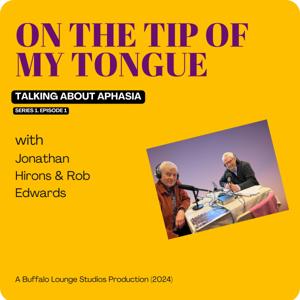
In this episode of 'On the Tip of My Tongue,' hosts Rob Edwards and Jonathan Hirons discuss aphasia with Graham Hall, an orchestral percussionist who suffered a stroke a decade ago. Graham shares his experiences dealing with aphasia, its impact on his career, and the challenges of regaining his speech and musical abilities. Despite losing the joy in playing music, Graham found fulfilment in music arrangement and preparation. The discussion touches on brain injury recovery, neuroplasticity, and the importance of continuous practice. Graham's story aims to raise awareness about aphasia and encourages support for individuals with brain injuries.
00:00 Introduction and Personal Story
00:34 Welcome to the Podcast
00:52 Understanding Aphasia
01:45 Graham Hall's Stroke Experience
03:20 Challenges in Music Post-Stroke
06:00 Reconnecting with Music
10:07 Living with Aphasia
14:31 Raising Awareness and Support
27:58 The Role of Family and Friends
29:55 Creative Coping Mechanisms
33:06 Conclusion and Resources
Before my stroke (2014) I used parody to comment/mock the situation in my musical life.
So I've been using that to describe my new life with aphasia. The lyrics are "contrafactum" (the substitution of text for another without change to the music) and comment on how I cope with brain damage and aphasia. The irony is that despite having musical anhedonia I'm still a musician!
https://grahamhall.bandcamp.com
Amongst other books , Graham recommends Musicophilia
[ https://www.oliversacks.com/oliver-sacks-books/musicophilia-oliver-sacks/]
Support the show
Support the show: Donate Now
This podcast is funded by https://www.bas.org.uk
To watch Jonathan’s film: https://tipofmytonguefilm.com
YouTube: https://www.youtube.com/@tipofmytonguefilm
Linkedin: https://www.linkedin.com/in/jonathanhirons/
Instagram: https://www.instagram.com/tipofmytonguepodcast/
X: http://x.com/buffaloloungeuk
The Tavistock Trust for Aphasia website
http://aphasiatavistocktrust.org
Send us Fan Mail
Surviving Stroke and Navigating Aphasia: Nigel's Story
This podcast episode titled 'On the Tip of My Tongue' features Rob Edwards and Jonathan Hirons discussing aphasia, a language impairment often caused by a stroke or brain injury. They interview Paula Fearnley and Nigel Cheffers-Heard to hear Nigel's journey of recovering from a stroke that resulted in aphasia. Paula shares her challenges as a caregiver, their struggles with the healthcare system, and Nigel's progress over six years. The episode explores the social and occupational difficulties faced by aphasia patients and highlights the importance of community support, exercise, and persistence in recovery. It concludes by addressing the need for better workplace integration for those affected by aphasia.
00:00 A Shocking Turn of Events
00:29 Introduction to the Podcast
00:47 Understanding Aphasia
01:25 Nigel's Stroke Journey
04:07 The Struggle for Diagnosis
07:42 Recovery and Rehabilitation
10:57 Challenges in Daily Life
25:16 Returning to Work
31:58 Supporting Stroke Survivors
36:57 Conclusion and Resources
Say Aphasia Exeter
Support the show
Support the show: Donate Now
This podcast is funded by https://www.bas.org.uk
To watch Jonathan’s film: https://tipofmytonguefilm.com
YouTube: https://www.youtube.com/@tipofmytonguefilm
Linkedin: https://www.linkedin.com/in/jonathanhirons/
Instagram: https://www.instagram.com/tipofmytonguepodcast/
X: http://x.com/buffaloloungeuk
The Tavistock Trust for Aphasia website
http://aphasiatavistocktrust.org
Send us Fan Mail
Emma Rich: Battling Aphasia and Advocating for Neuro Rehab
In this episode, Emma Rich, Charity Coordinator at Say Aphasia, shares her harrowing journey with severe brain injury and subsequent aphasia. She recounts her critical medical emergency, rehabilitation experiences, and the crucial role of neuroplasticity in her recovery. Emma discusses the importance of speech therapy, community support groups, and the uneven access to rehabilitation services. Advocating for better support and employment opportunities for brain injury and stroke survivors, Emma emphasizes the need for education, hope, and inclusive societal attitudes toward individuals with neurological conditions.
00:00 Introduction and Welcome
00:16 Emma's Brain Hemorrhage Experience
01:51 Recovery Journey Begins
03:45 Rehabilitation and Neuroplasticity
05:58 Challenges and Support Systems
10:21 Involvement with Say Aphasia
18:43 Employment and Inclusivity
29:34 Hope and Rehabilitation
31:54 Conclusion and Final Thoughts
Say Aphasia website: https://www.sayaphasia.org
Support the show
Support the show: Donate Now
This podcast is funded by https://www.bas.org.uk
To watch Jonathan’s film: https://tipofmytonguefilm.com
YouTube: https://www.youtube.com/@tipofmytonguefilm
Linkedin: https://www.linkedin.com/in/jonathanhirons/
Instagram: https://www.instagram.com/tipofmytonguepodcast/
X: http://x.com/buffaloloungeuk
The Tavistock Trust for Aphasia website
http://aphasiatavistocktrust.org
Send us Fan Mail
Overcoming Aphasia and the Importance of Carers
In this episode, the host reflects on past events and highlights key themes such as surviving a critical health incident in Las Vegas, the significant role of communication in recovery from strokes, and the challenges and strategies for living with aphasia. The episode also emphasizes the importance of unpaid carers, their economic contribution, and the need for perseverance in finding effective communication methods post-injury. The narrative draws an analogy to living in a foreign country to convey the experience of aphasia, highlighting its often hidden nature and the frustration of not being recognized for having a serious condition.
00:00 Reflecting on Past Episodes
00:10 A Harrowing Experience in Las Vegas
00:40 The Importance of Communication Post-Stroke
00:52 Meet Pete Cody: A Story of Resilience
01:05 Tips for a Healthy Brain
01:31 The Role and Impact of Unpaid Carers
02:07 Understanding Aphasia: A Hidden Disability
Support the show
Support the show: Donate Now
This podcast is funded by https://www.bas.org.uk
To watch Jonathan’s film: https://tipofmytonguefilm.com
YouTube: https://www.youtube.com/@tipofmytonguefilm
Linkedin: https://www.linkedin.com/in/jonathanhirons/
Instagram: https://www.instagram.com/tipofmytonguepodcast/
X: http://x.com/buffaloloungeuk
The Tavistock Trust for Aphasia website
http://aphasiatavistocktrust.org
Send us Fan Mail
Journey Through Aphasia: An Interview with Colin Lyle
In this episode of the On the Tip of My Tongue podcast, Colin Lyle, founder of the Say Aphasia charity, shares his powerful journey from experiencing a stroke and developing aphasia to actively supporting others with the condition. Colin talks about his stressful lifestyle that led to his stroke, the challenges he faced during recovery, and his efforts in starting the Say Aphasia charity. The episode covers the importance of speech and language therapy, the challenges of living with aphasia, and the mission to raise awareness and support for those affected. Colin’s inspiring story highlights the significance of community and peer support in navigating life with aphasia.
00:00 Introduction to Aphasia
02:22 Colin's Stroke and Initial Challenges
03:45 Speech and Language Therapy Journey
07:47 Founding Say Aphasia Charity
12:04 Expanding the Charity and Overcoming Hurdles
23:09 Future Plans and Reflections
31:33 Conclusion and Resources
Say Aphasia
The Say Aphasia Charity provides supportive drop-in groups for people with aphasia in the UK. It is run by people with aphasia for people with aphasia.
Aphasia is not a well known condition and so people with this communication disability can feel alone and isolated from their community.
Our aim is to provide continuous support in a social environment with people who are experiencing similar life changes.
Our charity makes a difference to people living with aphasia by:
#AphasiaAwareness
#StrokeRecovery
#SayAphasia
https://www.sayaphasia.org
Support the show
Support the show: Donate Now
This podcast is funded by https://www.bas.org.uk
To watch Jonathan’s film: https://tipofmytonguefilm.com
YouTube: https://www.youtube.com/@tipofmytonguefilm
Linkedin: https://www.linkedin.com/in/jonathanhirons/
Instagram: https://www.instagram.com/tipofmytonguepodcast/
X: http://x.com/buffaloloungeuk
The Tavistock Trust for Aphasia website
http://aphasiatavistocktrust.org
Send us Fan Mail
Support the show
Support the show: Donate Now
This podcast is funded by https://www.bas.org.uk
To watch Jonathan’s film: https://tipofmytonguefilm.com
YouTube: https://www.youtube.com/@tipofmytonguefilm
Linkedin: https://www.linkedin.com/in/jonathanhirons/
Instagram: https://www.instagram.com/tipofmytonguepodcast/
X: http://x.com/buffaloloungeuk
The Tavistock Trust for Aphasia website
http://aphasiatavistocktrust.org
Send us Fan Mail
Rebuilding Lives After Stroke: Colin Lyle's Journey with Aphasia
In this episode of the Tip of My Tongue podcast, Colin Lyle, founder of the Say Aphasia charity, discusses his personal journey with aphasia following a stroke 11 years ago. Colin shares details about his former stressful career, his initial denial about the severity of his condition, and the extensive speech and language therapy that aided his recovery. He explains the challenges he faced, including the realization that he could no longer continue his previous work. Colin also talks about the founding of Say Aphasia, the expansion of the charity, and the group's mission to support people with aphasia. He touches on the importance of peer support groups, the impact of stress on health, and the future direction of his charity. Colin highlights the need for more awareness and support for aphasia, revealing that many people still lack access to necessary speech and language therapy.
00:00 Introduction to Aphasia and Colin's Journey
02:22 Colin's Stroke and Initial Recovery
03:26 Challenges and Realizations Post-Stroke
07:47 Founding Say Aphasia Charity
11:50 Expanding the Charity and Overcoming Obstacles
23:09 Future Plans and Reflections
31:33 Conclusion and Resources
#AphasiaAwareness
#StrokeRecovery
#SayAphasia
https://www.sayaphasia.org
Support the show
Support the show: Donate Now
This podcast is funded by https://www.bas.org.uk
To watch Jonathan’s film: https://tipofmytonguefilm.com
YouTube: https://www.youtube.com/@tipofmytonguefilm
Linkedin: https://www.linkedin.com/in/jonathanhirons/
Instagram: https://www.instagram.com/tipofmytonguepodcast/
X: http://x.com/buffaloloungeuk
The Tavistock Trust for Aphasia website
http://aphasiatavistocktrust.org
Send us Fan Mail
Understanding the Role of the Royal College of Speech and Language Therapists
In this episode of the 'Tip of My Tongue' podcast, host Jonathan and Rob engage in a detailed conversation with Derek Munn, the Director of Policy and Public Affairs at the Royal College of Speech and Language Therapists. Munn shares insights on his role, which involves working with UK governments, managing legislative policies, and advocating for speech and language therapy services. He discusses the history and evolution of the Royal College, highlighting its formation, the role of speech therapists, and the importance of collaborative practices. The conversation also delves into the challenges of treating conditions like aphasia and the need for comprehensive communication support systems. Munn underscores the significance of raising public awareness about various speech and language disorders and the necessity of integrating speech therapists into multidisciplinary healthcare teams.
00:00 Introduction and Guest Welcome
01:19 Overview of the Royal College of Speech and Language Therapists
02:37 History and Evolution of Speech Therapy
05:02 Modern Speech Therapy Practices
06:22 Challenges in Speech Therapy and Aphasia Awareness
12:23 Workplace Inclusivity for People with Communication Challenges
21:41 Raising Awareness and Advocacy
31:37 Conclusion and Final Thoughts
https://www.rcslt.org
Support the show
Support the show: Donate Now
This podcast is funded by https://www.bas.org.uk
To watch Jonathan’s film: https://tipofmytonguefilm.com
YouTube: https://www.youtube.com/@tipofmytonguefilm
Linkedin: https://www.linkedin.com/in/jonathanhirons/
Instagram: https://www.instagram.com/tipofmytonguepodcast/
X: http://x.com/buffaloloungeuk
The Tavistock Trust for Aphasia website
http://aphasiatavistocktrust.org
Send us Fan Mail
Better Conversations with Aphasia: In-Depth with Dr. Suzanne Beek
In this episode, Dr. Suzanne Beek, Associate Professor of Language and Cognition at UCL, discusses her innovative therapy called Better Conversations with Aphasia. She explains how aphasia, a communication difficulty often resulting from stroke, affects conversations and the simple strategies her program employs to improve communication between people with aphasia and their loved ones. Dr. Beek also talks about the therapeutic techniques, including video feedback, that speech and language therapists use to facilitate better conversations. The conversation also highlights common communication issues, such as 'test questions,' and the need for greater awareness and support for speech and language therapy.
00:00 Introduction to Dr. Suzanne Beak and Better Conversations with Aphasia
00:13 Understanding Aphasia: Cognitive Effort and Communication Challenges
01:53 Dr. Suzanne Beak's Background and Research Focus
02:48 The Concept of Better Conversations
03:36 Implementing Better Conversations with Aphasia
05:57 The Role of Video Feedback in Therapy
07:55 Common Communication Challenges and Solutions
08:08 Addressing Test Questions in Conversations
10:37 The Emotional Impact of Aphasia
19:12 Raising Awareness and Media Representation
21:26 Different Types of Aphasia: Stroke vs. Primary Progressive Aphasia
34:09 Funding and Support for Aphasia Research
36:10 Training and Future Directions in Aphasia Therapy
41:18 Accessing Better Conversations with Aphasia
42:40 Conclusion and Final Thoughts
https://www.ucl.ac.uk/pals/research/language-and-cognition/language-and-cognition-research/better-conversations-lab
UCL Communication Clinic for people with aphasia and families
https://www.ucl.ac.uk/pals/ucl-communication-clinic
Twitter: https://x.com/BCAphasia
Support the show
Support the show: Donate Now
This podcast is funded by https://www.bas.org.uk
To watch Jonathan’s film: https://tipofmytonguefilm.com
YouTube: https://www.youtube.com/@tipofmytonguefilm
Linkedin: https://www.linkedin.com/in/jonathanhirons/
Instagram: https://www.instagram.com/tipofmytonguepodcast/
X: http://x.com/buffaloloungeuk
The Tavistock Trust for Aphasia website
http://aphasiatavistocktrust.org
Send us Fan Mail
Overcoming Aphasia: Pete Cody's Journey and Community Impact
In this episode, we talk to Pete Cody, a former Mondelez Cadbury salesman who became a peer leader for Say Aphasia after a serious car accident left him with aphasia. Pete discusses the challenges he faced transitioning from a high-paced sales job to living with a communication disorder, and how he found purpose by running aphasia support groups in Darlington and Bishop Auckland. He shares stories of personal struggles, the importance of community support, and the growth and impact of the aphasia groups he leads. The conversation highlights both the isolation that can come with aphasia and the hope and connection found through dedicated support networks.
00:00 Introduction to Pete Cody and His Journey
02:15 Life Before and After the Accident
04:15 Transition to Running Aphasia Groups
05:49 Challenges and Support in Managing Aphasia
07:44 Community Engagement and Growth
14:49 Future Plans and Aspirations
18:24 Concluding Thoughts and Reflections
https://www.sayaphasia.org
Support the show
Support the show: Donate Now
This podcast is funded by https://www.bas.org.uk
To watch Jonathan’s film: https://tipofmytonguefilm.com
YouTube: https://www.youtube.com/@tipofmytonguefilm
Linkedin: https://www.linkedin.com/in/jonathanhirons/
Instagram: https://www.instagram.com/tipofmytonguepodcast/
X: http://x.com/buffaloloungeuk
The Tavistock Trust for Aphasia website
http://aphasiatavistocktrust.org
From the publisher's feed
Jonathan Hirons's journey following his stroke and diagnosis of aphasia is both inspiring and informative. Here’s a summary of his experience and insights about…
Jonathan's Experience with Aphasia
1. Initial Incident:
In January 2019, while in a business meeting, Jonathan began to feel strange and soon realized he could not communicate effectively. His colleagues quickly called for medical help.
2. Medical Emergency:
He was rushed to University College Hospital, where scans revealed he had suffered a stroke due to a bleed on the brain. He spent five nights in the hospital and was diagnosed with aphasia.
3. Impact on Daily Life:
- Jonathan struggled with basic tasks such as speaking, reading, and writing.
- He had memory issues, recalling only his postcode but not his full address or other personal information.
- He faced challenges in understanding spoken language but could still sign his name.
4. Support from Family:
His wife, Ann, played a crucial role in his recovery:
- She encouraged him to read aloud daily and used flashcards to aid in word recognition and writing.
- This early intervention was vital for his rehabilitation.
5. Progress Through Therapy:
With the help of speech therapy, Jonathan made significant improvements:
- He regained much of his ability to read and write, although he still experiences difficulties, especially when tired.
6. Advocacy and Awareness:
- Jonathan has turned his experiences into a creative outlet by producing films, including "On the Tip of My Tongue" and "What is Aphasia?" These films aim to educate others about aphasia and its challenges.
- He actively shares his story to raise awareness about aphasia as a hidden disability and the ongoing need for support beyond initial rehabilitation.
Understanding Aphasia
Aphasia is a language disorder that affects communication abilities, including:
- Speaking: Difficulty in forming words or sentences.
- Understanding: Challenges in comprehending spoken or written language.
- Reading and Writing: Problems with reading text or writing coherently.
Key Takeaways
- Aphasia is often a result of brain damage, commonly from strokes, and can significantly impact daily life.
- Early intervention and support are crucial for recovery.
- Awareness and education about aphasia can help reduce stigma and improve support for those affected.
Jonathan's story highlights the resilience of individuals facing such challenges and the importance of community support in their recovery journey.
Copyright © 2025 Jonathan Hirons/Buffalo Lounge Studios All Rights Reserved.
This film/video/podcast is protected by copyright law. Unauthorized reproduction, distribution, or transmission of this material is prohibited.
For permissions or inquiries, please contact [email protected]