
Sign up to save your podcasts
Or



by Arnie Lal
In this episode, I explore the fascinating case of the copiale cipher, including its origins, method of encryption, method of decipherment, and historical significance. This cipher baffled cyptographers for centuries, and only with the power of computer analytics was this beast of a cipher able to be solved. To learn more, I hope you listen to my podcast, which goes much more in depth into all of these issues. If you desire even more information, I have included below links to various websites that I used as my sources.
by Kyle Schroeder
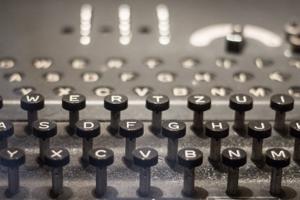
Almost everyone has heard of the infamous German Enigma machine, but only a handful know about the bigger and better British equivalent known as Typex. Typex was a highly sophisticated cipher machine used by the British military during World War II, which, unlike Enigma, was never cracked. In this episode, we explore the origin and development of the machine, dig into the mechanisms that make it work, and explain why it was so secure. In addition, we examine its evolution over time, as well as its impact both during and after the war.
References
For More Information:
http://www.cryptomuseum.com/crypto/uk/typex/index.htm
http://chris-intel-corner.blogspot.com/2014/11/the-british-typex-cipher-machine.html
http://www.cryptomuseum.com/crypto/uk/typex/files/kelly.pdf
https://www.mitel.com/en-us/articles/encoded-communications-world-war-ii
Music:
All music was obtained from Purple Planet Music
https://www.purple-planet.com/
“Fearless”: https://www.purple-planet.com/inspirational
“Tranquility”: https://www.purple-planet.com/gentle
“Far and Wide”: https://www.purple-planet.com/chilled
“Awakening”: https://www.purple-planet.com/chilled
“Dream the Dream”: https://www.purple-planet.com/hope
Sound Effects:
The typewriter sound effect was obtained from Sound Jay Free Sound Effects https://www.soundjay.com/typewriter-sounds.html
Image:
Typex on display at Bletchley Park, photo by Tom Murphy VII
by Leah Strickland
The 1903 Sir Arthur Conan Doyle short story “Sherlock Holmes and the Dancing Men” features an unusual cipher. In this podcast, I give a summary of the story, so listeners will understand why Sherlock solving the puzzle is important. I then explain how Sherlock was able to solve the Dancing Men cipher. He was able to solve it by using frequency analysis. I go on to explain how Sherlock solving this cipher is unrealistic because of more messages needed to be sent for frequency analysis to be more accurate. I then talk about how the dancing men cipher is similar to the Gold Bug cipher created by Edgar Allan Poe. I then describe some similarities between the two authors and their ciphers. I finish off my podcast by giving an example of popular cryptography in modern times.
I would like to thank Xiaoyu Dong and Xin Yi Zhang for helping me edit my script.
Sources
Illustration by Sidney Paget.
by Elton Song
Chinese, different from western languages, is a syllabic language without an alphabet. How can we create a cipher without an alphabet? How could ancient Chinese hide their secrets and send encrypted messages? Want to learn about the most difficult ciphers to be decrypted in the world? Come into this episode to enjoy the story of General Qi and his amazing Fanqie code, and learn about the profound Chinese history and language.
Resources:
Encryption/ciphers/codes in Chinese by Ethan Heilman
Fanqie by Wikipedia
中古漢語語音教程-17 反切、韻圖 by biopolyhedron [video]
Audio:
BEHIND THE GREAT WALL/Qi Jiguang Documentary by Zhongguo Wu Xue [video]
戚繼光 明朝船堅利炮,福建海戰全殲倭寇,威懾日本300余年 by Lucinda Mueller [video]
Music:
不能说的秘密(live)by JJ Lin [video]
童言无忌(不插电版)by 王以太 [video]
Image: General Qi Jiquang, Wikimedia Commons
by Kolapo Dairo
In this episode of One-Time Pod, we dive into the history of invisible ink. Dating back to over 2,000 years ago, invisible inks have been used for secret correspondences and espionage during wars. In this episode, we explore the types of invisible inks, how it’s used, and its role in history. Overall we learn about the practical applications of invisible ink, and its significance in secret communication.
Audio Sources:
Content Sources:
Image: Still from National Treasure (2004)
by Colin Snell
A dead man, found on the first of December in 1948 on Somerton Beach in Adelaide Australia, has baffled cryptanalysis and mystery buffs alike for the past decades. Who was he and how did he get there? Was the Somerton man a victim of the onset of the Cold War, a battle in the shadows? This mystery man appears to have had a life unseen. The cause of death pointing to poisoning and a book of ominous Persian poems all cast a dim light on his demise. An unsolvable cipher and hidden writing, still yet to be decrypted. Listen to discover the intrigue of the perfect cold case, the Somerton Man.
Work Cited
Orange Sounds (Music)
Image of the Somerton code via Wikimedia Commons
by Xinyi Zhang
This episode explores the arguably most complex hand-generated cipher: the VIC cipher. Curious to know how? Tune in to learn about the mechanics of the VIC cipher, the breaking of this cipher and its role in history. It all starts with little Jimmy dropping his nickel…
References:
Columnar Transposition Cipher. (n.d.). Retrieved October 30, 2018, from
Dankovich, R. (2014). Handwritten Russian Cipher Stumps FBI. Retrieved October 30, 2018, from http://derekbruff.org/blogs/fywscrypto/historical-crypto/handwritten-russian-cipher-stumps-fbi/
Hollow Nickel/Rudolph Abel. (2016, May 18). Retrieved October 30, 2018, from
Khan, D. (2008, July 01). Number One From Moscow. Retrieved October 30, 2018, from
Simmons, G. J. (2011, May 10). Transposition Cipher. Retrieved October 30, 2018, from
Straddle Checkerboard Cipher. (n.d.). Retrieved October 30, 2018, from
Music Sources:
Special thanks to Jerry Ji, JoJo Dong, and Leah Strickland for script edits.
by Carson McRae
In 1982, homeowners David and Anne Martin were in the process of renovating a chimney when they discovered the bones of a pigeon inside. Attached to one of the legs was a red canister that contained an unusual message that was, for the most part, unreadable. After passing the message off to various sources, it was deemed that the message had been sent from a British soldier, Sergeant W. Stot, who was gathering intel behind enemy lines for the D-Day invasion of June 6th, 1944.
Join us on this episode of One-Time Pod to explore the mystery behind this couple’s discovery. We will take you through the details of the story, explore the narrative of D-Day, hear from an expert on carrier pigeons, and look at potential encryption methods for the message.
Special Thanks:
Voices:
Sources:
Audio:
D-Day Radio Bulletin
Historical photograph via Wikimedia Commons
Welcome to Season 2 of One-Time Pod, a podcast on the history of cryptography produced by students in Derek Bruff’s first-year writing seminar at Vanderbilt University. Each episode considers a different code or cipher, how it works, and why it’s interesting.
For more on Dr. Bruff’s first-year seminar on cryptography, and for all episodes from Seasons 1 and 2 of One-Time Pod, visit the course homepage: derekbruff.org/blogs/fywscrypto/. Or add the RSS feed to your favorite podcast app.
Intro music: “To Be Decided,” Mystery Mammal, CC-BY
by Maria Sellers
Was Shakespeare really Shakespeare, or was there another author behind the plays? Many scholars have reason to believe that there was another writer who used the actor from Stratford as a pen name. Sir Francis Bacon is considered by some to be the most likely candidate for this mystery author, and a cipher that Bacon invented in his youth may be the key to proving it. Some claim that Bacon used his bi-literal cipher in the handwritten works of Shakespeare to secretly sign his name to his work. A few even believe that his cipher hides an entire hidden history. So, what were Shakespeare’s secrets? Listen to find out. Also, check out the links below for more information on Sir Francis Bacon and his ciphers.
Works Cited
Holden, Joshua. “Cipher Challenge #3 from Joshua Holden: Binary Ciphers.” Princeton University Press Blog. The Trustees of Princeton University, 23 Jan. 2017. Web.
derekbruff.org/blogs/fywscrypto/…s-greatest-works/
From the publisher's feed