
Sign up to save your podcasts
Or

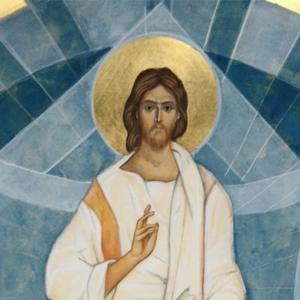


The Church worldwide loves St. John of Kronstadt… but do we love him for plainly speaking the truth? I can only imagine if parish priests today gave a homily like this. Most would get a lot of complaints from their parishioners, maybe even yelled at during coffee hour, and the bishops might hear of it, too. God grant us humility to accept the bitter medicine meant to heal our souls!
St. Nikolai Velimirović offers comments on the seven phrases Christ spoke on the Cross, helping us go deeper in our understanding and love for Christ.
St. Ephraim offers a dynamic commentary on this famous story (Matthew 26:6-13) that the Orthodox Church reads each year on Holy Wednesday. Presenting detailed conversations between the sinful woman, the devil, Simon the Pharisee, and Christ, this homily is faithful to Scripture yet expands our understanding and experience of this most instructive example of repentance and love.
St. Tikhon of Zadonsk, one of the most beloved Russian saints of the past few centuries, exhibits his apostolic love and zeal in these brief exhortations. Always remember the sufferings, the love of Christ Jesus.
0:00 Beginning
0:11 Remembrance of the Divine Passion
3:16 Imitation of the Life of Christ
This short excerpt from Elder George's treatise discusses the characteristics of experiences of theosis, union with God, the true purpose of each and every human being. Elder George (Kapsanis), former Abbot of the St. Gregorios Monastery on Mount Athos who reposed in the Lord on Pentecost 2014, presents the Orthodox understanding of Theosis and the essential path towards receiving this divine gift.
This short excerpt from Elder George's treatise explains the qualifications for attaining the true purpose of each and every human being: union with God, or Theosis. Elder George (Kapsanis), former Abbot of the St. Gregorios Monastery on Mount Athos who reposed in the Lord on Pentecost 2014, presents the Orthodox understanding of Theosis and the essential path towards receiving this divine gift.
St. Luke teaches: "With this deep and fiery repentance the force that prevented her from entering the church receded and she finally entered. There she fell before the life-giving Cross of the Lord and did not get up until the end of the service. Tears flowed from her eyes, from the eyes that once seduced men and are now cleansed with wholehearted and fervent repentance."
In this letter, Fr. Seraphim expresses his reaction to unhealthy approaches to Blessed Augustine, the great bishop and Church father of Africa, and shares a more personal side of his own experience with Augustine and his works: "I feel in Augustine the love of Christ."
St. Seraphim of Sofia discusses an important aspect of the Ecumenical Movement in the 20th century: Freemasonry. Presenting to the Moscow Pan-Orthodox Congress of 1948, which included representatives from nearly all autocephalous Orthodox churches, St. Seraphim highlights the well-known Freemason, John Raleigh Mott, the main promoter of "unity" among separate Christian groups. Mott spearheaded the 1910 World Missionary Conference in Edinburgh and the first meeting of the World Council of Churches in 1948. Mott helped send Protestant student missionaries with the YMCA to evangelize Orthodox countries and for his ecumenical efforts won the Nobel Peace Prize in 1946. St. Seraphim understands that ecumenical efforts only serve to blur the boundaries between the One, Holy, Catholic, and Apostolic Church (the Orthodox Church) and other sects claiming to be part of the Church. Such blurring draws people away from the only place, as St. Seraphim teaches, men can become saints: the Orthodox Church. Unfortunately, despite St. Seraphim's warning of the sinister nature and dreadful consequences of the Ecumenical Movement for Holy Orthodoxy, the Patriarchate of Moscow joined the World Council of Churches at its Third Assembly in New Delhi in 1961 and has been one of its most active members ever since.
Elder Epiphanios Theodoropoulos (+1989) was a celibate priest who lived his whole life in the world. “He didn’t retreat to Mt. Athos which he loved dearly, but lived in the city of Athens...." Absorb the wisdom of this faithful priest of our times.
The Elder said that to take care of people is a great virtue, the practice of which cannot be suspended during fasting periods. However, at the table there will necessarily be offered fasting foods. With certain limits they can be better prepared or more delicious if we want to honor someone, but they must of necessity be for fasting.
Nowhere in the Gerontikon does it praise an ascetic or display them as an example because they abolished the fast for the sake of hospitality. What it does mention is that certain holy hermits abolished their personal ascetic fasting, which was much more austere than what the Church required.
From the publisher's feed
Ranked by our users in the last 21 days
3,421 Listeners

6,758 Listeners

838 Listeners
869 Listeners
569 Listeners

1,328 Listeners

188 Listeners

19 Listeners

59 Listeners
1,487 Listeners

38 Listeners
192 Listeners

15 Listeners

64 Listeners

54 Listeners