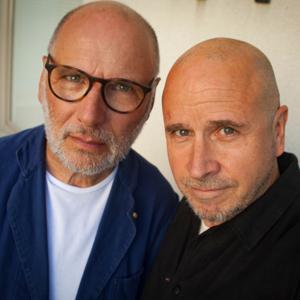
Överlevarna

Överlevarna

By ÖverlevarnaEducation
Download on the App Store

Överlevarna episodes

  • Nakba #23 - Khalid Jameel Saed Mosmar
    1948
    “Men, women, children, and the elderly arrived in Nablus by truck. They had been expelled from villages and towns in the surrounding area. The refugees were housed in a school. Inside, many families were gathered in one large hall.
    The hall was divided with pieces of cloth so that each family was given a few meters of space. It was horrible. The children cried, the women did not know what to do, and the men were very angry.
    Later it became even worse. First the rain poured down, and then the snow came. To me, snow was something wonderful. I stood in my room and looked out the window. I saw a boy from the camp’s daycare playing in the snow. Shocked, I saw that he was barefoot. After taking a few steps, he collapsed and began to cry.”
    1950
    “Of my nine siblings, I had the darkest skin in the family. That is why I was called ‘the brown one.’ My skin color was considered beautiful. My grandfather was the only person in the Nablus district who owned a radio. His friends used to gather in his house to listen to it. I would sneak in as well to listen.
    I was amazed at how large the radio was, like a cabinet. I tried to look for the announcer behind it. All I found were some tubes and a large battery connected to the radio. They listened to a radio station broadcasting from Cairo, Egypt. They played music from Sudan, which I loved to listen to and sing along with—something my grandfather noticed.
    ‘These are your relatives,’ my grandfather said, laughing.”
    1967
    “Abdel Nasser promised that we would be able to return to Palestine. We believed him; he was like a mountain to us. But the Israelis defeated him. We realized that we had to organize ourselves. At that time, I was studying at university in Cairo. I secretly joined the Palestinian liberation struggle.
    We formed small cells of three to five people so that we could join Fatah. Some of us received our military training in Syria.”
    1968
    “Israel attacked the PLO camp in al-Karama, in Jordan, under the leadership of General Moshe Dayan. Dayan regarded the attack as a picnic and invited Israeli journalists to witness the victory.
    They attacked with 15,000 men, fighter jets, and artillery. The goal was to kill all the fedayeen in the al-Ghor area, where Karameh is located. But together with the Jordanian army, the Palestinian fighters managed—for the first time since 1967—to defeat the Israeli army. For me, it was a turning point.”
    1 hr 15 min
  • Nakba #22 - Mahmud Khalil ‘Abdallatif
    1946
    “I grew up in Akka. We had a shop where my father sold timber. I was part of a scout band that played music in the streets. When we passed by my father’s shop, he would come out and watch. When he caught sight of me, he would start to cry.
    In addition to the shop, my father had a fine carpentry workshop. He also owned a piece of land where he grew bananas, figs, and grapes. We lived a very good life.”
    1947
    “The prison in Akka was located inside the citadel. Fourteen members of the Stern Gang were imprisoned there. They had been sentenced to death by the British.
    In 1947, I saw how Irgun members, disguised as British officers, managed to get into the prison. That was the first time I saw Jews carrying weapons. They freed the prisoners using dynamite. That was when I understood that the Jews were the rulers of the country, and that we, the country’s inhabitants, were their slaves.”
    1948
    “We traveled to Beirut because two of my brothers were looking for women to marry. Then al-Nakba broke out, and we were stuck there. There were no marriages for my brothers.”
    “To live is a right, but not to kill.”
    59 min
  • Nakba #21- Hisen Farea al-Sabour
    1936
    “I don’t know exactly what year I was born. We didn’t use dates or years. We were illiterate. We used to say that someone was born the same year someone else died.”
    1940
    “My mother died when I was three or four years old. I don’t remember her. My father took several new wives. He was a shepherd, so he was away from home for long periods. His new wives beat me. They cursed my mother, even though they had never met her.
    Once, when we went to fetch water from a stream, his wife grabbed me by the neck and pushed my head under the water. She tried to drown me. Her brother appeared and started beating her. He saved my life. I survived by God’s grace.
    I never told my father how badly his wives treated me. That would only have made my situation worse. My sister and I lived as if we were orphans. I was never taught to read or write, but I memorized the entire Qur’an by heart.”
    1948
    “I was married when I was twelve years old. I didn’t know him. I didn’t want to marry, but my father forced me. My husband often beat me, even while I was eating. My father will never see even a glimpse of heaven for what he did to me.
    We lived a normal and simple life in Palestine until the Jews came to our village and killed our neighbors. It happened at night. They shot many people, including children. I heard gunfire and screaming.
    We fled, but the Jews pursued us. My father carried me on his back and ran for his life. Many of us were fleeing. We ran for two hours up into the mountains, where we hid in caves. We hadn’t had time to take any food or water with us. We had nothing. I can still feel the bitterness today.
    After a few hours, the Jews withdrew and we were able to return. Some of the village men buried the dead. We sat in our houses and waited, without food or water. When the Jews returned, we fled back into the mountains.
    This happened several times.”
    1967
    “We were forced to leave the country and came to Jordan. First we lived in al-Ghor in the south, then they built a camp for us in the north. After that, we continued moving from place to place. Finally, we came to Husn refugee camp, north of Amman.
    Now I have a Jordanian passport. We bought a piece of land and built this house. What more can we do?
    I don’t know who is responsible for my situation. Maybe our leaders, I don’t know—only God knows. We don’t have enough knowledge to judge it. They took every piece of the land.”
    1 hr 1 min
  • Nakba #20 - Lee Mahmud Musa
    1943
    “My father was a simple man who worked in all kinds of construction jobs. He was the kindest person in the world. Every time my mother chased us, he yelled at her. My father also had a cart from which he sold boiled corn. Sometimes I went with him. The cart was set up about fifty meters uphill from the clock tower in Jaffa.”
    1948
    “My father was cycling uphill when he was shot in the arm. But he had no plans to leave Jaffa. My mother panicked and screamed at us:
    ‘The Jews are killing us! Run!’
    She grabbed my brother and me and we ran along a dried-up riverbed. Many people were fleeing. We reached Nahalin, north of Lydda. There we stayed with my maternal grandparents and uncles. It was hell. The first evening we had to go out and beg for bread. We slept on mattresses on the floor—no beds. That was what it meant to be a refugee. Everyone lived like that. Wealthy families wouldn’t take us in.
    ‘Go to hell,’ they said.
    We stayed in Nahalin for two years. During that time, I didn’t go to school.
    1950
    “With the help of the UN, we returned to my father in Jaffa. My father was at home when we arrived. We hadn’t seen each other for more than two years. He was the same as ever.”
    1956
    “I stopped going to school when I was thirteen and started working in a shoemaker’s shop run by some Jews from Iraq. They were all communists. They discussed politics and I listened. That’s how I got my political education.
    When Nasser came to power in Egypt in 1952, the Iraqi Jews celebrated, because Nasser was against imperialism. When Israel attacked Nasser in 1956, they opposed it. They wanted Israel to support the Egyptian people in order to build peace. That’s when I understood that the conflict had nothing to do with religion.
    As long as a Jew criticizes Zionism, he has a human heart. As long as a Muslim criticizes Saudi Arabia, he has a human heart.”
    1967
    “After a few years I left the shoemaker’s shop and joined the communist youth movement. The members were both Jews and Arabs. A party comrade helped me get a job as an elevator mechanic. I repaired elevators at a hospital in Jaffa. On the first day of the war, my comrade was fired. Then I quit as well.
    I started working at a hotel in Eilat, but the police forbade me from working there. In Tel Aviv I worked at a restaurant, where I was called a dirty Arab. I began calling myself Moishe to avoid trouble.
    Eventually I decided to emigrate to Sweden. My mother tried to stop me at any cost. But my father came into my bedroom on the last night and asked if I had enough money. He wanted to give me money, even though he needed it himself.” (starts crying)
    1969
    “I went to visit my parents in Jaffa. I rented a car and took my parents and siblings to Tiberias. I planned to take them to the Golan Heights, but I changed my mind and turned back. Instead, we went down to Lake Tiberias and ate fish at a restaurant. I gave back what little I could.
    When I was about to leave, I was stopped at the airport. I ended up in a room with four intelligence soldiers who interrogated me for an hour. They cursed, kicked, and beat me. They wanted to know why I had been in the Golan Heights. Meanwhile, the passengers were sitting on the plane waiting. When I boarded, people stared at me as if I were a terrorist.”
    1973
    “I went to Israel to attend one of my sisters’ weddings. At the airport I was taken to a room where a man explained that they were arresting me because I had a gun, which was of course a lie. Then the military arrived, blindfolded me, and drove me to a prison. In prison I was interrogated every day. They wanted to know which Palestinian movement I belonged to. When I refused, they started kicking me. They stripped me naked and beat me until I collapsed on the floor.
    ‘What are you doing here, you dirty Arab?’ one of the guards shouted, pressing his boot against my face.
    I was imprisoned for fifteen days. I missed my sister’s wedding. My return ticket had expired, so I had to buy a new one.”

    1 hr 18 min
  • Nakba #19 - Kazim al Zu‘ubi
    1943
    “Palestinian Jews and Arabs lived side by side, like one family. Arabs married Jews and Jews married Arabs. They were our friends, our relatives—we protected them.”
    56 min
  • Nakba #18- Fatima Abdurahman Steti
    1944
    “My father had a fairly large shoe shop in Haifa. We also owned real estate. We were very well off financially. As a child, I never noticed any tension between the Jews and us. We lived next door to a Jewish family. When they celebrated Passover, they gave us matzah, and when we celebrated the New Year, we gave them maqluba.”
    - Did you attend the same school?
    ”No, we had our school and they had theirs.”
    1948
    “Haganah fired at us from Mount Carmel. Their snipers killed many of our people, many young men. They also shelled us with artillery. Their side was better organized than ours. They also had better weapons. We stayed indoors so as not to be killed.
    After a week, rumors spread that other cities had been attacked, that men had been shot and women raped. We feared for our lives.
    Some fled on British ships toward the Lebanese border. We traveled by taxi to ‘Akka, a twenty-minute drive, to stay with relatives. We left behind our beautiful furniture. My mother was pregnant, yet she left all the baby clothes behind. My parents were convinced we would be able to return after a few weeks. There would be peace and two states would be established.
    After Haifa fell, Haganah began shelling ‘Akka with artillery. When the bombardment came closer and closer to our house, it eventually became too dangerous to stay. My mother put on a belt with money. My father arranged a car and we drove north. We crossed the Lebanese border at Naqoura and continued toward Beirut. We were housed in a camp where pilgrims had previously stayed. We received food from the UN and other aid organizations. We cried constantly because we had lost our homeland.
    We stayed in Beirut for four months. Then we rented a car and drove to Homs in Syria. My aunt and her husband lived there.”
    - Where did you get money from?
    “My father had an account at Barclays Bank in Haifa.”
    “Of course I am hopeful. The Turks were with us for 400 years before they were forced to leave. Years later, I visited my birthplace, Haifa. I felt guilt. We should not have left the country so easily. We should not have done that.”
    54 min
  • Nakba #17 - Hayat Dawud Muhammad al-Qawasmi
    1941
    “The house I grew up in was located on one of Jerusalem’s main streets. The façade was white and the door was blue. When you entered the house, you went down a few steps and arrived in a large room. On the ground floor there was a living room on the right, and on the left there were three bedrooms: one for my parents, with a balcony; one for my brother; and we three sisters shared the third bedroom. Then came the kitchen.
    We owned three houses in Jerusalem. The house in Baq‘a was built by my father with his own hands. It was three stories high and had six apartments. He built the house for us four children. When it was finished, the British confiscated it. We also owned a fourth house in al-Khalil (Hebron).”
    1947
    “My family lived in the neighborhood of Qatamon in Jerusalem. We lived in a house that we owned. It was me, my two sisters, my brother, and our parents. We were a very happy family.” (begins to cry)
    “I still feel the pain in my body. I miss our house and my school. It is a tragedy. How would you feel if you were thrown out of your home?
    My father owned a printing press and a gas station. He was known throughout Jerusalem for his generosity. People who had problems with the British occupiers often turned to him for help. One day, a woman from Egypt visited us. She explained that she was looking for someone who could show her around Palestine. She needed a car, a driver, and a hotel. My father offered her his car and his driver.
    ‘My house is your hotel,’ he said.
    The woman stayed for thirty days. The driver showed her around Palestine. Before she returned home, she gave my father her name and address.
    ‘Look me up when you come to Egypt. I will receive you,’ she said.”
    1948
    “The Israeli soldiers were armed, and they kicked us out of our home in Jerusalem. It happened during the day. We left in one of our ten cars, a large Mercedes. My father drove from Jerusalem to our vacation house in al-Khalil. There were five of us in the car: my parents, my two siblings, and me. We were not allowed to take anything with us, only the clothes we were wearing. I was forced to leave my dolls behind.
    Through the car window I saw men, women, and children fleeing on foot—some were barefoot. Some were walking, others running. Dead bodies were scattered everywhere.
    When we arrived at the house, my mother cooked food for us, and everything felt fine. I had other clothes and dolls there. My father said we would only stay one week in al-Khalil and then return to Jerusalem.”
    • What happened after one week?
    (laughs)
    “After one week, the Jews had occupied Palestine. My father lost the house, the printing press, nine cars, and the gas station.
    My father organized the young men in al-Khalil into a resistance movement. He supplied them with food and clothing. On one occasion, he parked his car in a large field. The young men were standing there waiting for him. He had filled the car with weapons.
    ‘Come on, now we do it—start fighting,’ my father shouted.
    My father’s men fought the Israelis. They captured some villages and areas, but in the end they were defeated by the Israelis. All the Arab leaders and armies betrayed us. Two months later, the Jews had won.”
    2 hr 12 min
  • Nakba #16 - Fayza Abed Bayrakji
    1946
    “My father owned a lot of land where he grew grapes, figs, olives, and other crops. We also had livestock. Many people worked for us during the harvest season. My father died when I was three years old.
    I remember the olive harvests. The men stood on ladders picking olives, and the ones that fell to the ground were gathered by the women and carried back to the village.
    There were no Jews living in our village. They lived in the neighboring town of Nahariya. There was a doctor there whom one of my sisters-in-law visited. She underwent a minor eye operation there. We had many Jewish friends in Nahariya: Shlomo, Auerbach, and Jitzchak. They worked together with my brothers. They were Palestinian Jews, not like the Jews who came from Russia and Poland.”
    - Did you go to school?
    “No, we did not have a school for beginners in the village, only for older children. There were only four girls in my village who studied.”
    1948
    “The Israelis demanded that the village mukhtar surrender. If he did not, we would be expelled. Auerbach, my brothers’ Jewish friend, advised us not to leave the village. But if we were forced to flee, he promised he would help us return.
    When the mukhtar refused to surrender, the Israelis attacked the village with heavy artillery. The men defended the village for a week against the Israeli army.
    One of my brothers sought out Auerbach to ask him to keep his promise. He objected, saying that because they had fought the Israelis for a week, his promise was no longer valid. The Israelis killed 45 people, mostly elderly people and women.
    Kuwaykat was surrounded and eventually fell. The Israelis gave us safe passage eastward so that we could flee in that direction. We fled during the night. Young resistance fighters returned the next day and found elderly people killed in the streets. Their bodies were dragged to the well and lowered into it so that wild animals would not eat them. One old man was found killed in his home. He was buried outside the house.
    We walked on foot to the other side of the Lebanese border. After a month, some kind of ceasefire was declared, so we returned to Kuwaykat to collect our belongings. But the Israelis broke the agreement, and we were forced to flee a second time. Once again, we fled on foot. Again, we arrived in a village on the Lebanese side of the border.
    My brother bought three fig trees from a man so that the Lebanese would not say that we had stolen their trees. The trees became our homes. A few years later, we moved to Beirut and to Burj al-Barajna. At that time, it was nothing but desert. I have lived here ever since.”
    - Who bears responsibility for your situation?
    “It is like the story of Yusuf in the Qur’an, where his brothers conspired against him. Arabs, Jews, and the English—all of them conspired against us.
    In the past, we lived with dignity and honor in our land. We used to invite Jews into our homes and share our food with them.
    If Israel were to open its borders, I would want to return and work the land. I want to sit in my own country and build my own house. I do not need electricity. I have hidden an antique oil lamp that I could take with me. I would rather be eaten by snakes than remain here. Lebanon is not our land. We want our land back.”
    49 min
  • Nakba #15 - Sara Aydi
    1937
    “I was an only child. My father died when I was four years old. My mother remarried his cousin. They had four more children.”
    1947
    “I got married when I was fifteen. My husband, Mahmud, was eighteen. It was shortly before al-Nakba.”
    1948
    “Israeli aircraft bombed the houses in our village. My mother was at home cooking and baking bread. She closed all the doors. Our house survived, but the neighbors’ houses were hit. Luckily, no one was home.
    My mother’s new husband and the other male relatives were not at home. They had worked in the fields the day before and slept outdoors, under the open sky.
    The women took us children to the caves outside the village. We spent the night there. Names were carved into the cave walls.
    A few days later, fighting broke out between Jewish forces and Palestinian and Arab forces. Many villagers were tied up and executed. I remember all their names. Jewish soldiers also died. The attack lasted twelve hours, from midnight until noon.
    The night after that, everyone fled. My mother managed to bring a little money. We walked north—we walked and walked. There were many dead bodies along the roads. There had been a grenade attack. We just kept walking.
    My mother carried a bag of clothes on her head and held my one-year-old brother, Rashid. She held two other small siblings by the hand. Suddenly she said to me,
    ‘Your brother is dead.’
    Rashid had been wrapped up and had suffocated. It was too much for my mother to manage.
    We passed Eilabun and eventually reached my mother-in-law’s village. But she did not want to stay and told me to follow her, and I did. It was very hard to leave my mother, but I felt forced to follow my mother-in-law.
    We walked for two days and two nights. At four in the morning, we sat under a tree to rest. It was me, my mother-in-law, and her six children. We were hungry and thirsty. We knew no one, so my mother-in-law had to beg for a little bread. She ate some of it and gave the rest to her children, but I got nothing. After a while, she wanted to continue, but I could not go on.
    My mother, her new husband, and some other male relatives caught up with me. They had food and water loaded onto a camel. After resting, we continued walking through the night.
    In the morning, we reached Dayr al-Qassi near the Lebanese border. Just as we were about to lie down under a tree, an Israeli aircraft appeared. It circled above us and attacked. Many people were killed, and we fled for our lives across the border into Lebanon.
    We slept under olive trees. Eventually, we reached Beirut, where we were allowed to stay in a school. Three families shared one room. After one and a half months, when the school term began, we were forced to leave the building. A bus picked us up and drove us to Joub Jannine in the Bekaa Valley, and from there by bus to Damascus in Syria.
    We were given shelter in a mosque on what was called Jewish Street. We stayed there for six years. Then we were given land where we could build our own house. We lived there for forty years. Life began to settle.”
    1996
    “When Israel attacked Lebanon, we moved to Egypt. Then I went to my son in Poland. All my other children moved to Sweden, and then I followed them. I arrived here five years ago. I do not feel at home anywhere.”
    1 hr

About Överlevarna

From the publisher's feed

One podcast - four themes: survivors of the Holocaust, the Palestinian Nakba, the second generation and Jewish Högalid. The podcast’s various projects have been funded by, among others Statens…

More shows like Överlevarna

Historiepodden by Acast

Historiepodden

60 Listeners

Allt du velat veta by Acast - Fritte Fritzson

Allt du velat veta

11 Listeners

Värvet by Acast

Värvet

48 Listeners

Bildningskomplexet by Benjamin Elfors

Bildningskomplexet

6 Listeners

Lyssna på de äldre by Jonas Uhlbäck & Poddagency

Lyssna på de äldre

9 Listeners