
Sign up to save your podcasts
Or

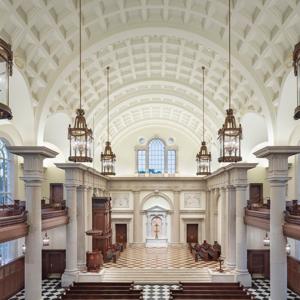


Did you know that the enrollment of Mennonite students at denominational colleges is in decline (and has been or a decade)? You probably didn't and you may not care if you have traditional confessional Protestant disregard for Anabaptists. But that trend is not isolated among Mennonites. Evangelical colleges have struggled with declining applications and enrollments even to the point where -- despite changing from colleges to "universities" -- administrators gut departments in the humanities. Lutheran Church Missouri Synod colleges are not immune to these challenges.
Even while Christian colleges struggle in the United States, the growth of classical Christian schools and academies (not to mention charter schools and homeschooling) show that parents are more active in superintending the primary and secondary education of their kids. In the case of families and churches where children are catechized and also receive religious reinforcement at school, what is the point of such a child going to a Christian college? If kids already have a solid religious and educational training, what value does Christian higher education add (especially if it is expensive)?
These were questions co-hosts Miles Smith (Anglican), D. G. Hart (Presbyterian), and Korey Maas (Lutheran) kicked around during a recent recording. The discussion was very much open-ended -- many more questions than answers. But everyone did seem to agree that Christian schooling in America may be going through a transition that could well leave Christian higher education in the lurch.
This recording was obviously sponsored by Hillsdale College, a Christian college of an unusual kind, even though the institution went unnamed to protect the innocent.
Listeners may follow us on Twitter @IVMiles and @oldlife. Dr. Maas refuses followers.
This recording takes a different direction as co-hosts Miles Smith (Anglican), D. G. Hart (Presbyterian), and Korey Maas (Lutheran) welcome Aaron Renn to the Paleo-Protestant Pudcast. Aaron Renn is a consultant and keen observer of American cities and social trends who has taken an active interest in American Christianity and political conservatism. Many will know him from his First Things piece on the three worlds of evangelicalism (positive, neutral, and negative). Those observations are relevant for his concerns about why evangelicals are second-class citizens in the world of American conservatism (politics). For listeners wanting a deeper dive into the place of American Protestantism within elite culture and institutional networks in the United States, his essay on the sociologist who invented the phrase - White Anglo-Saxon Protestant - and an interview about the essay are well worth consulting. Among the many hats that Aaron Renn wears, his editorial work and writing for the American Reformer is likely the one that connects most directly to confessional Protestantism. We talked for a while and could have talked longer about evangelicals, political conservatism, confessional Protestants, the value of denominations as institutions, and the cultivation of Protestant intellectuals.
This recording did not have an announced sponsor, but it may have well been Aaron Renn's substack which is the place to go to see Aaron wear most of his many hats.
Listeners may follow him at @aaron_renn but only after they follow @IVMiles and @oldlife. We all pine for Dr. Maas to do more than lurk on Twitter.
Anglicans were in the news in April which provoked co-hosts Miles Smith (Anglican), D. G. Hart (Presbyterian), and Korey Maas (Lutheran) to talk about they way confessional states operate in comparison to confessional churches. Are confessional states like England or Scotland stricter than their respective national churches? How strict can churches be when their punitive instruments are ministerial and declarative? Also, can confessional churches have more freedom in a liberal society that separates church and state than in one with an established church? Are confessional Lutherans and confessional Presbyterians in the United States more confessional than their counterparts in Europe where ecclesiastical establishments still exist?
News that led to these questions was first the decision of the Global Anglican Future Conference (GAFCON) to re-order the Anglican communion away from the See of Canterbury (which has functioned as "first among equals" among bishops). The reason for this resolve was the Church of England's General Synod's decision to bless same-sex unions.
This piece of ecclesiastical business dovetailed with an article about the new confessional state in Britain, one that is progressive and almost as restrictive as the old confessional state of England prior to the 1829 Emancipation of Roman Catholics (and related recognition of Protestant Dissenters. The essay about the new confessional state made the arresting point that the new terms of orthodoxy, because always evolving and independent of legal mechanisms, are illiberal. Under the old confessional state, subjects knew at least what the rules were and how to seek a remedy. But in the new confessional state, rules from a 2023 orthodoxy could substantially differ the "current thing" three years down the line.
This episode's sponsor is Brunswick, the company that puts the ow in bowling.
Follow us at @IVMiles and @oldlife. If you want Korey Maas' email address, send us a direct message at Twitter.
This time co-hosts Miles Smith (Anglican), D. G. Hart (Presbyterian), and Korey Maas (Lutheran) talk about the limitations of the American Protestant binary that divides white Protestants into either evangelicals or mainline (can you say "liberal"?). If a Protestant group doesn't fit one of those molds, that leaves "fundamentalist"? The inhumanity!
Each of our communions has brushes with positions, episodes, and sensibilities that might produce charges of make fundamentalism. At the same time, in a world of getting along either for the sake of mainline Protestant ecumenism or evangelical niceness, polemics about doctrine, liturgy, or even the church calendar can strike moderate Protestants and outside observers as mean and therefore fundamentalist.
To help with this session's talking points, panelists mention several books that might be useful for listeners wanting to get up to speed on confessional Protestants in relation to fundamentalism. These include:
Milton Rudnick, Fundamentalism & the Missouri Synod Allen Guelzo, For the Union of Evangelical Christendom: The Irony of the Reformed Episcopalians James Christian Burkee, Power, Politics, and the Missouri Synod: A Conflict That Changed American Christianity Ronald L. Numbers, The Creationists: From Scientific Creationism to Intelligent Design D. G. Hart, The Lost Soul of American Protestantism D. G. Hart, Defending the Faith: J. Gresham Machen and the Crisis of Conservative Protestantism in Modern America
No sponsors this time. The pudcast was hoping for something Big Pharma related since the television series Dopesick made a deep impression. But reading upbeat copy about a genuine social crisis is not what fundamentalists or confessional Protestants do.
Follow us @IVMiles and @oldlife. Korey Maas remains unfollowable.
In this conversation, co-hosts Miles Smith (Anglican), and D. G. Hart (Presbyterian) lean heavily on Korey Maas (Lutheran) to make sense of the dust up in the Lutheran Church Missouri Synod over a new edition of Luther's Large Catechism. It comes from Concordia Publishing House and includes essays on various theological and moral topics. Some in the LCMS have detected the fingerprints of progressive politics (or worse) in some of the essays even while others regard those critics as leaning too far to the Right. This controversy relates to Presbyterians and Reformed Protestants (discussed in a previous episode) at their General Assemblies and Synods last summer potentially reflecting the nation's political climate more than they imagine. These incidents raise questions about the ability of confessional Protestants to escape some of the moral assumptions that drive so many of the contemporary partisan divides. If, for instance, even the deepest die-hard fans of Penn State football could not resist the rush to judgment in the Jerry Sandusky scandal (listen to this podcast to get up to speed), how well do Protestants, even with the good bones of Reformation-era confessions and functioning church polities, escape the most popular interpretations of news events and national politics?
This episode's sponsor is Anthony Milton's recent book, England's Second Reformation: The Battle for the Church of England, 1625-1662.
Follow us @IVMiles and @oldlife. Korey Maas remains unfollowable.
After a holiday break, co-hosts, Korey Maas (Lutheran), Miles Smith (Anglican), and D. G. Hart (Presbyterian) catch up on highlights of downtime (and don't even mention the liturgical calendar) and then converse about a species of Protestant that goes by the name, "ecclesiocentric post-liberals." A mouthful. The essay that was in the background of this discussion is here.
The question of ecclesiocentrism (post-liberal or not) is of some import to confessional Protestants because Anglicans, Lutherans, and Presbyterians have long contended that evangelicals, without an ecclesiology or liturgy, largely find spiritual outlets in personal devotion and parachurch endeavors. In other words, evangelicals don't think much about church which means that confessional Protestantism is an ecclesiocentric alternative for serious Protestants. But from an ecclesiocentric post-liberal perspective, confessional Protestants aren't ecclesicentric enough. That may make sense from Rome's perspective, but from fellow modern Protestants? Related to the article linked above is this podcast which is an ongoing discussion of ecclesiocentric post-liberalism.
This episode's sponsor is the Department of Transportation.
It's the most wonderful time of the year because we have so many seasons to observe (do liturgical calendar adherents really think they can have it to themselves?). We have post-Thanksgiving nostalgia, the start of league play in NCAA DII basketball, the end of the academic term with finals and grading, Advent, and the excess of Christmas provides welcome push back to stale Halloween lawn displays.
In this session co-hosts, Korey Maas (Lutheran), Miles Smith (Anglican), and D. G. Hart (Presbyterian) discuss those seasons with Advent taking up the majority of oxygen. With hopes of not upsetting Anglican and Lutheran colleagues and listeners, Presbyterians may remain skeptical about the liturgical calendar and continue to wonder if the spiritual benefits that come with Advent are not more possible with fifty-two sanctified Lord's Days. Heck, with Sabbatarianism you don't even have to put up with Lady Gaga and Dean Martin Christmas albums.
This episode's sponsor is The Crown. As Mr. Biden say, "no joke."
Follow Dr. Smith and Dr. Hart on Twitter. Email Dr. Maas at Hillsdale College.
At the end of the previous recording, co-hosts, Korey Maas (Lutheran), Miles Smith (Anglican), and D. G. Hart (Presbyterian) were talking about expectations for being a good Anglican, Lutheran, or Presbyterian. One consideration not often in the equation is singing in worship. When a church member not only shows up for the service, but pulls out the hymnal and sings along with the rest of the saints the song selected by the pastor or priest, is he or she making any kind of show of devotion? The answer "yes" is plausible if only because a worshiper could easily not sing and no one would object.
This time the interlocutors get personal and talk about which hymns and Psalms are their favorites along the way to talking about the Anglican, Lutheran, and Presbyterian traditions of congregational singing. Listeners may be surprised to hear about the importance of Psalm singing, the relatively recent innovations of introducing hymns, and the difference that speaking German or English makes to a Protestant communion. One book about the history of hymnody in North America mentioned was Singing the Lord's Song in a Strange Land.
Follow Dr. Smith and Dr. Hart on Twitter. Dr. Maas is hopeless.
Our sponsor this episode is the Philips Digital Airfryer with Fat Removal Technology. Remember: Maximum Taste, Minimum Fat.
In history and geography, Presbyterians are adjacent to Puritans, which makes them "hot" Protestants in the sense that they exhibit forms of piety more intense, more holiness forward than other confessional Protestants. That is the reputation anyway for British Protestantism in the sixteenth and seventeenth centuries. Over time, Presbyterians became synonymous with "God's frozen chosen" because their worship is and remains (for some) so dull and lacking in energy.
Heat and cold are not the best descriptors of piety.
Behind measurements of pious temperature is a bigger question about how to practice your faith once you have found out, "what must I do to be saved?" Do Presbyterians have a more ardent piety Anglicans and their prayer books or Lutherans and their daily prayers? What does it mean to be a good Anglican, or a good Lutheran, or a good Presbyterian?
In this conversation, co-hosts, Korey Maas (Lutheran), Miles Smith (Anglican), and D. G. Hart (Presbyterian) talk about expectations for piety and being a member in "good standing" within their own parishes and congregations and also in the larger Anglican, Lutheran, and Presbyterian traditions. How much Christian devotion is too much? Can you even ask that question? Confessional Protestants have answers and also more questions.
Follow Dr. Smith and Dr. Hart on Twitter. Continue to pray for Dr. Maas to join Twitter.
Upstream from Christian nationalism, the topic of our last discussion, is the use to which historians of the United States have put denominational or church history in describing American identity (and with it American nationalism). In this recording, co-hosts, Korey Maas (Lutheran), Miles Smith (Anglican), and D. G. Hart (Presbyterian) talk about Anglican, Lutheran, and Presbyterian reactions to the way two or three generations of American historians, literary scholars, and faculty in related fields after World War II used Puritanism to understand the mission, purpose, and meaning of the United States. (Abram C. Van Engen's City on a Hill is one recent example of the way Puritanism became the distillation of American identity during the Cold War.)
Debates among historians of the Episcopal Church in the United States (Allen Guelzo and Thomas C. Reeves contested the high vs. low-church character of the denomination back in 1993 and 1994 in the pages of Anglican and Episcopal History) are exemplary of the way denominations can react to questions about a communion's own history independent its relationship to narratives about Christianity's influence on a nation's development. Another is to weave, as Presbyterians did, your own denomination into the success of the United States.
Though the lessons from this discussion are hardly reducible to a bumper sticker, the place of Protestantism in the American narrative is a topic that continues to be part of the study of American history. That in turn has implications for the way confessional Protestants tell their own histories and conceive of Lutheran, Anglican, or Presbyterian identity over against or alongside American national identity.
Follow Dr. Smith and Dr. Hart on Twitter. Pray for Dr. Maas to join Twitter.
From the publisher's feed

8,610 Listeners

2,190 Listeners

836 Listeners

721 Listeners
391 Listeners
352 Listeners

225 Listeners

95 Listeners
1,432 Listeners
466 Listeners

104 Listeners
674 Listeners
3,790 Listeners

41 Listeners
26 Listeners