
Sign up to save your podcasts
Or



Based on Podcast App listening data
We wish we could help our children make better decisions, or even make them for them sometimes! Where do we have control in parenting and where don't we? How can influence our children's decisions in areas where we don't have the control over those decisions? Tune in to find out!
At some point, our children will encounter adult authority figures whose way of teaching, guiding, and interacting is more harmful than helpful, How do we know when the way that someone regularly interacts with our child is potentially harmful to their self-esteem, mindset, and/or mental well-being? When is it just constructive criticism and guidance versus language that is potentially detrimental? In this episode, I cover 3 main guidelines to know when it's a good idea to step in and either limit or eliminate interactions between an authority figure and your child.
It seems like another approach to parenting gets introduced every year! How can we keep them all straight? How do we know which one/ones or mix is best for our family? The approach of conscious parenting has been around for almost 15 years but has grown in popularity over that time. What is it exactly? Is it different from any of the other approaches? In this episode, I cover the basic ideals behind conscious parenting, the positive attributes this perspective can bring to your family, and some pitfalls to be aware.
A disrespectful exchange from your child can often spiral to a battle of wills and a cycle of setting a respectful boundary vs. even bigger attitude from the youngster! How do break this? In this episode, I cover 5 simple strategies you can use to break this cycle of disrespect.
Competition is a part of everyday life, whether we like it or not. How do we foster a healthy sense of competition, help our kids see and understand where they excel and don't, and how to have a healthy approach and attitude towards self-improvement no matter where they fall? This episode covers all of this and the natural development of competition by age.
Life is messy. As we deal with life, our minds are often messy too. How do we teach our children the tools to deal with the messiness of life? Dr. Caroline Leaf explains why just helping kids learn to connect with feelings isn't enough and introduces us to the 5 steps we can use and teach our kids when life presents us with difficult situations.
Dr. Caroline Leaf is a communication pathologist, audiologist, and clinical and cognitive neuroscientist specializing in psychneurobiology and metacognitive neuropsychology. Her passion is to help people see the power of the mind to change the brain, control chaotic thinking, and find mental peace. Since the early 1980s, Dr. Leaf has researched the mind-brain connection, the nature of mental health, and the formation of memory. As a highly sought-after expert on mental health, she is the host of the top-rated podcast, Cleaning Up the Mental Mess. Dr. Leaf is also the author of several bestselling books, including Cleaning Up Your Mental Mess, How to Help Your Child Clean Up Their Mental Mess among others.
Whether your kids are starting school for the first time or going back to school after a summer break, get tips for success in this episode. The transition to starting school or starting back after a break can present challenges, from separation anxiety (yes even in kids past preschool!) To other adjustment difficulties. This episode is chock full of tips on how to circumvent these preventable and fixable struggles.
When we have Impulse control skills, we stop, consider and make better choices. There are many fun ways to help kids of all ages learn to practice impulse control. In this episode, learn 4 ways you can help your kids learn and practice these skills in engaging ways.
Sponsors:
Hello Fresh www.hellosfresh.com/parenting50 Use Code PARENTING50 for 50% off plus free shipping
Erin helps overwhelmed parents get a handle on positive discipline with step-by-step tips. She covers where to start to see the most progress quickly and which tools to cover next to keep it simple and effective. She also covers some tips on teaching heart felt apologies.
We used to take a pretty hard stance on digital technology in the lives of children, especially young children. Dr. Katie Davis, Associate Professor at the University of Washington (UW) and Director of the UW Digital Youth Lab, has been researching and speaking about the impact of digital technologies on young people’s learning, development, and well-being for 20 years and shares with us what research really shows about how we can best guide our children's use of technology by age.
From the publisher's feed
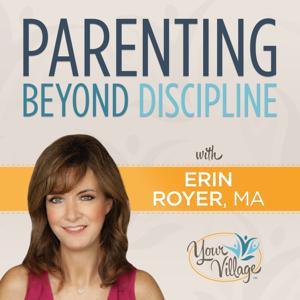
Parenting Beyond Discipline with Erin Royer, MA
Parenting is about so much more than managing behavior. It's about raising confident, capable, resilient kids who are prepared…
With over 8.3 million downloads, Parenting Beyond Discipline brings you practical, research-informed parenting strategies grounded in developmental psychology and real-life experience.
Host Erin Royer holds a master's degree in psychology, specializing in child development, and is a college psychology professor and mother of three. She brings a unique perspective to the challenges of raising children—from navigating tantrums, power struggles, and emotional development in the early years to building independence, motivation, healthy relationships, and the skills kids need as they move toward adulthood.
With warmth, humor, and a down-to-earth approach, Erin makes the science of parenting accessible and actionable, helping you understand not just what to do, but why it works.
Because the goal isn't simply to raise well-behaved children. It's to raise healthy, capable human beings who are ready for whatever comes next.
3,928 Listeners
9 Listeners