
Sign up to save your podcasts
Or

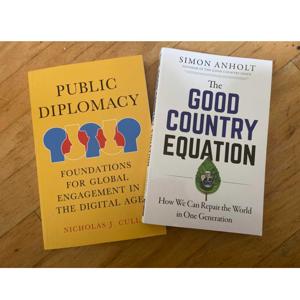


This episode considers how two core concepts of this field fit together: public diplomacy and place branding. Nick sees PD as the overall concept and place branding as one of the tools; Simon sees place branding as the overall approach and PD as just one aspect of a country's image. They find agreement in the issue of impact and the importance of real evaluation in both activities. Cases considered include the evolution of British public diplomacy and historical missteps to the United States. The conversation concludes with Simon and Nick both affirming that what is really important is getting to the right policies. Good policies that lay the foundation for success in both place branding and public diplomacy.
This episode takes the case of Scotland as a point of entry into the issue of smaller countries or regions seeking independence. It probes the image of Scotland as measured by the nation brands index and looks at the reputational strengths it already enjoys. Simon notes that Scotland is rated above Ireland and is already seen as roughly equivalent to New Zealand. The conversation includes discussion of the risks to the good image of Scotland if a change of status is handled badly, attention to the role of diaspora as a booster of image, the possibility of 'virtual independence' as an optimal solution, and the universal appeal of an underdog/David and Goliath story
This episode examines the image of Japan: consistently admired in the Nation Brands Index (#4 in 2020) but apparently out of step with the behaviors that bring strength in the Good Country index (#26 in 2020). Simon and Nick look at some of Japan's strategies to maintain a global presence such as hosting the Olympics and the up-coming Expo 2025 in Osaka; consider successful behavior such as the collective action of fans, cleaning stadiums during the soccer world cup and look at underlying weaknesses including a decline in knowledge of foreign languages and a reluctance to welcome migrants. Japan emerges as a unique actor with tremendous advantages but one which needs to take care to adapt its approach to 21st century priorities and global needs or risk a decline in its standing.
This episode considers the impact of digital and social media on the world of international reputation and soft power. Simon and Nick consider the association between populism and social media and ask whether diplomacy has become harder in a digital world. They look at countries which have sought to benefit from positive digital activity such as Estonia or Rwanda and ask how much damage is done when a country like Russia behaves badly. They conclude with a discussion of the reputation of big tech companies as actors in international space.
This episode probes the realities behind the excellent image of Canada and finds some worrying trends including a tendency for the image to be inversely linked to that of the US, to be based on behavior from the past, and to exaggerate strengths in areas where the country could do more. Simon compares the image in the Nation Brands Index with the reality-focused Good Country index where weaknesses are highlighted. Other issues include Canadian city image, indigenous issues, and the contribution of Quebec. The result is reminder that Canada needs to keep focused on delivering on its promise. It can't rest on its laurels
This episode examines the implications of populism around the world for the international community at a time when problems require collaborative solutions. Simon considers evidence that conservatism is the dominant feeling in the world by a factor of 80 to 20 and why this might be, and recalls Putin's personal reaction when told this. They discuss the case of Russia in more detail and consider the extent to which it is possible for a conservative/nationalist state to generate admiration from outsiders
This episode considers what a country can do when its image goes bad. Simon and Nick look at countries with excellent stories to tell but located in regions associated with difficulty such as Chile in Latin America or Botswana in Southern Africa. They consider the difficulties facing newly established countries like Kosovo and for countries in a time of crisis. They look at the damage to a country's image from being associated with conflict whatever the rights and wrongs of the issue, discussing Israel/Palestine in this regard. The episode concludes by underlining the value of a positive reputation in a moment of crisis and considers the path of the US following 9/11
This episode examines India through the lens of its recent performance in the Nation Brands Index and Good Country Index. The discussion focuses on recent slippage in Indian's image set against underlying strength of India's global contributions in culture, industry, and politics. Simon and Nick consider the threats to India's image, the potential for a still great contribution going forward, and make comparisons to other countries facing similar issues.
The episode probes the challenge of migration for the image and reality of nation states. Issues include treatment of migrants as a component of a 'good' image, with special note of the disproportionate role taken by Turkey and Jordan. Simon muses that the Swedish far right may be negatively branding their own country to deter migration. Nick recalls the benefits of unintended exchanges that arise from the positive treatment of refugees. The episode considers the experience of countries known for sending migrants and potential for diaspora diplomacy campaigns. The episode ends with a discussion of the risk to image for countries unwilling to accept migrants and most especially for Japan.
This episode considers whether a single well-known individual can significantly enhance the image of an entire nation state. Moving beyond politicians and leaders the conversation focuses on the impact of artists and celebrities, and the tendency for all abstract identities to be personified. Cases discussed include Kazakhstan and the cost/benefit of having Borat as a fictional citizen; the recent strength of South Korea, and the contribution of the world-famous pianist Jan Paderewski to the image of Poland 120 years ago when the country didn't have independence. The show notes that some cultures are more open to individual preeminence than others but also acknowledges the special role of individuals with relevance or connection to two places/communities and the special role of individuals in 'diaspora diplomacy'.
From the publisher's feed