
Sign up to save your podcasts
Or

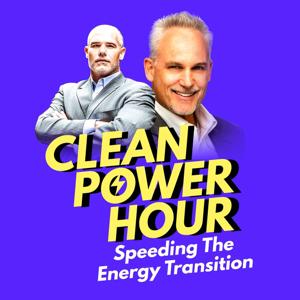

Silicon solar is approaching a hard physical efficiency ceiling at 30%. Perovskite tandem solar is the only proven path through it. Joel Jean, CEO of Swift Solar, explains the technology, what the Meyer Burger acquisition brings, and where tandems sit on the road to commercial scale.
After seven decades, silicon solar is closing in on its physical efficiency limit, and no previous thin-film technology has been able to outperform it at competitive cost. Joel Jean, CEO and co-founder of Swift Solar, a tandem PV manufacturer based in California, joined Tim Montague on the Clean Power Hour to explain why perovskite-silicon tandems are different and how Swift is building toward commercial scale.
Jean explains how Swift's approach of vertically integrating perovskite and silicon at the cell level differs from other tandem strategies, and what certifications and milestones a new module technology must clear before utility buyers and independent engineers will finance it. The conversation also covers the US position in the global solar race, perovskite degradation and lead-content concerns, and what a consistent industrial policy would mean for US solar manufacturers.
Here is what you will learn in this conversation about perovskite tandem solar and the path to next-generation module efficiency:
You'll understand why silicon solar cells are physically limited to around 30% efficiency, and how stacking a perovskite layer on silicon creates a two-junction cell with a path to 35-40%, with three junctions pushing toward 45% or more.
Find out what Swift Solar gains from the Meyer Burger acquisition: a heterojunction product with 0.2% annual degradation, the lowest rate in the industry, and a bankable product to serve customers while the tandem completes its certification and field-proof timeline.
Learn why Swift's approach of integrating perovskite and silicon at the cell level differs from other tandem strategies, including four-terminal approaches where perovskite is deposited on glass and stacked on a separate module.
You'll hear Tim push back on two common concerns about perovskites: degradation and lead content. Joel explains Swift's cell-level stability progress and why perovskite panels contain less lead per square meter than the solder in a standard silicon module.
With China installing solar 8.5 times faster than the US and having spent 15-20 years building a manufacturing and policy foundation, the US is still trying to rebuild. The window for US tandem solar companies to establish a position is narrowing. Swift Solar's acquisition of Meyer Burger assets is one of the few cases where a US perovskite tandem startup enters the market with a proven, bankable product already generating field data, rather than waiting years for the tandem to reach certification. For solar professionals evaluating next-generation module technology and investors tracking the US manufacturing pipeline, this conversation gives a clear picture of where tandem technology stands today and what the next two to three years need to deliver.
Connect with Joel Jean, Swift Solar
LinkedIn: https://www.linkedin.com/in/joeljean/
Swift Solar: https://www.swiftsolar.com/
Support the show
Connect with Tim
Clean Power Hour
Clean Power Hour on YouTube
Tim on Twitter
Tim on LinkedIn
Email [email protected]
Review Clean Power Hour on Apple Podcasts
The Clean Power Hour is produced by the Clean Power Consulting Group and created by Tim Montague. Contact us by email: [email protected]
Corporate sponsors who share our mission to speed the energy transition are invited to check out https://www.cleanpowerhour.com/support/
The Clean Power Hour is brought to you by CPS America, maker of North America’s number one 3-phase string inverter, with over 6GW shipped in the US. With a focus on commercial and utility-scale solar and energy storage, the company partners with customers to provide unparalleled performance and service. The CPS America product lineup includes 3-phase string inverters from 25kW to 275kW, exceptional data communication and controls, and energy storage solutions designed for seamless integration with CPS America systems. Learn more at www.chintpowersystems.com
 View all episodes
 By Tim Montague, John Weaver

4.6
2121 ratings
Silicon solar is approaching a hard physical efficiency ceiling at 30%. Perovskite tandem solar is the only proven path through it. Joel Jean, CEO of Swift Solar, explains the technology, what the Meyer Burger acquisition brings, and where tandems sit on the road to commercial scale.
After seven decades, silicon solar is closing in on its physical efficiency limit, and no previous thin-film technology has been able to outperform it at competitive cost. Joel Jean, CEO and co-founder of Swift Solar, a tandem PV manufacturer based in California, joined Tim Montague on the Clean Power Hour to explain why perovskite-silicon tandems are different and how Swift is building toward commercial scale.
Jean explains how Swift's approach of vertically integrating perovskite and silicon at the cell level differs from other tandem strategies, and what certifications and milestones a new module technology must clear before utility buyers and independent engineers will finance it. The conversation also covers the US position in the global solar race, perovskite degradation and lead-content concerns, and what a consistent industrial policy would mean for US solar manufacturers.
Here is what you will learn in this conversation about perovskite tandem solar and the path to next-generation module efficiency:
You'll understand why silicon solar cells are physically limited to around 30% efficiency, and how stacking a perovskite layer on silicon creates a two-junction cell with a path to 35-40%, with three junctions pushing toward 45% or more.
Find out what Swift Solar gains from the Meyer Burger acquisition: a heterojunction product with 0.2% annual degradation, the lowest rate in the industry, and a bankable product to serve customers while the tandem completes its certification and field-proof timeline.
Learn why Swift's approach of integrating perovskite and silicon at the cell level differs from other tandem strategies, including four-terminal approaches where perovskite is deposited on glass and stacked on a separate module.
You'll hear Tim push back on two common concerns about perovskites: degradation and lead content. Joel explains Swift's cell-level stability progress and why perovskite panels contain less lead per square meter than the solder in a standard silicon module.
With China installing solar 8.5 times faster than the US and having spent 15-20 years building a manufacturing and policy foundation, the US is still trying to rebuild. The window for US tandem solar companies to establish a position is narrowing. Swift Solar's acquisition of Meyer Burger assets is one of the few cases where a US perovskite tandem startup enters the market with a proven, bankable product already generating field data, rather than waiting years for the tandem to reach certification. For solar professionals evaluating next-generation module technology and investors tracking the US manufacturing pipeline, this conversation gives a clear picture of where tandem technology stands today and what the next two to three years need to deliver.
Connect with Joel Jean, Swift Solar
LinkedIn: https://www.linkedin.com/in/joeljean/
Swift Solar: https://www.swiftsolar.com/
Support the show
Connect with Tim
Clean Power Hour
Clean Power Hour on YouTube
Tim on Twitter
Tim on LinkedIn
Email [email protected]
Review Clean Power Hour on Apple Podcasts
The Clean Power Hour is produced by the Clean Power Consulting Group and created by Tim Montague. Contact us by email: [email protected]
Corporate sponsors who share our mission to speed the energy transition are invited to check out https://www.cleanpowerhour.com/support/
The Clean Power Hour is brought to you by CPS America, maker of North America’s number one 3-phase string inverter, with over 6GW shipped in the US. With a focus on commercial and utility-scale solar and energy storage, the company partners with customers to provide unparalleled performance and service. The CPS America product lineup includes 3-phase string inverters from 25kW to 275kW, exceptional data communication and controls, and energy storage solutions designed for seamless integration with CPS America systems. Learn more at www.chintpowersystems.com

32,100 Listeners

30,666 Listeners

43,528 Listeners

4,345 Listeners

1,967 Listeners
1,247 Listeners
401 Listeners

111,948 Listeners

179 Listeners
127 Listeners

6,089 Listeners
645 Listeners
278 Listeners

234 Listeners

141 Listeners