
Sign up to save your podcasts
Or

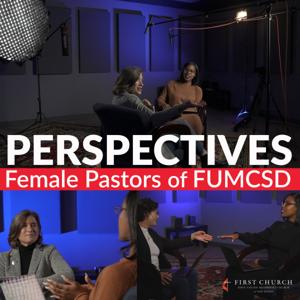


Was Jesus resurrected in body or spirit? Does it matter? What does it mean for us today? That’s what Revs. Trudy D. Robinson and Brittany Juliette Hanlin discuss in this episode of Perspectives FUMCSD Pastors Podcast.
Throughout Lent, this series—The People of the Passion—has focused on the individuals surrounding Jesus’ crucifixion, not just as historical figures, but as mirrors for who we are today.
This week, we turn to a brief but powerful passage: Matthew 27:62–66, where religious and political leaders seal Jesus’ tomb to prevent what they call “deception.” But beneath the surface is a deeper question: Who gets to control the story of resurrection?
The female pastors wrestle with:
This conversation invites us to move beyond proving resurrection…and instead, to live it.
Continue the conversation by reflecting with someone you trust or join the Perspectives community online via Patreon or in person at the weekly Convergence Discussion Group.
Reflection questions for Lent:
Limited on time? Jump ahead to these pivotal moments.
Timestamps
00:00 Introduction: Does the resurrection make sense?
01:43 Scripture Story: Matthew 27, verses 62 to 66
03:18 Is resurrection controversial—or just assumed?
05:00 “Death doesn’t have the final say” – what really matters
07:06 Why we’ve lost the mystery of resurrection
10:46 Resurrection as personal transformation (hope, joy, love)
15:15 Controlling the narrative: doubt, power, and the sealed tomb
19:28 Why Jesus’ story survived—and why that matters
24:18 Resurrection is not just for you
27:45 Reflection questions + closing
Privilege might feel like a modern conversation, but Scripture has been asking the same question for centuries: What do we do with the access we have that others don’t?
That’s what Revs. Brittany and Hannah explore in this episode of Perspectives as they continue the Lenten conversation series: “The People of the Passion.” This week, they focus on the story of Joseph of Arimathea in Matthew 27:57-61: A wealthy disciple who quietly uses his status, resources, and connections to honor Jesus after the crucifixion.
Joseph wasn’t one of the twelve disciples. He doesn’t preach, perform miracles, or stand in the spotlight. Instead, he does something quietly courageous: He approaches the Roman governor Pilate, asks for Jesus’ body, and provides a dignified burial.
His story raises powerful questions that feel strikingly modern:
Joseph’s story reminds us that much of discipleship often doesn’t happen on stage. Sometimes it happens out of the spotlight in unseen moments when someone uses what they have to make life more humane for others. And sometimes the most faithful thing we can do is simply use what we’ve been given to make someone else’s life better.
Continue the conversation by reflecting with someone you trust or join the Perspectives community online via Patreon or in person at the weekly Convergence Discussion Group.
Reflection questions for Lent:
Limited on time? Jump ahead to these pivotal moments.
Timestamps
00:00 Introduction: Is privilege a modern issue or a biblical one?
00:36 Scripture Reading: Matthew 27 verses 57–61
02:04 The surprising disciple: Who is Joseph of Arimathea?
05:18 Jewish burial law, Roman rule, and cultural tension
06:50 Courage and access: How Joseph used privilege to approach Pilate
10:12 Quiet discipleship vs. spotlight ministry
12:59 The unseen work that sustains communities
14:38 The dignity of the forgotten: What about the other crucified men?
17:10 When privilege becomes responsibility
20:08 Lenten reflection questions & wrap-up
What if a horror movie could teach us something about faith? In Sinners, music becomes a spiritual force that’s powerful enough to bring people together, challenge oppression, and even pierce the veil between life and death.
In this episode of Reel Theology: Where Film Meets Faith, Rev. Brittany and Rev. Trudy explore the film Sinners and uncover the powerful spiritual questions hidden beneath its supernatural story. It’s a haunting movie that weaves together music, history, theology, and horror into an unforgettable masterpiece.
Set in 1930s Mississippi, the film navigates faith, family expectations, and the cultural power of music in a deeply segregated society. What begins as a story about a juke joint and blues music soon unfolds into a layered reflection on temptation, survival, oppression, and spiritual power. It’s a vampire film, but it’s also about so much more: ancestral memory, cultural resilience, and the sacred power of music.
In this conversation, the female pastors explore themes like:
Ultimately, the film points toward a powerful truth echoed in Christian faith: Even in the presence of evil, racism, and death — nothing can separate us from the love of God. Watch the conversation and join us as we ask: What can a supernatural film teach us about faith?
Want to connect with others about this discussion? Join our Patreon community online!
Sinners has been nominated for a record-breaking 16 Academy Award nominations: Best Picture, Best Actor, Best Supporting Actor, Best Supporting Actress, Best Original Screen Play, Best Director, Best Cinematography, Best Original Score, Best Visual Effects, Best Film Editing, Best Makeup and Hairstyling, Best Costume Design, Best Production Design, Best Sound, and Achievement in Casting
Sinners also received nominations for: BAFTA Awards, Critics’ Choice Movies Awards, Golden Globe Awards, Grammy Awards, and SAG Awards.
A Note About Awards: While widely praised by critics for its storytelling, cinematography, and cultural depth, Sinners has also sparked conversation about which films receive major awards recognition and why.
Reel Theology: Where Film Meets Faith — Oscar Season Conversations
How do we heal when trauma runs through generations like a crack in a foundation? In this episode of Reel Theology, Revs. Trudy and Brittany explore the Oscar-nominated movie Sentimental Value, starring Stellan Skarsgård.
Set in Norway, the film tells the story of Gustaf, a filmmaker attempting to reconcile with his daughters after years of absence. As he tries to reconnect through a film he has written for them, the story reveals layers of grief, generational trauma, patriarchal expectations, and the longing for forgiveness.
Through the lens of progressive Christian theology, this conversation wrestles with the age-old question of theodicy: How can a loving God exist when so much suffering exists in the world? It's part of a special Academy Awards series from First United Methodist Church of San Diego, Reel Theology, where faith and film meet in meaningful conversation.
Listen as the female pastors of explore how the film raises profound spiritual questions that reflect on faith, forgiveness, and the courage it takes to confront what has been broken:
Want to connect with others about this discussion? Join our Patreon community online!
Reel Theology: Where Film Meets Faith — Oscar Season Conversations
What does it mean to live a meaningful life? Join Revs. Trudy and Hannah as they reflect on Academy Award–nominated movie Train Dreams. The quiet, contemplative film tells the story of Robert Grainier, an orphaned boy who grows into a railroad worker and logger in the early American West—living a life marked by hardship, grief, beauty, and unexpected moments of grace. And ultimately, it invites us to slow down, notice the sacred in everyday moments, and ask: What are we here for?
This is part of a special Academy Awards series from First United Methodist Church of San Diego, where faith and film meet in meaningful conversation.
Together, the female pastors explore the film’s deeper themes:
• The search for meaning in ordinary lives
• The importance of relationships and chosen family
• Spiritual connection beyond organized religion
• The healing power of presence in times of grief
• The beauty of nature and the interconnectedness of all creation
Want to connect with others about this discussion? Join our Patreon community online!
Reel Theology: Where Film Meets Faith — Oscar Season Conversations
What does an animated K-pop fantasy movie have to teach us about shame, grace, and spiritual healing? In this first episode of Reel Theology: Where Film Meets Faith, Revs. Trudy and Hannah explore the Oscar-nominated film KPop Demon Hunters – a visually vibrant story that turns out to be deeply theological beneath the surface.
Together, they unpack themes of identity, hidden flaws, community, redemption, and what happens when we stop trying to save face and start accepting saving grace.
Through Korean cultural insights, biblical parallels, and honest pastoral reflection, this conversation asks a powerful spiritual question: What do we do with the parts of ourselves we’ve been taught to hide?
This is part of a special Academy Awards series from First United Methodist Church of San Diego, where faith and film meet in meaningful conversation.
In this episode, the female pastors discuss:
• Shame, identity, and redemption in storytelling
• The theology of community and collective healing
• Music as spiritual connection
• Baptism symbolism in the public bathhouse scenes
• Why perfection isn’t the goal of faith
Want to connect with others about this discussion? Join our Patreon community online!
Power can be silent—or destructive. What happens when inaction allows injustice to continue?
In this episode of the Perspectives FUMCSD Pastors Podcast, Revs. Trudy Robinson and Hannah explore the Passion story through the lens of progressive Christian theology, reflecting on Matthew 27:11–24 and the theme “The Violence of Neutrality.”
Join them for a thoughtful Lenten conversation about how avoidance, silence, and shifting responsibility can perpetuate injustice—and how the Passion story challenges us to recognize the power we hold in our own lives.
From Pontius Pilate to Caiaphas, they explore how those in positions of authority collude, manipulate crowds, and deflect responsibility—and how Jesus moves toward the cross with a radically different kind of power: truth, grace, and forgiveness.
In this episode, you’ll hear discussions about:
Continue the conversation by reflecting with someone you trust or join the Perspectives community online via Patreon or in person at the weekly Convergence Discussion Group.
Reflection questions for Lent:
Limited on time? Jump ahead to these pivotal moments.
Timestamps
00:00 Introduction: Feeling powerless
01:08 Reading Matthew 27:11-24 (Jesus before Pilate)
03:33 Pilate, Caiaphas, and power dynamics
08:38 Pilate’s political authority vs. emotional disengagement
12:20 The crowd, shifting responsibility, and complicity
16:14 Jesus’ radical power: truth, grace, and forgiveness
23:25 Reflection: Using power without collusion
28:02 Lenten reflection questions & wrap-up
Betrayal. Disillusionment. Survival.
Before we condemn Judas, we might first need to admit how often faith turns transactional in our own hearts. Perhaps we have more in common with Judas than we previously thought. That’s what Revs. Hannah and Brittany discuss in this episode of our Lenten Series: The People of the Passion. They reflect on Matthew 26:14-16, 47-50 and the story of Judas … not as a cartoon villain, but as a mirror of our own hearts.
They ask: Why did Judas betray Jesus? Was it really about money? Or unmet expectations? Disappointment? Survival within a broken system?
We will all make mistakes, we all sometimes turn down the wrong path, so perhaps Judas’ story is more about the hope available to us all instead of the story of a villain. Join the female pastors of First UMC of San Diego as they explore:
Judas isn’t just “the betrayer.” He is a disciple, a friend, and someone invited to the table — even knowing what he would do. And that might be the most hopeful part of the story.
Continue the conversation by reflecting with someone you trust or connecting with the Perspectives community online through Patreon and in person at the weekly Convergence Discussion Group.
Reflection questions for Lent:
Limited on time? Jump ahead to these pivotal moments.
Timestamps
00:00 Opening Reflection: “Before we condemn the betrayer …”
01:07 Scripture Reading of Matthew 26:14-16, 47-50
04:10 Relationship vs. Money – Is Faith Transactional?
06:35 Betraying Jesus… and Ourselves
07:52 Systems, Power, and Institutional Betrayal
10:09 “Friend” – Emotional Distance in the Garden
15:51 When Expectations Turn Into Resentment
18:10 The System Behind the Betrayal
19:16 The Open Table – Grace for Judas (and Us)
22:02 Lenten Reflection Questions & Closing
What happens when faith confronts us with responsibility we’d rather avoid? We get defensive – just like the priests of Jesus’ time.
That’s what Revs. Trudy and Brittany discuss this first episode in our Lenten Series: The People of the Passion. They start with Matthew 21:33-45, the Parable of the Tenants. Often read as a story about religious leaders rejecting Jesus, the parable is more layered – and more uncomfortable – than we tend to admit.
Why does Jesus tell such a violent story? Why does the landowner keep extending grace? And why do the religious leaders get so defensive? Perhaps the answer to the questions is because the parable isn’t about Jesus defending his authority – it’s about us.
Join the female pastors of First UMC of San Diego as they wrestle with:
Lent invites us to honest self-examination. This week we ask:
Join us as we consider whether we are living as grateful tenants or defensive ones. Continue the conversation by reflecting with someone you trust, or connecting with the Perspectives community online through Patreon and in person at the weekly Convergence Discussion Group.
Limited on time? Jump ahead to these pivotal moments.
Timestamps:
00:00 Opening Question – “Who Do Our Actions Serve?”
01:12 Reading Matthew 21:33-45
03:10 The Violence & Logic of the Parable – Why This Story Feels Strange
06:00 Authority, Empire, and Anti-Semitic Misreadings
08:48 The Defensive Heart – When Accountability Hits a Nerve
15:31 Who Is Your Authority? Faith vs. Empire
22:30 Lenten Reflection & Final Questions
Will we ever fully know and understand God? And if we could … would that even be God?
In this final episode of our Unexpected Divine conversations, Revs. Brittany and Hannah explore John 1:18: “No one has ever seen God. It is God, the only Son, who is close to the Father’s heart, who has made him known.”
Through their conversation, the female pastors of First United Methodist Church of San Diego use poetic theology, humor, and real-life reflection to wrestle with:
From TikTok analogies to the Grand Canyon, from Mary & Martha to Sankofa, this conversation invites us into a faith that is expansive, relational, and beautifully unfinished.
Reflection Questions:
Join the conversation by sharing this episode, reflecting with someone you trust, or connecting with the Perspectives community online through Patreon and in person at the weekly Convergence Discussion Group.
Limited on time? Jump ahead to these pivotal moments. Timestamps:
00:00 Opening Question – Can We Ever Fully Know God?
00:46 “No One Has Ever Seen God” – What Does John Mean?
02:51 Jesus as the “Exegesis” of God
06:28 Have We Seen God Through Jesus?
12:32 Jesus Wept – The Heart of God Revealed
16:52 If We Can Explain God, Is It Still God?
20:57 Is Christocentrism Compatible with Jesus?
24:53 Reflection Questions & Final Thoughts
From the publisher's feed