
Sign up to save your podcasts
Or

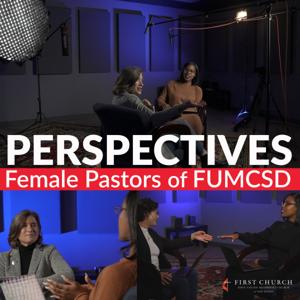


What happens when God calls us to leave behind not only familiar places, but familiar assumptions?
In Episode 2 of our four-part Imago Dei 2.0 series, Rev. Dr. Brittany Juliette Hanlin sits down with Kay Gilbert, a longtime member of First UMC San Diego and participant in the church’s Sankofa racial justice pilgrimages. As a self-proclaimed recovering racist, Kay reflects on her childhood in segregated Alabama, the questions she carried for decades, and why she’s dedicated her adult life to confronting history, telling the truth, and growing in understanding.
Inspired by Genesis 12:1–3, where God calls Abram to leave everything familiar and journey into the unknown, this conversation reflects on what can happen when we step outside our comfort zones and allow God to reshape our hearts and understanding.
This episode explores:
This conversation is for you if you're:
Reflection Questions
Continue the Conversation
This episode accompanies our sermon series, Imago Dei 2.0, exploring the many ways God's image is reflected in the people of our church community. Whether you're deconstructing your faith, pursuing racial justice, seeking a more inclusive Christianity, or simply curious about these conversations, we'd love to continue the journey with you.
First United Methodist Church of San Diego is an LGBTQ-affirming, progressive Christian congregation committed to justice, inclusion, and spiritual growth.
Timestamps
00:00 God calls us beyond what is familiar
01:00 Genesis 12 & introducing Kay Gilbert
03:19 Growing up in segregated Alabama
10:14 "I could have been them" — recognizing race and privilege
18:40 Racism and disparities in healthcare
25:03 Why Kay joined the Sankofa Pilgrimage
28:20 "I'm a recovering racist"
29:27 Visiting Bryan Stevenson's Legacy Museum to confront America’s history
33:44 How the pilgrimage deepened Kay's faith
38:11 Using our social capital for justice
40:06 Reflection questions
What does it mean to be made in the image of God as an LGBTQ+ Christian?
Rev. Dr. Hannah Ka is joined by Benicio Casillas, a transgender Christian and member of First United Methodist Church of San Diego, for a conversation about faith, identity, Ecclesiastes 3, and trusting God when life refuses to fit into neat categories.
This is Episode 1 of our four-part Imago Dei 2.0 series celebrating the many ways the image of God is reflected in the diverse people of our church family. In this episode, Benicio shares his experience growing up Catholic, coming out as transgender, finding an LGBTQ-affirming church at First United Methodist Church of San Diego, and discovering what it means to embrace that he was created in God's image.
Inspired by the Bible passage Ecclesiastes 3:1-8, the episode explores:
This conversation is for you if you're:
Reflection Questions
Continue the Conversation
This episode accompanies our sermon series, Imago Dei 2.0, exploring the many ways God's image is reflected in the people of our church community. Whether you're an LGBTQ+ Christian, an ally, deconstructing your faith, or simply curious about inclusive Christianity, we'd love to continue the conversation:
First United Methodist Church of San Diego is an LGBTQ-affirming, progressive Christian congregation committed to justice, inclusion, and spiritual growth.
Timestamps
00:00 Life is richer than our categories
00:00:45 Imago Dei 2.0: Celebrating God's image in everyone
00:04:00 Ecclesiastes, mystery, and trusting God
00:05:32 A transgender Christian's faith journey
00:10:57 How life's seasons transformed faith
00:14:38 Finding the courage to live authentically
00:18:47 What "made in the image of God" means today
00:22:31 LGBTQ+, mental health, and God's unconditional love
00:24:10 Finding an LGBTQ-affirming church community
00:26:07 Reflection questions: Seeing God's image in others
What if the stories you've been told about yourself aren't the whole story?
In this episode of Perspectives Podcast, Rev. Hannah and licensed marriage and family therapist Sheilah Cameron, LMFT, explore the Samaritan woman at the well (John 4) and what it teaches us about shame, identity, worth, and belonging.
Drawing on both Scripture and therapeutic insight, this conversation explores how shame, exclusion, and internalized beliefs affect our mental, emotional, and spiritual well-being. And how Jesus’ encounter with the Samaritan woman offers a picture of being fully known without being shamed.
This is Episode 5 of our five-part series, Taking Care of Mind, Body, and Spirit, featuring the female pastors of First United Methodist Church of San Diego and Sheilah Cameron, Director of New Life Counseling Center. Inspired by John 4:7-19 and 27-29, the episode includes:
Reflection Questions:
Continue the Conversation
Whether you identify as Christian, progressive Christian, spiritual but not religious, are deconstructing faith, or are simply curious about spirituality and mental health, we'd love to continue the conversation.
Please note: This conversation is intended for reflection and encouragement and is not a substitute for professional mental health care. If you're struggling with your mental health, consider reaching out to a licensed mental health professional or a trusted support person, such as the New Life Counseling Center, a mental health ministry of First United Methodist Church of San Diego.
Timestamps
00:00 What Happens When Someone Truly Sees You?
01:21 The Samaritan Woman at the Well (John 4)
04:01 Jesus Crosses Boundaries with Compassion
05:37 Identity, Belonging, and Mental Health
10:20 Trauma, Shame, and the Stories We Tell Ourselves
17:55 Healing Through Safe Relationships
19:17 Leaving the Water Jar: A New Story Emerges
20:36 What Healing and Integration Look Like
22:01 Personal Stories of Identity and Belonging
25:03 Questions for Reflection
Grief touches every life—but many of us don't know how to talk about it.
In this episode of Perspectives FUMCSD Pastors Podcast, Rev. Trudy and licensed marriage and family therapist Sheilah Cameron explore grief, loss, healing, and hope through the story of Jesus, Mary, Martha, and Lazarus in John 11. Together they discuss the stages of grief, why community matters, how to support someone who is grieving, and what Christian faith can offer in seasons of loss.
Episode 4 of our five-part series, Taking Care of Mind, Body & Spirit, explores modern wellness challenges through the wisdom of Scripture.
This conversation is for anyone grieving a loss, supporting someone who is grieving, wondering how to talk about death with loved ones, or seeking a more faithful and honest way to hold life’s joys and sorrows together. Inspired by John 11:1-3, 14, 17-24, 32-36 and Mary, Martha, and Jesus' experience of grief over the loss of Lazarus, the topics discussed include:
This series features conversations with the women pastors of First United Methodist Church of San Diego and Sheilah Cameron, Director of New Life Counseling Center. Join them over five weeks as they explore information overload, purpose fatigue, mental health, grief, and identity through the lens of biblical prophets and key figures in Jesus’ life.
Reflection Questions:
Join the Conversation:
Whether you're a lifelong Christian, exploring progressive Christianity, deconstructing faith, or simply searching for hope, we’d love to continue the conversation.
Timestamps
00:00 Welcome: Grief Is Part of Life
00:50 John 11: Jesus and the Raising of Lazarus
03:39 Why Community Matters in Grief
05:19 Learning to Talk About Death
10:02 The Five Stages of Grief Explained
12:20 Martha, Mary, and the Permission to Feel
15:14 How to Support Someone Who Is Grieving
17:29 Memorial Services, Rituals, and the Healing Process
22:36 Advice for Anyone Living Through Grief
26:10 Reflection Questions & Closing
Please note: This conversation is for reflection and encouragement and is not a substitute for professional mental health care. If you’re grieving or struggling with your mental health, consider reaching out to a licensed mental health professional, a trusted support person, or a crisis resource in your area, such as the New Life Counseling Center, a mental health ministry of First United Methodist Church of San Diego.
Topics: grief, Christian grief, grief support, loss, bereavement, mental health, Jesus, Lazarus, Mary and Martha, John 11, stages of grief, progressive Christianity, Christian podcast, spiritual growth, counseling, healing after loss.
According to WHO, 1 in 8 adults globally face mental health challenges. And yet, it remains a taboo topic in many communities.
Join Rev. Dr. Brittany Juliette Hanlin and Sheilah Cameron, LMFT, as they unpack and challenge the stigmas associated with mental health – especially within faith communities – by looking at the experience of Ezekiel, one of the major prophets of the Old Testament.
This is Episode 3 of "Taking Care of Mind, Body & Spirit," a five-part series exploring modern wellness challenges through the wisdom of Scripture. This conversation is for anyone struggling with isolation, depletion, shame, generational trauma, negative self-talk, and mental health challenges—as well as those who want to better understand the burdens others carry.
Inspired by Ezekiel 4:1–8, this conversation explores Ezekiel’s experience of exile, embodied burden, and prophetic responsibility—and how those themes connect to mental health and emotional challenges today. Topics include:
This series features conversations with the women pastors of First United Methodist Church of San Diego and Sheilah Cameron, Director of New Life Counseling Center. Join them over five weeks as they explore information overload, purpose fatigue, mental health, grief, and identity through the lens of biblical prophets.
Reflection Questions
Join the Conversation
Whether you're a lifelong Christian, exploring progressive Christianity, deconstructing faith, or simply seeking a deeper spiritual foundation, we invite you to reflect alongside us:
Timestamps
00:00 Introduction: Mental health, stigma, and the church
00:53 Ezekiel 4,1-8 Bible Reading
02:38 Ezekiel, pressure, and chronic stress
06:29 Caregiving, leadership, and burnout
08:26 Generational trauma and the ACEs study
12:37 Trauma and the nervous system
15:47 Shame vs. guilt
18:09 Self-talk and mental health
29:42 Boundaries and community care
32:38:15 Final thoughts, reflection, and closing encouragement
Please note: This conversation is for reflection and encouragement and is not a substitute for professional mental health care. If you are struggling, consider reaching out to a licensed counselor, trusted support person, or crisis resource in your area, such as the New Life Counseling Center, a mental health ministry of First United Methodist Church of San Diego.
Am I making a difference? Am I fulfilling my purpose? Am I doing the right things? Will this work ever end?
If you've asked yourself these questions, you may be experiencing purpose fatigue—the exhaustion that comes from carrying responsibility, striving to make an impact, and wondering if your efforts are enough. You're not alone. Even the prophet Elijah wrestled with burnout, overwhelm, and discouragement.
This is Episode 2 of "Taking Care of Mind, Body & Spirit," a five-part series exploring modern wellness challenges through the wisdom of Scripture.
Drawing from 1 Kings 19:1-4, 9-14, Rev. Trudy D. Robinson and Sheilah Cameron, LMFT, explore Elijah's experience of burnout and what it can teach us about purpose, rest, and resilience today.
Whether you're struggling to find joy in your work, questioning your impact, feeling emotionally exhausted, or sensing that something is off in your calling, this conversation offers practical and spiritual insight.
In this episode, we discuss:
About the Series
For five weeks, the female pastors of First United Methodist Church of San Diego and Sheilah Cameron, Director of New Life Counseling Center, explore what it means to care for mind, body, and spirit. Together, they discuss information overload, purpose fatigue, mental health, grief, identity, and other challenges through the lens of biblical wisdom and the lives of the prophets.
Reflection Questions:
Join the Conversation:
Whether you're a lifelong Christian, exploring progressive Christianity, deconstructing faith, or simply seeking a deeper spiritual foundation, we invite you to reflect alongside us:
Timestamps:
00:00:00 Introduction to Purpose Fatigue
00:01:02 Prophet Elijah’s Burnout – 1 Kings Chapter 19
00:04:30 Compassion Fatigue, Purpose Fatigue, and Burnout
00:08:27 Can We Ever Do Enough? Catastrophizing & All-or-Nothing Thinking
00:11:11 Caring Too Much vs. Not Caring Enough
00:12:39 God's Response to Elijah — When a Calling Changes
00:14:04 Preventing Purpose Fatigue & Burnout Recovery
00:17:45 What to Do When You’ve Hit the Wall
00:21:24 Gratitude Practice & Finding Joy Again
00:24:15 Closing Reflections & Discussion Questions
Topics: Purpose fatigue, compassion fatigue, burnout recovery, Christian mental health, self-care, gratitude, stress management, emotional wellness, healthy boundaries, spiritual growth, biblical wisdom, Elijah, 1 Kings 19, Christian wellness, resilience, calling, vocation, and rest
Are you feeling overwhelmed by constant news, social media, emails, and information? In this podcast, Rev. Trudy D. Robinson and Sheilah Cameron, LMFT, explore information overload, anxiety, mental health, mindfulness, and faith—through the surprising lens of the biblical prophet Daniel.
This is Episode 1 of "Taking Care of Mind, Body & Spirit," a five-part series exploring modern wellness challenges through the wisdom of Scripture.
This conversation is for anyone struggling with stress, overwhelm, decision fatigue, digital overload, anxiety, burnout, or the pressure to stay informed about everything happening in the world.
Inspired by Daniel 8:1-27 and the prophet Daniel's experience of receiving overwhelming visions, the topics discussed include:
This is a series of conversations with the female pastors of First United Methodist Church of San Diego and Sheilah Cameron, the Director of New Life Counseling Center. They’ll be talking for five weeks about Taking Care of Mind, Body, and Spirit. Join them to explore information overload, purpose fatigue, mental health, grief, and identity – as inspired by biblical prophets.
If this conversation resonates with you, subscribe for more discussions on faith, mental health, spiritual growth, and practical ways to care for mind, body, and spirit.
Reflection Questions:
Timestamps:
00:00 Introduction: Why we're overwhelmed by information
00:01:43 Information overload and the story of Daniel
00:07:27 Daniel's response mirrors our modern struggle
00:09:01 The guilt of not keeping up with everything
00:12:13 How to set healthy information boundaries
00:14:12 The 3-step emotional check-in practice
00:21:19 Consuming vs. creating: finding balance
00:27:17 Solitude, faith, and hearing God's voice
Topics: information overload, Christian mental health, anxiety, stress management, emotional wellness, Christian mindfulness, healthy boundaries, spiritual growth, self-care, solitude, biblical wisdom, and the Book of Daniel
What helps you stay grounded when life gets difficult?
In this episode of Perspectives, Rev. Drs. Hannah and Brittany of First United Methodist Church of San Diego explore Luke 6:43-49 and Jesus' powerful images of trees, fruit, and firm foundations. Together, they discuss how faith is formed long before life's storms arrive—and why spiritual growth is less about avoiding hardship and more about developing the resilience to face it.
The female pastors ultimately ask: What if discipleship isn't a "cost" to be paid, but a spiritual gym where we build the strength, courage, wisdom, and grounding needed to weather life's challenges?
This progressive Christian conversation explores:
Reflection Questions:
Join the Conversation:
Whether you're a lifelong Christian, exploring progressive Christianity, deconstructing faith, or simply seeking a deeper spiritual foundation, we invite you to reflect alongside us:
Timestamps:
00:00 Why Jesus Talks About Trees and Foundations
01:15 Scripture Reading: Luke 6:43-49
03:09 Faith Foundations and a Grandmother's Wisdom
05:15 Trees, Houses, and the Practice of Patience
08:00 More Than Saying "Lord, Lord": Faith as Formation
12:32 Why Storms Are Part of Life
18:18 The Spiritual Gym: Growing Through Difficult Seasons
20:12 The Inner Life, Richard Rohr, and Spiritual Transformation
25:53 Discipleship as Formation, Not Cost
27:31 Reflection Questions for Spiritual Growth
What makes music sacred? Who gets to be heard in worship? And where do we draw the line between “sacred” and “secular” music?
In this special worship-focused episode of Perspectives, Rev. Dr. Hannah Ka sits down with Sarah Amos, Director of Music Ministries and Principal Organist at First United Methodist Church of San Diego, for a thoughtful conversation inspired by Psalm 150.
Together, they explore:
From pipe organs and Taizé songs to Methodist hymn traditions and modern worship styles, this episode invites listeners to think more deeply about music as communal expression, spiritual formation, and embodied praise.
Whether you come from a traditional church background, contemporary worship culture, or simply love music and spirituality, this conversation offers meaningful insight into the role music plays in connecting us to God and to one another.
Join the Conversation
We invite you to consider the below reflection questions and share your thoughts with our podcast community. We offer our in-person Convergence discussion group on Sundays at 12 PM and 24/7 connection online at Patreon.
Reflection Questions:
Timestamps:
00:00 Opening Reflection — “Let everything that has breath praise the Lord”
01:14 Psalm 150 Reading & First Impressions
03:05 Sacred vs. Secular Music in Worship
05:59 Catholic Traditions, Lent, and Worship Rules
09:05 Hymns, Folk Music, and Congregational Singing
10:34 Why Singing Together Matters Spiritually
15:58 Music as Worship, Not Performance
18:13 Creativity, Taizé, and Expanding Worship Expression
22:26 How Music Reaches Us Beyond Words
Christians often try to define where the Holy Spirit can move, who it can speak through, and what it should look like. But in Acts 2, Pentecost arrives suddenly—like wind and fire—and disrupts every expectation.
In this episode of Perspectives, Revs. Brittany and Hannah of First UMC San Diego explore Acts 2:1–21 and ask an important question: What if Pentecost wasn’t just a past event, but an ongoing movement of God still unfolding today through unexpected people and in unexpected ways?
Together they discuss:
Pentecost is more than a monument from the past—it is a movement still unfolding in our communities, relationships, and lives today.
Continue the Discussion:
There’s so much more to discuss when it comes to Pentecost and the mighty sound from Heaven. Join one of our groups to keep the discussion going: In-Person Convergence, Sundays at 12 PM, or our Patreon Online Community, available 24/7.
Reflection Questions:
Timestamps:
00:00 “Some winds arrive gently…” Opening reflection
00:00:45 Reading Acts 2, verses 1 to 21: The Pentecost story
00:03:23 Pentecost as disruption and radical change
00:05:45 The Holy Spirit comes through diversity, not uniformity
00:07:27 Understanding beyond spoken language
00:09:43 Why we limit the Holy Spirit to church spaces
00:11:53 Diversity, difference, and the Spirit without borders
00:16:22 Pentecost is not a monument — it’s a movement
From the publisher's feed