
Sign up to save your podcasts
Or

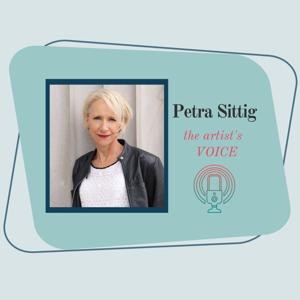


In this conversation with South African SAMA award-winning R&B singer, songwriter and producer Francis Jay, we talk about the role that music and creativity have played in his life from a young age. Francis shares how his sister, opera singer Monica Mhangwana, encouraged him and inspired him to start writing songs. She also passed on some of the knowledge and lessons she had gathered along her own musical journey. Music was part of his family life, with his father playing guitar and his mother singing in a choir. One of the things I found particularly interesting about our conversation was Francis's understanding of creativity and the artistic process. He speaks honestly about the challenges of making art, especially when you care deeply about what you are creating. He believes that everyone has the ability to create something they feel passionate about, and that we should explore art not simply for the end result, but for the experience and process itself. I really enjoyed this conversation with Francis and the depth of thought he brings to the subject of creativity. It was also lovely to have had the opportunity to speak with both Francis and his sister Monica, each of whom has their own creative path. There is something special about seeing how two people from the same family have developed their own artistic voices, while sharing such a humble and caring approach to what they do. Every artist has a story worth hearing, and I am happy to share Francis's story with you. https://www.songfinch.com/artists/francis-jay?srsltid=AU7gw4Wq8xFQWWG1BOlTkA-VkhTtDahwpEK7GwaKrBaFYY-ZksF1xidm If you've enjoyed The Artist's Voice, you're invited to support the project through https://buymeacoffee.com/petrasittig Every coffee helps keep meaningful conversations with artists brewing. Thanks for listening, watching, and cheering on the arts! The Inspiration by Keys of Moon | https://soundcloud.com/keysofmoon Attribution 4.0 International (CC BY 4.0) https://creativecommons.org/licenses/by/4.0/ Music promoted by https://www.chosic.com/free-music/all/ #singersongwriter #musicianinterview #petrasittigtheartistsvoice
In this conversation, I speak with guitarist Zarek Silberschmidt, a full-time freelance musician based in Basel, Switzerland, whose work spans solo and ensemble performance, studio work, composition and music education. Zarek’s approach to the guitar is as curious and unconventional as his musical journey, moving between solo guitar, traditional jazz, fingerstyle, Dixieland and, most importantly, Gypsy Jazz. Zarek talks about his early years in Australasia, teaching himself to play and developing his own way of learning. After moving to Switzerland, he hoped to study Jazz formally, but when he wasn’t accepted into music school, he simply continued playing, practising and finding his own way forward. Then he discovered Gypsy Jazz, and something clicked. He knew this was a musical world he wanted to explore more deeply. We talk about his passion for Gypsy Jazz and some of the history behind this beautiful genre, as well as the many other styles that have shaped his playing. Although Gypsy Jazz has become a particular passion, Zarek’s curiosity continues to take him in different musical directions. I always find it fascinating to hear the stories of artists who begin by teaching themselves and then, through dedication, perseverance and curiosity, discover their own path. Sometimes not getting into an art or music school can open another door, leading an artist towards a different way of learning, meeting people, finding inspiration and developing their own voice. I always find it fascinating to hear the stories of artists who begin by teaching themselves and then, through dedication, perseverance and curiosity, discover their own path. Sometimes not getting into an art or music school can open another door, leading an artist towards a different way of learning, meeting people, finding inspiration and developing their own voice. I first discovered Zarek through his guitar videos on Instagram, and I’m so happy to have had the opportunity to learn more about the musician behind them and about the beautiful world of Gypsy Jazz. Every artist has a story worth hearing. If you've enjoyed The Artist's Voice, you're invited to support the project through https://buymeacoffee.com/petrasittig Every coffee helps keep meaningful conversations with artists brewing. Thanks for listening, watching, and cheering on the arts! The Inspiration by Keys of Moon | https://soundcloud.com/keysofmoon Attribution 4.0 International (CC BY 4.0) https://creativecommons.org/licenses/by/4.0/ Music promoted by https://www.chosic.com/free-music/all/
In this conversation, I speak with wildlife artist Aurélien VLNA, whose paintings grow from a deep connection with animals and the natural world. Aurélien travels around the world to experience wildlife in its natural surroundings. For him, being out in the wild is not simply about observing an animal. It is about sensing its presence, its movement and its energy. He brings this experience into his paintings through a fascinating process that begins with movement and colour. Aurélien sees his paintings in different parts. First comes the soul of the animal. He paints with the same movement he senses in the animal, allowing the energy of the creature to become part of the painting. Only afterwards does he use ink to draw the details and distinctive characteristics that make each animal what it is. “First the soul, then comes the lines.” Gold and silver leaf bring light into his work, almost as though he is revealing the value and preciousness of the animal itself. Some of his paintings take many hours to complete. In a world that is constantly moving faster, Aurélien has chosen another pace. He calls it slow art. “Nature never rushes. Neither do I.” What struck me most during our conversation is the genuine connection I sense between Aurélien and the animals he paints. He has found his own voice and his place within the world of wildlife art, and his work has begun to receive recognition from major wildlife art communities. He was selected for the prestigious Natural Eye 2026 exhibition in London. This is a conversation about wildlife, movement, patience and the search for the soul within a painting. Every artist has a story worth hearing. If you've enjoyed The Artist's Voice, you're invited to support the project through https://buymeacoffee.com/petrasittig Every coffee helps keep meaningful conversations with artists brewing. Thanks for listening, watching, and cheering on the arts! The Inspiration by Keys of Moon | https://soundcloud.com/keysofmoon Attribution 4.0 International (CC BY 4.0) https://creativecommons.org/licenses/by/4.0/ Music promoted by https://www.chosic.com/free-music/all/
In this interview, I speak with Andre Visser, Head of Music at Empangeni High School in South Africa, about a school where music has become much more than an extracurricular activity. It has become an important part of the school’s identity and its approach to educating young people. Empangeni High School’s celebrated music programme has gained national recognition and, through the school’s unique Education Village model, is now reaching towards international opportunities. Andre tells me about the school’s choir, its remarkable successes and the incredible dedication of the learners who make it possible. The choir is currently raising funds to participate in the World Choir Games in Austria in 2027, an opportunity that would give these young singers the chance to perform on an international stage. One particularly special aspect of the choir is that its conductor is none other than the school’s Headmaster, Dr Desmond Sizwe Zwane. Andre shares what this means for the choir and speaks about the commitment and enthusiasm of the students. We also talk about the school’s orchestras and the eagerness of the learners to discover the world of instrumental music. But perhaps most importantly, Andre explains what students gain from being involved in music. Learning an instrument, singing in a choir, performing together and studying music develops much more than musical ability. It encourages discipline, concentration, listening, creativity, confidence, teamwork and perseverance. These skills can support students far beyond the music classroom, and it is striking that many of the learners involved in the music programme are also high achievers academically. This is something I find particularly inspiring. Music education is not separate from education; it can become a way of teaching young people how to think, listen, collaborate, solve problems and commit themselves to something over time. It gives them a space to express themselves while also learning the responsibility of being part of something larger than themselves. Hearing about Empangeni High School’s holistic approach to education made me very excited. The impact reaches beyond the individual learners and into the wider community, where families and supporters are coming together to encourage and sustain these young people. I sincerely hope that the choir will be able to raise the funds needed to come to Austria for the World Choir Games in 2027. Not only would this give them international exposure, but more importantly, it would give these dedicated and talented young learners an experience they will carry with them for the rest of their lives. Every artist has a story worth hearing. Support the Choir: https://www.backabuddy.co.za/campaign/empangeni-high-school-choir The Inspiration by Keys of Moon | https://soundcloud.com/keysofmoon Attribution 4.0 International (CC BY 4.0) https://creativecommons.org/licenses/by/4.0/ Music promoted by https://www.chosic.com/free-music/all/
Júlia Aubà is a singer and musical theatre actress from Barcelona whose love for the stage began when she was very young. Long before she imagined herself pursuing musical theatre professionally, she was captivated by the songs and stories of Disney films, singing along to the music and discovering the joy of bringing characters to life. In this conversation, Júlia gives us an insight into the musical theatre world in Barcelona and what it takes for a young performer to find their place within it. She talks openly about auditions and the way she prepares for them, from getting to know the character and understanding their story to imagining herself already stepping into that character before she even walks into the audition room. What comes through strongly is Júlia’s determination not to give up. She speaks honestly about rejection and the obstacles that young performers inevitably encounter, while reminding us that many of the musical theatre artists we admire today also faced disappointment and rejection on their way to building their careers. Júlia’s strong will, openness and realistic approach reveal a great deal about her not only as a young artist, but also as a person. This is a wonderful conversation for anyone interested in musical theatre, offering encouragement and practical insight into what it means to follow a dream, keep learning and keep going when the path is not always easy. Every artist has a story worth hearing. If you've enjoyed The Artist's Voice, you're invited to support the project through https://buymeacoffee.com/petrasittig Every coffee helps keep meaningful conversations with artists brewing. Thanks for listening, watching, and cheering on the arts! The Inspiration by Keys of Moon | https://soundcloud.com/keysofmoon Attribution 4.0 International (CC BY 4.0) https://creativecommons.org/licenses/by/4.0/ Music promoted by https://www.chosic.com/free-music/all/
In this conversation, I speak with South African artist Jean Theron Louw, an architect whose true passion found its expression through sculpture. Jean studied architecture at the University of the Free State and went on to build a career as an architect before finding her true passion in sculpture. Her architectural training and experience continue to play an important role in the way she approaches her art, from her understanding of structure, proportion and materials to the way she constructs the foundations of her sculptures. Moving from architecture into sculpture also gave Jean a new way to express her voice and explore the issues that matter deeply to her. What makes Jean’s work particularly fascinating is the way her architectural background continues to influence her sculptures. She speaks about the importance of the base of a sculpture and how she can spend a great deal of time working on its measurements, proportions and ratios. Her understanding of materials, their properties and how they work together is also deeply connected to her training as an architect. It is wonderful to see how architecture and sculpture overlap in her practice, bringing together different skills and ways of thinking. Jean also shares the deeply personal journey behind her African wild dog sculptures. In My African Wild Dogs. My Journey into My Inner Turmoil, she explores her relationship with the seriously endangered African wild dog, describing how she fuses with the animal and becomes part of it. This gives rise to her therianthropic wild dog, where the human and animal become intertwined. Through this work, Jean brings together her own inner world with the vulnerability of a species facing an uncertain future. For Jean, sculpture is not simply about creating an object. It is a way of speaking, questioning and raising awareness. She shares some of the challenges faced by artists in South Africa, including the lack of governmental support for the arts, while also talking about her future projects and her desire to continue using her work to draw attention to issues that matter. It was wonderful to hear Jean speak about the journey from architecture to sculpture and how the different disciplines in her life continue to inform and expand her artistic voice. Every artist has a story worth hearing. https://jeantheronlouw.co.za If you've enjoyed The Artist's Voice, you're invited to support the project through https://buymeacoffee.com/petrasittig Every coffee helps keep meaningful conversations with artists brewing. Thanks for listening, watching, and cheering on the arts! The Inspiration by Keys of Moon | https://soundcloud.com/keysofmoon Attribution 4.0 International (CC BY 4.0) https://creativecommons.org/licenses/by/4.0/ Music promoted by https://www.chosic.com/free-music/all/
In this fascinating conversation, I speak with British conductor David Murphy, a musician whose work reaches far beyond the traditional boundaries of conducting. At the heart of his work is a desire to deepen awareness and create a stronger human connection through sound. David takes us back to the beginning of his musical journey, from his early life as a violinist to discovering the art and language of conducting. Along the way, he shares the influence of five extraordinary musical figures: legendary violinist Yehudi Menuhin, whose influence led him towards Indian music and philosophy; Léon Barzin, who gave him a direct connection to the great conducting tradition of the early twentieth century; Pandit Ravi Shankar, with whom he developed a close performing and composing relationship; sarod maestro Ustad Amjad Ali Khan; and the “musician’s musician”, conductor Sir Charles Mackerras. One of the most fascinating parts of our conversation is David’s exploration of the relationship between gravity, movement and time in conducting. The movements we see from a conductor may appear intuitive or purely musical, but behind them lies a remarkable relationship with physical forces and the perception of time. David opens up a different way of looking at the conductor’s role and at music itself, revealing how science can be present in something as seemingly simple as a movement of the hand. This was such a wonderful conversation and an opportunity to look at conducting, music and human connection from a completely different perspective. Every artist has a story worth hearing. https://davidmurphyconducts.org/about/ If you've enjoyed The Artist's Voice, you're invited to support the project through https://buymeacoffee.com/petrasittig Every coffee helps keep meaningful conversations with artists brewing. Thanks for listening, watching, and cheering on the arts! The Inspiration by Keys of Moon | https://soundcloud.com/keysofmoon Attribution 4.0 International (CC BY 4.0) https://creativecommons.org/licenses/by/4.0/ Music promoted by https://www.chosic.com/free-music/all/
In this interview, I speak with Nigerian artist Paschal Ugwu, whose captivating paintings explore the human form, observation and the many layers of the human experience. Based in Abuja, Paschal has developed a distinctive visual language of disjointed human figures, dark skin tones created through expressive paint drippings, exaggerated eyes and a single ear. Working primarily in acrylic on canvas, his figures are immediately recognisable, but behind their striking appearance lies a deeply personal story. Paschal takes me back to his humble beginnings in Orba, Enugu State, where his journey as an artist began as a young boy drawing pictures in the sand and sculpting little figures from it. His fascination with images grew when he discovered My Book of Bible Stories. He began copying the illustrations from the book, and by secondary school he was drawing more and more, gradually realising that art was not simply something he enjoyed, but something he wanted to pursue. He went on to formally study art at the University of Nigeria, Nsukka. Paschal also speaks about the meaning behind the distinctive features of his figures. After losing the hearing in one ear, he became more observant of the world around him. His experience made him think differently about how we see and understand one another. The single ear in his paintings reflects this personal experience, while his exaggerated eyes speak to his belief that the eyes are the window to the soul. For Paschal, looking becomes a way of listening, noticing and connecting with another person. I find Paschal’s paintings incredibly beautiful, but it was his story and the thought behind his work that left me deeply touched. There is something very quiet and human in the way he has transformed his own experiences into a visual language that invites us to look more closely. Paschal dreams of seeing his work reach a much wider audience, and I sincerely hope that dream comes true. His paintings have a story to tell, and I feel very grateful to have had the opportunity to listen to it. Every artist has a story worth hearing. https://www.artsper.com/us/contemporary-artists/nigeria/116511/paschal-ugwu If you've enjoyed The Artist's Voice, you're invited to support the project through https://buymeacoffee.com/petrasittig Every coffee helps keep meaningful conversations with artists brewing. Thanks for listening, watching, and cheering on the arts! The Inspiration by Keys of Moon | https://soundcloud.com/keysofmoon Attribution 4.0 International (CC BY 4.0) https://creativecommons.org/licenses/by/4.0/ Music promoted by https://www.chosic.com/free-music/all/ #artist #inspirationalstory #petrasittigtheartistsvoice
South African artist Louis Jansen van Vuuren is a painter and poet whose life has been shaped by a deep and enduring love for creative expression. As Louis says, “I believe the creative impetus to write and paint comes from the same place.” For him, painting and poetry are not separate paths, but different ways of giving expression to the same creative impulse. In this conversation, Louis talks about his love for art and how it was clear to him from a young age that becoming an artist was what he wanted to do. Growing up in Middelburg, South Africa, his journey eventually led him to study art and design at Stellenbosch University. There, he was encouraged and inspired by the people who recognised his talent and helped shape his path as an artist. Louis reflects on a life that has often held what he describes as a serendipitous element, with people appearing along the way to inspire and support him in his quest to become an artist. Over the years, his journey as a contemporary painter has been one of colour, instinct and an unwavering conviction that art and life are inseparable. Since his first exhibition decades ago, Louis has exhibited throughout South Africa and internationally. His paintings often bring together visual and written language, weaving text and typography into works that feel deeply personal and immediate. His passion for words also led him to publish his first collection of poetry, Termpermes, in 2010, followed by further books exploring memory, place, identity and life. Louis also speaks with great fondness about his life in the beautiful French countryside, where the landscape and the rhythms of everyday life have become part of the story of his continuing creative journey. This is a conversation about following an artistic calling, the people who encourage us along the way, and a life devoted to painting, poetry and the simple, powerful act of creating. Every artist has a story worth hearing. https://louisjansenvanvuuren.com/bio/ If you've enjoyed The Artist's Voice, you're invited to support the project through https://buymeacoffee.com/petrasittig Every coffee helps keep meaningful conversations with artists brewing. Thanks for listening, watching, and cheering on the arts! The Inspiration by Keys of Moon | https://soundcloud.com/keysofmoon Attribution 4.0 International (CC BY 4.0) https://creativecommons.org/licenses/by/4.0/ Music promoted by https://www.chosic.com/free-music/all/ #southafricanartists #artandpoetry #petrasittigtheartistsvoice
In this interview, I speak with contemporary fiber artist Jen Morgan, whose richly textured work celebrates the people, culture, music, and distinctive sense of place that define New Orleans and beyond. Jen’s journey into fibre art began with a background in graphic design and a simple felting workshop that opened up a completely new creative world for her. Today, she works almost entirely with natural fibers, combining wet felting, Nuno felting, and needle felting to create works that, at first glance, can look like paintings. Each piece begins with a hand-felted foundation of natural fibers and silk before thousands of additional fibers are meticulously needle felted into place. Embroidery, hand-spun art yarns, feathers, beads, and found objects can then become part of the work, adding even more depth, texture and detail. Jen explains her process and how she came to discover the possibilities of working with fiber, as well as what inspired her to begin creating portraits. Her love of colour is impossible to miss. Her work is vibrant, expressive and full of life, and she uses colour not simply to create beautiful images, but to tell stories. One of the subjects that has particularly captured Jen’s imagination is the Black Masking Indians of New Orleans. This centuries-old cultural tradition, rooted in the city's African American history and shaped by connections between Black communities and Native American peoples, is expressed through elaborate handmade suits, music, movement and community. The tradition has its roots in the 19th century and has become an important part of New Orleans' cultural identity. Jen's portraits of the Black Masking Indians were another reminder to me of why I believe art matters so much. Through her work, I discovered a part of New Orleans and its history that I might otherwise never have encountered. What I see is not simply a beautiful portrait. There is a story, a culture and a history behind it. This is one of the things I love about art. It opens up worlds for us. It makes us curious. It allows us to discover beauty in places, people and stories where we may never have thought to look. Jen's work also challenges our ideas about what fiber can be. Something that appears to be painted may, on closer inspection, reveal itself to be thousands of tiny pieces of fiber, patiently and lovingly placed by hand. Thank you, Jen, for sharing your story with me and for bringing so much colour, texture and beauty into our world through your art. Every artist has a story worth hearing. https://www.jenmorgancreativearts.com/about-me If you've enjoyed The Artist's Voice, you're invited to support the project through https://buymeacoffee.com/petrasittig Every coffee helps keep meaningful conversations with artists brewing. Thanks for listening, watching, and cheering on the arts! The Inspiration by Keys of Moon | https://soundcloud.com/keysofmoon Attribution 4.0 International (CC BY 4.0) https://creativecommons.org/licenses/by/4.0/ Music promoted by https://www.chosic.com/free-music/all/ #artistinterviews #feltart #portraits #petrasittigtheartistsvoice
From the publisher's feed
This channel is dedicated to raising awareness and showing support for the creative individuals and organizations who are shaping the future of arts and culture. I believe in giving artists a…