
Sign up to save your podcasts
Or

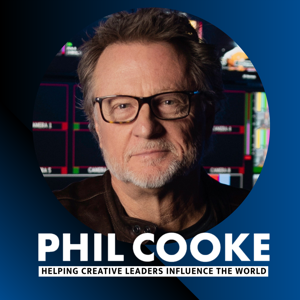


Momentum can catapult your career or leadership, particularly if you're a creative professional. Phil Cooke shows you how to maximize it when it happens and how to make it work to advance your career.
Few people really understand the power of momentum, and how to take advantage of it when it happens. Momentum is serendipitous – which means it happens outside of our control. But if and when it happens we need to recognize it and use it for our advantage.
What is momentum? It may be winning an award that puts you on the map or grabbing a highly coveted project. Maybe a friend's been working on developing a new web-based company, and out of the blue, it was featured on a major news site. Perhaps it's being called for a big media interview, or having a story appear about your work on a major news network.
Whatever it is, momentum causes your career to move forward in a huge growth spurt. So how can you use momentum to your advantage?
First – put a plan in place right now. Are your industry contacts up to date, so you can let people know about your achievement or recognition? Do you know how to get out a press release to announce your success?
Can you do an email blast? Are you building your social media following? Who are the most influential leaders in your industry that you could arrange a meeting with when it happens? When it comes to letting people know about your success, don't be caught flat-footed when something great happens.
Second – Have multiple projects ready at all times. What if you get a major award and someone decides to invest in your future? What can you show them? Dust off those old ideas and get them ready to pitch.
Third – Keep networking. Remember the advertising principle: "Once product sales are down, it's too late to advertise." It's very difficult to move forward when you're standing still. If you've already been networking and keeping your relationships up to date, when something explosive happens, it's far easier to move forward.
Finally – Recognize favor when it comes. Always be scanning the horizon for good things in your life. When God's favor happens, it doesn't always come in the package we expect. You might not immediately think how a small success in one area could translate into something significant, but publicity is built on recognizing potential buzz.
You may feel like nothing is happening right now, but you never know when the match will strike. Momentum is a rare thing, so when it does happen, be ready to fan the flame and keep your career moving forward.
For more tips on momentum and your career, visit Phil's blog at https://www.philcooke.com/the-power-of-momentum-and-why-you-need-it
Get "Unique: The Ultimate Planner for Creative Professionals" here: https://amzn.to/2UbEtcI
(As an Amazon Associate, I earn from qualifying purchases.)
Get a free eBook on Creativity! Sign up for Phil's blog at https://www.philcooke.com
Listen to the Phil Cooke Podcast here: https://itunes.apple.com/us/podcast/philcookes-podcast/id1439369056
Find out more about Cooke Media Group here: https://www.cookemediagroup.com
Visit Phil Cooke's YouTube channel at https://www.youtube.com/channel/UCzivfiicpepFmAv5ZblgYWQ
Showrunner Dean Batali shares how to be a successful writer and producer for network television in this interview with Phil Cooke. With a long career in Hollywood, Dean is known for That '70's Show, Buffy the Vampire Slayer, Good Witch, Ties That Bind, Nazareth, and Chonda Pierce: This Ain't PrettyvilleTV movie. He's also a co-writer of the book Watching TV Religiouslywrittenwith Kutter Callaway.
In part two of this interview, Dean shares practical tips for writers wanting to break into television gleaned from his years of working in Hollywood in both film and TV. Find out how to lead and work within a writer's room, take notes from producers, set up a writer's schedule and pitch your project to a Hollywood executive. You'll also gain insight on how to excel in your writing skills even if you don't live in LA.
Here are a few highlights from the interview…
--A good TV writer "plays well with others." You'll spend 6-12 hours in a room breaking episodes with 6-12 writers and you've got to communicate and collaborate well.
--If you want to learn how to lead a writer's room, build your own! Be the showrunner for your own script and gain the experience, even if it's outside of real production.
--When receiving notes, find out if these are preferred notes or demand notes. Do you have to implement them or just consider them? For the ones that are difficult, learn how to pick your battles.
--Learn how to write on a schedule. Develop a plan, even if it's writing 45 minutes before you go to your "day job."
--Remember when you're working on a deadline that sometimes "good enough" can be good enough.
--When pitching your project, remember to engage your listeners in the first 90 seconds. Are you grabbing them with a hook – even if it's not necessarily the pitch? Gain their interest first.
--If you don't live in Hollywood, remember you can get good wherever you are.
--Make sure to find a support group for your writing and for the spiritual aspect of what you're trying to accomplish.
Find Dean Batali on IMDb here: https://www.imdb.com/name/nm0060678/?ref_=nv_sr_1
Follow Dean Batali on Twitter: https://twitter.com/deanbatali
Check out these books mentioned in the interview…
"Watching TV Religiously" by Kutter Callaway with Dean Batali https://amzn.to/2FkWf43
"One Big Thing: Discovering What You Were Born To Do" by Phil Cooke https://amzn.to/2Y67CEr
"Creativity, Inc." by Ed Catmull https://amzn.to/2FlePJm
For more tips on TV, film and Hollywood, visit Phil's blog at https://www.philcooke.com
Get a free eBook on Creativity! Sign up for Phil's blog at https://www.philcooke.com
Listen to the Phil Cooke Podcast here: https://itunes.apple.com/us/podcast/philcookes-podcast/id1439369056
Find out more about Cooke Media Group here: https://www.cookemediagroup.com
Visit Phil Cooke's YouTube channel at https://www.youtube.com/channel/UCzivfiicpepFmAv5ZblgYWQ
Showrunner Dean Batali shares how to be a successful writer and producer for network television in this interview with Phil Cooke. With a long career in Hollywood, Dean is known for That '70's Show, Buffy the Vampire Slayer, Good Witch, Ties That Bind, Nazareth, and Chonda Pierce: This Ain't PrettyvilleTV movie. He's also a co-writer of the book Watching TV Religiouslywrittenwith Kutter Callaway.
In this interview, he shares his story of breaking into Hollywood and offers tips for creatives interested in a career in film and television, plus specific helps for writers including getting your first script produced, pushing past writer's block, meeting deadlines and the value of writing a spec script.
Here are a few highlights from the interview…
--The more you know what you want to do in the industry, the better. (i.e. line producer, showrunner, director) Figure out what you're aiming at.
--If you want to be great in the kingdom of Hollywood, become a servant of all. (This attitude was key to helping him break in!)
--Don't go into a meeting unless you've done your homework. (Check IMDb, Facebook, LinkedIn.) It gives you an opportunity to affirm people for their work.
--Breaking into Hollywood depends on talent, access and opportunity – but you've got to have the skills.
--Spec writing is still a necessary step before you write a pilot. When he's hiring for a show, he wants to know if people can write the style he's looking for.
--Dean relates Malcolm Gladwell's 10,000 hour rule to writing with those hours equaling 10,000 pages.
--Forcing through deadlines can help make you a better writer. He believes that sometimes good enough is good enough! Just get your first 2-3 scripts done, rewrite a few drafts, but then move on.
--Learn to separate yourself from the work so you can take notes and rewrite as necessary without taking it too personally.
--Be ready for a lot of rejection in Hollywood. Keep producing; be a self starter and if necessary, be ready to shift your dreams.
Find Dean Batali on IMDb here: https://www.imdb.com/name/nm0060678/?ref_=nv_sr_1
Follow Dean Batali on Twitter: https://twitter.com/deanbatali
Check out these books mentioned in the interview…
"Watching TV Religiously" by Kutter Callaway with Dean Batali https://amzn.to/2FkWf43
"One Big Thing: Discovering What You Were Born To Do" by Phil Cooke https://amzn.to/2Y67CEr
"Creativity, Inc." by Ed Catmull https://amzn.to/2FlePJm
For more tips on TV, film and Hollywood, visit Phil's blog at https://www.philcooke.com
Get a free eBook on Creativity! Sign up for Phil's blog at https://www.philcooke.com
Listen to the Phil Cooke Podcast here: https://itunes.apple.com/us/podcast/philcookes-podcast/id1439369056
Find out more about Cooke Media Group here: https://www.cookemediagroup.com
Visit Phil Cooke's YouTube channel at https://www.youtube.com/channel/UCzivfiicpepFmAv5ZblgYWQ
Ever offended someone by giving unsolicited advice? No matter how noble your intentions are, giving advice when it's not asked for can backfire on you. Here's Phil Cooke's advice – on not giving advice!
I'm embarrassed to say that it's taken me most of my life to understand this, but it's true. Except in very rare situations, giving people advice who haven't asked for it just doesn't work – no matter how noble your intentions. In fact, they will often be offended and your very relationship can be damaged.
When my daughters were growing up I would see them making a mistake and offer my advice. Did they take it? Rarely. More often than not, they were offended. My wife Kathleen was the same way. Unsolicited advice almost always seems judgmental and is therefore unappreciated.
After a lot of fiery darts being flung my way, here are a few things I've learned:
The impact of your advice isn't just based on the insight, it's also based on the timing. Bottom line? Don't give advice, unless they ask.
Anyone else found that to be true? – Phil Cooke
Read more – and get more tips on leadership and creativity here: https://www.philcooke.com/stop-giving-advice-to-people-who-dont-ask-for-it/
Get a free eBook on Creativity! Sign up for Phil's blog at https://www.philcooke.com
Listen to the Phil Cooke Podcast here: https://itunes.apple.com/us/podcast/philcookes-podcast/id1439369056
Find out more about Cooke Media Group here: https://www.cookemediagroup.com
Visit Phil Cooke's YouTube channel at https://www.youtube.com/channel/UCzivfiicpepFmAv5ZblgYWQ
Changing your business, ministry or non-profit name can re-invigorate your organization. Phil gives a checklist for leaders to think through before changing your name while considering brand equity before making the switch. https://www.cookemediagroup.com
Sometimes the need to change a organization's name is obvious, but more often, leaders can't always put their finger on a good reason. In many cases, there's so much brand equity and goodwill in a name, it's not worth changing, but in other cases there are very good reasons to consider a switch.
It's time to change your name when…
1. The mission changes. Perhaps you're a nonprofit that began building water wells in Africa, but now you're moving in a different direction. Your name should be identified with the organization's mission, so when that mission changes, it may be time to change the name.
Cooke Pictures recently went through a name change to more accurately reflect the breadth of what we do. Cooke Media Group more clearly shares with our audience of pastors and ministry or non-profit leaders what we can offer them in amplifying their message to the world.
2. You expand or contract. Sometimes, an organization grows and offers new services or products, and sometimes an organization specializes so they can focus on a more narrowniche. Your name should reflect what you are doing at the moment. It may be time to change your name to reflect that shift.
3. Your current name is hurting your business. For instance, Phillip Morris, the tobacco industry behemoth, changed its name to Altria in 2001 to move away from the negative perceptions ofthe tobacco industry. In other situations an organization's name can be caught up in negative publicity because of political or cultural changes. Changing a name can improve that perception.
4. There's a major shift in technology or culture. Your name can become outdated over time. UPS was originally the American Messenger Company, but delivery services experienced a radical shift so they changed their name. In a different way, names like "First Baptist," "Third Presbyterian," and other legacy denominational church names don't seem to resonate as much in today's culture. Changes in these situations can often reinvigorate an organization.
5. Your name doesn't translate internationally. Today the world is global. There's an iconic story about Chevrolet launching the Nova model in Spain only to see sales tank. That's when the marketing department realized that in Spanish, "Nova" means "no go."
6. You can't get the URL. Owning the website based on your company name and the social media platforms are critical in today's digital world. If you can't secure the URL and the appropriate social media handles that work with your name, then it might be time to change.
7. You can shorten it. Shorter and simpler is almost always better. A good example is Bearing Point. It started when two companies merged: Peat Marwick International and KlynveldMain Goerdeler. They could have been "Peat Marwick KlynveldMain Goerdeler" but changed the name to KPMG Consulting, and eventually Bearing Point. (It was a good move!)
Don't discount what a new name can do for your organization. It can re-invigorate an organization and help people understand better what you do.
Grow your brand equity and influence! Phil's book "Unique: Telling Your Story in the Age of Brands and Social Media" is available here: https://amzn.to/2NIQRdu
(As an Amazon Associate, I earn from qualifying purchases.)
For more about branding and marketing, visit Phil's blog at https://www.philcooke.com/when-its-time-to-change-a-business-or-nonprofits-name/#more-17508
Listen to the Phil Cooke Podcast here: https://itunes.apple.com/us/podcast/philcookes-podcast/id1439369056
Find out more about Cooke Media Group here:https://www.cookemediagroup.com
Visit Phil Cooke's YouTube channel at https://www.youtube.com/channel/UCzivfiicpepFmAv5ZblgYWQ
Are legal issues holding your film project or idea back? Phil Cooke interviews Hollywood-based entertainment attorney Sam Curphey about contracts, memos and other legal topics filmmakers must deal with.
Sam Curphey represents producers, writers, directors, actors, rights holders, and on-screen and new media talent. He is a guest lecturer on entertainment legal topics at Act One and at Biola University and a member of the State Bar of California. He has been the production attorney for "Woodlawn" and "Mom's Night Out" and other films and represents individual clients including YouTube stars Dude Perfect.
Topics covered in this interview include:
Why do I need an entertainment lawyer?
How soon should I call an attorney about my project or film?
Can I use my uncle who is an insurance attorney for my film project?
What's the biggest mistake Sam has seen filmmakers make?
How can I protect my idea? Should I ask for a NDA (non-disclosure agreement)?
Should I sign a script submission release?
What is fair use? What's a safe way to shoot if I'm not sure about fair use in my film?
Do I need to be concerned about legal issues with my YouTube video?
Do I need an LLC?
I have a limited budget; how much does it cost to hire an attorney?
Other topics include:copyright laws, chain of title, memos, contracts, release forms, partner agreements, E&O insurance, public domain, fair use, and more.
Take away thoughts:
Find out more about Sam Curphey here: http://samcurpheylaw.com/
For more filmmaking tips, visit Phil's blog at https://www.philcooke.com
Get a free eBook on Creativity! Sign up for Phil's blog at https://www.philcooke.com
Listen to the Phil Cooke Podcast here: https://itunes.apple.com/us/podcast/philcookes-podcast/id1439369056
Find out more about Cooke Media Group here: http://www.cookemediagroup.com/
Visit Phil Cooke's YouTube channel at https://www.youtube.com/channel/UCzivfiicpepFmAv5ZblgYWQ
A podcast or media interview can impact your career in profound ways, offering the opportunity to share your expertise and enhance your reputation. Phil Cooke offers seven tips to help you be more articulate when your interview opportunity comes along.
With the rise in popularity of podcasts, your chances of being interviewed are going way up! If you're a designer, leader, filmmaker, teacher, coach – whatever you do, your reputation and credibility can be heightened by being able to articulate well.
Here are Phil's tips on how to do a great interview:
The Bible says to be ready in season and out of season. You should be ready to share your story or your area of expertise at any moment, should the interview opportunity come up. Once people see how articulate you are, it can open more opportunities to get your message heard. – Phil Cooke
For more tips on how to do a great interview, visit Phil's blog at https://www.philcooke.com/how-to-be-more-articulate-in-everyday-interviews-and-conversations/#more-17308
Get a free eBook on Creativity! Sign up for Phil's blog at https://www.philcooke.com
Listen to the Phil Cooke Podcast here: https://itunes.apple.com/us/podcast/philcookes-podcast/id1439369056
Find out more about Cooke Pictures here: http://www.cookepictures.com/
Visit Phil Cooke's YouTube channel at https://www.youtube.com/channel/UCzivfiicpepFmAv5ZblgYWQ
Are your leadership skills hindered by your mood? Phil Cooke takes a hard look at how emotions impact and often damage a ministry or organization.
How do you come in to work? Angry, happy, sad… Over years of coaching pastors and leaders of ministries and non-profits, Phil has seen the tragic consequences of leaders driven by emotion.
You cannot project your emotions onto your team. If your mood changes from day to day or moment to moment, no one on your team knows how to respond to you. The standard of excellence is lost as everything your team accomplishes is evaluated by your mood – whether good or bad.
Take a hard look at how your emotions impact what you do. The best leaders motivate and inspire their teams. By leading with your emotions, you'll never be able to take your people to the next level of excellence. – Phil Cooke
For more tips on becoming a better leader, visit Phil's blog at https://www.philcooke.com/the-damage-from-leaders-who-are-driven-by-emotion/#more-17197
Get a free eBook on Creativity! Sign up for Phil's blog at https://www.philcooke.com
Listen to the Phil Cooke Podcast here: https://itunes.apple.com/us/podcast/philcookes-podcast/id1439369056
Find out more about Cooke Pictures here: http://www.cookepictures.com/
Visit Phil Cooke's YouTube channel at https://www.youtube.com/channel/UCzivfiicpepFmAv5ZblgYWQ
Interested in a successful career in Hollywood? Phil Cooke interviews Hollywood Prayer Network founder Karen Covell with tips on the spiritual aspect of how to be survive – and thrive in Hollywood.
Jim and Karen Covellstarted the Hollywood Prayer Networkas a prayer ministry in 2001. As active industry professionals, their vision and mission is to encourage Christians to pray for believers and non-believers working in the entertainment industry in Hollywood.
A career in Hollywood in film or television is challenging and very few people survive and go on to success. Whether you're an actor, director, producer or crew on a set in Hollywood, Karen offers several keys to being successful and "making it in Hollywood."
For creatives in Los Angeles, community is important.You can't do it alone. Often creatives feel like they're all alone in Hollywood, but that's not the case. The Hollywood Prayer Network can help Christians connect with other Christians in LA and gain a prayer covering for what they are working to accomplish in the industry.
The church needs to understand that society needs creative people.Hollywood is defining our culture and Christians can have an influence on that. Phil adds that the people in Hollywood are not necessarily anti-God or anti-Christian, it's more how they've been raised.
Creative people are spiritual and open to spiritual things.Karen mentions that she's never been turned down when she offers prayer. She's seeing a shift in the industry where Christians are not afraid to share with others – and unbelievers are open to what someone believes, even if it's different from what they believe.
People moving to LA should be ready to commit for the long haul to be successful. Get experience first through the city you live in or nearby before you move to LA. Hollywood is a brutal place. You must stay connected to your faith and know that there's a bigger picture outside of your career.
Phil adds that it's important to make sure that your spouse is united with you in the decision to move to Hollywood. Make sure you're on the same page before you move here. (See Phil's blog on that topic here: https://www.philcooke.com/why-couples-need-to-agree-on-each-others-career-choices/#more-17303)
Phil encourages creatives not to come to Hollywood unless you're committed and driven. There are other cities where other filming is happening; it may not be the top tier, but they are hiring local crew and you can gain experience before you make the leap to LA. Karen adds you can connect with the film commission in every state where you live.
Don't come to Hollywood unless there's nothing else you can do. You have to know in your heart this is absolutely the right move for you.
Karen's last words of advice for creatives considering a move to Hollywood:
--Have relationships along the way.
--Know that even the biggest failure is not a failure; you're learning and growing. If you find it hard, connect with the Hollywood Prayer Network!
--Work hard and keep growing in your talent.
--Be prepared to persevere for the long haul.
The Hollywood Prayer Network has three goals:
Join the movement and check out the resources at https://www.HollywoodPrayerNetwork.org.
Find out more about Karen at https://www.KarenCovell.com
Creatives are loving Phil's new planner. Order your copy of "Unique: The Ultimate Planner for Creative Professionals" here: https://amzn.to/2Gdx2JN
(As an Amazon Associate, I earn from qualifying purchases.)
Get a free eBook on Creativity! Sign up for Phil's blog at https://www.philcooke.com
Listen to the Phil Cooke Podcast here: https://itunes.apple.com/us/podcast/philcookes-podcast/id1439369056
Find out more about Cooke Pictures here: http://www.cookepictures.com/
Visit Phil Cooke's YouTube channel at https://www.youtube.com/channel/UCzivfiicpepFmAv5ZblgYWQ
Will live streaming affect your church attendance? Phil Cooke consults many pastors and ministry leaders on navigating a changing media landscape, and one of the big changes is live streaming.
If you're hesitant about live streaming, here are a few big picture things to keep in mind:
The church will always be a place where people engage.It's so much more than listening to a sermon online; there will always be a place in people's lives for attending an actual church.
Streaming makes what God is doing in your church available to people elsewhere. You're able to reach people who are not able to physically attend for one reason or another, such as travel or sickness. Shut-ins can benefit as well.
Phil has not seen attendance decline when churches begin live streaming. Statistics show that when you stream, it opens your service up to a larger audience and you begin to have a global impact.
Here are a few quick tips for live streaming…
Try to avoid wide shots.Remember that people are watching on a small screen, whether through an iPad, laptop or phone. Try to get up close to create a more intimate experience for those screens. It's much like shooting for IMAG.
(See Phil's blog about directing for IMAG here: https://www.philcooke.com/the-5-dos-and-5-donts-when-directing-for-church-imag-screens/#more-16077 )
Think in terms of a campus experience,rather than a live experience. Make people feel like they're part of a campus by speaking to them directly. Thank them for watching and always remember to invite them to visit.
Make live streamers feel like they're part of your church. If your live stream is compelling and more of an experience, people will want to support it and be a part of it.
Phil encourages pastors and ministry leaders to explore the possibilities of live streaming. Live stream doesn't take the place of a church; rather, it's all about making the gospel available to as many people as possible. – Phil Cooke
For more about live streaming, visit Phil's blog for here:
https://www.philcooke.com/will-livestreaming-a-worship-service-hurt-a-churchs-attendance/
https://www.philcooke.com/youre-a-church-so-why-arent-you-live-streaming/#more-14680
https://www.philcooke.com/the-5-dos-and-5-donts-when-directing-for-church-imag-screens/#more-16077
Get a free eBook on Creativity! Sign up for Phil's blog at https://www.philcooke.com
Listen to the Phil Cooke Podcast here: https://itunes.apple.com/us/podcast/philcookes-podcast/id1439369056
Find out more about Cooke Pictures here: http://www.cookepictures.com/
Visit Phil Cooke's YouTube channel at https://www.youtube.com/channel/UCzivfiicpepFmAv5ZblgYWQ
From the publisher's feed

1,695 Listeners
10,764 Listeners
2,265 Listeners

19,474 Listeners

152,949 Listeners

183 Listeners

26,554 Listeners