
Sign up to save your podcasts
Or

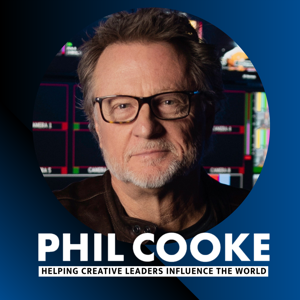


Building effective teams is an important leadership skill that many leaders get wrong. Here are my 5 key mistakes that are holding many leaders back from the amazing work their team is capable of. https://philcooke.com
Subscribe to My Podcast for more good advice for leaders and creatives https://podcasts.apple.com/us/podcast/phil-cooke-podcast/id1439369056
Do you have a message or story the world needs to hear? As a Hollywood producer and media consultant, I offer advice for leaders and creatives each week on filmmaking, digital media, publishing, strategy, communication, leadership, culture and faith – to help you reach a greater audience.
Building Teams: 5 Things Leaders Get Wrong
Good leaders know how to develop a great team. The key isn't just maximizing the talent of each member, it's also about combining that collective talent to do amazing things. But there are five key mistakes I see leaders make over and over that keep them from building a legendary team…
If you want to go fast, go alone. If you want to go far, build a great team. – Phil Cooke
Schedule:
New episodes are uploaded every Tuesday. Make sure to Subscribe and hit the Notification bell to be notified when they go live.
Other Great Resources:
Sign up for my blog and get a free eBook on creativity at https://www.philcooke.com
Follow me:
Twitter https://twitter.com/philcooke
Facebook https://www.facebook.com/philcookepage/
Instagram https://www.instagram.com/philcooke/
Podcast https://itunes.apple.com/us/podcast/philcookes-podcast/id1439369056
Find out about Cooke Media Group here: https://www.cookemediagroup.com
Getting new visitors to church can be hard. Keeping them can be even harder. Phil Cooke helps pastors understand the importance of first impressions in an 8 second culture.
Technology has dramatically changed the way we live. We live in an 8 second world where people are so distracted, they make decisions about people, churches and even pastors – within the first 4-8 seconds. For pastors, this means you must be intentional about training your teams and your people to create a culture of hospitality in your church.
This involves focus on every level, from the parking lot to the lobby and all the way to the sanctuary. You've got to capture a visitor's attention in the first 8 seconds as they come onto your property! Getting their attention matters and can help pave the way for them to have a deeper experience with God. The stakes are too high to fail. – Phil Cooke
Get my book "The Way Back": https://amzn.to/2QhIFSY
(As an Amazon Associate, I earn from qualifying purchases. This helps support my channel and allows us to continue making videos like this. Thank you for the support!)
Schedule: Podcasts are uploaded every Tuesday. Make sure to subscribe to be notified when podcasts go live.
Other Great Resources: Sign up for my blog and get a free eBook on Creativity here: https://www.philcooke.com
Make sure to check out my YouTube channel and subscribe if you haven't already at https://www.youtube.com/c/philcookeofficial?sub_confirmation=1
Follow me:
Twitter https://twitter.com/philcooke
Facebook https://www.facebook.com/philcookepage/
Instagram https://www.instagram.com/philcooke/
Find out about Cooke Media Group here: https://www.cookemediagroup.com
Phil Cooke interviews Bobby Gruenewald about his concept of the "abundance mindset" that he applies in leading creative teams. Bobby serves as Pastor and Innovation Leader at Life.Church, a multisite church based in Oklahoma; and is the founder of the YouVersion Bible App with over 500 million unique downloads globally. He is passionate about exploring new ideas and finding practical ways to leverage them for the global Church.
Quick takeaways from this interview…
"The fruit [idea] is not my identity; my identity is in the Tree…This makes me very open to feedback. It's okay if this isn't the best idea. I'm confident God's going to enable me to produce more." – Bobby Gruenewald
"Part of being creative is not being too critical too early, but at some point being realistic and filtering out things that won't work." – Phil Cooke
The "abundance mindset" axiom: "If you don't like this idea, don't worry, there's more where that came from. God designed me to create and I'm confident in that design." – Bobby Gruenewald
"The credibility of the critic really matters." – Phil Cooke
"When you have people with your best interest (or the vision or the ministry) at heart that give you feedback, those are the right people to listen to." – Bobby Gruenewald
Follow Bobby Gruenewald @bobbygwald
https://www.facebook.com/bobbygwald/
https://www.instagram.com/bobbygwald/
https://twitter.com/bobbygwald
Find out more about YouVersion: https://www.youversion.com/
Get the free Bible App from YouVersion here: https://www.youversion.com/the-bible-app/
Find out more about Life Church: https://www.life.church/
For more tips on leadership and leading creative teams, visit Phil's blog at https://www.philcooke.com
Get a free eBook on Creativity! Sign up now at https://www.philcooke.com
Visit Phil Cooke's YouTube channel at https://www.youtube.com/channel/UCzivfiicpepFmAv5ZblgYWQ
Find out more about Cooke Media Group here: https://www.cookemediagroup.com
TV graphics greatly impact your audience's perception of your message. Phil Cooke shares how to make effective graphics for your livestream church services, videos and television programs. Your graphics are far more important than you may think!
With non-linear editing it's amazing what we can do with television graphics, but the original purpose has not changed. We use graphics to convey information beyond what the speaker is saying. I was preparing some graphic design notes for a client and thought these ideas for TV graphics are a good reminder for video editors, television producers and graphic designers. When it comes to onscreen TV graphics, the keys are:
3.Be sensitive to the content. Don't just insert a phone number, address, or URL anywhere! Make sure it's not a distraction from the content at the moment. You will maximize your response by being sensitive to what's happening onscreen. Ask yourself: is this taking away or adding to the message of the speaker?
5.Remember size matters: We don't have to use large graphics, but do remember that the typical religious TV viewers is often older. Therefore, "readability" is critical. If that fits your program's demographics, make sure the graphic is on long enough and is clear enough for your grandmother to read easily.
Doing graphics well makes a big difference in the impact of your video or program. Think in terms of how your graphics can help your message reach more people. – Phil Cooke
Get the book "The Last TV Evangelist" here: https://amzn.to/2Yl0nYu
(As an Amazon Associate, I earn from qualifying purchases.)
For more tips on TV graphics, visit Phil's blog at https://www.philcooke.com/tv_graphics/#more-1999
Get a free eBook on Creativity! Sign up at https://www.philcooke.com
Listen to the Phil Cooke Podcast here: https://itunes.apple.com/us/podcast/philcookes-podcast/id1439369056
Find out more about Cooke Media Group here: https://www.cookemediagroup.com
Visit Phil Cooke's YouTube channel at https://www.youtube.com/channel/UCzivfiicpepFmAv5ZblgYWQ
Good leaders know that a positive work environment is more important than vision, especially when it comes to leading a creative team. Phil Cooke shares 10 tips to creating a vibrant creative culture in your ministry or organization for your creative team to reach their best work.
It's no secret that culture is more important than vision.I've worked in creative, vibrant cultures where original thinking is valued and wonderful things happen. On the other hand, I've worked at organizations where you could literally feel the oppression when you walked into the building. Those destructive cultures often have leaders with great vision and potential, but because the culture is so negative, that vision will never be realized.
So how to do you create a creative culture? Here are 10 principles I've used to turn around numerous organizational cultures:
Your creative team should be able to call anyone to ask questions and discuss ideas. Don't force them to communicate through supervisors, managers, or anyone else. Create a free-flowing communications system, and the ideas will grow.
Creating a creative and positive culture in your organization is one of the most important things you can do as a leader. Create this culture and you and your team will do amazing things. – Phil Cooke
For more about designing a creative culture, visit Phil's blog at https://www.philcooke.com/ten-critical-keys-for-designing-a-creative-culture/
Get a free eBook on Creativity! Sign up for Phil's blog at https://www.philcooke.com
Find Ed Catmull's book "Creativity, Inc." on Amazon here:https://amzn.to/2Jh4D6W
Get Dale Carnegie's book "How to Win Friends and Influence People" here: https://amzn.to/2VklDAK
(Note that as an Amazon Associate, I earn from qualifying purchases.)
Listen to the Phil Cooke Podcast here: https://itunes.apple.com/us/podcast/philcookes-podcast/id1439369056
Find out more about Cooke Media Group here: https://www.cookemediagroup.com
Visit Phil Cooke's YouTube channel at https://www.youtube.com/channel/UCzivfiicpepFmAv5ZblgYWQ
Can you be creative on a deadline? Most creative professionals work within schedules and time frames – the television episode shooting in two days, the fast-approaching deadline for a film to be locked, or a ministry video due for a Sunday's service. Phil Cooke offers techniques on delivering creativity under fire when you don't have the luxury of waiting until the mood strikes.
We often think that creativity is something that's inspired, beautiful, and only happens when the spark strikes or the muse speaks. Actually, nothing could be further from the truth.
I'm a proponent of what I call "practical" creativity – which means creativity on a deadline. I've spent my career working for clients – studios, networks, nonprofits, major churches and ministries. In those cases, I don't have time to wait for inspiration, I have to deliver ideas on a schedule. Worse – sometimes I have to deliver when there's enormous pressure, risk, and a great deal on the line.
If you're in the film and television industry or in any position which requires your talents as a creative, chances are, you work in a similar situation. While we'd all like to experience the comfort of waiting for wonderful ideas to come from the heavens, with most projects, we have to conjure up something right now.
Certainly we can't totally control creativity, and can't just hit an on and off switch, but there are techniques we can use to draw from when we have to deliver creativity under fire.
To know what creative ideas will work, you need to know what's working now, what's failing, and what's already been done. Keep your finger on the pulse of the culture.
Plus, experience and confidence tends to quiet that voice in your head that's telling you that you have no talent and your work is trash. However, the key is that you should be mastering your craft when the pressure is not happening, so that when it does hit, you're ready to be amazing.
Always have creative friends and mentors you can reach out to when you're coming up blank because building on each other's ideas is a key to creating brilliant work. Who would you call right now if you needed some help? Create a list so you'll have it when things get tough.
Unless you've decided to be a landscape painter and only work when the muse speaks, then chances are you need to deliver creative projects on time and on budget. You can master practical creativity, but it takes preparation and discipline. There's no better time to start than right now. – Phil Cooke
For more tips for creative professionals, visit Phil's blog at https://www.philcooke.com/how-to-be-creative-even-when-its-risky
Get Phil's "Unique: The Ultimate Planner for Creative Professionals" here: https://amzn.to/2vAj0eE
Get a free eBook on Creativity! Sign up for Phil's blog at https://www.philcooke.com
Listen to the Phil Cooke Podcast here: https://itunes.apple.com/us/podcast/philcookes-podcast/id1439369056
Find out more about Cooke Media Group here: https://www.cookemediagroup.com
Visit Phil Cooke's YouTube channel at https://www.youtube.com/channel/UCzivfiicpepFmAv5ZblgYWQ
As a leader, speaking skills are critical to your career. Whether you need to inspire your team, preach to your congregation or captivate an audience as a keynote speaker for a major conference, Phil Cooke offers ten tips to improve your ability to speak to groups.
Conquer this list and you're on your way:
1) Stop using "fill in" words like "um," "ah," "like," or "aaah." In my opinion, few things make a speaker look more amateur than using fill-in words. Don't be afraid to simply pause and think. Better yet, know your talk so well that you won't stumble.
2) Don't get obsessed with your notes. Referring to your notes too often is the best way to tell your audience you're not prepared. Practice, learn your talk, get comfortable with it, and stop constantly looking down and checking your notes.
3) Don't let unexpected things throw you off balance. I've spoken to live audiences hundreds of times, and problems happen more often than you think. The sound goes out, lighting glitches happen, microphones cut out, there's a crazy person in the audience, or more often there's a technical problem using PowerPoint or Keynote. Always expect the unexpected and don't let it ruffle you or throw you off. Make a joke about it and move on.
4) Be very careful about using PowerPoint. Read the book "Give Your Speech, Change the World: How To Move Your Audience to Action." It begins with a simple premise: become a good speaker first, and then add PowerPoint if necessary.
5) Make eye contact with the audience. More speakers than you think avoid eye contact with the people in the seats. They look at their notes, stare at the floor, or lock in on the wall behind the audience. Look at the audience just as if you were talking to a friend. Without that relationship, you won't make an impact.
6) Make sure your "speaking voice" is the same as your normal talking voice. This comes with practice, and sometimes you do have to project your voice. As much as possible, however, make sure it's YOUR voice, not some made up voice that you think sounds dramatic or important.
7) Don't get stuck behind the podium. Too many speakers look like they're bolted to the floor. Great speakers move, use expressions and speak "physically" as well as vocally.
8) Make sure you connect with the audience. Although there will always be audience members who fall asleep, look disinterested or bored, be on the lookout for large numbers mentally checking out. This is really about knowing your audience and understanding their expectations.
I always do my best to find out ahead of the event who's in the audience, what their interests are, and why they came. Certainly you want to give them more than they expect, but start with meeting their expectations.
9) Don't lose your place in your presentation or in your notes. Know your presentation. But if you're developing something new and need your notes, think about printing them in a large font that's easy to read. Getting lost is a strong signal that you're not prepared, and you'll quickly lose credibility.
10) If the audience looks bored or people start leaving early, you're in trouble. Of course, this is your worst nightmare, and if it happens in big numbers there's no real fix because it's simply too late. Either you've missed their expectations or not been interesting or professional enough for them to stick with you to the end. My advice is more practice.
Bonus: Understand there will always be outliers within the audience that you won't figure out. However, it's the larger group that should be your focus.
Do your jokes get a laugh? Is the audience attentive during your serious moments? Are they taking notes? If you can win the greater group, and do it with consistency, then you know you're on the right track. – Phil Cooke
For more tips on public speaking, visit Phil's blog at https://www.philcooke.com/my-top-ten-secrets-to-improve-your-public-speaking/
"Give Your Speech, Change the World : How to Move Your Audience to Action" is available here: https://amzn.to/2UOYVvs
(As an Amazon Associate, I earn from qualifying purchases.)
Get a free eBook on Creativity! Sign up for Phil's blog at https://www.philcooke.com
Listen to the Phil Cooke Podcast here: https://itunes.apple.com/us/podcast/philcookes-podcast/id1439369056
Find out more about Cooke Media Group here: https://www.cookemediagroup.com
Visit Phil Cooke's YouTube channel at https://www.youtube.com/channel/UCzivfiicpepFmAv5ZblgYWQ
Are you wasting time pursuing a dream? Passion isn't enough to get you where you want to be in your career. Phil Cooke offers sound advice to help you discover what you are wired to do – and avoid getting derailed along the way.
Jiminy Cricket ("When you wish upon a star…") would not be happy with me, but the truth is, I'm getting tired of people wasting their lives following dreams they'll never achieve.
I have screenplays on my desk from writers who "have a dream" about writing a Hollywood screenplay, but aren't interested in actually attending a writing class. I met an actor recently who left his wife and young son to pursue his dream of an acting career. The problem is, he has absolutely no talent.
I know -- some of you will push back about me being too harsh. "Who is Phil Cooke to dash someone's dream?" "How arrogant to tell someone they don't have talent or they're pursuing the wrong dream for their life?"
I understand. I struggled for years with the question of whether or not I should continue encouraging people or tell them the hard truth. But writing my book, "One Big Thing: Discovering What You Were Born to Do" taught me something that changed everything: It's much easier than most people think to actually determine the real "one big thing" that we were born to accomplish with our lives. https://amzn.to/2IARV2z
But Hollywood, the self-help industry, the esteem movement and well-intentioned friends have led us down a far more romantic, but ultimately destructive path. We've been taught that all it takes is a dream, and you can accomplish whatever your heart desires.
As a result, we have a flood of would-be filmmakers descending on Hollywood every year. Publishers are deluged with poorly written manuscripts from wannabe writers with no talent, and auditions for shows like "American Idol" have long lines of singers who can't hold a tune in a bucket.
High school drama teachers, parents, and well meaning friends have encouraged them for years. But at what cost? How many years have been robbed from potentially finding the one thing where they could actually be extraordinary?
Don't get me wrong. Pursuing a dream is fine. But unless you have the talent, skill, ability, a commitment to achieve that dream, you're simply wasting your life. But how do you figure it out? How can you avoid spending years pursuing a delusion?
In my book, I suggest you start with a few key questions:
1) What comes easy for you? Think about your life. How many times were you asked to do something because you were the organized one, the athletic one, the best writer, or good with numbers?
Perhaps you're the responsible one who's always expected to keep your group together at the shopping mall. Maybe you're the person everyone turns to in a crisis.
The confirmation of other people matters, so take a minute and think about talents you possess that other people notice. Whatever it is, that ability could be a key indicator of the dream you should be following – or what I call in my book, your "one big thing."
2) What do you love? There are plenty of people volunteering at jobs they love and working on the side to make a living. But what if you could combine the two? What if you could actually make a living working at a job you love? What's the first thing you think about when you wake up in the morning and the last thing you think about when you go to bed at night?
3) What drives you nuts? It may sound strange, but I've discovered that in many cases, the thing you hate the most could be the problem you were born to fix. In other words, what do you hate? The answer may change the course of your future.
4) Finally - have you done the time? I'm not talking about prison, but a question of commitment. Professional writers write. Musicians practice. Designers design.
You may not have a job, a business card, or a buyer, but if you have a dream, what foundation are you laying today for success tomorrow? What classes are you taking? Have you found a mentor or coach? It's time to stop being average at so many things and start being extraordinary at one big thing.
This is your moment. Maybe it's time to stop just following a dream and spend more time discovering what dream you should follow.
Get Phil's book "One Big Thing: Discovering What You Were Born to Do" here: https://amzn.to/2IARV2z
(As an Amazon Associate, Phil earns from qualifying purchases.)
For more on this topic, visit Phil's blog at https://www.philcooke.com/please-stop-following-your-dreams/
Get a free eBook on Creativity! Sign up for Phil's blog at https://www.philcooke.com
Listen to the Phil Cooke Podcast here: https://itunes.apple.com/us/podcast/philcookes-podcast/id1439369056
Find out more about Cooke Media Group here: https://www.cookemediagroup.com
Visit Phil Cooke's YouTube channel at https://www.youtube.com/channel/UCzivfiicpepFmAv5ZblgYWQ
follow your dreams, one big thing, actors, writers, filmmakers, acting career, screenwriting, pursue your dreams, chasing your dreams, Hollywood, designers, city slickers, American Idol, discovering your talents, discovering talent,
CEO of Mastermedia International Dan Rupple shares insight into affecting Hollywood as well as tips for those considering a move to Los Angeles in this interview with Phil Cooke.
Known by many as one of the founding members of the Christian comedy team Isaac Air Freight, Dan Rupple has over four decades of media experience as a respected producer, writer and speaker. His Hollywood experience includes ten years as supervising producer with CBS television ("The Price is Right," "The Late Show with David Letterman"), plus serving as head of programming and development for five internet television companies. Featured on NBC Nightly News, CNN, FOX News and The Washington Post, he is an honored Biola University graduate and an ordained minister.
In 2016, Dan was installed as the CEO of Mastermedia International, building meaningful trust relationships that confidentially serve today's leading media professionals, creating honest dialogues around issues of faith and offering them insights regarding America's vast Christian community. Mastermedia also exits to be an encouraging voice to the media leaders of tomorrow.
Here are some quick takeaways from today's interview…
Always be a student. The film and television industry changes really quickly. You've got to be able to adapt.
You can change the way Hollywood looks at the Christian community in three ways:
If you're considering a move to Hollywood, Dan comments:
--Come if you feel that's the way God wired you. If it's a joy, and you've got the drive, passion and talent, he encourages the move.
--Understand the industry.
--Stay strong in your convictions.
--Prepare to be surprised. Learn your craft, form your network, get prepared with your projects. God will surprise you with opportunities, so be ready!
Overall, Dan reminds Christian workers in the film and television industry in Hollywood, "People are one miracle away from meeting the Lord."
Find out more about Mastermedia International here: https://mastermedia.com/
For more insight on the intersection of faith, media and culture, visit Phil's blog at https://www.philcooke.com
Watch Phil's video on how he uses his "Unique: The Ultimate Planner for Creative Professionals" now at https://www.philcooke.com/unique-creative-planner/
Get a free eBook on Creativity! Sign up for Phil's blog at https://www.philcooke.com
Listen to the Phil Cooke Podcast here: https://itunes.apple.com/us/podcast/philcookes-podcast/id1439369056
Find out more about Cooke Media Group here: https://www.cookemediagroup.com
Visit Phil Cooke's YouTube channel at https://www.youtube.com/channel/UCzivfiicpepFmAv5ZblgYWQ
Donor development and fundraising is critical for your non-profit organization to succeed. Phil Cooke shares five important keys to producing successful fundraising videos that can engage potential donors with your vision and encourage them to partner with you in the mission of your ministry.
Hundreds of nonprofit organizations and religious ministries use fundraising videos to tell their story. It's a powerful medium, and along with other projects, our team at Cooke Media Group produces fundraising and donor development videos for some of the largest nonprofits and ministries in the country.
After years of producing these around the world, we've discovered some important keys to creating an impact with the audience. The next time your organization considers a promotional or donor video for your website or to show at a live event, here are five important principles to remember:
Potential donors want to hear your story, and in today's visual culture, showing a powerful video is an incredible tool. The question is: What's the story your organization needs to tell? – Phil Cooke
Want help telling your story or creating a donor development strategy? Cooke Media Group can amplify your message so you are reaching the audience you hope to reach. Find out more about here: https://www.cookemediagroup.com
For more on donor development and how to produce a great fundraising video, visit Phil's blog at https://bit.ly/2I6dcBc
Get a free eBook on Creativity! Sign up for Phil's blog at https://www.philcooke.com
Listen to the Phil Cooke Podcast here: https://itunes.apple.com/us/podcast/philcookes-podcast/id1439369056
Visit Phil Cooke's YouTube channel at https://www.youtube.com/channel/UCzivfiicpepFmAv5ZblgYWQ
From the publisher's feed

1,695 Listeners
10,764 Listeners
2,265 Listeners

19,474 Listeners

152,949 Listeners

183 Listeners
26,554 Listeners