
Sign up to save your podcasts
Or

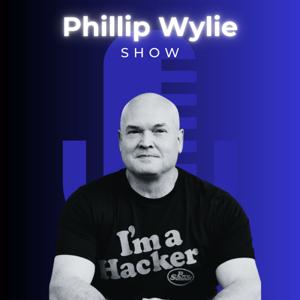


What does it take to go from growing up on welfare in Jamaica, Queens to running your own penetration testing company on your own terms?Patrick Gorman, better known as InfoSecPat, has lived that path, and his story proves that where you start doesn’t decide where you end up.Patrick is the CEO and founder of ISP Security, a pen testing firm built to give startups and small businesses access to testing they can actually afford. He brings experience across network, systems and cloud security, detection engineering and nearly four years as a CISO for a credit union, and he recently stepped into a new role as head trainer for a CISO program.Pat explains why he chose freedom over chasing millions, the business headache nobody warns new founders about, and how an hour a day of his own marketing keeps the leads coming in. He also shares why governing AI tools like ChatGPT and Microsoft Copilot is one of the biggest new challenges for today’s CISOs.Whether you’re thinking about starting your own cybersecurity business, working toward a CISO role, or wondering how much of yourself to share online, this episode is packed with honest insight. Stick around for the story behind Hack the Odds, the book Pat is writing now.Chapters00:00 Intro02:15 Pat’s InfoSecPat Origin Story04:39 Building ISP Security for Small Businesses08:37 Trading the 9 to 5 for Freedom11:45 The Hardest Part of Running a Business13:43 How Pat Markets His Pen Testing Business16:51 Brand Deals and a Privacy Wake-Up Call19:29 Teaching the Next Generation of CISOs24:35 What the Internet Doesn’t Know About You29:25 Why Showing Off Success Draws Hate34:59 Growing Up in Jamaica, Queens40:23 Hack the Odds and Pat’s Final Advice=========================Connect with Patrick Gorman (InfoSecPat):LinkedIn: https://www.linkedin.com/in/infosecpat/ISP website: https://ispsecurity.co/Pat's YouTube: https://www.youtube.com/@InfoSecPatPat's Instagram: https://www.instagram.com/infosecpat/Previous episode featuring Pat: https://youtube.com/live/jjk4Fgfogd4=========================Connect with your host, Phillip Wylie:LinkedIn: https://linkedin.com/in/phillipwylieX: https://x.com/PhillipWylieInstagram: https://www.instagram.com/phillipwylie
What does it take to go from hacking your way to more time on Oregon Trail in third grade to doing offensive AI research for a living?
Richie Vinson, an offensive AI security researcher at Cobalt, took the long way into cybersecurity, going from a rugby career and a help desk job to security work on the nuclear side, and now research into how AI is changing penetration testing.
Richie shares how his advice for breaking into offensive security has changed in just the past year, why building your own model from scratch can teach you things a certification never will, and what hardware you actually need to start running local LLMs at home. He also gives his honest answer on whether AI will replace pen testers, why so many companies are quietly hiring back the people they cut, and why he thinks local models are about to become a much bigger deal for organizations watching their token costs.
Richie also opens up about why volunteering and community helped him find his footing as an introvert, and gives a first look at Hack Myrtle, his new small-format cybersecurity conference on December 5, with an AI training from Royce Davis the day before. Whether you’re working toward the OSCP, experimenting with local AI models or trying to get better at networking, this episode is packed with practical advice from someone who started at the bottom. Stick around to hear about Netrunner, the upcoming documentary about his journey.
=========================
Connect with Richie Vinson:
LinkedIn: https://www.linkedin.com/in/r2600/
Hack Myrtle website: https://hackmyrtle.com/
=========================
Connect with your host, Phillip Wylie:
LinkedIn: https://linkedin.com/in/phillipwylie
X: https://x.com/PhillipWylie
Instagram: https://www.instagram.com/phillipwylie
What happens when a red teamer spends years sitting side by side with defenders, watching every EDR and SIEM on the market up close?
Trey Bilbrey has spent 18 years in IT and cybersecurity, from helping build the U.S. Marine Corps cyber program to red teaming industrial control systems for the Army Corps of Engineers, building Hack The Box Academy content and leading purple team engagements at Scythe, and he just launched his own consultancy.
Trey returns to the show two years after his first appearance as episode 100, and this time he shares why he now often recommends a detection over a fix, the moment leadership finally takes a pen test seriously, and how often organizations should really be running purple team exercises. He also gives a candid look at where AI fits into red teaming and threat emulation, including how far it can actually get from threat intelligence to a usable test plan, why a confident AI-built Sigma rule fooled no one, and his honest timeline for when AI could run a full red team engagement on its own.
Whether you’re trying to land your first cyber role, weighing Hack The Box against a degree, or curious about how purple teaming changes security culture, this episode is packed with real-world insight. Stick around to hear why Trey left big enterprise work behind to protect the small businesses in his own backyard, and how his Tampa nonprofit, the Neon Temple, is helping people break into the field.
========================
Connect with Trey Bilbrey:
LinkedIn: https://www.linkedin.com/in/georgebilbrey/
X: https://x.com/TCraf7
BSides Tampa Keynote: https://youtu.be/TBkzFBYU5vU?si=EtHqSUnAxIIv10yO
Trey's first appearance on the Phillip Wylie Show: https://www.youtube.com/watch?v=3n0BKLaqDvs
The Neon Temple (Non-Profit): https://www.theneontemple.com/https://www.youtube.com/@theneontemple/videos
Trey's Website: https://www.treycraft.com/
=========================
Connect with your host, Phillip Wylie:
LinkedIn: https://linkedin.com/in/phillipwylie
X: https://x.com/PhillipWylie
Instagram: https://www.instagram.com/phillipwylie
What happens when someone who knows exactly how applications are built decides to start breaking them? Jarrod Rizor went from writing code and running DevOps to hacking web and mobile apps for a living, and he recently joined TrustedSec as a penetration tester. His path is a real-world playbook for anyone trying to break into offensive security.
Jarrod shares what actually gets someone hired as a pen tester, why being stubborn can matter more than being the smartest person in the room, and how putting your work out there can open doors a certification alone never will. He also gives an inside look at how AI is changing ethical hacking, including what happened when he turned Claude Code loose on an iOS app with Frida, and lays out a low-cost way to start learning mobile application security on Android before you ever spend money on iOS gear.
Whether you’re working toward the OSCP, grinding through Hack The Box, curious about mobile app pen testing, or wondering where AI fits into offensive security, this episode is full of practical insight from someone who has walked the path. Stick around to find out why the volunteers at his local wildlife rehab center say nobody else can handle Grimble the great horned owl.
=========================
Connect with Jarrod Rizor:
LinkedIn: https://www.linkedin.com/in/jarrod-rizor-7270a832
X: https://x.com/Jr0dR87
=========================
Connect with your host, Phillip Wylie:
LinkedIn: https://linkedin.com/in/phillipwylie
X: https://x.com/PhillipWylie
Instagram: https://www.instagram.com/phillipwylie
Tim MalcomVetter has spent 26 years moving between offense and defense, and his biggest takeaway is that the future of security comes down to speed - whoever has the fastest software wins.
Tim got his start by offering to work for free at a hospital in the early days of HIPAA, which turned into his first security job. From there he moved into pen testing, including work on the point-of-sale system behind roughly one in three U.S. credit card transactions, and then into red teaming at Walmart, where engagements could run as long as eight months. Today he is the co-founder of Wirespeed and General Manager of Coalition Security.
Recorded in person at Cybr.Sec.Con in Houston, this conversation with Phillip gets into what separates real red teaming from pen testing, what cyber insurance data reveals about which security controls actually work, and why so many in the industry misjudge risk. Tim also shares how his red team experience shaped his approach to automation, and why he sees the next era of attack and defense being decided in milliseconds.
=========================
Connect with Tim MalcomVetter:
LinkedIn: https://www.linkedin.com/in/malcomvetter
WireSpeed: https://wirespeed.co
=========================
Connect with your host, Phillip Wylie:
LinkedIn: https://linkedin.com/in/phillipwylie
X: https://x.com/PhillipWylie
Instagram: https://www.instagram.com/phillipwylie
License plate readers, police drones and fake cell towers are spreading fast, and two hackers are proving that anyone can detect them with about ten dollars of hardware and some open source firmware.
Colonel Panic is a malware researcher and hardware builder whose hacking started with AOL dial-up and stacks of 2600 Magazine. After years in restaurants and grocery retail, he went back to school during COVID, earned his certs and turned his love of rapid prototyping into privacy tools like OUI Spy. Cooper got his start on a hand-me-down 286 in fifth grade, spent his early years teaching privacy and security to activists, and has been a public interest technologist at the Electronic Frontier Foundation for almost thirteen years, where he works on Rayhunter.
Building on their DEF CON talk, "ESP32 as a Counter-Surveillance Platform," this episode covers:
- How OUI Spy uses an ESP32-S3 and a buzzer to alert you when specific Bluetooth or Wi-Fi devices or drones are nearby, and what changed when Flock updated its firmware
- Mesh Detect, which sends alerts over Meshtastic networks to build a sensor net for tracking drones
- Rayhunter, EFF's open source firmware that turns a cheap Orbic mobile hotspot into a cell-site simulator detector
- Why "I have nothing to hide" falls apart, including a Flock misread that put an innocent woman in jail for weeks
- The national security risk of ALPR data piling up with vendors who have a track record of vulnerabilities
- The current surveillance boom and EFF's work on litigation, activism, Privacy Badger and Certbot
- Why war driving is legal, and how to get involved by building tools or showing up at city council meetings
DEF CON 34 - ESP32 as counter-surveillance platform:
https://www.youtube.com/watch?v=PcK-TDmzshcEFF
=========================
Connect with Colonel Panic:
Website: https://colonelpanic.tech
https://x.com/_colonel_panic
https://colonelpanic.tech/
Connect with Cooper:
https://bsky.app/profile/cooperq.com
EFF: https://www.eff.org
=========================
Connect with your host, Phillip Wylie:
LinkedIn: https://linkedin.com/in/phillipwylie
X: https://x.com/PhillipWylie
Instagram: https://www.instagram.com/phillipwylie
Luke Canfield came up the way a lot of hardware hackers do, the geeky kid in high school everyone came to when the school's computers broke, tinkering with Windows XP and war driving with homemade Yagi antennas built out of Pringles cans. That fascination with the hardware side never left him, and today he runs Reconnaissance Drone Consulting, teaching people about a threat surface most of the security world still isn't looking at.
Phillip and Luke met at KernelCon, and this conversation is a wide tour through the corners of security that live outside the usual enterprise conversation. They get into the resurgence of war driving and how a headless Kali Pi has replaced a car full of gear, why AI is reshaping RF and CTF competitions and what that means for people who still want to learn things manually, and Luke's real focus, drones as a multi-domain problem spanning the cyber, operational, and physical.
From there it opens up into the stuff that makes you rethink physical security entirely, the six-week drone iteration cycle coming out of Ukraine and how much of it ends up freely available online, why the cartels have run in-house drone design teams for over a decade, prison contraband as the biggest domestic misuse case, and the simple reason nobody looks up - as Luke puts it, humans evolved to avoid being eaten by big cats, not big birds.
He also shares his current build, an open source unmanned ground vehicle named Tortuga, made from two donated power wheelchairs, that's headed into Texas cattle pastures to spot parasite outbreaks with thermal imaging.
=========================
Connect with Luke Canfield:LinkedIn: https://www.linkedin.com/in/luke-a-canfield/ =========================
Connect with your host, Phillip Wylie:LinkedIn: https://linkedin.com/in/phillipwylieX: https://x.com/PhillipWylieInstagram: https://www.instagram.com/phillipwylie
Zack Korman came into cybersecurity from about as far outside the field as you can get, a UK law degree and a master's in law and finance, and he now spends his days on the AI defense problems most of the industry is still catching up to. His outsider path is exactly what makes his take on the current AI moment worth hearing.
Based in Norway, Zack got into code to win an argument with a professor, worked his way up to running a media company's tech department, then spent four and a half years as CTO of an Oslo cybersecurity startup building AI phishing simulations and AI insider threat detection. That work pulled him deep into the defensive side of security and into a conviction that detection is one of the most underserved areas of the field.
Phillip and Zack get into why the "thousand crap alerts" model of detection is broken, the blind spots that let obvious insider threats slip past a SOC that was never even receiving the data, and Zack's work on AI agent security, including the malicious MCP server he built to prove how completely an agent can exfiltrate a company. From there the conversation turns to the thing Zack has become known for online, pushing back on inflated AI risk claims, the fallout from the Hugging Face incident, and why so many of the loudest warnings about AI in cybersecurity are coming from people who have never worked in security. They also cover frontier versus local models, why smaller models could reshape defensive work, model guardrails and offensive testing, and Zack's straightforward advice for anyone trying to fold AI into their day to day.
=========================
Connect with Zack Korman:
LinkedIn: https://www.linkedin.com/in/zacharyakorman/
X: https://x.com/ZackKorman
=========================
Connect with your host, Phillip Wylie:
LinkedIn: https://linkedin.com/in/phillipwylie
X: https://x.com/PhillipWylie
Instagram: https://www.instagram.com/phillipwylie
=========================
Sponsored by Suzu Labs
=========================
All the ways to connect with Suzu Labs
https://suzulabs.com
https://x.com/suzulabs
https://www.linkedin.com/company/suzu-labs/
Most advice about breaking into cybersecurity tells you to follow the path. rekdt makes the opposite case: the path is exactly what makes you look like everyone else. In this episode he shares a candid, sometimes contrarian view of the field, shaped by nearly two decades in it.
rekdt runs a cloud security tower for a large enterprise operating across multiple clouds, and he came up through the professional cloud world during his time at AWS. He is also a longtime fixture in the hacker community, volunteering with the DEF CON Social Engineering Community and helping out at Red Team Village. His start in tech goes back to a teenage fascination with dial-up, the piracy and IRC scene, and picking apart malicious code on early MySpace pages, before a winding route through bartending and help desk work led him into engineering and eventually security.
In this episode, rekdt and Phillip get into why the most interesting security conversations happen at cloud and developer conferences rather than security echo chambers, how cloud and containers upended traditional defenses, and why shadow IT and vibe coding are making things harder. rekdt explains why cybersecurity is really a people problem, what actually makes a candidate stand out when everyone has the same resume, and why he sometimes asks people why they want to get into security at all.
He closes with honest, practical advice on building a career with an actual plan instead of just chasing the title.
=========================
Connect with rekdt:
https://x.com/rekdt
=========================
Connect with your host, Phillip Wylie:
LinkedIn: https://linkedin.com/in/phillipwylie
X: https://x.com/PhillipWylie
Instagram: https://www.instagram.com/phillipwylie
=========================
Sponsored by Suzu Labs
=========================
All the ways to connect with Suzu Labs
https://suzulabs.com
https://x.com/suzulabs
https://www.linkedin.com/company/suzu-labs/
Dave Kennedy was a skeptic. After 28 years in the field, he had heard every claim about the next technology that was going to change cybersecurity, and he assumed AI was more of the same. Then it changed his mind, and now he is building some of the most advanced defensive AI in the industry.
Dave is the founder of TrustedSec and Binary Defense. He got his start on the military intelligence side as a U.S. Marine in cyber warfare. He is a well-known name in the cybersecurity community through his work on BackTrack Linux, the Social-Engineer Toolkit, and Metasploit. Dave is also, by his own description, obsessed with cybersecurity as both a career and a hobby - he can't get enough of it.
In this episode, Dave breaks down how AI has re-energized his work and, in his words, made this feel like the early 2000s all over again. He walks through Night Beacon, the AI system his team built to transform the security operations center, and explains why they train their own models instead of relying on frontier models, how they keep a human in the loop for every final determination, and why his teams now ship more than a million lines of code a week.
Phillip and Dave get into what AI means for offensive work at TrustedSec and Binary Defense, concerns about autonomous hacking and cheaper zero days, and why Dave believes AI will create more work in cybersecurity rather than eliminate it.
=========================
Connect with Dave Kennedy:
https://www.linkedin.com/in/davidkennedy4
https://x.com/HackingDave
https://binarydefense.com
https://trustedsec.com
=========================
Connect with your host, Phillip Wylie:
LinkedIn: https://linkedin.com/in/phillipwylie
X: https://x.com/PhillipWylie
Instagram: https://www.instagram.com/phillipwylie
=========================
Sponsored by Suzu Labs
=========================
All the ways to connect with Suzu Labs
https://suzulabs.com
https://x.com/suzulabs
https://www.linkedin.com/company/suzu-labs/
From the publisher's feed

149 Listeners
372 Listeners

373 Listeners

98 Listeners
649 Listeners
1,023 Listeners

419 Listeners

11,010 Listeners
8,079 Listeners

93 Listeners

10,140 Listeners
2,894 Listeners

46 Listeners

2 Listeners

3 Listeners