
Sign up to save your podcasts
Or

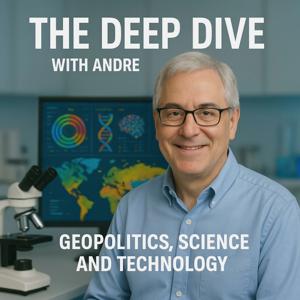

The provided text offers a comprehensive overview of photoacoustic imaging (PAI), an advanced biomedical visualization technique that combines light and sound. It begins by explaining the physical principles behind PAI, detailing how absorbed light energy is converted into detectable acoustic waves within tissue. The document then describes the components and architectures of PAI systems, differentiating between photoacoustic tomography (PAT) for deep imaging and photoacoustic microscopy (PAM) for high-resolution superficial imaging. Furthermore, it presents a comparative analysis of PAI with other imaging modalities like ultrasound and MRI, highlighting PAI's unique strengths in providing molecular and functional contrast. Finally, the text explores diverse biomedical and clinical applications of PAI, discussing its use with both natural and engineered contrast agents, and concludes by addressing current challenges and future directions for its widespread adoption.
Research done with the help of artificial intelligence, and presented by two AI-generated hosts.
 View all episodes
 By Andre Paquette


3.7
33 ratings
The provided text offers a comprehensive overview of photoacoustic imaging (PAI), an advanced biomedical visualization technique that combines light and sound. It begins by explaining the physical principles behind PAI, detailing how absorbed light energy is converted into detectable acoustic waves within tissue. The document then describes the components and architectures of PAI systems, differentiating between photoacoustic tomography (PAT) for deep imaging and photoacoustic microscopy (PAM) for high-resolution superficial imaging. Furthermore, it presents a comparative analysis of PAI with other imaging modalities like ultrasound and MRI, highlighting PAI's unique strengths in providing molecular and functional contrast. Finally, the text explores diverse biomedical and clinical applications of PAI, discussing its use with both natural and engineered contrast agents, and concludes by addressing current challenges and future directions for its widespread adoption.
Research done with the help of artificial intelligence, and presented by two AI-generated hosts.

14,391 Listeners

5,543 Listeners
12,231 Listeners

4,186 Listeners
1,625 Listeners

22 Listeners

16,327 Listeners