
Sign up to save your podcasts
Or

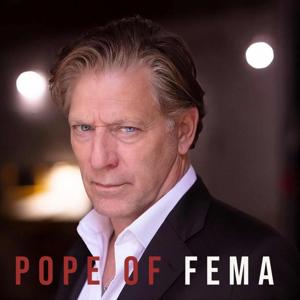


David Webb talks with David Richardson, former acting FEMA administrator and author of Texas Flood 4 July 2025, about the federal programs that keep people building where the water comes back.
Richardson explains why FEMA’s flood maps are actuarial tools, not safety tools, and how the National Flood Insurance Program — in place since 1969 — turned a limited backstop into a nationwide subsidy for coastal and floodplain development. Taxpayers far from the water pay so premiums stay cheap. Developers make billions. When the flood hits, the loss is someone else’s problem. He ties that system to places like North Topsail Beach and to the July 4, 2025 Guadalupe River flood that killed more than 130 people, including children at Camp Mystic.
He also gives his account of the response: coordinating with Texas emergency manager Nim Kidd, Coast Guard rescues, why he stayed in Washington, and his decision to override DHS’s $100,000 contract rule so aid could move. They close on what would actually change the incentives — private insurance, a blended model for people already there versus new construction — and why FEMA, Congress, and the FEMA Review Council keep pointing at each other instead of fixing it.
Transcript
David Webb:But let’s get a little bit more into the weeds. FEMA’s outdated flood maps and FEMA’s billion-dollar gravy train. David Richardson, former acting FEMA director, joining me now. And David, as we hear, the late storm of late storms about to come on shore in the Gulf seems an appropriate title and topic. But thanks for joining me this morning.
David Richardson:David, thanks for having me. I love your show, by the way. You’re doing great things for the American people.
David Webb:I appreciate that. With guys like you to help me and what you’ve sent me, that’s how we help people. And I really mean that. Let’s dive in because your recent op-ed on FEMA’s billion-dollar gravy train exposes so much right down to the outdated flood map. So help us understand this more.
David Richardson:Yes, so I’ll talk about the flood maps first because the flood maps are tied to something called the National Flood Insurance Program. And the National Flood Insurance Program is designed to essentially rebuild structures in the floodplain after they get flattened or really from flood damage by hurricanes or any other type of flood. And essentially, it’s a subsidized program. And by subsidized, I mean everybody across the country is paying so that people living in the coastline and in floodplains can have cheap insurance. It’s changed a little bit over the years. But in general, it’s the same program we’ve had since I think it’s 1969. And it was never intended to do that. So it was never intended for communities to pop up in places like North Topsail Beach, North Carolina. Where I lived for a while, which is essentially a sandbar. And every time there’s a hurricane, the structures get knocked down and the National Flood Insurance Program assists in rebuilding them. All of these coastal communities, for the most part, have popped up since the National Flood Insurance Program. And here’s the deal on the flood maps. The flood maps support the National Flood Insurance Program. And the way they do that is there are lines drawn in these Floodplains, and they dictate how high the premiums are. And FEMA will tell you that the flood maps are for actuary purposes only, and they are not predictive. They have nothing to do with safety and precaution. So that’s kind of how the flood maps work. They’re not ideal. There’s better ways to do it. But FEMA chooses to stick with the old way of doing it, and that’s partially—I know you’re familiar with the Camp Mystic and the children that died there and the children that died along the Guadalupe River. Between the National Flood Insurance Program and the flood maps, we’re allowed to build in the floodplain because of that. But the key point is they have nothing to do with safety or precaution. It’s all actuary information for insurance. So that’s kind of the story on the flood maps.
David Webb:Yeah, so the name doesn’t really fit the reality, I guess. And by the way, David’s book is Texas Flood, Power, Money, Politics, History, Bureaucracy, and Tragedy. Picture the Texas flag on there. I’m reminded, David, and it was a tragedy in a sense. I remember when the Trinity flooded in the 90s in Houston. There was a house floating down the river on fire because it was on the banks of the Trinity. You know, just one of those areas that you didn’t think till you saw the news roll of it. But these areas that are being built up, infills and, you know, all of this. I mean, people are making, I don’t know, I call it bad decisions. Am I wrong?
David Richardson:No, you’re not. Number one, people are making billions of dollars by building in the floodplains and selling condominiums and what have you. It’s not a prudent decision, and it wouldn’t be allowable—not allowable, it wouldn’t be feasible unless you had the National Flood Insurance Program that started in 1969. And by the way, one of the architects of the program, there were some senators at the time that said this is going to backfire. Instead of simply insuring the structures that were currently in the floodplain, it’s going to cause a building boom in the floodplain because when the floods do come, the damage is going to be, ding, ding, somebody else’s problem. And that’s exactly what happened.
David Webb:Oh, God. You know, the minute you say Senate, I just—something I read—the hairs on the back of my head raise up. My guest, David Richardson, former acting FEMA administrator. Let’s dive into more of the topic areas that we want to hit on here. And again, the book Texas Flood, it’s available wherever books are sold. It’s an inside account of disaster response, the bureaucracy, the leadership decisions made. As you put it, under extraordinary pressure. And it is pressure. When these events, these tragic events fold out, communities are uprooted in so many ways. Not just people, not just property, even animals. Agriculture, wild animals, so much is in this mix. And yes, we often think of that scene, the reporter, the storm, the wind blowing. We see that. But what’s really going on here is the destruction of so many lives in so many ways. Let’s go into that a little bit more. What happens? And, you know, Texas, Texas flood. Use Texas as that example.
David Richardson:Yeah. So in Texas Flood for July 2025, I describe that. The conditions that caused that flash flood. And there have been five or six of those in American history. And what happened there was a storm settled over the hills of Texas. And it got stuck there for reasons that we don’t need to get into, but it’s not climate change. The primary cause was the storm that stalled over the hills of Texas. And then what happened was there was potentially some failed warning systems. And there was also some talk about the weather predictions never being perfect. Well, I’m not telling anybody anything new, but warning systems are never perfect. And the weather forecast is never perfect. And in that case, there’s a bill right now on the president’s desk. I think it’s HR 7022. Called the Camp Mystic Alert Bill. It addresses one of the proximate causes, but it does not get into the deep cause, as we just discussed, of actually building in the floodplain, which is allowed by two FEMA programs, the National Flood Insurance Program, as well as the flood mapping. So what happened there was I got a call about 12 in the afternoon on 4 July while I was driving to Gettysburg, Pennsylvania with my two boys. And it essentially outlined that what had happened about somewhere between 1 and 4 in the morning, that flood had—correction, thunderstorm stalled out and was causing mass flooding. I think it was like three months’ worth of rain fell within like 72 hours. So it was massive flooding. And they were in the floodplain. And partially the reason they were there, as I’ve said three times now, were because of FEMA programs. So immediately, the emergency manager for Texas and myself, Nim Kidd, began to coordinate search and rescue teams to get to Texas. Unfortunately, and this is kind of tough to talk about, most of that would be search teams. The Coast Guard was already on the ground. That was Sean Planky and his crew. There were already FEMA teams or FEMA-trained teams from Texas, and Nim was coordinating the search and rescue, and he had a very tight schedule that he was coordinating with. You don’t want too many people on the ground in one place because otherwise it turns into a pylon sport. So with my small team, and I excluded a lot of people from that team, and they were angry and they went to the press and said I couldn’t be reached. That was false. That’s simply because I excluded them because they didn’t have the emergency management experience in a crisis to handle it like me and them and a few other folks did. So Nim and I coordinated the search and rescue. And the search and rescue that came from out of the state, Nim didn’t need that until Monday. And that’s when they arrived. And once again, unfortunately, that was mostly a search effort. There was a lot of rescuing going on. I think the Coast Guard got somewhere around 250 people from whether on the ground or out of trees. So it was a very successful operation in a very unfortunate situation. And as President Trump said, that’s exactly how FEMA should work. One thing I never did was I didn’t encroach on Nim Kidd’s turf. He’s the emergency manager for Texas. He’s the person closest to the problem, and he was best equipped to handle it. The major problem we had during the 4th July, Texas Flood 2025, it had to do with something called the 100K memo that DHS had put in place. Probably not everybody knows about it, but essentially the secretary said that she was going to sign off on any contract over $100,000. Well, in a disaster, you get into the millions very, very quickly. So at some point, because I had done my homework on what happens during a disaster, I coordinated with my team and I realized that I was probably going to have to override that hundred thousand dollar memo because it put a whole other layer of bureaucracy in place. So I think it was on Sunday, the 6th of July, I made the decision to override it so that the people of Texas could get what they needed from out of state on that Monday. It was a tragic event. I mean, over 130 people got killed. I flew over the next week. Once again, I stayed in Washington, D.C., because that’s where the greatest point of friction for me was. That’s where I was needed, so I could override the memo if needed. The next week, I went to Texas, and I flew, and it was—I’ve been in a war zone. Some people say it looked like a war zone, which always makes me scratch my head, because most people haven’t been in a war zone.
David Webb:You’re a former Marine. You certainly understand that.
David Richardson:Yes, and I understand crisis management, emergency management, what to do in a bad situation, how certain people have to be cut out because they don’t provide any necessary input. And so that was a small, tight operation that we did to make sure they got what they needed. I never encroached on Nim’s territory. I stayed in Washington, D.C. because that is where the greatest point of friction was. And weeks before that, because we had war-gamed similar situations, I knew that the $100,000 memo was likely going to get in our way because the level of bureaucracy it put over us. So I stayed in D.C. and made sure that the people of Texas got what they needed on time, on target.
David Webb:My guest, David Richardson. The book, again, is Texas Flood, the date for July 2025, part of that title. There are many questions, David, many, many questions I have about this, but also another aspect of this, and I think in terms of solutions and forward-looking steps, broader question, what are some of the actions that should be taken to deal with the very real-world effects of this insurance program? In that vein, would something or some change that brings the private insurer back into the picture more, which would bring more of a market and realistic assessment, the insurer would assess risk before authorizing, would that help?
David Richardson:It’s interesting because part of solving this problem is asking the right questions. And David, you’re asking some of the right questions. And by the way, I’ve been writing articles with a few other folks, and you can see the articles at the popeoffema.com or popeoffema.com at Substack where we outline a lot of this. So to directly answer your question, whether or not private insurance can handle this is up for debate. So the president appointed the FEMA Review Council, and one of the recommendations they made was that private insurance take over where the National Flood Insurance Program is working now. There’s a challenge there, and this is the challenge, and this is something that your viewers are kind of aware of, but they don’t really understand the impact. To build in most of the floodplains where structures are now, or for private insurance to take over, the premiums would be so high that likely the people living there now could no longer live there.
David Webb:Can you just hit pause there for a second? Let me add a little more to this because kind of expected that because that’s the very real assessment of it. In that case, and from a property and casualty approach for the private insurer, and I know we’re getting a little weedy here, folks, but you need to understand this because some of you live there. What about a blended model, a protection for the people that are there? There has to be some cutoff point to a degree, but then new build and new development coming in. If you have to meet the private insurer, the property and casualty insurance stack to get that done, would that help limit the build where, frankly, it shouldn’t be built?
David Richardson:David, the answer is yes. And if you and me and 10 of your listeners all sat down on the table, we could figure this out. If we asked the question why enough, if we really decided what the problem the insurance is solving, we could come up with a blended solution that would address the issues and would also find a better solution for the flood maps. The challenge is FEMA has been trying to do this for years, and they can’t get out of their own way to do it. FEMA points at Congress. Congress points at FEMA. Now there’s a third party to point at, which was the presidential council on reforming FEMA. And I can tell you, none of the reforms will happen because FEMA—the schedule was two to three years and National Flood Insurance Program was something on the agenda, but they asked for a two or three year period for it to be addressed. And as you well know, David, a two to three year period is might as well be a century in Washington, DC, because things are going to change. Different people are going to come into place with their own interests, and the recommendations of the FEMA Council will never be realized because FEMA can’t figure it out.
David Webb:If they ever get their act together, I literally will do this. I will send them four books written by my father, Property and Casualty, used to teach insurance, still used today, four textbooks. The guide map for the private market, the risk assessment, frankly, and the answer that a lot of people don’t want, you shouldn’t do this. Is what the private market will say sometimes. This blended model can lead us down a path. The discussion doesn’t have to be one or the other. You have to take care of the people that are there to the degree that they’re stuck or whatever. Costs are there. But also, sometimes you have to reduce the use of what is a bad decision or a bad area. I don’t know. I’m just a realistic guy.
David Richardson:A little bit of history. There was a great flood of 1927 on the Mississippi River, and essentially 700,000 people were displaced. My father was one of them. Many of them joined the Great Migration and went north. There used to be private flood insurance, but the great flood of 1927 on the Mississippi River ended it. So they all went bankrupt. So for about 40 years, we tried to engineer ourselves out of the problem. And then once things like waterborne diseases like cholera, malaria, and others were cured, suddenly the coastlines and the river lines were available for development. And that’s how you and me and the rest of us that are not so well-heeled are paying for the property losses of the well-heeled living on the coastline. So it’s a little bit more insidious than appears on the surface. And I guarantee your father—because what he knew about insurance could have predicted exactly what has happened. All of us are paying for the coastal living style because of the National Flood Insurance Program and flood maps. The worst thing about flood maps, however, and you alluded to this, is that they have nothing to do with safety and precaution. And most of us reasonably would think that they do, but they don’t.
David Webb:It’s the misnomer. That’s what it is. Texas Flood, 4 July 2025. Great read. Power, money, politics, history, bureaucracy, and tragedy. And out of this, what David and I are talking about, there needs to be a… David, that’s to you and all of your listeners. Thank you. And keep going. Texas Flood for July 2025.
David Richardson:All right.
David Webb:You got it, my friend. Available wherever books are sold. All right. 866-95-PATRIOT, 957-2874. I’ll be right back.
I joined John Solomon on Just the News tonight.
Texas got what it needed on time and on target. The holdup was the $100,000 memo out of DHS. I overrode it. The greatest point of friction was in Washington, not on the river.
The flood was a storm that stalled in the hills, not climate change. Two programs still put families in the floodplain: the National Flood Insurance Program and the flood maps.
The fix is simple. Stop talking about the things you want to do, and only do the things you have to do.
The interview aired today on Cheryl K. Chumley’s Bold & Blunt podcast from The Washington Times.
Transcript:
Cheryl ChumleyMy guest today, David Richardson, is the former acting head of FEMA. He oversaw FEMA as the acting head during the 2025 Texas floods, and he has lots of insider information on why it takes so long to get FEMA money into the hands of those who need it most. David Richardson, I want to thank you so much for being on Bold and Blunt. So great to have you here.
David RichardsonWell, Cheryl, thank you for having me. I greatly appreciate this.
CherylThis is going to be a very interesting discussion because we’re going to talk about the bureaucracies of government responding to natural disasters, but you have an insider look because you were the former acting head of FEMA during the 2025 Texas floods. Start a little bit from the very beginning. What happened when this flooding first started occurring?
DavidThe flooding, which is not necessarily anything unusual, was caused by a stalled-out storm in the hills of Texas. We got first word of this about noon on the 4th of July. By that time the flood had already essentially occurred, and most of the deaths had already happened, because it started sometime about four in the morning.
What we immediately began to do is coordinate search and rescue. I was in contact with Nim Kidd, who was the emergency manager in Texas. I was also in contact with Sean Plankey, who was overseeing the Coast Guard at the time. Most of the immediate support came from within Texas — FEMA teams in Texas, Texas National Guard, Nim Kidd’s teams, and the Coast Guard. Last time I talked to them I think it was like 235 survivors were rescued, some out of trees.
After the first day it was a search-and-rescue operation. Unfortunately for the people in Texas, primarily a search operation for the bodies. We reacted immediately on the 4th of July, then began to coordinate moving search and rescue into Texas over the next few days. I was in very close contact with Nim Kidd. There were bureaucratic obstacles we had to overcome, and we overcame them successfully to make sure the people of Texas got what they wanted when they asked for it.
CherylWhat are some of those bureaucratic obstacles? Response then versus New Orleans during that hurricane was very different. What are some of the obstacles people might not be aware of?
DavidWhen it comes to search and rescue, you don’t want to turn it into a pile-on sport. There’s only so many teams you can fit into the scheme of maneuver as they work down the river. Nim Kidd and the State of Texas had a plan. He wanted the teams phased in according to his plan. He needed search-and-rescue teams from Colorado and Missouri on the move by Monday morning so they could get to Texas.
DavidSo I gave them a chance to relieve us of the burden of the hundred-K memo, and when they never did, I simply released the search and rescue, and we paid them as we normally would have without the hundred-K memo in place.
CherylWhat is the memo? What did it state?
DavidThe hundred-K memo stated that the secretary herself would sign off on all contracts over a hundred thousand dollars.
We knew search and rescue and whatever else Texas needed was going to be in the millions. The operations officer at FEMA had walked me through a day in the life of a disaster — a day in the life of a hurricane — the decision points, then the graph of the money spent. An average level-three hurricane, we were spending five hundred million dollars a day. I’d done the math on a piece of paper. Nobody could sign all those contracts.
CherylHow long does it take to unfreeze funding? California wildfires have fallen off the radar, but a lot of angry people didn’t get the promised funds. Is it fraud? Is it bureaucracy? What takes place behind the scenes?
DavidFEMA is DHS’s pot of gold. It’s the fattest calf in DHS to be sold, slaughtered, and consumed. There’s a lot of money to be had, and with that lot of money goes a lot of bureaucracy and paperwork.
There are hordes of FEMA personnel in the field, living on per diem in hotels. They report to a center each day, go downrange, and count every fence, driveway, shed, house — anything that’s had damage — and they evaluate it. Those evaluations are open to appeals, and they’re often slow. It’s not uncommon that if FEMA evaluates something at a certain cost, the state or county has hired a former FEMA employee to appeal that. Appeals go on sometimes for years. A lot of bureaucratic wrangling inside FEMA and the states, arguing and grabbing for that money.
CherylIs there a better way to administer emergency funds so the people most impacted get the money quicker?
DavidThere is. First: Texas got what they wanted when they needed it, and I detail that in my book, Texas Flood 2025.
Instead of evaluating every fence and driveway as a bottom-up count that can be appealed — lawyers, paperwork, years — we could use block grants.
[Thinner stretch: block grants and aerial photos; then his uncle’s 2012 Arkansas individual-assistance case.]
In 2012 his house was built inside the levee in Arkansas. He got some FEMA money. I paid for a third of the house to be rebuilt. He was flabbergasted at the amount of work it took just to get individual assistance.
The corollary to the block grants — I had a plan to do this before I left FEMA — they could make an app. I spoke to Steve Davis, Elon Musk’s right-hand man, about a streamlined way for Americans to apply for individual assistance. There are ways to reduce it. There’s no push to get it done.
CherylYour book is Texas Flood. I imagine you wrote it in part from the frustration, and to give people a better way forward.
DavidThe book is titled Texas Flood 2025, because if you search Amazon there are other Texas floods. David Richardson, Texas Flood 2025. Shameless plug.
I wrote it for the children of Camp Mystic and the other people who died, because I had to get to the bottom of the why.
The immediate cause was a stalled storm in the hills of Texas. It had nothing to do with climate change, regardless of what institutes, PhDs, and everybody else will tell you. The storm moved in and couldn’t get over the hills.
[Thinner stretch: immediate / proximate / deep cause.]
Building in the floodplain is the deep cause of the tragedy in Texas. It’s fostered partly by NFIP and flood maps.
FEMA will tell you flood maps are for actuarial purposes and they are not predictive. That’s true. They inform the National Flood Insurance Program. What they won’t tell you is they have nothing to do with safety and precaution. Immediate cause, proximate cause, deep cause. There is no one cause, and that one cause is definitely not climate change.
CherylFrom local zoning coverage: environmentalists expanding flood maps and floodplains as a way of halting development. Response?
DavidThe flood maps are a weapon. You can use them to keep people from building in the floodplain. You can also appeal to FEMA to alter them so you can put more buildings in the floodplain, or cut the already-low premiums. That’s what happened at Camp Mystic.
Between 2011 and 2020, Camp Mystic and associated personnel appealed to FEMA to change the lines so they could either build more or reduce premiums on the ones already in the floodplain. FEMA works with locals. Could be the environmentalist. Could be people who want to expand into the floodplain. The levels just get deeper.
CherylIf you yourself were hit by a flood, would you wait on FEMA, or take other measures?
DavidI would move on. FEMA doesn’t respond immediately. That’s mostly the state. FEMA is the wagon train that comes in and burrows in at the state and local level so they can collect per diem and sift through the bureaucratic mess. I would take matters into my own hands and stay free from anything FEMA had to offer. I witnessed that with my uncle. I footed a third of the bill. We built nothing more than a shack on a small hill that passed state and federal housing inspection.
CherylThat’s a hard truth to stomach, given the tax dollars. David Richardson, your book is Texas Flood 2025. I hope people read it.
DavidThank you, Cheryl. I appreciate it.
Grant Stinchfield: Now, let’s talk about FEMA, the Federal Emergency Management Agency. This agency is, I don’t know, it’s ripe with fraud. Why? Because the bureaucracy is so big. The contracts can be huge, and quite frankly, people take advantage of it.
Department of Homeland Security Secretary Mark Wayne Mullin talked about the need for overhaul over there at FEMA. Listen to him this week.
Mark Wayne Mullin (clip): It’s a constant battle of figuring out how we can cut the red tape and allow local authorities to have the ability to go out, respond, and get refunded faster. I think that is the number one conversation we have with the president. Every time we talk with him is about FEMA and how to reorganize it to get it back to what it was intended for.
Grant: Look, it’s basically a lose-lose proposition. They can never get there fast enough, right? They can never be fully prepared. There’s always something that’s going to come up, but you do the best that you can. But when it gets like this, when it becomes so political, you know the agency has a problem. Who could forget this?
FEMA employee (Fox News clip): And someone feels uncomfortable, we can’t go to that home. If you have loose dogs and someone on the team is comfortable with dogs and another person is not, we can’t go to that home because of safety precautions.
Fox News host: So you fear the Trump houses—the people on FEMA were fearing the Trump houses like they were fearing people with vicious dogs in their backyard.
FEMA employee: Exactly.
Grant: Oh my gosh. Well. I want to bring in now to discuss all of this former acting Federal Emergency Management Agency administrator and author of Texas Flood. He was in charge of the response to that Texas flood back on July 4th a year ago. David Richardson is with us. David, welcome to the program.
David Richardson: Thank you, Grant. Glad to be here.
Grant: All right, it’s a pleasure to have you on. Let me ask you—you get into FEMA. What was it like, as far as, you know, we say the deep state, but the ruling class of bureaucrats, career politicians, whatever you want to call it—what was that like in that agency?
David: Well, I gotta say this first. President Trump keeps his promises, and I know he wants to either radically transform FEMA or shut it down, and I know he will keep that promise.
So what it was like for me when I arrived at FEMA: the first day, I walked around the seven floors at FEMA, kinda chatting with the folks, and what I heard was, “We are not ready to do our mission, and our morale is low.” And I’ve heard that in every federal organization I’ve worked with, but particularly at FEMA. So there was much fear. I arrived when it was in tatters, and I immediately began to orient them on their mission and being prepared for what they needed to do by writing a hurricane strategy and doing a few other things to tighten them up, to get them ready. And I’m glad I did because, as we’ll shortly discuss, there was a tragedy in Texas that we addressed. But between the time I arrived, which was mid-May, and that tragedy, I had a lot of work to do making sure that we had a strategy in place.
Grant: Look, David, I don’t need to be some big-government bureaucrat to know that FEMA, you’re supposed to respond to hurricanes and wildfires and all these things. A hurricane strategy? FEMA didn’t have a strategy in place? I mean, who’s responsible ultimately for those failures?
David: You know, my predecessor—I’m not sure what they were doing. They were very… they were busy doing stuff, but the first thing I asked when I got there was, “Do we have a strategy?” Now, a caveat to that: we did write the strategy. I sent it up to DHS headquarters, and they never approved the strategy. But here’s the deal. The plan is one thing, but the planning is everything. So we did the planning. We had it in place, even though it was never signed off by DHS headquarters. I still had the plan.
So no, they weren’t ready for hurricane season when I got there, and I quickly brought them up to speed from them claiming that they weren’t ready and that they had low morale and they couldn’t do their job.
Grant: Yeah, yeah. Amazing. Which brings us to the Texas floods. Now, I broadcast from Dallas. Sadly, there were many families that I know that lost children in those floods. This was the summer camps that were just devastated. So many kids losing their lives there. You had to organize response there. What was that like? Take me through it, and was FEMA ready?
David: So we were ready when that came. When that happens. And there’s something to point out: there are actually FEMA programs that contributed to that tragedy in Texas. And they are the National Flood Insurance Program and the Flood Mapping Program. Both contributed to that disaster and the horrific things that happened there. But since I had planned with my team—
Grant: Oh, wait, hold on, David. We need to—how did those things, the flood mapping and the flood insurance program, contribute to it? If you can briefly, but I’m curious about that.
David: It’s easy. So the National Flood Insurance Program was never intended to encourage people to move into floodplains, but it did because of the low insurance premiums that the National Flood Insurance Program offers. Structures could get run over by water or whatever have you, and they could be replaced with somebody else’s money.
And as FEMA would tell you, the flood maps that support the National Flood Insurance Program—the flood maps have nothing to do with safety and precaution. The flood maps are non-predictive, and they are for actuarial purposes only. FEMA will tell you that, but what they won’t tell you is they have nothing to do with safety and precaution. So that’s how those FEMA programs contributed to that tragedy in Texas.
Grant: All right. So after everything you went through, what is the number one piece of advice you would give FEMA today as they quest to reform this agency?
David: So first of all, they should take their numbers down to about half, and then they should focus on closing out—listen to this—the 80,000 projects across the country. There are 80,000 FEMA projects. In states like Florida and Tennessee, almost every county has open FEMA projects in them. But because those FEMA projects are jobs programs for FEMA people who are on per diem in those states, living in hotel rooms, they don’t want to shut those projects down because they are job security.
So shut the programs down. Reduce the FEMA workforce by about 50 percent. And that’s easy to do. I had the plan in place. Wouldn’t have been a problem. However, because I refused to work with the leadership at DHS at the time, I resigned.
Grant: All right, and that was Kristi Noem at the time, and now she’s gone as well, and we could get into all of that as well. David Richardson, I urge people to read your book, Texas Flood. We appreciate you coming on the program today, and thank you for your service to this country as well.
David: Thank you, Grant. Thanks for having me.
Grant: Absolutely.
The National Security Hour · America Out Loud Talk Radio
Hosts: Dr. Michael Scheuer and “Colonel Mike” · Guest: Lt. Col. David Richardson
Editor’s note. This is a cleaned-up transcript prepared from the show’s auto-generated captions. Mis-heard names and terms have been corrected (e.g., Kristi Noem, Tom Homan, Camp Leatherneck, Countering Weapons of Mass Destruction, DOGE, Guadalupe River), repeated words and verbal stutters have been smoothed for readability, and station promotions and advertisement reads have been removed and marked. The substance and wording of the interview itself are preserved. Because both hosts speak throughout, a few host attributions are best-effort and may need correction.
SEGMENT 1
COL. MIKE: Welcome back to another episode of The National Security Hour on America Out Loud Talk Radio. Today we have a really big show — like Ed Sullivan used to say — and I’ll tell you why. We have with us Dave Richardson. He’s got a new book coming out. What was he doing? He was working with the government. So what could possibly go wrong working with the government, right? Dave, welcome to The National Security Hour. We want to discuss this new book, and we want to tell people how screwed up FEMA is.
RICHARDSON: Thanks for having me. I greatly appreciate it. I’m really glad to be here to speak with you two gentlemen.
COL. MIKE: So, Dave, why were you chosen to lead FEMA? What qualified you?
RICHARDSON: Number one, I’ve got a background in strategy. I was a ground combat officer in the Marine Corps in a couple of different theaters of war. I went to the Marine Corps schools and essentially learned how to plan, build strategies, and do things like mission analysis. After I got out of the Marine Corps — partially due to what I did in Korea — I got into the countering weapons of mass destruction business. Eventually I was appointed by President Trump in 2020 to be the Assistant Secretary for Countering Weapons of Mass Destruction. When Trump didn’t get back into office, I spent four years doing similar work. When he came back into office, I returned as the Assistant Secretary at the Department of Homeland Security for Countering Weapons of Mass Destruction — and I was immediately told they were going to shut it down. Look, I’m a small-government guy, partially because, as you said, the government can be a mess. The smaller the government, the smaller the mess. So I turned to shutting down Countering Weapons of Mass Destruction. I’d done a mission analysis on it. It’s simple: you go to all the laws, figure out what you should do by law, do only that, and match the people to the law and the capabilities. As I was shutting that down, the President had expressed a desire to do the same at FEMA — like had been done at the Department of Education, and then USAID. Since I was having success systematically shutting down Countering Weapons of Mass Destruction — and that wasn’t happening to the President’s approval at FEMA, which he wanted shut down or drastically reduced and rebranded — they removed the person running FEMA and sent me over. I made no bones about it when I got there. There was much howling and gnashing of teeth the day I told them I intended to carry out the President’s intent, because they knew what that was: shut it down, or drastically reform and rebrand it. I lay all this out in my book, Texas Flood 2025.
COL. MIKE: So hang on — what did you find when you got to FEMA?
RICHARDSON: As I say in my book, I found people wandering around the seven floors at 500 C Street SE, essentially saying their morale was low and that they couldn’t do their mission. I immediately turned to addressing both. A note on federal employee morale: it’s a perennial problem. It’s always low, because they have a sneaking suspicion their work doesn’t matter — and in some cases they’re right, because they’re stuck leaderless, with no one pointing out the mission and driving them toward it. So they wander around and complain. And even if one person is cut, they’ll go to the press and say, “We can’t do our mission — of 18,000 of us, there are only 17,999 left.”
COL. MIKE: This almost sounds like Voice of America when they started cutting VOA — “You don’t understand, we need to check the birds in Ghana, the ones with that special whistle, we just can’t report anymore.” So you had a plan to shut it down. Mike and I both lived in Northern Virginia; you’re in Northern Virginia. We understand the morale — every year when the government’s going to shut down, the world ends. It’s War of the Worlds. So what was your plan?
RICHARDSON: My plan was very similar to the one I did at Countering Weapons of Mass Destruction, and it’s simple. The military calls it “troop to task.” What do you have to do — your mission — and what are the subtasks? You figure out your specified tasks and subtasks and align the people to them. That tells you what your org chart should look like. Most government people, when told to reorganize or reduce, immediately go to the org chart. That’s 100% the wrong answer. You go to the law, figure out exactly what it tells you to do, figure out how many people you need to do it, and then build your org chart. Otherwise you’re just stirring the pot — which is what I think my predecessor did, because I don’t think he had a strategic-level understanding or knew how to do mission analysis. When I walked through the door, I’d already had my team at Countering Weapons of Mass Destruction do a mission analysis on FEMA, and we redrew the org chart. There were 6,000 people at FEMA headquarters. I quickly discerned we only needed about 2,000 of them. There are another 12,000-plus FEMA people in what they call “the field” — which always makes me scratch my head, because as a ground combat Marine, “the field” means living in the woods. Instead, many of these field offices are living in hotels on per diem, overseeing a bureaucratic process for handing out FEMA money that goes on for years. So there were two pots. At headquarters, they needed maybe 2,000 people to do what 6,000 were doing. It took me the summer to figure out what to do with the roughly 17,000 to 18,000 in the field. I started from what the law requires, matched people to it, and my plan was to cut FEMA — headquarters down to 2,000, and eventually the field down to about 4,000. Keep in mind, during Hurricane Katrina FEMA was about 4,000 people. It’s grown to the behemoth it is today — around 18,000. Right about the time I got there, the FEMA Review Council stood up. I collaborated with them as much as I could, because they were moving the same direction, but it was a committee — and I don’t lead by committee. I knew it would be slow. My plan was to have it down by about half by the end of October 2025, and to cut more over the next six or seven months. If I’d stayed, it would be no more than 8,000 people, not 20.
COL. MIKE: Let me ask you — what was your budget at FEMA?
RICHARDSON: Get ready for this one. About $30 billion. And keep in mind: a million seconds is 12 days; a billion seconds is 31 years. I’d managed a budget at Countering Weapons of Mass Destruction of about $400 million. Now I’m dealing with a pot of gold. The money at FEMA is DHS’s largest calf to be slaughtered. Thirty billion dollars. That’s a drop in the bucket compared to the Department of Defense, but for DHS it’s the pot of gold for anybody who can hand it out and get the credit.
COL. MIKE: So what’s the DHS budget itself?
RICHARDSON: I don’t know the total — I’d be guessing. Anybody could do a quick search. I imagine it’s probably double FEMA’s, so maybe $60 billion, but I don’t know.
COL. MIKE: Michael, let me ask you — back when you were at the Agency, what was the budget?
DR. SCHEUER: I have no idea.
COL. MIKE: You don’t remember?
DR. SCHEUER: I don’t know if I even asked. I wanted to know how much money I had to run my operations.
COL. MIKE: How much did you have?
DR. SCHEUER: The most I ever had was about a million and a quarter. If it was a terrorism problem, you’d get all the money you needed. But most years I came to the end of the year and they had money to give away — instead of returning it to Congress, they’d give it to the Pakistanis or the Thais or some other friend around the world. So it’s waste incorporated, in some ways.
COL. MIKE: By the way, I just looked it up. FEMA’s budget is about double, as I said — DHS is somewhere between $60 and $65 billion. So FEMA was about half the DHS budget.
DR. SCHEUER: Wow. That’s a lot of money.
COL. MIKE: We’ve got to take a break. We’re on with Dave Richardson, talking about FEMA — another one of these boondoggles. We’ll be back in two minutes.
— Advertisement break omitted —
SEGMENT 2
COL. MIKE: This is how bad the government is. You want to know how we got to $40 trillion — besides sending money overseas, paying off everybody around the globe, throwing money in the street? You have an agency like FEMA, an agency like DHS. Remember, DHS came into being right after 9/11 — and last week was the 25th anniversary of 9/11. So, Dr. Michael Scheuer, Osama bin Laden hunter — where are we 25 years later in the world of terrorism? Anyway — Dave, how did Secretary Kristi Noem’s “$100K memo” impact your mission? What was that all about?
RICHARDSON: First, let me say — I remember when Osama bin Laden was killed. I was sitting on my rack in Afghanistan on Camp Leatherneck, listening to the BBC on a radio I’d carried out of Iraq. I’ll never forget it. Anyhow — the $100K memo. What Secretary Noem did was try to solve the problem of the American taxpayer’s dollar being squandered. A noble problem. But I don’t think her solution was ideal: she said she would personally sign all contracts over $100,000. Normally that’s something you delegate — something reasonable would be around $20 million. Remember the magnitude: a million seconds is 12 days, a billion is 31 years. Nobody — even with an autopen — could sign every contract on a $30 billion budget. Oversight of contracts is key, but you’ve got to make sure the contracts still get out the door. If you owe people money, it’s got to go out. Put that kind of bureaucracy on top of the system and you can’t pay people in time. To her credit, she was trying to solve a real problem — but she only came up with one solution when there were others. When I got to FEMA, I immediately asked about hurricane season, because I was sent there three weeks before it started on June 1. I cracked a joke once — “Huh, who knew it was hurricane season?” Everybody knew it was a joke, but somebody ran to CNN and said I didn’t even know.
COL. MIKE: Oh my gosh — these wimps you worked with. What wimps.
RICHARDSON: It didn’t bother me. The truth eventually comes out; I know how history works. When I got there, I knew my mission was to shut down or radically transform FEMA — but I also knew it was hurricane season. So I had the operations officer walk me through a series of war games where I saw exactly what happens during a disaster historically — three or four days before a hurricane makes landfall, and ten days after — with a graph of the money spent. In a Category 3 hurricane, which we used as a model, I recognized quickly that the $100,000 memo wasn’t going to fly, because by day two of a disaster we were spending $500 million. I wasn’t going to be able to sign all the contracts — we’d have to delegate. Leaders reduce ambiguity and then go to the greatest point of friction. So I did war games for hurricane season with all the states that would be majorly impacted. When the floods came in Texas, I already knew the $100,000 memo would be a problem, because we’d start having to write checks for four and five million dollars to get search-and-rescue in place. On July 4, when the tragedy happened at night, I was on my way to Gettysburg the next morning. I got a call telling me to phone the congressman in Kerr County, Texas. Then I immediately called Nim Kidd, the emergency manager in Texas, and asked what he needed. He said “nothing right now,” because Texas already had search-and-rescue with the Coast Guard and FEMA-trained teams, plus the National Guard. But he said that by Monday he’d need the release of search-and-rescue folks from Colorado and Missouri. That’s when I began sounding the alarm that we’d need a waiver on the $100,000 memo, because that runs into the millions.
COL. MIKE: Dave, one second — let me bring the listener up to speed. This flood in Texas — did it have a name? What time of year was it?
RICHARDSON: It was July. Anywhere you have hills, a river, and people living in the floodplain, it’s prone to flash floods. It hadn’t rained all spring in Texas, and they estimate a couple of months’ worth of rain fell over three or four days in the Hill Country. The Guadalupe River originates in the Hill Country, so all that water ran off into tributaries, piled up, and caused a major flash flood. When I flew over a week later, I saw huge cypress trees dragged down, many houses stripped to the concrete slab, semi-trucks — the water just carried it all away. What I did was override Noem’s $100K memo. I signed the relief Texas needed and sent it downrange. I gave the process its chance, but the bureaucracy got in the way, so I did it myself.
COL. MIKE: How hard were you hit? How hard did the congresspeople or committees come after you?
RICHARDSON: It wasn’t hard at all, because they were going after the wrong things. They asked me where I was on July 4. I was on my way to Gettysburg when I found out, and I continued, because my greatest point of friction was in DC, where I had to kick down the doors of bureaucracy — the bureaucracy DHS put in place to handle the $100K memo. They also asked why I didn’t go to Texas. First, I didn’t want to be seen on stage with Secretary Noem. She wanted to run down to Texas; my job was here, making sure they got the relief they needed. I talked to Nim Kidd that Saturday and asked where he needed me. He said, “I need you there to make sure the emergency declaration gets to the President on time, and that we get the search-and-rescue we need.” Those were the pieces of bureaucracy I had to outmaneuver. Had I gone to Texas that weekend, it wouldn’t have made any difference — I’d only have gotten in the way of people doing their jobs.
DR. SCHEUER: The thing about bureaucracy in DC is that if you’re a successful officer doing the right thing, you can sometimes tell people to go stick it and just get on with it, because they see you’ve been in a place where you were successful. Otherwise it’s a nightmare — the ability to stop important things for idiot reasons. In the intelligence world, you get quizzed by lawyers about what mask you’d put on Osama bin Laden if you captured him, so you don’t pull his beard. There’s enough stupidity in the system to sink more than one country.
RICHARDSON: The bureaucracy gets in the way so much because everybody’s trying to preserve their five years. As I say in my book, a leader’s job is to reduce ambiguity — through training and exercises, being clear about intent and mission — and then, when things hit the fan, you go to the greatest point of friction, whether it costs you your life, your job, or your reputation. When the flood happened, there was no doubt in my mind I needed to be in Washington, so I could kick down any doors of bureaucracy and get Texas its emergency declaration and search-and-rescue. I’m glad I did — I wouldn’t have understood the immediacy of having to override Secretary Noem had I been on the plane with her.
COL. MIKE: You said $500 million — that’s a big number.
RICHARDSON: In that case it wasn’t $500 million, but it was in the millions — far more than $100,000.
COL. MIKE: Before the break — let’s talk about the relationship between FEMA flood maps and national flood insurance. Our neighbor, southern West Virginia, floods every year. What’s the relationship?
RICHARDSON: Number one: flood maps have nothing to do with safety or precaution. The most senior people at FEMA who handle flood maps will tell you they’re not predictive — they’re for actuarial purposes, to inform the National Flood Insurance Program, which started in the late 1960s. There was no flood insurance, public or private, between the late 1920s and the 1960s — because of the Great Flood of 1927 on the Mississippi, which bankrupted private flood insurance. From the late 1920s to the late 1960s, we tried to engineer our way out of the problem. Then the government created the National Flood Insurance Program, which spread the cost of premiums across the country. It was intended to insure structures already in the floodplain, but it backfired: because the burden was spread nationwide, construction companies and others began building in the floodplains — because if wind or water ruined something, it was somebody else’s problem, and the premiums were artificially low. That’s why you have coastal communities all down the coast, popping up on sandbars — when the structures blow down, the premiums stay low because somebody else is paying for them.
COL. MIKE: We’re going to the break. Go visit our sponsors — this is the only place you get freedom of speech. We’ll be back in two minutes.
— Advertisement break omitted —
SEGMENT 3
COL. MIKE: Welcome back to the final segment of The National Security Hour. Let me ask you — you knew Kristi Noem, you met her; she was head of DHS at the time. In your honest opinion, was she really competent to run this thing?
RICHARDSON: I told Congress she did a good job during the Texas flood, and here’s why: she essentially got out of my way. In that sense she led well — but only because she got out of my way. I was glad she flew to Texas so I didn’t have to deal with her here. In my book I call her “the main act,” because it seemed to be the Kristi Noem show, and I don’t think that’s the appropriate thing for a leader to do. The $100K memo was very short-sighted. So I kept her at arm’s length. I didn’t go to the parties at her house, because it just wasn’t the type of leadership I’d grown up with in the Marine Corps.
COL. MIKE: This isn’t coming from you, Dave — I just have to throw in a little satire: it was “The Kristi Noem Show,” starring Corey Lewandowski. Okay, continue.
RICHARDSON: I had to tell a buddy one day, “Whatever rumors are out there, they’re probably just rumors — I’ve got bigger fish to fry.” I never really paid attention. I was focused on shutting down Countering Weapons of Mass Destruction, radically transforming FEMA, and dealing with the disasters. Back to the connection between flood mapping and flood insurance: the flood maps aren’t about safety or precaution — they’re there to inform insurance, and the premiums are set artificially low because we’re all paying for them. That’s encouraged building in the floodplains. If my uncle — whose house was ruined when the Black River in Arkansas overflowed because he lived on the wrong side of the levee — had ever seen Camp Mystic or the places along the Guadalupe that got destroyed, he’d have said, “David, it might not be today, it might not be tomorrow, but I know a lot about rivers, and someday there’s going to be a flash flood here, and a lot of people are going to suffer.” Instead, we’ve built these communities on the artificial back of national flood insurance, because it’s a federal program and it makes us feel like we have top cover. It’s not top cover at all — it’s cheap insurance made artificially low because someone in Iowa, Washington State, or Arkansas is paying for it. That’s the truth behind the flood maps: they’re actuarial tools, and they’re not predictive.
COL. MIKE: Similar to property tax — it’s all actuarial. They tell you you’re paying to build schools, and then they tell you they haven’t built a school in 20 years, so where’s the money? Anyway — continue. Great conversation.
RICHARDSON: As far as overall leadership, I wasn’t impressed — but I didn’t pay much attention, because I had my own work. In the Marine Corps we laughed a lot, played a lot, but in the end we were doing serious business — killing an enemy and keeping our Marines alive in a very tough environment. As I look at it, America hasn’t won a protracted shooting war in 80 years. Michael tested this out — right, Mike?
DR. SCHEUER: I think it’s closer to the last hundred years.
RICHARDSON: Well, it’s since the end of World War II — 80 years.
DR. SCHEUER: Yes, exactly right.
RICHARDSON: If you were a Dane who’d gone Viking, it was important to win — when you won, you got gold, silver, and plunder, and more men joined your command. As soon as you started losing, they found other jarls to follow. In our case, we haven’t won a protracted shooting war in 80 years, and it’s very difficult to lead Marines in some of those situations. I never felt DHS headquarters was up to serious business, so I kept them at arm’s length and did what I had to do. I didn’t get to shut FEMA down or radically transform it, because somehow that magically got handed over to a committee.
DR. SCHEUER: And as soon as something’s handed to a committee, it’s not that serious anymore. Imagine President Trump running the country with a committee — he’d never do such a thing. Once a committee is established, that form of bureaucracy is normally the death knell of whatever it’s supposed to do.
RICHARDSON: That’s absolutely the case.
DR. SCHEUER: Colonel, I have a question our listeners would be interested in. There were stories — I think it was the hurricane that hit North Carolina — that FEMA field officers were stealing, preventing people from reaching their houses, even killing people. Did you run into any of that?
RICHARDSON: I heard about those things. I don’t think the killing is true, but I’ll tell you what has come out — just in the last month, we finally determined, after two and a half years, that there were indeed FEMA people passing up houses that had Trump signs in the yard. That was just wrong. When folks suggest criminality, I always look first for sheer incompetence — it’s normally not by intent, just plain stupidity. I hadn’t heard the other cases, but I do know we’ve recently concluded that FEMA personnel were passing up houses with Trump signs.
COL. MIKE: Dave, how did you get appointed to your position?
RICHARDSON: I knew a few key people already in the administration, in the Trump circle. I never really cared to hang out at Mar-a-Lago — I like smoky bars. There’s a place called the 219 club in Alexandria with live music and wild people; that’s more my crowd. Some people in the administration recruited me. But look — becoming a political appointee isn’t that hard; you just have to know somebody. Leading is hard. You get a lot of political appointees in these positions with no leadership experience at all. So they’re dealing with the federal government — already a bureaucratic mess — and they walk in with no leadership experience, which only makes it worse. It happens on both sides. That’s reflected in a lot of the buffoonery in the political ranks, and combined with the buffoonery already in the federal government, you get a nuclear explosion of buffoonery.
COL. MIKE: Let’s talk about fentanyl. Are you really the guy who did the legwork on fentanyl?
RICHARDSON: Yeah, I’m the guy who did the legwork on fentanyl. Because of my position at Countering Weapons of Mass Destruction, I had the authority to call a working group. It took two weeks, and we came to a conclusion. The problem we were trying to solve was that the leading cause of death for Americans aged 18 to 45 was overdose from illicit fentanyl and other synthetic opioids. We concluded that at DHS we were already doing everything we could — so it needed to go to the national level. I got all 17 components to agree, with Tom Homan’s help. We kicked it up to headquarters, and I never heard anything. Since I know what silence means, I made a hard copy and handed it to Tom Homan. He eventually took our recommendation to the White House and the President. In December of last year, I got a call saying the legwork I did on having fentanyl declared a weapon of mass destruction helped convince the President to make that the policy.
COL. MIKE: Was that Tom Homan who called you?
RICHARDSON: It was somebody with a very similar name — looks a lot like him. I love Homan — he was the only guy at DHS with more Neanderthal blood in him than I have. He’s short, gruff, big head, always laughing, and really serious about what he does. A good dude.
DR. SCHEUER: He’s the honest broker.
COL. MIKE: A couple more questions — we’ve got five minutes. Why did you resign, and what do you think FEMA will look like in two years?
RICHARDSON: I resigned for two reasons. Number one, I wasn’t allowed to radically transform or get rid of FEMA — that had been turned over to the FEMA Council. At that point all I was there for was to get DHS through hurricane season. Number two, I refused to work for Kristi Noem. Had I stayed and been given the authority to shut down or radically transform FEMA, it would be at least half its size today, if not mostly gone. I’d have laser-focused them on their mission and gotten rid of the fat. I was dealing with an obese government agency I wasn’t able to put on a diet. I had the plan in place and the people around me willing to do it — some of them were FEMA people who know what FEMA’s problems are and were ready to help — but the Council took it over. I’ll say the Council’s recommendations will likely never come to fruition, because the entrenched bureaucratic mentality at FEMA is in no way capable of carrying them out. I was fond of DOGE, and DOGE liked me — they liked what I did at Countering Weapons of Mass Destruction. I met with Steve Davis, one of Elon Musk’s right-hand guys, and showed him what I’d planned for FEMA. He liked it. I’d have executed it, and it would be radically different today. Instead they’re in a go-along-to-get-along situation. There’s great fear at FEMA, because anytime you remove even one person, they run to the media and say they can’t do their mission. Most people there are captives of FEMA — it’s a kind of Stockholm syndrome. There’s nobody at DHS with the intestinal fortitude or the know-how to carry out even the Council’s recommendations, which pale in comparison to what I would have done.
COL. MIKE: That’s amazing. I think we can both agree Homeland Security Investigations — HSI — is a great organization. These guys bring cases up, and back when I was working with that, Eric Holder dropped every case. Today one of our biggest problems in HSI is all these fraudulent H-1Bs and the L-4s that follow. We talk about the open border and what comes over from Mexico, but we don’t talk about the fraud that comes in legally. So, Mike, I’ll give you the final word — we’ve got to cut it off.
DR. SCHEUER: I don’t know what you found, sir, but I found in my career an extraordinarily un-adult workforce — in the sense that a lot of people got discouraged if they didn’t have someone who could take the blame for them when something went wrong. I managed in a way that said, “I’ll take the blame, as long as you weren’t screwing up or doing something illegal.” But at all levels — from operators to analysts — we’re not raising adults anymore. They’re childlike. What they want is to never be blamed for anything, so they can keep their job. Federal employees are always howling about some imaginary wolf, so that if things go wrong, they can say “I told you so.” But the wolf is only a thimble with hair on it.
COL. MIKE: All right — Dave Richardson, thank you for coming on The National Security Hour. Terrific guest, and thanks for being patient.
RICHARDSON: Thank you.
COL. MIKE: And thank you for joining us — the listener — on the mission of The National Security Hour, the tip of the spear in the epic battle to defend the United States of America. Send it to your friends when it goes to podcast. We’ll see you next week.
From the publisher's feed