
Sign up to save your podcasts
Or

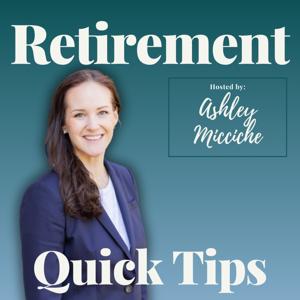

The theme this week on the One Minute Retirement Tip podcast is: new research that will shatter your expectations about spending in retirement. So far this week I’ve been talking about how retirees tend to decrease their inflation-adjusted spending in retirement by about 2% annually, with many showing a strong preference to asset preservation by matching their spending to their guaranteed income sources and not touching their investment portfolios unless they need to.
Today, I’m talking about how you can align your portfolio income strategy with your spending preferences.
If you’re a saver, not a spender, then you’re more likely to show a strong preference for sticking to your guaranteed income sources.
But what if those guaranteed income sources just won’t be enough? That’s where portfolio income comes in. Psychologically, I find that many of my retired clients prefer to just take their portfolio income each year, rather than selling assets to supplement their income. This means that your income needs would remain flexible to account for changing dividends and income from your investments.
In today’s low interest rate environment, it’s even more challenging because the portfolio income that you can generate from your bond portfolio is a joke, unless you’re taking on a lot of risk.
So what is a retiree to do who wants to preserve assets, but will still need to supplement their guaranteed income? For that, I have 2 suggestions:
First is to own a substantial amount of your stock portfolio in stocks that increase their dividends. I’m not talking about high dividends or high yield stocks, but stocks that have a demonstrated history of raising their dividends year-in and year-out for many years. Many of these companies tend to increase their dividends 5-10% annually, providing a growing stream of income for retirees, even in this low interest rate environment.
The other strategy is to invest in a bond ladder. I’ve talked about bond laddering many times on the podcast. Essentially, it provides a predictable stream of income with an opportunity to gradually grow your income once interest rates start rising again, rather than being locked in by owning longer-term, low interest-paying bonds that are the norm today.
Do you know what your current portfolio income is? It doesn’t take too much legwork to find that out, and I encourage you to see if your current dividend and interest income is enough to supplement your guaranteed income to help you live a comfortable retirement, while at the same time helping you avoid spending down the principal value of your retirement investment portfolio.
That’s it for today. Thanks for listening! My name is Ashley Micciche and this is the One Minute Retirement Tip.
----------
>>> Subscribe on Apple Podcasts: https://apple.co/2DI2LSP
>>> Subscribe on Amazon Alexa: https://amzn.to/2xRKrCs
>>> Visit the podcast page: https://truenorthra.com/podcast/
----------
Tags: retirement, investing, money, finance, financial planning, retirement planning, saving money, personal finance
 View all episodes
 By Ashley Micciche

4.9
5252 ratings
The theme this week on the One Minute Retirement Tip podcast is: new research that will shatter your expectations about spending in retirement. So far this week I’ve been talking about how retirees tend to decrease their inflation-adjusted spending in retirement by about 2% annually, with many showing a strong preference to asset preservation by matching their spending to their guaranteed income sources and not touching their investment portfolios unless they need to.
Today, I’m talking about how you can align your portfolio income strategy with your spending preferences.
If you’re a saver, not a spender, then you’re more likely to show a strong preference for sticking to your guaranteed income sources.
But what if those guaranteed income sources just won’t be enough? That’s where portfolio income comes in. Psychologically, I find that many of my retired clients prefer to just take their portfolio income each year, rather than selling assets to supplement their income. This means that your income needs would remain flexible to account for changing dividends and income from your investments.
In today’s low interest rate environment, it’s even more challenging because the portfolio income that you can generate from your bond portfolio is a joke, unless you’re taking on a lot of risk.
So what is a retiree to do who wants to preserve assets, but will still need to supplement their guaranteed income? For that, I have 2 suggestions:
First is to own a substantial amount of your stock portfolio in stocks that increase their dividends. I’m not talking about high dividends or high yield stocks, but stocks that have a demonstrated history of raising their dividends year-in and year-out for many years. Many of these companies tend to increase their dividends 5-10% annually, providing a growing stream of income for retirees, even in this low interest rate environment.
The other strategy is to invest in a bond ladder. I’ve talked about bond laddering many times on the podcast. Essentially, it provides a predictable stream of income with an opportunity to gradually grow your income once interest rates start rising again, rather than being locked in by owning longer-term, low interest-paying bonds that are the norm today.
Do you know what your current portfolio income is? It doesn’t take too much legwork to find that out, and I encourage you to see if your current dividend and interest income is enough to supplement your guaranteed income to help you live a comfortable retirement, while at the same time helping you avoid spending down the principal value of your retirement investment portfolio.
That’s it for today. Thanks for listening! My name is Ashley Micciche and this is the One Minute Retirement Tip.
----------
>>> Subscribe on Apple Podcasts: https://apple.co/2DI2LSP
>>> Subscribe on Amazon Alexa: https://amzn.to/2xRKrCs
>>> Visit the podcast page: https://truenorthra.com/podcast/
----------
Tags: retirement, investing, money, finance, financial planning, retirement planning, saving money, personal finance

1,945 Listeners

453 Listeners

814 Listeners

1,307 Listeners
549 Listeners

756 Listeners

551 Listeners
688 Listeners

601 Listeners

935 Listeners

832 Listeners

204 Listeners
596 Listeners

437 Listeners
1,068 Listeners