
Sign up to save your podcasts
Or

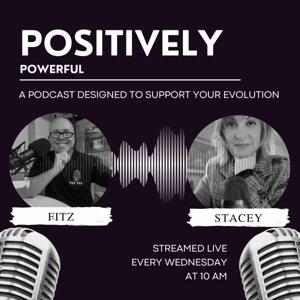


Positively Powerful | Episode Notes with Scott Fitzgerald & Stacey Steinmiller
Eight Years, a Messy Middle, and Where the Nuts Are
It's Roc Vox's eighth anniversary and Scott is in a bit of a low. A deal that seemed imminent quietly fizzled out, and the emotional spiral that followed became the whole episode.
In a good way.
What started as Scott processing disappointment turned into one of the most honest conversations we've had about what entrepreneurship actually feels like from the inside — the desperate energy, the self-protection habits, the identity stories we've been carrying since childhood, and why none of the external fixes work until the internal stuff shifts.
Stacey shares the framework she's used with clients for over a decade: your emotions belong in the backseat, not behind the wheel. The kid back there still needs to be heard. Just not running the show.
Topics in this episode:
Why your energy going into an opportunity matters more than the opportunity itself
The difference between a real low and unmet expectations
How self-doubt is actually a protection strategy — and what it's protecting you from
Why identity has to shift before behavior does
What a year of coaching has actually changed for Scott
Why Stacey's approach isn't about giving you a formula — it's about finding yours
Happy 8 years, Roc Vox.
Find Stacey at radicallifecoach.com Find Scott at rockfox.com Positively Powerful drops every Wednesday at 10 AM — find it on YouTube and all podcast platforms.
Positively Powerful | Episode Notes with Scott Fitzgerald & Stacey Steinmiller
Taking Your Power Back from Social Media
Scott is having a rough tech morning and Stacey is three weekends into something that's actually working — going fully offline every Friday at 6 PM and not coming back until Monday.
She's tried versions of this for years. Failed every time. Something is different now, and she's still figuring out exactly what.
In this episode we talk about why willpower isn't the answer, what it actually means to change your relationship with something you can't just quit, and why the shift from consumer to creator is an identity move — not a scheduling one.
We also get into AI, dopamine, Chuck Norris, Oreos, and why understanding your own system matters more than following anyone else's rules.
Topics in this episode:
Why this attempt is working when others didn't
The consumer → creator identity shift
How social media masks loneliness (and why that's not a moral failure)
AI as a tool vs. AI as a crutch
How to actually want to change something — not just think you should
Find Stacey at radicallifecoach.com Find Scott at rocvox.com Positively Powerful is available on YouTube and all podcast platforms.
Episode Overview
In this candid and heartfelt episode of Positively Powerful, host Scott Fitzgerald sits down with radical life coach Stacey Steinmiller for an honest conversation about one of the most relatable — and least talked about — emotions we experience: jealousy.
Scott opens up about the sting of watching others seemingly get handed opportunities they didn’t earn, while hardworking people grind away without the same advantages. From there, the conversation deepens into the belief systems that fuel jealousy, the power of self-compassion, the fear of running out of time, and why the real work is always an inside job.
This episode is part live stream, part therapy session — and that’s exactly what makes it so good.
What We Cover
* Jealousy and the “nepo baby” effect – What happens when we watch others succeed through privilege rather than effort, and why it bothers us so deeply
* The Child archetype and fairness – How shadow belief systems around “it’s not fair” keep us stuck
* The Sovereign archetype – Recognizing your inherent power and ability to create your own path
* Meeting emotions without judgment – Why compassion is the first step to processing difficult feelings
* The belief in lack – How scarcity thinking keeps us from prioritizing ourselves
* The fear of running out of time – Scott turns 53 and grapples with the feeling that it might be “too late”
* “I am the master of time” – A reframe that shifts energy and helps you get present
* Consistency and self-care practices – The struggle of showing up for yourself when the day takes over
* Loving yourself into your potential – Why shame never drives lasting change, but self-compassion does
* Eclipse season and collective emotional patterns – What’s in the air and why so many of us are feeling it right now
Key Takeaway
The negative feelings aren’t the enemy — they’re a signal helping you realign with what matters most. Meet them with compassion, feel them fully, and let them point you back to your values and desires.
Connect With Our Hosts
🌐 Stacey Steinmiller – Radical Life Coach Website: www.radicallifecoach.com
🎙️ Scott Fitzgerald – Roc Vox Recording Podcast production, audio books, legacy casts, live streams & video production Website: www.rocvox.com
About Positively Powerful
Positively Powerful is a weekly live stream and podcast where host Scott Fitzgerald gets real about the mindset challenges of everyday life — with the help of transformational life coach Stacey Steinmiller. No fluff, no filters. Just honest conversations about what it takes to grow.
Subscribe, leave a review, and share with someone who needs it. 💙
Recorded at Roc Vox Recording | www.rocvox.com
Navigating Disillusionment & Reclaiming Your Power
Episode Summary:
In this raw and honest conversation, Scott and Stacey tackle the heavy feelings we all experience - disillusionment, discouragement, and distraction. They explore how to navigate those "dis" moments when life feels overwhelming and nothing seems to be going right.
Key Topics Discussed:
The Power of Getting Outside - Why there's no bad weather, only bad clothing, and how getting outdoors (even in harsh winter conditions) can shift your mental state
Focus vs. Distraction - How shiny new goals can sabotage your original intentions, and why discipline is the "positive dis word" we all need
The Endurance Mindset - Lessons from extreme athletes about training your mind to push past perceived limitations
Do It Now - The simple practice that prevents procrastination and frees up mental space
Solutions Over Problems - Why focusing on the problem keeps you stuck, and how shifting to solution-focused thinking creates breakthroughs
Meditation & Divine Power - Understanding the difference between ego identity and your true nature as a divine being, and why this matters
Practical Tools - Calendar blocking, writing things down, therapy (in all its forms), and creating mental space for creativity and joy
Key Takeaway: You are more powerful than you remember. When you shift from ego consciousness to divine awareness, solutions emerge naturally. Stop giving your power away to circumstances, problems, and distractions.
Resources Mentioned:
Napoleon Hill's work on "Do It Now"
Eckhart Tolle's teachings on awareness
Connect With Us: www.radicallifecoach.com & https://rocvox.com/
Remember: You are positively powerful. Don't forget it. ✨
Episode Overview
After a holiday hiatus, Scott and Stacey return to explore one of the most transformative aspects of personal development: emotional regulation and energy management. This raw, honest conversation dives into how self-awareness can turn heated reactions into peaceful responses, and why staying calm isn’t just about feeling better—it’s about fundamentally changing how you move through the world.
Key Topics & Timestamps
The Power of Self-Awareness in High-Stress Situations
* Scott shares his breakthrough moment during an audio book recording crisis when technical difficulties threatened to derail everything
* How maintaining calm in front of clients transforms both the situation and your professional relationships
* The practice of asking “What’s the worst that can happen?” to reduce perceived urgency
Manifesting Through Frustration (Stacey’s Unexpected Discovery)
* Why complaining with forward momentum can actually work
* The difference between stuck complaining and frustrated forward motion
* How language shapes whether frustration keeps you trapped or propels you forward
Managing Energy in Relationships
* Why we’re worst with the people closest to us
* The concept of not “feeding into” others’ negative energy
* Responding to others’ “temper tantrums” without getting pulled in
* The importance of consent before coaching others
The Fear-Urgency-Control Cycle
* How perceived loss (of opportunity, finance, relationships) triggers fight mode
* Why “everything’s working out in my favor” is a game-changing mindset shift
* Moving from ego-driven control to trust
Practical Tools for Staying Grounded
* Weather as a “spiritual teacher” for acceptance
* The phrase “people are peopling” as a way to detach from others’ behavior
* Road rage as a measure of personal growth
* The “nobody died” reality check for perspective
New Year Intentions & Routines
* Stacey’s word for 2026: “All In” (releasing doubt and fear)
* Scott’s exploration of organize, focus, and follow-through
* Why health routines create a foundation for everything else
* The importance of not judging yourself when routines slip
Memorable Quotes
“Nobody’s gonna die. So just relax. We’ll get through this.” - Scott’s mantra from his radio days
“People are peopling. The weather is weathering. It’s all just happening—let it.” - Stacey on radical acceptance
“When you can laugh at yourself and make light of it, all the pressure just melts away.” - On the power of humor in self-awareness
“You can’t be all in and simultaneously be entertaining your fears and doubts.” - Stacey on her 2026 intention
Action Items for Listeners
* Practice the self-awareness pause: Next time you feel yourself getting heated, stop and ask “Am I peopling right now?”
* Try the weather exercise: Use weather as your first spiritual practice—notice how your perception of it affects your mood
* Implement the “worst case scenario” check: When stressed, ask yourself what’s really the worst that could happen
* Choose your word for 2026: Pick an intention word that sets the energy for your year
* Start small with routines: Don’t judge yourself for falling off—just restart whenever you’re ready
Resources Mentioned
* Roc Vox Studios, Bushnell’s Basin
* Diane Schiffer (@schifferdiane on Instagram) - vintage style influencer
* Warm 101.3 radio station
Connect with Positively Powerful
Recording Location: Roc Vox Studios, Bushnell’s Basin, NYJoin the conversation on Telegram and social media
Next Episode
Join Scott and Stacey next Wednesday for more authentic conversations about personal growth, mindset shifts, and living powerfully.
This episode is perfect for anyone working on emotional regulation, dealing with stress, or looking to understand how self-awareness can transform daily interactions and overall life quality.
Episode Summary
Join Scott Fitzgerald and Stacey Steinmiller for their most authentic episode yet—literally! After a technical mishap forced them to start over, they lean into a freewheeling conversation about what it really means to be authentic in an age of performative realness. From manifestation and gratitude to social media’s impact on kids, seven years of sobriety, and the courage to live as your true self, this episode covers it all with raw honesty and plenty of tangents.
Key Topics Discussed
On Authenticity
* The irony of “forced authenticity” online
* Finding the balance between being authentic and staying on-brand
* Aligning your energy with your words and actions
* When authenticity becomes an excuse for mean behavior
Manifestation & Mental Health
* Removing yourself from the “how” when manifesting
* Why logical thinking can lead to depression
* The power of gratitude to shift your vibration
* Finding life’s magic when you stop overthinking
Social Media & Children
* Australia’s groundbreaking ban on social media for kids under 15
* Jonathan Haidt’s research on teenage mental health and Instagram
* The difference between YouTube Kids and traditional TV
* Screen time’s impact on behavior and attention spans
* The rise in ADHD and autism spectrum diagnoses
Seven Years of Sobriety
* Scott’s upcoming sobriety milestone (January 30th)
* Why he chose to share his journey publicly
* Annie Grace’s perspective on alcohol in society
* The growing social acceptance of sobriety
* Sobriety Sounds: creating safe spaces for musicians in recovery
Living Authentically
* Reaction formation: railing against what you secretly struggle with
* The courage required to live as your authentic self
* Trans authenticity and acceptance (Scott’s personal experience with his son)
* How growth sometimes means losing relationships
* Putting your alignment first without guilt
Wins of the Week
* New podcast client: Twin Talks with Deanna and Deborah (The Brow Divas) launching next week
* Getting through tough weeks and showing up anyway
* Fresh snow being better than ice (the small victories!)
Resources & People Mentioned
Books:
* The Righteous Mind: Why Good People Are Divided Among Politics and Religion by Jonathan Haidt
* The Anxious Generation by Jonathan Haidt
* Don’t Miss the Magic by Meg Fitzgerald (upcoming)
* This Naked Mind by Annie Grace
* Book on focus (possibly Stolen Focus - they couldn’t quite remember!)
People:
* Joe Dispenza (manifestation teacher)
* Jonathan Haidt (social psychologist and author)
* Annie Grace (sobriety advocate and author)
* Meg Fitzgerald (Scott’s cousin, author)
Organizations:
* Sobriety Sounds (providing safe performance spaces for musicians in recovery)
Memorable Quotes
“Authenticity is when your words and your energy are in alignment.” - Stacey
“If you’re on a mission to change the world, having a positive disposition is going to get you further than being negative about it.” - Stacey
“Do you, as long as you’re not hurting other people.” - Scott
“We can’t just reject parts of ourselves. We have to accept that this part of you is there so that you can actually work through it.” - Stacey
Connect With Us
Positively Powerful broadcasts live Wednesdays at 10 AM from RocVox Studios in Bushnell’s Basin, NY (Note: No shows during holiday weeks)
This episode is brought to you by honesty, technical difficulties, and the belief that sometimes the messy middle is where the real magic happens.
The Illusion of Being Too Busy
I’ve been noticing an excuse floating around lately. It a very common excuse but I had curated my life to be far from it. Yet the whispers have returned…
The, “I don’t have time” excuse.
But the truth is you have time. You’re just spending it on something else.
You have time to:
* Answer client texts at 10 PM
* Redo work your team should have done right the first time
* Stress about money on Sunday afternoons
* Scroll Instagram looking at what other people in your field are doing
* Have the same conversations with yourself about what you need to change
What you don’t have time for, apparently, is the thing that would actually solve those problems.
When people say they don’t have time to get gas they’re just pushing their problem out for a different day, or a few miles later rather.
To fix this problem you need to set your priorities and turns out, many people’s priorities are in the toilet.
And look, I get it. I’ve been there. I spent years “too busy” which didn’t serve me. I finally started DESIGNING my life and business how I wanted to and it was only then that things began to change for me.
What You’re Actually Saying
When you say “I don’t have time for a mastermind,” here’s what I hear:
“I don’t have time to work ON my business” Translation: I have time to stay buried IN my business until I burn out, resent my clients, and wonder why I’m still doing this.
“I don’t have time for support right now” Translation: I have time to figure everything out the hard way, alone, while making expensive mistakes I could have avoided.
“I don’t have time to invest in my growth” Translation: I have time to stay exactly where I am, making the same amount of money, dealing with the same problems, having the same internal blocks.
“I don’t have time for the gym today” Translation: I have time for the health issues, the low energy, the body that doesn’t feel like mine anymore that I feel disconnected from.
You’re not saving time.
You’re just deciding when you’re willing to deal with the consequences of running on empty.
The Compound Cost of “Not Now”
Every month you don’t address the thing that’s actually blocking you costs you.
Not in dramatic, obvious ways, but in the slow erosion of your energy, your vision, your belief that things can be different.
The therapist who’s “too busy” to get support keeps taking on clients who drain her because she hasn’t had space to examine why she keeps saying yes to the wrong people.
The creative who’s “too busy” for a mastermind stays stuck at the same revenue because he hasn’t had anyone call out the belief system keeping him from charging what he’s worth.
The entrepreneur who’s “too busy” to work on her business keeps doing everything herself and wonders why her team never steps up.
A year from now, you’ll either be in a different place or you’ll be in the same place saying the same thing.
“I’m too busy.” “Not right now.” “Maybe next year.”
And the vision you had? Still a vision. Not a reality.
What Actually Takes Time
You know what takes MORE time than 4-5 hours a month dedicated to your personal and professional growth?
Spinning your wheels alone. Trying to figure out what’s blocking you without anyone to reflect it back. Googling strategies that don’t work for your specific situation. Second-guessing every decision because you don’t have a sounding board.
Staying stuck in the same patterns. Having the same frustrating conversation with your team member for the third time. Losing another client because your boundaries are unclear. Undercharging and then resenting the work.
Crisis management mode. Constantly putting out fires because you never had time to build systems. Reacting instead of leading. Letting your business run you instead of the other way around.
Burnout and recovery. Running yourself into the ground. Taking months to recover. Starting over. Repeat.
That’s what actually steals your time.
The coaching? That’s life giving. The gym? That’s life giving. Date nights with your spouse? That’s life giving.
All the areas of your life that you *actually* want to thrive, you need to prioritize.
The Gas Station Principle
You don’t skip getting gas and expect to reach your destination.
You don’t ignore the warning light and hope the car figures it out.
You don’t push through on fumes and act surprised when you’re stranded.
But if you’re like me, a recovering (or active) procrastinator, you do those things not just with your car, but with everything.
We ignore the signs that we need support. We push through when we’re running on empty. We tell ourselves we’ll deal with it later. After this project, after this launch, after the kids go back to school, after Mercury stops being retrograde.
Your business is not going to spontaneously fix itself while you’re in survival mode.
Your vision isn’t manifesting while you’re buried in client work.
Your next level isn’t happening while you’re too busy to think strategically.
Your dreams aren’t being built during crisis management.
What Fueling Actually Looks Like
Coaching isn’t a luxury you add when everything is perfect.
It’s the fuel that helps you get to perfect.
It’s the space where:
* Someone calls you out on the pattern you can’t see from the inside
* You process the internal block that’s been running your business decisions
* You celebrate the win you would have minimized
* You get the strategy you need for the specific situation you’re in
* You remember you’re not alone in this
It’s where the triathlete coach finally owns her passion instead of apologizing for it and starts attracting clients who respect that commitment.
It’s where the therapist stops performing “professional” and starts showing up as herself and her practice fills with people who actually get her.
It’s where the business owner faces the visibility fear she’s been avoiding and lands the contract she’s been chasing.
That doesn’t happen in the cracks between client sessions.
That happens when you make space for it.
You’re Choosing Either Way
Here’s what I want you to understand:
“I don’t have time” is still a choice.
It’s choosing to stay where you are.
It’s choosing to keep operating the way you’re operating.
It’s choosing to deal with the consequences of running on empty instead of filling the tank.
You either make time to fuel yourself or you make time to deal with the burnout, the stagnation, the resentment, the “how did I end up here again?”
Both take time.
One moves you forward. One keeps you stuck.
The Question Isn’t “Do You Have Time?”
The question is: What are you making time for?
You have 168 hours in a week and you’re spending them on something.
You’re spending them on:
* Client work that drains you
* Tasks your team should be doing
* Scrolling, numbing, distracting
* Worrying about the thing you’re avoiding
* Wishing things were different
Or you’re spending them on:
* The support that helps you see what you can’t see alone
* The strategy that moves you from stuck to momentum
* The community that reminds you what’s possible
* The space to actually think instead of just react
You’re spending your time either way.
The question is whether you’re getting where you want to go.
So Here’s My Invitation
If you’ve been saying “I don’t have time” I want you to ask yourself:
How’s that working for you?
Are you closer to your vision? Is your business more sustainable? Do you feel more aligned, more energized, more clear?
Or are you in the same place, just more tired?
Because the thing about running on empty is that you can only go so far before you stop.
And when you stop, you’re not just dealing with refueling.
You’re dealing with the damage from pushing too long.
You don’t have to wait until you break down to get support.
You can choose to fuel yourself now.
Not when things are perfect. Not when you’re more established. Not when you magically have more time.
Now. While you still have momentum. While you still have the energy to actually use the support.
Ready to stop running on empty?
Come join The Sovereign Society Mastermind which is an intimate group of small business owners who understand that the development of themselves is imperative to the continued development of their business and the way to live their life by their desired design vs. a life of reaction to what’s happening around them.
Curious to see if you’re a good fit for this group? Let’s chat to explore your goals, how you’ve gone about navigating your current situation, and what this group can do for you as you step into living life by design.
Book a consult call here
The Entrepreneur’s Paradox: Why Working Harder Keeps You Stuck
Guest: Stacey SteinmillerHost: ScottDuration: ~30 minutes
Episode Summary
In this episode, Stacey Steinmiller dives deep into the entrepreneur’s paradox—why skilled business owners find themselves working harder than ever yet feeling more stuck, stressed, and disconnected from the freedom they started their business to create. This isn’t a strategy problem or a time management issue—it’s a belief problem.
Stacey explains how entrepreneurs unconsciously choose to believe stories of doubt and operate from a frequency of scarcity and struggle, creating a self-fulfilling cycle where hard work yields diminishing returns. The breakthrough isn’t in working smarter—it’s in believing differently and recognizing that our energy and frequency create results just as much as our actions do.
Key Takeaways
1. You’re Unconsciously Choosing Your Doubt
The beliefs keeping you stuck (”I’m not enough,” “People will choose my competition,” “I have to sacrifice everything to succeed”) aren’t facts—they’re stories you’ve been unconsciously choosing to believe. The first step to freedom is recognizing this is a choice and examining where these beliefs came from.
2. Your Energy Creates Results, Not Just Your Actions
Think about all the times clients appeared “out of nowhere” without running ads, or solutions showed up right when you needed them. These weren’t coincidences—they were moments when your energy aligned with what you wanted. When you’re forcing and controlling from a place of stress, you can’t access the creative, strategic thinking that actually moves your business forward.
3. Unwavering Self-Belief Is a Practice, Not a Destination
You don’t have to “fully believe” the new story before you start living it. The practice is examining where your limiting beliefs came from, finding evidence that contradicts them, and consciously choosing the new story—especially when doubt creeps in. This shifts the frequency you’re operating from and everything else flows from there.
Topics Discussed
The Doing vs. Being Trap
* Why doubling down on problems when you’re stuck doesn’t work
* The importance of stepping back, taking breaks, and allowing insights to come
* How answers come from shifting your energy, not forcing solutions
The Belief Problem Behind the Time Management Myth
* Why efficiency and delegation won’t solve the root issue
* How unconscious beliefs create self-fulfilling cycles of struggle
* The moral judgments around success, money, and taking time off
The Freedom Paradox
* Why entrepreneurs leave 9-5 jobs for freedom but end up in a worse grind
* The fear of being seen as “just in it for the money” or lazy
* How these beliefs inadvertently create the exact problem you were trying to escape
Practical Tools for Shifting Your Energy Stacey shares journaling prompts to examine your beliefs:
* What do I believe about my ability to succeed?
* Where did these beliefs come from?
* What evidence do I have that contradicts these beliefs?
* What do I need to believe instead to create the life I actually want?
* When have I experienced “miracles” in my business?
The Power of Feeling Your Feelings
* Why processing emotions is essential (not just meditation or breathing exercises)
* The story Paul Gemo shared about crying in his car after making payroll
* How acknowledging and releasing feelings helps you reset and move forward
Energy Over Action
* Making energy the priority instead of action
* Why taking time to process emotions isn’t wasting time—it’s essential work
* How crying, feeling, and acknowledging can create breakthroughs
The Responsibility Trap
* How taking on energetic responsibility for others (employees, clients, family) creates pressure
* The difference between helping/serving vs. saving/fixing
* Why taking less responsibility for others allows you to hold more and lead better
Choosing Your Story
* How there’s a story behind every action and goal
* The practice of consciously choosing which story you believe
* Why you can’t “think your way out” when you’re in survival mode
Memorable Quotes
“When you start resenting your business, you’re gonna treat it like s**t. Because you’re angry and you’re not meeting your own needs because you’ve decided that’s not possible for you. You’ve created your own hell.” — Stacey
“If you don’t even let yourself think that success is possible while taking vacation, you are not gonna build the life that will make that possible.” — Stacey
“Your energy creates results as much as your actions do. And that’s a hard pill for a lot of people to swallow.” — Scott
“Where you are with your business has just as much to do with your attitude as it does with your actions.” — Scott
Guest Bio
Stacey Steinmiller is a transformational coach supporting entrepreneurs and leaders to rise beyond fear and self-doubt to embody their highest desires and live a soul-aligned life. Her work focuses on the relationship between energy, beliefs, and business success—helping driven entrepreneurs break free from burnout and build sustainable, fulfilling businesses.
Connect with Stacey:
* Website: RadicalLifeCoach.com
* Substack: RadicalEvolution.Substack.com
Resources Mentioned
* Read the full article that inspired this episode on Stacey’s Substack
* Journal prompts for examining limiting beliefs (included in the article)
* Story: Paul Gemo’s vulnerable moment about making payroll at Craft Cannery
Next Steps
If this episode resonated with you:
* Take 20 minutes to journal with the prompts Stacey shared
* Notice where you’re unconsciously choosing doubt over trust
* Pay attention to the “miracles” that happen in your business when you’re not forcing
* Reach out to Stacey if you’re ready to do deeper work on shifting your beliefs and energy
About This Show
This podcast explores energy work, entrepreneurship, and the inner game of building a business that doesn’t burn you out. Hosted by Scott, featuring regular conversations with transformational coach Stacey Steinmiller about what it really takes to succeed as an entrepreneur—from the inside out.
Subscribe and follow for more episodes on energy, belief work, and sustainable business growth.
Production by Roc Vox StudiosIf you want to do a live stream or podcast like this, visit RocThe Entrepreneur’s Paradox: Why Working Harder Keeps You Stuck
Guest: Stacey SteinmillerHost: ScottDuration: ~30 minutes
Episode Summary
In this episode, Stacey Steinmiller dives deep into the entrepreneur’s paradox—why skilled business owners find themselves working harder than ever yet feeling more stuck, stressed, and disconnected from the freedom they started their business to create. This isn’t a strategy problem or a time management issue—it’s a belief problem.
Stacey explains how entrepreneurs unconsciously choose to believe stories of doubt and operate from a frequency of scarcity and struggle, creating a self-fulfilling cycle where hard work yields diminishing returns. The breakthrough isn’t in working smarter—it’s in believing differently and recognizing that our energy and frequency create results just as much as our actions do.
Key Takeaways
1. You’re Unconsciously Choosing Your Doubt
The beliefs keeping you stuck (”I’m not enough,” “People will choose my competition,” “I have to sacrifice everything to succeed”) aren’t facts—they’re stories you’ve been unconsciously choosing to believe. The first step to freedom is recognizing this is a choice and examining where these beliefs came from.
2. Your Energy Creates Results, Not Just Your Actions
Think about all the times clients appeared “out of nowhere” without running ads, or solutions showed up right when you needed them. These weren’t coincidences—they were moments when your energy aligned with what you wanted. When you’re forcing and controlling from a place of stress, you can’t access the creative, strategic thinking that actually moves your business forward.
3. Unwavering Self-Belief Is a Practice, Not a Destination
You don’t have to “fully believe” the new story before you start living it. The practice is examining where your limiting beliefs came from, finding evidence that contradicts them, and consciously choosing the new story—especially when doubt creeps in. This shifts the frequency you’re operating from and everything else flows from there.
Topics Discussed
The Doing vs. Being Trap
* Why doubling down on problems when you’re stuck doesn’t work
* The importance of stepping back, taking breaks, and allowing insights to come
* How answers come from shifting your energy, not forcing solutions
The Belief Problem Behind the Time Management Myth
* Why efficiency and delegation won’t solve the root issue
* How unconscious beliefs create self-fulfilling cycles of struggle
* The moral judgments around success, money, and taking time off
The Freedom Paradox
* Why entrepreneurs leave 9-5 jobs for freedom but end up in a worse grind
* The fear of being seen as “just in it for the money” or lazy
* How these beliefs inadvertently create the exact problem you were trying to escape
Practical Tools for Shifting Your Energy Stacey shares journaling prompts to examine your beliefs:
* What do I believe about my ability to succeed?
* Where did these beliefs come from?
* What evidence do I have that contradicts these beliefs?
* What do I need to believe instead to create the life I actually want?
* When have I experienced “miracles” in my business?
The Power of Feeling Your Feelings
* Why processing emotions is essential (not just meditation or breathing exercises)
* The story Paul Gemo shared about crying in his car after making payroll
* How acknowledging and releasing feelings helps you reset and move forward
Energy Over Action
* Making energy the priority instead of action
* Why taking time to process emotions isn’t wasting time—it’s essential work
* How crying, feeling, and acknowledging can create breakthroughs
The Responsibility Trap
* How taking on energetic responsibility for others (employees, clients, family) creates pressure
* The difference between helping/serving vs. saving/fixing
* Why taking less responsibility for others allows you to hold more and lead better
Choosing Your Story
* How there’s a story behind every action and goal
* The practice of consciously choosing which story you believe
* Why you can’t “think your way out” when you’re in survival mode
Memorable Quotes
“When you start resenting your business, you’re gonna treat it like s**t. Because you’re angry and you’re not meeting your own needs because you’ve decided that’s not possible for you. You’ve created your own hell.” — Stacey
“If you don’t even let yourself think that success is possible while taking vacation, you are not gonna build the life that will make that possible.” — Stacey
“Your energy creates results as much as your actions do. And that’s a hard pill for a lot of people to swallow.” — Scott
“Where you are with your business has just as much to do with your attitude as it does with your actions.” — Scott
Guest Bio
Stacey Steinmiller is a transformational coach supporting entrepreneurs and leaders to rise beyond fear and self-doubt to embody their highest desires and live a soul-aligned life. Her work focuses on the relationship between energy, beliefs, and business success—helping driven entrepreneurs break free from burnout and build sustainable, fulfilling businesses.
Connect with Stacey:
* Website: RadicalLifeCoach.com
* Substack: RadicalEvolution.Substack.com
Resources Mentioned
* Read the full article that inspired this episode on Stacey’s Substack
* Journal prompts for examining limiting beliefs (included in the article)
* Story: Paul Gemo’s vulnerable moment about making payroll at Craft Cannery
Next Steps
If this episode resonated with you:
* Take 20 minutes to journal with the prompts Stacey shared
* Notice where you’re unconsciously choosing doubt over trust
* Pay attention to the “miracles” that happen in your business when you’re not forcing
* Reach out to Stacey if you’re ready to do deeper work on shifting your beliefs and energy
About This Show
This podcast explores energy work, entrepreneurship, and the inner game of building a business that doesn’t burn you out. Hosted by Scott Fitzgerald, featuring regular conversations with transformational coach Stacey Steinmiller about what it really takes to succeed as an entrepreneur—from the inside out.
Subscribe and follow for more episodes on energy, belief work, and sustainable business growth.
Production by Rock Fox StudiosIf you want to do a live stream or podcast like this, visit RocVox.com —walk in, talk, walk out. We handle everything else.
Show Notes:
Change isn’t a flip of a switch, but rather a process, and often, a messy one. In this episode of Positively Powerful, host Scott Fitzgerald and transformational coach Stacey Steinmiller dive into what Stacey calls The Messy Middle: the space between who you were and who you’re becoming.
If you’ve ever felt frustrated because you “should know better” but keep slipping into old habits, this conversation will help you see that’s not failure, it’s evolution.
In this episode, you’ll discover:
* Why The Messy Middle is proof of your growth, not your failure
* How self-criticism actually reinforces the patterns you’re trying to change
* The power of self-compassion to create momentum and calm your nervous system
* What’s really happening in your brain when you rewire old habits
* Simple daily practices (like setting intentions) to help you embody the person you’re becoming
🪞Key Quotes:
“The messy middle isn’t where your growth stops — it’s where integration happens.”“Shame stops progress. Compassion creates momentum.”“You can’t gaslight yourself into change — you have to understand what’s really going on beneath the surface.”
🔥 Takeaway:You’re not stuck, you’re integrating. Stay present, stay patient, and keep showing up with compassion. That’s where transformation turns into embodiment.
📍Connect with Stacey:👉 radicallifecoach.com | @theradicalevolution
📍Connect with Scott:👉 rocvox.com | @rocvoxrecording
Transcript
Positively powerful. It’s Wednesday, just moments after the 10 o’clock hour, and I am once again with Stacey Steinmiller. We’re gonna talk about stuff. As long as my voice holds out, it’s it’s going, it’s been going in and out, so we’ll see. Yeah, no, I don’t know why. It’s just that lately it’s been a thing.
Today we’re talking about the messy middle and the messy middle case. You were wondering what the heck is the messy middle? It’s like that part where you’re the person who you’re becoming and the person who you were. That’s not a switch that just gets flipped. It’s a process, and when you’re. Doing that process.
It’s the messy middle. So there’s things that, like your brain is still doing the old way, but you’re cognizant of it and you wanna do it the new way. And you get caught into this like quagmire. And a lot of people mistake that as failure. And it’s not. You just have to stick it out. And that’s what Stacey is going to school us on today.
The messy middle. Yeah. Yeah. I started using that phrase, I don’t know, a while ago. And I don’t know if it came from somewhere or just outta my mouth like most things. But yeah, I guess that’s like the process that, the part where I talk about with my clients of, they’re like, okay, I am aware. I know what I’m doing well, and I became really aware of this myself, right?
Like I. I knew exactly what not to say, for example. And it’s don’t say it, don’t react like this. And then I, it just ends up coming out. And I’m like this is really annoying. And so yeah, so it took us like a lot of working through that and it’s frustrating. It’s a really frustrating process too.
No yeah, the right thing to say, the right thing to do, the, what your higher self would do, but then you just notice those immediate reactions just coming out. And yeah, it’s something that requires a lot of patience and this is where I bring in a lot of like patience and self compassion into the mix, because that, I would say, is.
Helps us with that bridge to get to the other side where we do start responding in the way that we wish to
Compassion. Yeah. Compassion for yourself. Again, that’s a, that, that’s a tough there’s most people who are on that kind of journey of transformation. Are laser focused on it and they don’t have time to give themselves a break, they, they see that as weakness or like we said as failure. And it’s yeah, slowing down and taking an inventory of all these things and thinking about them one at a time is like a necessary part of the process.
I mean in anything that we do when there’s a transformation involved, it’s not just a switch, sometimes it is, but not usually. Especially when you’re talking about your own personal like character and your existence for lack of a, for lack of a smaller descriptor. Your whole existence is changing.
So you think it’s just gonna change overnight, it’s not, yeah. It takes a lot of Yeah. Practice and repetition and but the interesting thing is then when it does shift it, then it feels like it, it happens right away, in that moment. So it’s but to get to that moment, it requires a lot of practice.
Just like anything, when you think about learning an instrument or a score or something like that, there’s a lot of repetition involved, but then all of a sudden when it does click, then it’s there and it’s almost like you. We were like, wow, I can’t believe I couldn’t do this before. Or why was this so hard before?
And then those are the times that it feels like an instant. So it’s really interesting. So when you hear people talk about it being in an instant, it’s because, yeah, it, that changeover happens in an instant, but that doesn’t mean you weren’t doing anything or you weren’t like working on it or being mindful about it, up until that point.
If that makes Right. And how, we’re talking about this self-compassion idea. How do people replace that feeling of self-criticism with that compassion? Like how do they make that switch to, ‘cause they don’t wanna give themselves like a break, letting themselves off the hook or getting away with something, right?
Yeah. So you have to. Believe or admit that being hard on yourself, like that actually isn’t working right. And in fact it perpetuates the problem. So say if you’re trying to not react negatively to your spouse or your employees or your children, or and you want to foster. Love and growth and so forth.
And if you accidentally yell or judge or something and then inside you beat yourself up, you are just like feeding that negative energy, right? And that actually makes you more likely to respond in a negative energy versus it. So it’s like admitting that that’s not working at least at the level that you want it to work.
Maybe that worked from getting your homework in on time or something when you were a kid. But it’s not working in the role of a leader or parent or something like that. So you have to really, yeah, admit that that’s not working for you anymore and that compassion is the solution. So it’s like you have, and it will almost feel like defeat if you believe that being nice to yourself is a form of weakness.
Then it will almost feel like defeat. When you accept that truth. And, but, so it’s like accepting that and being like, okay, the only way through this is to be nice to myself right now. And then you do that even if it is feeling a little diff. Like defeat. As soon as you do that, you’ll take some deep breaths, you’ll calm your system being like, wow, I am undoing decades of conditioning and decades of being like you’re saying, like your whole existence.
Wow. So this is really hardwired in me. So this is quite the process. And just by doing that, like something small like that, you’ll feel your whole body soften. And when your body softens, how do you think you’re going to then interact in the world? Softer, right? So now it’s a lot easier to then sit down to the person that maybe you just yelled at or snapped at and be like, oh wow, sorry, I’m, I really was getting frustrated there for a second.
And now you’re suddenly able to just sit, be. Own your mistake and move forward. It’s a wrong answer. Yeah. And there’s like a physiological component to all of this when you’re talking about these changes, because you’re, you have, there’s a lot of muscle memory and like your nervous system has this attachment to how things are going.
Yeah. And then you’ve gotta change it. So a lot of times it won’t, it doesn’t catch up right away. And there’s some disconnect. Like what’s happening in the nervous system when you’re trying to make these changes? Yeah. I always call ‘em like information pathways. That neuron to neuron it, they connect, right?
And then the more you use the same circuit, the stronger and faster it goes. And so if we’re trying to undo an existing circuit and recreate a new one, I always described it as it’s like we’re gonna not take the expressway anymore and we’re gonna take the back roads. And when you take the back roads, there’s a lot of lights, there’s a lot of traffic, right?
There is, people walking on the streets, there’s a lot more going on, so it’s going to be slower. But I’m gonna, I’m gonna disagree with you on that one because when I take the back roads through Mendon and lower pit sport, it’s a lot faster. And there are very few people on the road and you just have to watch out for deer.
Yeah. Okay, so I’m thinking city, right? City. Yeah. I, yeah. I’m just breaking your balls. Yeah. Just whatever. I hear you. But just stay with the analogy for me. But but the thing is, so then also pretend that. As you’re taking the back roads that first have lights and all these things, is that you have the ability to turn it into a highway. If you go over it over and over and over again then that becomes your new highway and the other one starts to become abandoned.
But it’s still there, which is why did you ever not do anything for months? Then suddenly you do it again for some reason, and then now you’re doing it all the time and you’re like, wait a minute. I stopped this habit forever ago and now I just realize I picked that back up. Like for me it might be like eating chips or something.
Like I won’t eat it for like months and then all of a sudden I eat chips and then, and now they’re like in my grocery chart car. This happened, right? Because I like went back to the old highway. The old habit. Yeah. And that they’re so easy to pick back up, especially if you’ve been doing them for a long time.
That’s why you have to be extra vigilant with your decisions on that stuff, because I, that happens to me I really got into this habit of having a couple of ice cream cones after. After dinner. I was like, I gotta stop doing that. Like I just have to stop. And and then one time I was like, I found myself eating an ice cream cone again.
I’m like, wait a second. So now I have yogurt. Oh, there you go. Yeah. Having a replacement is helpful, but yeah, so basically I describe it as in you need to stop getting on the highway, take the back roads. It’s gonna feel foreign, weird, slow, and so forth. But eventually you build a new habit, you build a new, information pathway where this neuron is now connected to that one, now connected to that one, and you you start something new. So yeah, it’s like paving a new path in the forest, right? It’s, there’s gonna be a lot of brush and a lot of this, but the more you walk on it, the more you do it.
It gets packed down and now there’s trail there that wasn’t there before. So that’s what’s happening inside. Yeah. So that means that you have to, you’ve, you have to develop daily practices to, to remind yourself and to do those things. Yeah. What are some things that you can, that people can do? I, obviously it depends on what the habit is.
Habit is, right? Yeah. Would you say something like journaling or? Some kind of a gratitude moment to where you’re taking an inventory of what you’re supposed to do or like how would people do that? I’m, I really like setting intentions. For the day. I think that’s probably, you get most bang for your buck.
So say you are like, get back to the compassion thing. So since you’ve accepted, okay, compassion is the way, even though I hate it and I don’t wanna do it and I’m throwing a temper tantrum about it, whatever might be going on, if you set an intention in the morning, that compassion is that you want to show up compassionately.
And setting an intention isn’t just saying it, it’s not just writing the goal down. It’s also an energy of getting in that energy of how it feels to be in a state of compassion, whether it’s compassion to self or others or so forth. So just taking a few minutes to set that intention.
That’s your like, top priority for the day is to be in an energy of compassion and you take a minute to sit in that energy of compassion. I would say that’s probably your most like simplest and impactful, powerful thing you could do. I like that. Yeah, I, and that’s, I think that’s something that I’ve been missing.
I’m gonna try to incorporate that is setting intentions for the day, I think deep down I always have this intention of I’m gonna do the best I can, which is vague, but it’s still there. Yeah. It’s like the driving force behind. Most people don’t get up and say I’m gonna do just enough to get by.
And some people might, or some people might do that, and they don’t think about that. That’s what they’re doing. ‘Cause it’s become a habit and they’re used to just it’s our default. Yeah. Doing just enough to get by. But I like that. I like that the idea of of setting an intention early on in the day.
Yeah. And so how specific do you get when you set intentions? Do you set overall, like intention about your attitude or do you set intentions about specific goals? How crazy into it do you get. I think it’s best to set ‘em on how we’re gonna show up in the energy that we want to bring to the world so that we set ourselves up as like the creator of your reality for the day.
And so maybe whatever. It is that might be testing that for you. So maybe where in your life are you showing up as a victim and we want to undo that. And how can you show up as a creator in that area? And and that’s probably gonna be in energy around you knowing that like how it, it all falls on you, so that you’re not, getting into excuses around why things aren’t going the way that you want them to go. Yeah. That’s interesting. We always come back to the energy concept. And one of the things that I started to really be mindful of is the energy that one has going into a situation.
So I had a friend who’s been outta work and it was like, oh, I’m gonna go back to work and everything’s gonna be crazy because I’m da and da. And I’m like you’re already setting yourself up for a bad time because you’re setting your energy in a negative way. You’re setting a negative energy to get into there.
You should be thinking about, and sometimes I don’t know. I can’t remember what we said about this, but that kind of lying to yourself, like psyching yourself up or like you think things are gonna be bad, but you tell yourself that they’re not gonna be bad and you try to convince yourself that they’re not gonna be bad.
That’s the hard part, I think. But going into something with negative energy, I believe is just setting yourself up for failure. I’ve seen it recently, and I identified it by saying. This didn’t work out because I knew the two people involved in this relationship both went into it with severe skepticism and weren’t thinking that anything was gonna come of it and had a, just a negative outlook.
And I’m like no wonder why that didn’t work. Both of you were going into it like this isn’t gonna work. Exactly. Yeah. And the thing is, yeah, you don’t. You can’t gaslight or convince yourself otherwise. So it’s more of looking as to why do I believe this to be true, or why am I going forward with this if I don’t want it?
So then it’s if I think this is gonna be bad, why is that? Why do I think that? What is that about? This is where the digging and, the actual, having a questions and back and forth to figure that out is really helpful. What is that about? Is it because, oh I failed at that before, so I’ve decided to accept defeat.
Why are you deciding to accept defeat? Because I don’t want to psych myself up and be disappointed. Why can’t I handle disappointment? ‘cause then I will feel like a failure. What happens if you feel like a failure? I won’t wanna get outta bed in the morning. What happens if you don’t get outta bed in the, you have to like really dig deep and see what’s going on for you.
And that’s where the real work is. And the change can happen when you have a deeper level of awareness of what’s actually going on. Yeah. That’s been the key for me, that level of awareness and trying to understand what I’m feeling and why I’m feeling it, and how I can reframe what’s happening.
Yeah. Reframing the journey. Do you have any tips for that? On reframe. Yeah. So yeah, you have to, allow yourself to get to those deep, dark places, of usually. It’ll end like being unlovable com alone, right? Homeless. Oh, if I’m homeless. What does that mean? You get, you gotta get like really deep as to what those core, what that core fear is.
But like I said it’s probably on some sort of unlovable and alone is usually where most people end. Then. Then it’s saying, so then now we have some place to work. Now this is where the creation happens of, of seeing I’m looking outside of myself for love, whether that’s in my accomplishments at work, whether it’s in my relationship, whether it’s whatever that is.
And then starting to change the concept of who you are, what you are. That we are not out here just trying to earn love, but that this is something that we are, this is something that is within us. And then now we start the inner journey of. Of tapping into, to our life force, energy to that which is alive and awake within us.
And then we become more aware of that and build that up, which is, it’s not, it’s already there. Learn how to feed that, learn how to use that, learn how to relate to that, and building yourself forward from there. Yeah. But yeah, I would recommend hiring support in that process.
Yeah. Not that you can’t do it alone, but it’s really hard because you’ll just keep it, it getting in your own way. And I know my mind’s really good at that. So if it wasn’t for a lot of my mentors and things like that, that, and they’d point things out, then I would still argue with them, about it.
Yeah. It’s really hard to get outta your own head. Oh, yeah. Oh yeah, I’m proof positive about that. All right, so the messy middle as we wrap up. Woo. Look at that. We got all kinds of technology going on. What are what do we got? Some three core takeaways from today. Some people might just skip to the end, but no, you should see the whole thing first.
The messy middle is not failure. That’s where a lot of people stop, right? There. They’re like, oh, I screw up. I can’t do it. No, you’re still doing it. You’re still right in there. Give yourself a chance. Get through that part, and you’ll see. Number two, shame slows stops progress right when you get down on yourself.
But compassion creates momentum, and that’s huge. Give yourself a break, give yourself some grace. Gosh. I think that’s probably the biggest thing for me is always like beating myself up over stuff. And then I, you stop. Just step back, right? Because yeah, if you beat yourself up, if you feel shame, you stop.
But that’s where the compassion, it softens you enough. To try again. Basically. Yeah. It gives you enough humbleness to keep going. Embodiment takes repetition, which isn’t sexy. Yeah. Nobody likes repetition. Right? Why do I have to do 15 of these squats? Can I just do two? Yeah. Yeah. What they say about like now.
Serious, are really good at doing boring things. You know exactly over and over and over again. And that’s, then it becomes easy, and then you don’t have to think about it. Muscle memory, right? Yep. All right. Here’s your final quote. The messy middle isn’t where your growth stops. It’s where integration happens.
The work isn’t to rush through it, but to stay present enough to witness yourself becoming that’s huge. Pretty cool. Yeah hopefully some people get some value out of this little live stream that we do. We’re trying to make it so that you can hop on and maybe get a little bit of a boost for your day, right?
That’s the plan. Radical life coach.com. If you want to work with Stacey, which I highly recommend. And if you’d like to work with us on podcasting or any kind of technology that deals with live streaming and content creation, rock v.com is our website, and we hope to we hope to see you soon.
We’ll see you next Wednesday on Positively Powerful Chow.
From the publisher's feed