
Sign up to save your podcasts
Or

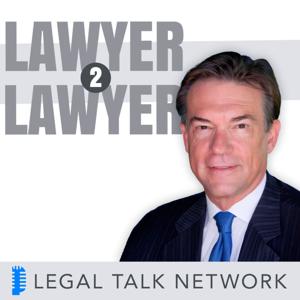

According to Article II, Section 2, of the United States Constitution, the president "shall have power to grant reprieves and pardons for offenses against the United States, except in cases of impeachment.” With the recent investigation into President Trump’s possible collusion with Russia by special counsel Robert Mueller, talk of presidential pardon power has surfaced. So the question remains: if President Trump were to be ever found guilty of a federal crime, could he pardon himself?
On Lawyer 2 Lawyer, host Bob Ambrogi joins guests Brian C. Kalt, professor of law and the Harold Norris Faculty Scholar at Michigan State University College of Law, and Robert L. Deitz, professor of Public Policy at the Schar School of Policy and Government at George Mason University, as they take an inside look at presidential pardon power. They discuss limits, take a look back at history, look ahead to see how this all will unfold, and get a deeper look into a possible presidential self-pardon and repercussions.
Brian C. Kalt is professor of law and the Harold Norris Faculty Scholar at Michigan State University College of Law.
Robert L. Deitz is professor of Public Policy at the Schar School of Policy and Government at George Mason University.
Special thanks to our sponsors, Clio and Litera.
 View all episodes
 By Attorney J. Craig Williams and Legal Talk Network

4.2
135135 ratings
According to Article II, Section 2, of the United States Constitution, the president "shall have power to grant reprieves and pardons for offenses against the United States, except in cases of impeachment.” With the recent investigation into President Trump’s possible collusion with Russia by special counsel Robert Mueller, talk of presidential pardon power has surfaced. So the question remains: if President Trump were to be ever found guilty of a federal crime, could he pardon himself?
On Lawyer 2 Lawyer, host Bob Ambrogi joins guests Brian C. Kalt, professor of law and the Harold Norris Faculty Scholar at Michigan State University College of Law, and Robert L. Deitz, professor of Public Policy at the Schar School of Policy and Government at George Mason University, as they take an inside look at presidential pardon power. They discuss limits, take a look back at history, look ahead to see how this all will unfold, and get a deeper look into a possible presidential self-pardon and repercussions.
Brian C. Kalt is professor of law and the Harold Norris Faculty Scholar at Michigan State University College of Law.
Robert L. Deitz is professor of Public Policy at the Schar School of Policy and Government at George Mason University.
Special thanks to our sponsors, Clio and Litera.

38,430 Listeners

6,881 Listeners
26,012 Listeners
1,150 Listeners
3,530 Listeners
379 Listeners
488 Listeners
14 Listeners
11 Listeners
22 Listeners
116 Listeners
8 Listeners
1,110 Listeners
9 Listeners
39 Listeners
30,233 Listeners
54 Listeners
32 Listeners
6,304 Listeners
26 Listeners
10 Listeners
34 Listeners
61 Listeners

113,121 Listeners

56,944 Listeners
8,312 Listeners
639 Listeners
47 Listeners
5,217 Listeners

6,462 Listeners

16,525 Listeners
32 Listeners
5 Listeners
52 Listeners
7 Listeners