
Sign up to save your podcasts
Or



What if the reason most people fail to change… isn’t lack of discipline—but misunderstanding how transformation actually works?
In this episode, we dive deep into the science of sustainable change with one of the world’s leading experts in leadership and human development, Richard Boyatzis.
A distinguished professor at Case Western Reserve University and a pioneer in emotional intelligence alongside Daniel Goleman, Dr. Boyatzis has spent decades uncovering what truly drives lasting growth—both in individuals and organizations.
This conversation goes beyond surface-level motivation and into the neuroscience of transformation.
We explore:
Why willpower alone fails—and what actually creates lasting change
The power of vision and identity in rewiring your brain
The difference between coaching with compassion vs. compliance
How emotional intelligence shapes elite leadership and performance
Why stress destroys performance—and how renewal restores it
This is not just about becoming better.
It’s about becoming who you are capable of being.
If you’re an athlete, leader, or high performer seeking sustainable excellence, this episode will challenge the way you think about growth, discipline, and transformation.
What happens when the noise stops?
No distractions.
Just… you.
In this thought-provoking episode of Human Performance 360, Dr. Parsa Peykar explores the hidden space most people avoid—the silence where clarity, identity, and truth begin to emerge.
Because high performance isn’t built only in action.
When everything gets quiet, something powerful happens:
In this episode, we break down:
• Why silence is uncomfortable—and why that’s exactly why you need it
This is not just about performance.
Because the most dangerous thing isn’t failing…
🎯 Takeaway:
Are faith and science truly in conflict — or are they both essential tools for unlocking peak human performance?
In this powerful episode of Human Performance 360, Dr. Parsa Peykar sits down with Dr. Thomas G. Plante, a leading psychologist at the intersection of spirituality, ethics, and mental health, to explore one of the most misunderstood questions in modern performance psychology.
We often think of high performers as purely rational — driven by data, evidence, and logic.
Elite athletes, world-class leaders, and even top scientists don’t rely on science alone.
Because performance is not just physical or intellectual —
In this episode, we break down:
• The real relationship between faith and science in high performance
As Dr. Plante powerfully states:
This conversation challenges the traditional divide between evidence and meaning — and reveals how integrating both can elevate not just your performance… but who you become.
Most people think nutrition is about dieting.
High performers know it’s about biology and output.
Whether you are an athlete preparing for competition, an executive making high-stakes decisions, or a professional navigating long cognitive days, the same question applies:
Is your nutrition supporting your performance — or silently limiting it?
In this episode of Human Performance 360, Dr. Parsa Peykar explores nutrition as applied performance science, breaking down how food directly shapes energy regulation, cognitive clarity, recovery, and leadership capacity.
This is not about restrictive diets or nutrition trends.
It’s about metabolic support for high-level performance.
In this episode, you’ll learn three practical resets:
🥗 Energy Stability Over Stimulation
🔁 Recovery Is a Nutritional Variable
🧠 Nutrition as Cognitive Strategy
This reset is especially valuable if you experience:
Afternoon cognitive crashes
Difficulty sustaining focus
Slower recovery from stress
Declining sleep quality
High output but reduced clarity
Because performance is not purely psychological.
It is biological.
Food influences:
Energy stability
Emotional regulation
Recovery speed
Cognitive clarity
Leadership consistency
From elite athletes to executives in boardrooms, performance begins with physiology.
This is Human Performance 360 — where nutrition isn’t treated as aesthetics.
It’s treated as performance infrastructure.
Eat for energy.
Because before strategy executes,
biology decides.
What if the quality of your decisions, your leadership capacity, and your emotional control were shaped not just by mindset—but by metabolism?
In this episode of Human Performance 360, we explore a powerful but often overlooked truth: human performance is biological before it is psychological. Every strategic decision, every moment of focus, and every emotional response is powered by the brain’s metabolic systems. And those systems depend directly on how we fuel the body.
Your brain represents only about two percent of your body weight, yet it consumes roughly twenty percent of your daily energy. Cognitive clarity, impulse control, decision making, and emotional regulation all rely on stable energy delivery to the brain—primarily through glucose metabolism, oxygen supply, and neural efficiency.
When that fuel becomes unstable, performance declines.
Research in neuroscience and behavioral physiology shows that fluctuations in blood glucose can impair attention, working memory, cognitive flexibility, and inhibitory control. Poor sleep—often influenced by alcohol consumption, late-night eating, or poor nutritional habits—reduces activity in the prefrontal cortex, the very region responsible for planning, judgment, and emotional regulation, while increasing reactivity in the amygdala, the brain’s threat detection center.
The result?
More impulsivity.
Add another layer: chronic low-grade inflammation, often associated with highly processed dietary patterns. Studies link it to fatigue, slower recovery, depressive symptoms, and reduced cognitive efficiency. Inflammation does not only affect physical health—it affects mood, clarity, and resilience.
Elite athletes already understand this. In sports science, nutrition is treated as a performance system:
• Glycogen availability predicts endurance and fatigue resistance
Athletes fuel strategically because margins matter.
But here is the deeper question we explore in this episode:
Why do we apply nutritional precision to athletes—but not to leaders, entrepreneurs, and decision makers?
The same metabolic systems that determine a marathon runner’s endurance also influence a CEO navigating a ten-hour negotiation. The same glucose dynamics affecting a tennis player in a fifth set affect a founder making high-stakes financial decisions.
The brain does not distinguish between sport and strategy.
Energy stability shapes cognitive stability.
This episode reframes nutrition not as a trend, aesthetic goal, or moral debate—but as infrastructure for human performance.
Because if mindset is the software,
And hardware determines bandwidth.
To explore this with scientific rigor and clarity, I’m joined by one of the most influential voices in nutrition science and public health:
Marion Nestle
Together, we examine how nutrition shapes cognitive performance, decision making, leadership capacity, and long-term resilience—from elite athletes to executives operating at the highest levels.
This conversation will change how you think about food, performance, and the biology behind human excellence.
🎧 Listen now and rethink what truly fuels performance.
Self-efficacy is not confidence.
It’s your brain’s belief about one specific question:
“Can I execute the actions required in this situation?”
And that belief determines everything.
When self-efficacy is strong:
When it weakens:
In this Mental Reset episode of Human Performance 360, Dr. Parsa Peykar breaks down the psychology of self-efficacy and gives you three structured tools to rebuild belief — especially when results are delayed.
🔑 Tool 1: Shrink the Target
🔁 Tool 2: Separate Outcome from Capability
🧭 Tool 3: Borrow Belief Strategically
This episode is for you if:
Self-efficacy does not collapse all at once.
This reset rebuilds it through structure.
Because before performance improves,
And belief stabilizes through action.
🎙️ This is Human Performance 360.
What separates two equally talented performers under pressure?
Often, it’s not skill.
In this episode of Human Performance 360, Dr. Parsa Peykar sits down with Deborah Feltz, distinguished professor at Michigan State University and one of the foremost authorities on self-efficacy in sport and exercise psychology.
Building on the foundational work of Albert Bandura, Dr. Feltz has spent decades researching how belief influences performance — from individual athletes to entire teams.
Together, we explore:
What self-efficacy truly is — and how it differs from confidence or self-esteem
The four scientifically validated sources of belief
How athletes can use failure to strengthen — not weaken — efficacy
The role of physiological interpretation (nerves, adrenaline, fatigue) in performance
Coaching efficacy — and how a leader’s belief shapes team outcomes
The difference between calibrated confidence and dangerous over-belief
How self-efficacy applies beyond sport — into leadership, entrepreneurship, and life
This episode moves beyond motivational language and into evidence-based performance science.
You’ll learn why self-efficacy predicts:
Effort
Persistence
Emotional regulation
Resilience under pressure
And ultimately, results
Whether you’re an athlete, coach, executive, student, or creator — this conversation will challenge you to examine a powerful question:
Where is your belief coming from — and is it strong enough to support your next level?
Think of one area in your life where you hesitate — not because you lack skill, but because you lack belief.
What would change if you acted as if you could?
Spiritual Reset is not about religion.
In high performance environments, adversity is often framed as an obstacle to overcome quickly. But growth doesn’t always accelerate under pressure — sometimes it deepens.
A Spiritual Reset is the intentional pause that allows you to:
• Separate circumstance from identity
This reset invites you to shift from reaction to reflection.
It reframes adversity as a refining process — one that strengthens character, emotional maturity, and meaning.
Where others see delay, you see development.
Spiritual Reset reminds you:
You are not defined by the storm.
This is Human Performance 360.
What if adversity wasn’t the enemy of greatness—but the training ground for it?
In this episode of Human Performance 360, Dr. Parsa Peykar sits down with Dr. Sarah Schnitker—a leading researcher on virtues, patience, resilience, and thriving—to unpack what science reveals about growing stronger because of hardship, not just surviving it.
Together, they explore how high performers can reframe struggle as a catalyst for character development, how emotion regulation becomes a performance advantage under pressure, and why even strengths like perseverance and patience can become liabilities when they’re out of balance. You’ll learn the difference between suppression vs. regulation, how micro-habits like reframing and gratitude shape stability in chaotic moments, and what leaders can do to build cultures that promote virtue-based resilience—not just output recovery.
You’ll also take away a simple but powerful practice for anyone going through a setback right now:
🧠 In this conversation, you’ll discover:
If you’re a high performer, leader, athlete, or ambitious builder navigating pressure and setbacks—this episode gives you a clear, grounded blueprint for turning adversity into endurance, wisdom, and growth.
If nutrition feels confusing, you’re not failing—you’re paying attention.
From contradictory headlines to diet tribes and viral certainty, modern nutrition is loud, polarized, and exhausting—especially for high performers who genuinely want to eat well, feel energized, and protect their long-term health.
In this episode of Human Performance 360, Dr. Parsa Peykar offers a Nutrition Reset—not a diet, not a rulebook, and not another list of foods to fear or worship. Instead, this episode gives you three powerful mental tools to cut through the noise and make food decisions with clarity, confidence, and flexibility.
🔑 In this episode, you’ll learn:
Why nutrition confusion is so common—and why it’s not your fault
How diet identity quietly increases stress, rigidity, and self-judgment
A simple thinking filter to find truth beneath polarized nutrition debates
The function-first framework that brings food back to energy, recovery, focus, and longevity
How to know when your nutrition needs adjustment—not discipline or guilt
This episode is for anyone who:
Feels overwhelmed by conflicting nutrition advice
Has “done everything right” but still feels stuck or stressed
Wants sustainable clarity instead of jumping between extremes
This is Human Performance 360. Because clarity always comes before optimization.
We don’t chase diets.
From the publisher's feed
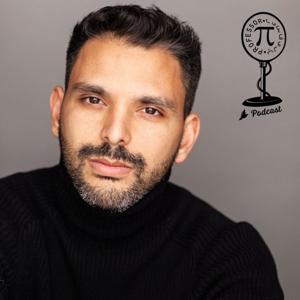
What does it take to be influential in today's world? Dr. Parsa Peykar -Mental performance consultant, university professor, and author- joined by world-class experts from diverse fields explore practical lessons on leadership, influence, and service.Each episode of the Professor P Podcast is designed like a mini research project, built around a central “research question” tied to the theme. Every episode unfolds in three parts: 1.Book Review or Art Analysis – exploring ideas that set the stage.2. Expert Conversation – insights from leading voices across diverse fields. 3. Student Reflections – real feedback and fresh perspectives from university students.
Across all episodes, one theme remains constant: every guest leaves listeners with at least one simple act of kindness to put into practice.
The Professor P Podcast is a fun, engaging “university” for everyone—delivering both educational and experimental lessons to inspire you to grow, lead, and make an impact in your chosen field. More than a podcast, it’s a movement to add value to your life—and to encourage you to add value to others.
📩 We’d love to hear from you! Share your comments, ideas, or just say hi: [email protected]