
Sign up to save your podcasts
Or

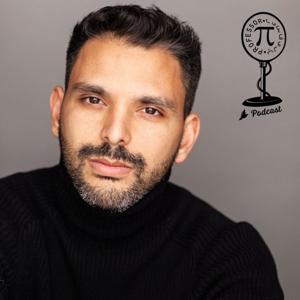


Is nutrition science settled — or is it all just one big food fight?
From keto to vegan, low-carb to plant-based, we’re bombarded with diet headlines that seem to contradict each other every week. But where does real scientific consensus actually exist… and where are we still locked in controversy?
In this episode of the Human 360 Performance Series, Dr. Parsa Peykar sits down with Dr. Chris Gardner, Stanford professor and world-renowned nutrition scientist, to cut through the noise. Dr. Gardner has led groundbreaking studies like DIETFITS, revealing why one-size-fits-all diets often fail — and why personalization, culture, and behavior matter just as much as nutrients.
🔥 What you’ll discover in this episode:
The three core principles of nutrition that nearly all experts agree on.
Why carbs and protein are still at the center of heated debate.
The truth about supplements — science vs. marketing hype.
How athletes and high performers can apply evidence-based nutrition without getting lost in diet wars.
The future of food: where research is headed, and how it may change how we fuel our bodies.
If you’ve ever felt confused, overwhelmed, or frustrated by the endless “do this, don’t do that” of nutrition advice — this episode is your reset. Get ready for clarity, grounded science, and practical takeaways to help you fuel your health, energy, and performance.
Overthinking doesn’t show up when life is easy.
In this Human Performance 360 mini-episode, Dr. Parsa Peykar delivers a practical Mental Reset designed for high performers who feel mentally stuck, overwhelmed, or caught in analysis paralysis.
This episode introduces three simple, science-grounded tools you can use on demand to regain clarity and move forward with confidence—without needing certainty, perfection, or motivation.
You’ll learn how to:
Calm mental noise using a fast neuroscience-based technique
Reframe fear into direction through identity-based decision-making
Use an action-based mantra to break overthinking and create momentum
This is not about positive thinking or forcing calm.
Perfect to listen to:
Before a big decision
Before a performance or presentation
When you’re stuck in your head and need direction fast
Human Performance 360 trains the mind—not to eliminate discomfort, but to move forward with it.
What if peak performance didn’t require controlling your thoughts, eliminating fear, or forcing motivation?
In the first-ever episode of the Human Performance 360 series, we lay the foundation for a radically different approach to excellence—one built on psychological flexibility, values, and identity beyond results.
This episode unfolds in two powerful parts:
Host Dr. Parsa Peykar introduces Acceptance and Commitment Therapy (ACT) as a practical mental performance system for athletes, leaders, and high performers operating under pressure.
You’ll learn how the six core processes of ACT function as trainable skills—helping you stay present, open, and values-driven when anxiety, doubt, and high stakes inevitably show up.
This is not about feeling confident.
In an in-depth conversation, the co-founder of ACT shares how psychological flexibility—not motivation or mental toughness—is the true foundation of sustainable high performance.
Together, we explore:
Why tying identity to achievement creates fragility
How values anchor resilience when results fluctuate
What elite performers do differently under pressure
How ACT is shaping the future of sport psychology and leadership development
This episode reframes success—not as an outcome to chase, but as a way of showing up.
The 6 ACT processes as a complete performance toolkit
How to perform effectively without waiting to feel confident
Why values-driven action outlasts motivation and grit
How to separate self-worth from results—without losing ambition
One daily practice that keeps performance aligned under pressure
Sustainable excellence doesn’t come from controlling the mind—
When identity is rooted in values rather than outcomes, pressure stops being a threat—and performance becomes an expression of who you are.
Who am I when performance dips or results disappear?
What values do I want my actions to express—regardless of the scoreboard?
How would I show up differently this week if I acted from values instead of outcomes?
This is not just an episode.
🎧 Press play—and step into performance that lasts.
What does it really take to perform at your highest level — consistently, sustainably, and with purpose?
In this special preview episode of the Professor P Podcast, Dr. Parsa Peykar introduces Human Performance 360, a new flagship series exploring peak performance from the inside out.
Drawing on psychology, neuroscience, elite sport, nutrition, and spiritual intelligence, this series goes beyond tactics and motivation to uncover what truly drives excellence. You’ll hear conversations with world-class experts and performers — including guests from Harvard, MIT, and elite athletic environments — alongside practical, applied tools you can use immediately.
This episode also introduces the Reset Mini-Series — short, high-impact episodes released every other week, focused on real-world application:
Mental Reset
Emotional Reset
Body Reset
Identity Reset
Whether you’re an athlete, coach, leader, entrepreneur, or someone striving to live and perform with clarity and meaning, Human Performance 360 is designed to help you integrate mind, body, emotion, and purpose into a unified performance system.
This isn’t just a podcast.
🎧 Subscribe now and begin the journey.
In this exclusive episode of the Professor P Podcast, I take you inside two of Europe’s most iconic football institutions — FC Barcelona and SL Benfica — through a rare, first-hand experience across Barcelona and Lisbon.
This is not a tactical breakdown.
From matchday energy and VIP access at Barça’s football and basketball games, to thoughtful reflections on Benfica’s philosophy, structure, and long-term development model, this episode connects two cities, two clubs, and one shared standard: excellence built over time.
In this episode, we explore:
What elite football culture looks like up close
How FC Barcelona and FC Benfica protect identity across generations
The difference between talent-driven success and system-driven success
Leadership, discipline, and standards inside world-class organizations
Lessons that translate beyond sport — into business, leadership, and life
This conversation blends observation, psychology, and real-world insight from inside European football culture — offering lessons for athletes, coaches, leaders, and anyone serious about long-term greatness.
🎧 Exclusive. Grounded. Insightful.
Professor P Podcast
Step inside FC Barcelona — not as a fan, but from the inside.
In this exclusive preview episode, Professor P takes you behind the scenes of one of the most iconic sporting institutions in the world. From VIP environments and elite match-day energy to intimate conversations and observations rarely shared publicly, this episode sets the stage for a deeper journey into football culture, leadership, identity, and performance at the highest level.
This is not about tactics or scores.
🎧 What to expect:
Rare behind-the-scenes insights from the FC Barcelona environment
Reflections on elite culture, leadership, and legacy
The psychological atmosphere of world-class sport
A preview of upcoming conversations and stories born from this journey
This is the beginning of something bigger.
Movement. Momentum. Meaning. Welcome to the FC Barcelona Experience — Professor P Podcast.
What if every human being was born not with fate written in stone—but with a blank page waiting to be filled?
John Locke reshaped how humanity understands the mind, freedom, and government. In this episode, we explore how his belief in experience, education, and consent changed philosophy—and how his lessons can still shape our personal and civic life today.
From the idea of the blank slate to the foundations of democracy, Locke teaches us that liberty is not inherited—it’s built through reason, growth, and responsibility.
---------------------------------------------------------
John Locke (1632–1704) was an English philosopher, physician, and political theorist often called the Father of Liberalism. Born in Somerset, England, he studied at Oxford and later served as a physician and advisor. His writings on human understanding and government laid the groundwork for modern democracy and psychology. In his Essay Concerning Human Understanding, Locke argued that the mind is a tabula rasa—a blank slate shaped by experience, not innate ideas. His Two Treatises of Government championed individual rights, equality, and the idea that governments exist by the consent of the governed. His thought inspired Enlightenment leaders, the American Revolution, and remains at the core of Western ideas of freedom and reason.
---------------------------------------------------------
Fun Fact: John Locke’s writings were so influential that Thomas Jefferson referred to him as one of the “three greatest men who ever lived,” placing him alongside Bacon and Newton. His ideas literally helped draft the DNA of freedom.
In this episode, we dive into the transformative world of global healthcare innovation with Dr. David Blumenthal, an expert in health policy and international collaboration. Together, we explore how different healthcare systems across the globe address common challenges, the lessons they offer, and the role of groundbreaking technologies in driving change.
Dr. Blumenthal shares insights into how countries are reimagining care delivery, the importance of collaboration in tackling global health crises, and what the future holds for international healthcare partnerships. Whether you're a policymaker, healthcare professional, or just curious about the future of health, this episode will leave you inspired by the possibilities of global innovation and reform.
-----------------------------
Dr. David Blumenthal is a prominent health policy expert, physician, and thought leader in healthcare innovation. He is currently the President of The Commonwealth Fund, a private foundation dedicated to advancing a high-performing healthcare system that achieves better access, quality, and equity, particularly for society's most vulnerable.
Dr. Blumenthal previously served as the National Coordinator for Health Information Technology under President Barack Obama, where he played a pivotal role in implementing the HITECH Act, which spurred widespread adoption of electronic health records across the United States.
A primary care physician by training, Dr. Blumenthal is also a former faculty member at Harvard Medical School and has held senior leadership positions at Massachusetts General Hospital and the Institute for Health Policy. He has authored several books and over 300 scholarly articles on health policy, healthcare innovation, and the intersection of technology and health systems.
Dr. Blumenthal’s expertise lies in bridging clinical practice, policy, and technological innovation to improve healthcare equity and efficiency worldwide.
-----------------------------
*Act of Kindness suggested by our guests: Caring for friends, encourage others
What if true freedom wasn’t about doing whatever you want—but about understanding reality so deeply that nothing could control your mind?
Baruch Spinoza lived quietly, but thought boldly. Excommunicated, misunderstood, and ahead of his time, he gave the world a vision of freedom rooted in understanding. In this episode, we explore how his ideas—reason over passion, knowledge over fear, and harmony with nature—still shape science, psychology, and spirituality today.
Discover how clarity, compassion, and curiosity can free your mind—and help you live with deeper peace in a chaotic world.
---------------------------------------------------------
Baruch Spinoza (1632–1677) was a Dutch philosopher of Portuguese-Jewish descent, born in Amsterdam. Excommunicated from his Jewish community for his radical ideas, he lived modestly as a lens grinder while writing some of the most revolutionary works in modern philosophy. In his masterpiece Ethics, Spinoza described a universe governed by natural laws rather than divine will, where God and Nature were one and the same. His ideas on reason, freedom, and tolerance laid the groundwork for Enlightenment thought and modern democracy. He died at only 44 from lung illness caused by glass dust—but his vision of intellectual and spiritual freedom lives on.
---------------------------------------------------------
Fun Fact: Spinoza polished lenses for microscopes and telescopes, helping others see clearly—a perfect metaphor for his philosophy. He literally crafted the tools that expanded human perception.
In this episode of Professor P Podcast, we unlock the invisible side of human behavior — the mental processes shaping your decisions, perceptions, and beliefs long before you’re aware of them.
We begin with a deep-dive review of Leonard Mlodinow’s Subliminal, a groundbreaking book revealing that much of what we call free will is actually guided by unconscious forces. From snap judgments to distorted memories, we explore five core insights:
With practical tools such as the Bias Log, Double-Take Challenge, and Belief Audit, listeners learn to spot unconscious patterns in real time.
Next, we sit down with the brilliant Dr. Charles Spence to explore one of psychology’s most fascinating topics: crossmodal perception — how your senses constantly interact, influence one another, and create illusions you don’t notice.
We discuss:
Dr. Spence breaks down the science in a way that is practical, mind-bending, and immediately applicable.
Finally, we’re joined by Mariam Marcy, one of my former students, who brings a fresh perspective on how unconscious processes and sensory illusions show up in everyday life — in habits, relationships, learning, and performance.
Her insights bridge the science with lived experience, showing how understanding the unseen parts of the mind can transform self-awareness and elevate personal growth.
-----------------------------
*Act of Kindness: Give gifts to others (Surprise gifts); Giving a compliment.
-----------------------------
Dr. Charles Spence is a leading experimental psychologist and professor at the University of Oxford, specializing in multisensory perception—how our senses interact to shape experiences in areas like food enjoyment, product design, and consumer behavior. His work has pioneered the field of gastrophysics, revealing how sensory elements such as sound, color, and texture influence taste and dining experiences. Dr. Spence has collaborated with major brands like Unilever, Starbucks, and BMW to apply sensory science in marketing and product innovation. He is the author of Gastrophysics: The New Science of Eating and a recipient of the Ig Nobel Prize for his research demonstrating how the sound of a chip can alter its perceived freshness, solidifying his reputation for uncovering the subtle ways our senses shape behavior.
From the publisher's feed
What does it take to be influential in today's world? Dr. Parsa Peykar -Mental performance consultant, university professor, and author- joined by world-class experts from diverse fields explore practical lessons on leadership, influence, and service.Each episode of the Professor P Podcast is designed like a mini research project, built around a central “research question” tied to the theme. Every episode unfolds in three parts: 1.Book Review or Art Analysis – exploring ideas that set the stage.2. Expert Conversation – insights from leading voices across diverse fields. 3. Student Reflections – real feedback and fresh perspectives from university students.
Across all episodes, one theme remains constant: every guest leaves listeners with at least one simple act of kindness to put into practice.
The Professor P Podcast is a fun, engaging “university” for everyone—delivering both educational and experimental lessons to inspire you to grow, lead, and make an impact in your chosen field. More than a podcast, it’s a movement to add value to your life—and to encourage you to add value to others.
📩 We’d love to hear from you! Share your comments, ideas, or just say hi: [email protected]