
Sign up to save your podcasts
Or



Based on Podcast App listening data
As Hong Kong hurtles towards the transition from British colony to Chinese territory, the king becomes an unlikely celebrity artist. Governor Chris Patten prepares to hand back Hong Kong to the Chinese, and as talks between the global powers take place, the people of Hong Kong are consigned to be spectators, powerless over their own future. Louisa continues her quest to discover the truth behind the king's claims of dominion, and meets a man who might provide some answers.
With thanks to Getty for use of news footage.
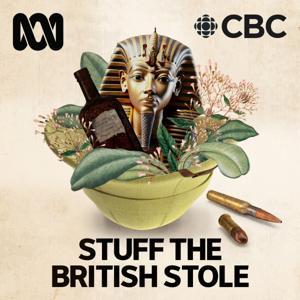
The King's calligraphy once covered Hong Kong, but now it has all but disappeared. Louisa searches for traces of the King, and for any truth to his claims of dominion over Kowloon. In this quest, she goes to the heart of his kingdom — Kwun Tong is an area full of high-rise factories, churning out t-shirts and souvenirs. There she discovers the first of the King's courtiers; and begins to understand that the search for the king is the search for Hong Kong itself.
He called himself the King of Kowloon and, for almost half a century, he used his misshapen Chinese characters to wage a calligraphic campaign claiming his dominion over Hong Kong. Journalist Louisa Lim follows the trail of a man who was first known as a crank, then an artist, then a most unlikely icon.
The decision to get cosmetic enhancement is complicated. It could be triggered by childhood bullying, influenced by social media, or stem from a belief that you’re not good enough.The beauty industry encourages you to tie your self-identity to your appearance. It promises to empower you.In the final episode of Face Value, we delve further into why so many people are driven to change the way they look. Who are they doing it for? And do cosmetic procedures make people happier or more confident?
Cosmetic enhancement comes with plenty of risks. Botched surgeries, safety breaches, and in the worst-case scenario, fatal results. They've been reported for decades. Horror stories aside, chasing your aesthetic ideal is no easy task. Beneath every Insta-perfect photograph is a tonne of time, energy and money that's often glossed over. And that's not to mention the pain and prolonged recovery that can come with invasive procedures.
Why are so many people willingly submitting themselves to putting this much effort into how they look?
For the longest time, Western beauty has been celebrated. The desire and pressure to look more 'Western' has led to skin whitening products, nose jobs and double eyelid surgery. But the tide is turning. Celebrities like the Kardashians are leaning into an ethnically ambiguous aesthetic.
Is this cultural appropriation or cultural appreciation? What do people of colour, who've often been racially vilified for their appearance, have to say about others cherry-picking their features?
COVID-19 has changed the way we do things. We're relying on video platforms to work and to connect. And it turns out that seeing our faces on-screen everyday has triggered more people to seek cosmetic enhancement than ever before. Couple that with the constant stream of impossibly beautiful — and heavily edited — people on social media, and you have the perfect storm to create appearance insecurity. Where is all this leading us to?
The cosmetic enhancement industry is booming. Injectables and surgical procedures promise age-defying beauty. But they come with real risks. From anti-wrinkle injections and fillers, to nose jobs and Brazilian Butt Lifts, why are so many people choosing to enhance their appearance?
From the publisher's feed
Ranked by our users in the last 21 days

102 Listeners
121 Listeners
75 Listeners
1,737 Listeners

822 Listeners

761 Listeners

126 Listeners
21 Listeners

58 Listeners
162 Listeners

318 Listeners
925 Listeners
52 Listeners

147 Listeners
10 Listeners
195 Listeners
114 Listeners

160 Listeners

238 Listeners
1,008 Listeners
17 Listeners
4 Listeners
116 Listeners