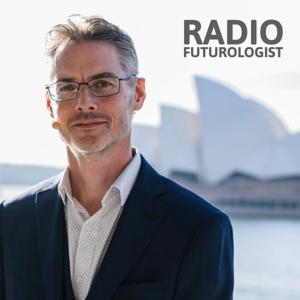
Radioland, with James Cridland - radio futurologist

Radioland, with James Cridland - radio futurologist

By James CridlandBusinessNewsNews Commentary
Download on the App Store

Radioland, with James Cridland - radio futurologist episodes

  • Norway switches off FM. Why don't they just stream everything?
    Norway has started switching off (almost) every FM transmitter, replacing it with DAB+. But why aren't they just streaming everything? I do some tedious maths. And here's the maths written down, because, heavens, this was a difficult podcast to make even approachably interesting.
     
    This week, FM broadcasts in one area of Norway finally fall silent. The majority of radio stations move over to broadcast on DAB+, alongside online and DTV. The whole country will have turned off FM by the end of the year. (Some small local stations continue for now on FM, but stations that get 95% of listening will move).
    DAB+ is broadcast radio, just like FM. You need a new receiver, but it works exactly the same: broadcasting from a tower, being received on an antenna.
    But why bother with broadcast radio, people are asking, when streaming is all we need? Let’s do the maths.
    In many countries, you rent your FM (or DAB) broadcast equipment from a transmission provider, who deal with maintenance and the electricity bills. A station I picked at random in the UK spends US$6,000 a month on their FM transmission to cover 2,500,000 adults. It has a market share of 5%, and at their peak time, 43,000 listeners are tuned-in.
    Now, with FM (and DAB), it doesn’t matter how many people are tuned in: it makes no difference to the cost of the transmitter. But with internet streaming, you pay for enough capacity to cope (servers and bandwidth).
    Now, 43,000 is a LOT of concurrent listeners for internet streaming. Most stations won’t be doing anywhere near that - I know of a few running about 15,000 peak concurrent listeners, though most are in the hundreds. But, I spoke to an internet streaming company which specializes in radio streaming for large companies. Their rough costs are $55 per month for 100 concurrent streams - a maximum of 100 listeners at the same time. To turn off FM and have to stream a station to 43,000 listeners at peak would cost $23,650 a month: internet is four times more expensive than an FM transmitter.
    The station has 11m total listening hours a month, by the way, if you want to go and do some other rough costs. In bandwidth costs alone, one CDN I checked would charge $65,000 a month for the 343TB a month your audience would use. So the proper radio streamers I spoke to earlier have a good deal.
    There’s then the cost to the consumer. That station is listened-to for 32 hours a month by each listener, which is about 1GB of data per month. That isn’t entirely free. There’s the reliability of a data signal for live streaming, too; and streaming uses seven times more battery than listening to FM on the same device. And music rights. And so it goes on.
    In Bodø, the capital of Nordland, the county in Norway where they’re first to switch, a typical FM listener might get ten radio stations. When they turn on their DAB+ radio, they’ll find 30 stations there: a significant increase in choice.
    Perhaps that explains the global trends. Live internet streaming for radio is growing very slowly: far slower than DAB take-up in most countries, including Norway. So, even when people are being forced to change their radio sets, they don’t start using streaming: they stick to broadcast. And why wouldn’t they? It’s free, reliable, and it works.
    Internet broadcasting is great. It’s definitely part of radio’s future. But it isn’t - can’t be - a replacement for broadcast. Not yet, anyway.
     
     
    Support the show.
    6 min
  • Norway switches off FM. Why don't they just stream everything?

    Got something to say to this podcast? Send a voicemail, and you might hear yourself on the next episode!

    Norway has started switching off (almost) every FM transmitter, replacing it with DAB+. But why aren't they just streaming everything? I do some tedious maths. And here's the maths written down, because, heavens, this was a difficult podcast to make even approachably interesting.


    This week, FM broadcasts in one area of Norway finally fall silent. The majority of radio stations move over to broadcast on DAB+, alongside online and DTV. The whole country will have turned off FM by the end of the year. (Some small local stations continue for now on FM, but stations that get 95% of listening will move).

    DAB+ is broadcast radio, just like FM. You need a new receiver, but it works exactly the same: broadcasting from a tower, being received on an antenna.

    But why bother with broadcast radio, people are asking, when streaming is all we need? Let’s do the maths.

    In many countries, you rent your FM (or DAB) broadcast equipment from a transmission provider, who deal with maintenance and the electricity bills. A station I picked at random in the UK spends US$6,000 a month on their FM transmission to cover 2,500,000 adults. It has a market share of 5%, and at their peak time, 43,000 listeners are tuned-in.

    Now, with FM (and DAB), it doesn’t matter how many people are tuned in: it makes no difference to the cost of the transmitter. But with internet streaming, you pay for enough capacity to cope (servers and bandwidth).

    Now, 43,000 is a LOT of concurrent listeners for internet streaming. Most stations won’t be doing anywhere near that - I know of a few running about 15,000 peak concurrent listeners, though most are in the hundreds. But, I spoke to an internet streaming company which specializes in radio streaming for large companies. Their rough costs are $55 per month for 100 concurrent streams - a maximum of 100 listeners at the same time. To turn off FM and have to stream a station to 43,000 listeners at peak would cost $23,650 a month: internet is four times more expensive than an FM transmitter.

    The station has 11m total listening hours a month, by the way, if you want to go and do some other rough costs. In bandwidth costs alone, one CDN I checked would charge $65,000 a month for the 343TB a month your audience would use. So the proper radio streamers I spoke to earlier have a good deal.

    There’s then the cost to the consumer. That station is listened-to for 32 hours a month by each listener, which is about 1GB of data per month. That isn’t entirely free. There’s the reliability of a data signal for live streaming, too; and streaming uses seven times more battery than listening to FM on the same device. And music rights. And so it goes on.

    In Bodø, the capital of Nordland, the county in Norway where they’re first to switch, a typical FM listener might get ten radio stations. When they turn on their DAB+ radio, they’ll find 30 stations there: a significant increase in choice.

    Perhaps that explains the global trends. Live internet streaming for radio is growing very slowly: far slower than DAB take-up in most countries, including Norway. So, even when people are being forced to change their radio sets, they don’t start using streaming: they stick to broadcast. And why wouldn’t they? It’s free, reliable, and it works.

    Internet broadcasting is great. It’s definitely part of radio’s future. But it isn’t - can’t be - a replacement for broadcast. Not yet, anyway.


    Support the show.


    This podcast uses the following third-party services for analysis:

    OP3 - https://op3.dev/privacy
    6 min
  • The great radio switchoff
    Broadcasting on AM? You might want to think about your future strategy. Sorry.
    Music for this episode from Lee Rosevere. I have a newsletter which is very good and now reaches over 2,500 people. Subscribe at https://james.cridland.net
    So, then. Happy New Year and all.
    Support the show.
    4 min
  • The great radio switchoff

    Got something to say to this podcast? Send a voicemail, and you might hear yourself on the next episode!

    Broadcasting on AM? You might want to think about your future strategy. Sorry.

    Music for this episode from Lee Rosevere. I have a newsletter which is very good and now reaches over 2,500 people. Subscribe at https://james.cridland.net

    So, then. Happy New Year and all.

    Support the show.


    This podcast uses the following third-party services for analysis:

    OP3 - https://op3.dev/privacy
    4 min
  • Why radio matters
    Here's why radio matters - and why I hope your local station was live, not voicetracked, on Christmas morning.
    Audio is from Luke Grant on 2GB and 4BC, via radiorewind.com
    Support the show.
    3 min
  • Why radio matters

    Got something to say to this podcast? Send a voicemail, and you might hear yourself on the next episode!

    Here's why radio matters - and why I hope your local station was live, not voicetracked, on Christmas morning.

    Audio is from Luke Grant on 2GB and 4BC, via radiorewind.com

    Support the show.


    This podcast uses the following third-party services for analysis:

    OP3 - https://op3.dev/privacy
    3 min
  • The radio station in a pub, and other company-run stations

    Got something to say to this podcast? Send a voicemail, and you might hear yourself on the next episode!

    Lee Rosevere does the music for this, while I write a very good weekly newsletter which you should get, from https://james.cridland.net

    Support the show.


    This podcast uses the following third-party services for analysis:

    OP3 - https://op3.dev/privacy
    3 min
  • Barking mad - radio for dogs
    BBC Radio London's Barking Hour lives here on Thursdays: http://www.bbc.co.uk/programmes/p011nd8m
    Pedigree K9FM showreel at https://www.youtube.com/watch?v=0E9H3jCoTE4
    You can get my weekly newsletter at james.crid.land and daily media news at media.info/daily
    Support the show.
    4 min
  • Barking mad - radio for dogs

    Got something to say to this podcast? Send a voicemail, and you might hear yourself on the next episode!

    BBC Radio London's Barking Hour lives here on Thursdays: http://www.bbc.co.uk/programmes/p011nd8m

    Pedigree K9FM showreel at https://www.youtube.com/watch?v=0E9H3jCoTE4

    You can get my weekly newsletter at james.crid.land and daily media news at media.info/daily

    Support the show.


    This podcast uses the following third-party services for analysis:

    OP3 - https://op3.dev/privacy
    4 min

About Radioland, with James Cridland - radio futurologist

From the publisher's feed

A regular audio column with the most interesting news about radio's future. James is a radio futurologist - a writer, speaker and consultant concentrating on the effect that new platforms and…

More shows like Radioland, with James Cridland - radio futurologist

Global News Podcast by BBC World Service

Global News Podcast

7,573 Listeners

Page 94: The Private Eye Podcast by Page 94: The Private Eye Podcast

Page 94: The Private Eye Podcast

378 Listeners

The Media Show by BBC Radio 4

The Media Show

31 Listeners

The Kyle & Jackie O Show by KIIS and iHeart Australia

The Kyle & Jackie O Show

106 Listeners

The Media Club with Matt Deegan by Rethink Audio

The Media Club with Matt Deegan

8 Listeners

Twenty Thousand Hertz by Dallas Taylor

Twenty Thousand Hertz

4,206 Listeners

Up First from NPR by NPR

Up First from NPR

56,384 Listeners

Newscast by BBC News

Newscast

661 Listeners

Podnews Daily - podcast industry and podcasting news by Podnews LLC

Podnews Daily - podcast industry and podcasting news

85 Listeners

Full Disclosure with James O'Brien by Global

Full Disclosure with James O'Brien

266 Listeners

Game Changers Radio by Game Changers: Radio

Game Changers Radio

4 Listeners

Podnews Weekly Review by James Cridland and Sam Sethi

Podnews Weekly Review

21 Listeners

The Rest Is Politics by Goalhanger

The Rest Is Politics

3,017 Listeners

The News Agents - USA by Global

The News Agents - USA

418 Listeners

The Rest Is Politics: US by Goalhanger

The Rest Is Politics: US

2,305 Listeners