
Sign up to save your podcasts
Or

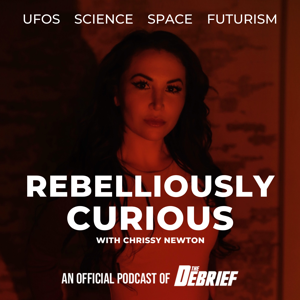


Today I'm joined by U.S. Congressman Eric Burlison, a leading voice in the fight for UAP disclosure. We're discussing government secrecy, political influence, David Grusch's departure from Rep. Burlison's team, Grusch's UAP motivations, and why international cooperation (including Canada) could be critical to uncovering the truth.
With competing narratives shaping the disclosure debate, who controls the information, and how do we get real answers?
Join us as we get rebelliously curious.
Watch the YouTube interview here: https://www.youtube.com/@RebelliouslyCurious
Follow Chrissy Newton:
Winner of the Canadian Podcast Awards for Best Science Series.
YouTube: https://www.youtube.com/channel/UCM32gjHqMnYl_MOHZetC8Eg
Instagram: https://www.instagram.com/beingchrissynewton/
X: https://twitter.com/chrissynewton?lang=en
Facebook: https://www.facebook.com/BeingChrissyNewton
Chrissy Newton's Website: https://chrissynewton.com
Top Canadian Science Podcast: https://podcasts.feedspot.com/canadian_science_podcasts/
Today I'm joined by Rear Admiral Tim Gallaudet, a retired U.S. Navy officer and oceanographer. He previously served as acting Undersecretary and Assistant Secretary of Commerce and acting Administrator and Deputy Administrator of the National Oceanic and Atmospheric Administration (NOAA), and he's one of the most prominent voices in the UAP conversation.
His new book, Holding Fast in Heavy Seas, explores leadership, uncertainty, and how to navigate difficult situations when you don't have all the answers.
Today, we're going beyond UAPs in the sky, into questions about secrecy, national security, the military-industrial complex, USOs, and the extraordinary claims surrounding possible underwater activity.
What is real? What isn't? And how do we find the truth when the evidence is incomplete?
Join us as we get rebelliously curious.
Watch the YouTube interview here: https://www.youtube.com/watch?v=BROyyRLXeI8
Follow Chrissy Newton:
Winner of the Canadian Podcast Awards for Best Science Series.
YouTube: https://www.youtube.com/channel/UCM32gjHqMnYl_MOHZetC8Eg
Instagram: https://www.instagram.com/beingchrissynewton/
X: https://twitter.com/chrissynewton?lang=en
Facebook: https://www.facebook.com/BeingChrissyNewton
Chrissy Newton's Website: https://chrissynewton.com
Top Canadian Science Podcast: https://podcasts.feedspot.com/canadian_science_podcasts/
A recent study suggests Gen Z is the generation most likely to believe in UFOs, and they're also the generation growing up surrounded by UAP stories across news and social media. But what happens when the government starts releasing more and more information about UFOs?
Does transparency build trust, or can it actually create more suspicion? Today, I'm joined by Yaniv Regev, political theorist and author of The Bulwark article, "Why the Trump Administration Is Telling Us So Much About UFOs." We're talking transparency, populism, Gen Z and UAPs, conspiracy theories, and whether the Trump administration is helping answer the UAP enigma or firehosing the topics to the public.
Join me as we get rebelliously curious.
Watch the YouTube interview here: https://www.youtube.com/watch?v=BROyyRLXeI8
Follow Chrissy Newton:
Winner of the Canadian Podcast Awards for Best Science Series.
YouTube: https://www.youtube.com/channel/UCM32gjHqMnYl_MOHZetC8Eg
Instagram: https://www.instagram.com/beingchrissynewton/
X: https://twitter.com/chrissynewton?lang=en
Facebook: https://www.facebook.com/BeingChrissyNewton
Chrissy Newton's Website: https://chrissynewton.com
Top Canadian Science Podcast: https://podcasts.feedspot.com/canadian_science_podcasts/
On June 30 of this year, the House Oversight Task Force on the Declassification of Federal Secrets held a congressional hearing examining one of the CIA's most controversial covert programs: Project MKUltra. More than 50 years after the program was exposed, lawmakers revisited questions about secret human experimentation, accountability, and whether the legacy of MKUltra still has implications today.
Joining me is Stephen Kinzer, award-winning journalist, historian, former New York Times foreign correspondent, and author of Poisoner in Chief, the definitive book on the CIA MKUltra program.
In this conversation, we'll discuss what the hearing revealed, what history tells us about the program, whether the CIA's pursuit of mind control worked, and how advances in neuroscience, artificial intelligence, and brain-computer interfaces are reshaping the conversation around influence, manipulation, and human consciousness.
Join me as we get rebelliously curious.
Watch the YouTube interview here: https://www.youtube.com/watch?v=BROyyRLXeI8
Follow Chrissy Newton:
Winner of the Canadian Podcast Awards for Best Science Series.
YouTube: https://www.youtube.com/channel/UCM32gjHqMnYl_MOHZetC8Eg
Instagram: https://www.instagram.com/beingchrissynewton/
X: https://twitter.com/chrissynewton?lang=en
Facebook: https://www.facebook.com/BeingChrissyNewton
Chrissy Newton's Website: https://chrissynewton.com
Top Canadian Science Podcast: https://podcasts.feedspot.com/canadian_science_podcasts/
I'm joined by Randy Bostick, PhD, a physicist and former Science Advisor for the U.S. Department of Defense's All-domain Anomaly Resolution Office, or AARO. Today we'll discuss Randy's time at AARO, the challenges facing UAP investigations within the government, how government and civilian scientists can work together, and so much more.
Join us as we get rebelliously curious.
Watch the YouTube interview here: https://www.youtube.com/watch?v=lFW4V8dhKbQ&t=12s
Follow Chrissy Newton:
Winner of the Canadian Podcast Awards for Best Science Series.
YouTube: https://www.youtube.com/channel/UCM32gjHqMnYl_MOHZetC8Eg
Instagram: https://www.instagram.com/beingchrissynewton/
X: https://twitter.com/chrissynewton?lang=en
Facebook: https://www.facebook.com/BeingChrissyNewton
Chrissy Newton's Website: https://chrissynewton.com
Top Canadian Science Podcast: https://podcasts.feedspot.com/canadian_science_podcasts/
Today, we're joined by Bryce Zabel—award-winning television writer, producer, and journalist, and one of the most respected voices in the UFO and UAP conversation. From creating the cult-classic TV series Dark Skies to co-hosting the popular UFO podcast Need to Know and launching his new podcast Sound, Light, and Frequency, Bryce has spent decades exploring the intersection of media, mystery, and the unknown. In this conversation, we'll dive into the current state of disclosure and Hollywood's role in shaping public perception of the UFO and UAP phenomenon. We'll also discuss Steven Spielberg's film Disclosure Day and the long-standing claims that Spielberg may have been briefed on aspects of the phenomenon through government channels, despite his public statements to the contrary.
Bryce also shares the fascinating story of how Spielberg's team reportedly attempted to stop the production Dark Skies during its original run. Finally, we discuss whistleblower David Grusch's first on-camera interview with NewsNation, the unreleased extended interview conducted by Ross Coulthart at Bryce's home, and why that full conversation has yet to air. We'll explore what may still be missing from the public record and what it could mean for the future of disclosure.
Join us as we get rebelliously curious.
Watch the YouTube interview here: https://www.youtube.com/watch?v=nQUIu1X47y8
Follow Chrissy Newton:
Winner of the Canadian Podcast Awards for Best Science Series.
YouTube: https://www.youtube.com/channel/UCM32gjHqMnYl_MOHZetC8Eg
Instagram: https://www.instagram.com/beingchrissynewton/
X: https://twitter.com/chrissynewton?lang=en
Facebook: https://www.facebook.com/BeingChrissyNewton
Chrissy Newton's Website: https://chrissynewton.com
Top Canadian Science Podcast: https://podcasts.feedspot.com/canadian_science_podcasts/
In 2016, the idea of a hidden planet lurking far beyond Neptune reignited one of astronomy's biggest mysteries. Since then, the search for "Planet Nine" has captured the imagination of scientists and the public alike—raising profound questions about how our solar system formed, and whether we've overlooked an entire world in our cosmic backyard. Today, I'm joined by Konstantin Batygin, professor of planetary science at the California Institute of Technology (Caltech) and one of the leading architects of the Planet Nine hypothesis.
We discuss the evidence for the theory, the controversy surrounding it, and the new evidence that could be found this year supporting the idea that Planet Nine actually exists! We also discuss what its discovery would mean for astronomy and how it could reshape our understanding of the solar system.
Finally, we explore the line between science and mythology—from cultural Mesopotamian legends like Nibiru and the Anunnaki to what Planet 8's discovery would mean for people who follow Anunnaki folklore. Does this mean Sumerians were right? Join us as we get rebelliously curious.
Join us as we get rebelliously curious.
Watch the YouTube interview here: https://www.youtube.com/watch?v=nQUIu1X47y8
Follow Chrissy Newton:
Winner of the Canadian Podcast Awards for Best Science Series.
YouTube: https://www.youtube.com/channel/UCM32gjHqMnYl_MOHZetC8Eg
Instagram: https://www.instagram.com/beingchrissynewton/
X: https://twitter.com/chrissynewton?lang=en
Facebook: https://www.facebook.com/BeingChrissyNewton
Chrissy Newton's Website: https://chrissynewton.com
Top Canadian Science Podcast: https://podcasts.feedspot.com/canadian_science_podcasts/
Today's guest is Dr. Diane Hennacy Powell, a retired integrative medical doctor, neuropsychiatrist, and psychotherapist whose work has spanned the intersections of mind, brain, and human development.
In this conversation, we explore neurodiversity, autism, communication, and the evolving science behind non-speaking autistic individuals. We also examine controversial claims around telepathy, emerging research on cognition and consciousness, the ethical responsibilities of working with vulnerable populations, and how politics, genetics, and culture are shaping the future of autism research.
This is a wide-ranging conversation that challenges assumptions and asks difficult questions about what we really understand — and what we may still be missing — about the human mind.
Join us as we get rebelliously curious.
Follow Chrissy Newton:
Winner of the Canadian Podcast Awards for Best Science Series.
YouTube: https://www.youtube.com/channel/UCM32gjHqMnYl_MOHZetC8Eg
Instagram: https://www.instagram.com/beingchrissynewton/
X: https://twitter.com/chrissynewton?lang=en
Facebook: https://www.facebook.com/BeingChrissyNewton
Chrissy Newton's Website: https://chrissynewton.com
Top Canadian Science Podcast: https://podcasts.feedspot.com/canadian_science_podcasts/
In this episode, we focus on China's rapidly evolving role in BCI development with guest Phoenix Peng, CEO and founder of Gestala, from Chinese communist government policy and healthcare integration to questions around data privacy, ethics, and large-scale deployment of BCI technology in schools, hospitals, and industry.
We also explore how China's regulatory environment is shaping innovation, what's currently possible in clinical and consumer settings, and where the line sits between advancement, safety, and oversight in one of the most closely watched tech frontiers in the world.
Join us as we get rebelliously curious.
Follow Chrissy Newton:
Winner of the Canadian Podcast Awards for Best Science Series.
YouTube: https://www.youtube.com/channel/UCM32gjHqMnYl_MOHZetC8Eg
Instagram: https://www.instagram.com/beingchrissynewton/
X: https://twitter.com/chrissynewton?lang=en
Facebook: https://www.facebook.com/BeingChrissyNewton
Chrissy Newton's Website: https://chrissynewton.com
Top Canadian Science Podcast: https://podcasts.feedspot.com/canadian_science_podcasts/
Today's episode sits right at the intersection of mystery, media, and manipulation. We're diving into the strange, often unsettling world of UFOs—or what we now call UAPs—and asking a simple question: what's real, and what have we been led to believe?
For decades, stories of unidentified craft, alien encounters, and government secrecy have shaped public imagination. But behind those headlines lies a deeper story—one involving Cold War paranoia, psychological operations, and, at times, deliberate disinformation.
Our guest is Mark Pilkington, author of Mirage Men. Together, we will deconstruct the controversial role of Air Force investigator Richard Doty, and the case of Paul Bennewitz—one of the most troubling examples of how belief, secrecy, and state power can collide.
Along the way, we'll look at how media, including major publications like Life magazine in the 40s and 50s, may have been influenced—subtly or otherwise—by intelligence agencies during a time when information itself was a battlefield.
So today, we're not just asking whether UFOs are real.
We're asking: who's been shaping the story all along?
Join us as we get rebelliously curious.
Follow Chrissy Newton:
Winner of the Canadian Podcast Awards for Best Science Series.
YouTube: https://www.youtube.com/channel/UCM32gjHqMnYl_MOHZetC8Eg
Instagram: https://www.instagram.com/beingchrissynewton/
X: https://twitter.com/chrissynewton?lang=en
Facebook: https://www.facebook.com/BeingChrissyNewton
Chrissy Newton's Website: https://chrissynewton.com
Top Canadian Science Podcast: https://podcasts.feedspot.com/canadian_science_podcasts/
From the publisher's feed
1,197 Listeners
520 Listeners
1,400 Listeners
477 Listeners
454 Listeners
861 Listeners
216 Listeners
605 Listeners
1,008 Listeners
455 Listeners
1,402 Listeners
335 Listeners
258 Listeners
41 Listeners
444 Listeners