
Sign up to save your podcasts
Or

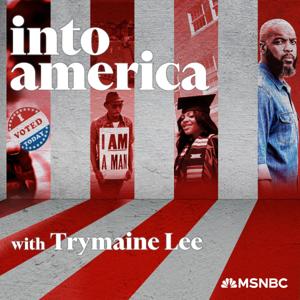

One question has plagued our nation since its founding: will Black people in America ever experience full citizenship?
In searching for an answer, Into America is collaborating with the Smithsonian’s National Museum of African American History and Culture for a series on the legacy of Reconstruction. We tour the museum’s Make Good the Promises exhibit with co-curator Spencer Crew, who helps use artifacts to bring the history of the era to life. Over four episodes, ‘Reconstructed’ will explore how after the Civil War, Black Americans gained citizenship and political power, planted roots and formed communities on newly acquired land, and how the newly freed drew on their faith to carry them through violent white backlash.
The story begins in the late 1860s, as the newly freed became citizens under the law and Black men gained the right to vote.Black Americans across the South suddenly had the power to exert control over their own lives. In the face of horrific violence from their white neighbors, Black people voted in liberal governments across the South, elevating hundreds of their own to places of political power.
Perhaps no one exemplifies this more than the lateCongressman Robert Smalls. As his great-great-grandson Michael Boulware Moore tells Trymaine Lee, Smalls’ daring escape from slavery and wartime actions made him a hero. Then, like hundreds of newly freed Black Americans, he decided to get involved in politics in his hometown of Beaufort, South Carolina.
Smalls helped found the state’sRepublican Party in 1868 and served in the state legislature, where he crafted laws to create the first free compulsory public school system in the country. In 1874, he was elected to the US House of Representatives, where he remained for five terms.
Not long after Smalls left office, much of the progress of Reconstruction had been undone by a combination of white violence, Northern apathy, and severe voting restrictions aimed at Black Americans.
And more than a century later, we still see the impact of this brief time of Black political power, through people like the current Democratic National Committee chair and South Carolina native Jaime Harrison, who tells Trymaine how today’s 20th-Century fight for voting rights is a continuation of the Reconstruction era.
For a transcript, please visit https://www.msnbc.com/intoamerica.
Thoughts? Feedback? Story ideas? Write to us at [email protected].
Further Reading and Listening:
To listen to this show and other MS podcasts without ads, sign up for MS NOW Premium on Apple Podcasts.
Hosted by Simplecast, an AdsWizz company. See pcm.adswizz.com for information about our collection and use of personal data for advertising.
 View all episodes
 By Trymaine Lee, MS NOW

4.6
33503,350 ratings
One question has plagued our nation since its founding: will Black people in America ever experience full citizenship?
In searching for an answer, Into America is collaborating with the Smithsonian’s National Museum of African American History and Culture for a series on the legacy of Reconstruction. We tour the museum’s Make Good the Promises exhibit with co-curator Spencer Crew, who helps use artifacts to bring the history of the era to life. Over four episodes, ‘Reconstructed’ will explore how after the Civil War, Black Americans gained citizenship and political power, planted roots and formed communities on newly acquired land, and how the newly freed drew on their faith to carry them through violent white backlash.
The story begins in the late 1860s, as the newly freed became citizens under the law and Black men gained the right to vote.Black Americans across the South suddenly had the power to exert control over their own lives. In the face of horrific violence from their white neighbors, Black people voted in liberal governments across the South, elevating hundreds of their own to places of political power.
Perhaps no one exemplifies this more than the lateCongressman Robert Smalls. As his great-great-grandson Michael Boulware Moore tells Trymaine Lee, Smalls’ daring escape from slavery and wartime actions made him a hero. Then, like hundreds of newly freed Black Americans, he decided to get involved in politics in his hometown of Beaufort, South Carolina.
Smalls helped found the state’sRepublican Party in 1868 and served in the state legislature, where he crafted laws to create the first free compulsory public school system in the country. In 1874, he was elected to the US House of Representatives, where he remained for five terms.
Not long after Smalls left office, much of the progress of Reconstruction had been undone by a combination of white violence, Northern apathy, and severe voting restrictions aimed at Black Americans.
And more than a century later, we still see the impact of this brief time of Black political power, through people like the current Democratic National Committee chair and South Carolina native Jaime Harrison, who tells Trymaine how today’s 20th-Century fight for voting rights is a continuation of the Reconstruction era.
For a transcript, please visit https://www.msnbc.com/intoamerica.
Thoughts? Feedback? Story ideas? Write to us at [email protected].
Further Reading and Listening:
To listen to this show and other MS podcasts without ads, sign up for MS NOW Premium on Apple Podcasts.
Hosted by Simplecast, an AdsWizz company. See pcm.adswizz.com for information about our collection and use of personal data for advertising.

37,247 Listeners

8,794 Listeners
7,350 Listeners
5,867 Listeners
3,934 Listeners
4,471 Listeners

6,988 Listeners
9,475 Listeners

628 Listeners
27,721 Listeners
15,600 Listeners
8,562 Listeners
5,832 Listeners
834 Listeners
10,475 Listeners
965 Listeners
4,357 Listeners
1,429 Listeners
31,821 Listeners
2,159 Listeners
7,014 Listeners
6,288 Listeners

1,460 Listeners
1,768 Listeners
54 Listeners
203 Listeners
65 Listeners

4,433 Listeners