
Sign up to save your podcasts
Or

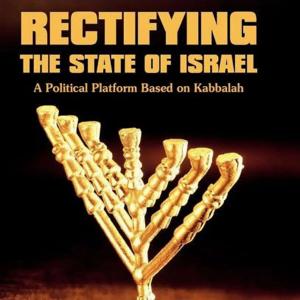


Rav Shlomo Katz unpacks Rav Yitzchak Ginsburgh’s teachings on the four groups of Jews at Yam Suf, each with a distinct response to crisis: return to Egypt, fight, flee to the desert, or advance through faith. Discover how three of these approaches mirror modern Israeli political ideologies—leftist appeasement, right-wing activism, and religious escapism—and align with the Kabbalistic worlds of Asiyah (action), Yetzirah (formation), and Beriah (creation). Rav Katz reveals how these perspectives shape Israel’s challenges and the path to true rectification through spiritual awareness and action.
Rav Shlomo Katz explores Rav Yitzchak Ginsburgh’s teachings on the interplay of chesed (loving-kindness) and gevurah (strength) in rectifying the State of Israel. Discover how love must precede strength, as exemplified by Nachshon ben Aminadav’s courageous leap into the Sea of Reeds, driven by devotion to God and Israel. Rav Katz unpacks how chesed empowers gevurah to confront challenges, from combating evil to building a holy nation, offering a profound vision for aligning the Jewish people with their divine purpose through love-infused action.
Rav Shlomo Katz explores Rav Yitzchak Ginsburgh’s profound teachings on Avoda Ivrit (Jewish Labor), emphasizing the spiritual and practical importance of physical work in the Land of Israel. Discover how labor fosters an intimate connection between the Jewish people and their homeland, akin to a marriage, and why embracing honest work is a mitzvah that uplifts both the individual and the nation. Rav Katz delves into the Torah’s call to overcome societal stigmas about manual labor, addressing modern challenges like unemployment and reliance on foreign workers, and offers a vision for rectifying Israel through dedicated, love-infused work.
When we speak of settling the Land of Israel, it’s not about politics. It’s about love. It’s about a deep, sacred bond between the Jewish people and our eternal soulmate—the Land itself.
Rav Shlomo Katz shares the heartfelt and holy vision of creating a ratzef shel ahavah, a continuous chain of Jewish presence across the Land. Every Jewish home, every planted tree, every kiss upon the soil—each one becomes a point in a constellation of covenantal love.
Drawing from Chazal, from Rav Ginsburgh, and from his own life experiences, Rav Shlomo brings down a teaching that is as practical as it is poetic. Financial independence from foreign powers, returning to agriculture, teaching our children to touch the Land with their own hands—these aren’t extras. They are acts of marital devotion, ways to express real ahavah through rooted presence.
From the aftermath of 1967 to the small lemon trees growing in a Jewish yard today, the mission is the same: to create not just a nation, but a home. A marriage. A living, breathing testimony that this love is not an idea. It’s a reality.
Because when the Land is loved with presence and passion, it responds. And the shechinah begins to dwell once again.
What does it mean to marry the Land of Israel?
Rav Shlomo Katz takes us deep into one of the most powerful and poetic truths in all of Torat Eretz Yisrael: our relationship with the Land is like that of a groom and his bride. It’s not just ownership. It’s not just residence. It’s love. And real love demands presence, devotion, and action.
Drawing from the words of the prophets, Rav Ginsburgh's teachings, and the deepest chords of our people’s yearning, this shiur explores how that love is expressed in its most tangible form—through settling, working, and developing the land. Not out of nationalism, not out of ideology, but from the same overflowing heart that wants to nurture a beloved.
We are reminded that proclaiming sovereignty is not enough. The relationship becomes whole only when we act like those who are in love, with effort, passion, and consistency. This is not metaphorical; it’s agricultural, practical, emotional, and deeply spiritual.
If we want the Land to thrive, we must become the devoted partner she deserves.
Let’s be honest: the Torah has a public relations problem. But it’s not the Torah’s fault. It’s ours.
Rav Shlomo Katz opens up the heartbreak, confusion, and beauty of trying to represent Torah in today’s world. Why is it that so many people recoil at the mention of Torah and mitzvot? Why does a vision of holiness sometimes come across as judgment, rigidity, or even oppression?
Rav Shlomo calls it out directly: we’ve been shouting Torah without embodying its sweetness. Acting in Hashem’s name without transmitting His rachamim. Building ideological kingdoms while forgetting the human heart. And that’s why the Rebbe’s vision of a “Kingdom of Priests”—a people who bring light through example, not force—is more relevant than ever.
The repair begins when we reintroduce Torah not as a demand, but as a love song. When we live it with beauty, humility, and emunah. When our words reflect the same Divine compassion that gave us those words in the first place.
Because Torah without love is not Torah. And love without Torah is not enough.
Rav Shlomo Katz asks one of the deepest questions a Jew can ask: How do I know if what I’m doing is really from love? Not love as a slogan. Not love as a performance. But ahavah pnimis—the inner life-force of a soul that seeks only to uplift, to heal, and to build in truth.
Drawing from the Torah of Rav Ginsburgh and the heart of Eretz Yisrael, Rav Shlomo gently guides us to check our engine: Am I building because I love Hashem, His people, and His land? Or am I trying to win an argument? Am I giving over Torah with compassion, or with fire but no light?
Real love isn’t soft. It’s strong. It knows how to say no. It sets boundaries. But it always begins in the heart that says, “I want the good. I want Hashem’s good for the world.” And that’s what sustains a people through 2,000 years of exile, and what brings us back to Zion—not as colonizers, but as children coming home.
There’s no greater kindness than clarity.
Rav Shlomo Katz draws from a 1969 sicha of the Lubavitcher Rebbe to teach one of the most urgent lessons for our generation: the ability to distinguish between a lover and an enemy. Not everyone who smiles at you wants your good. And not everyone who challenges you is your foe. Without Da’at—clear, inner, Torah-rooted knowledge—we’re prone to catastrophic confusion.
Rav Shlomo journeys through Tanach and modern history, from the tragic story of King Achav to today's Israeli leadership, showing how misplaced mercy and misread alliances have cost us dearly. With love for Am Yisrael and compassion for all of humanity, he invites us to mature our vision and stop projecting our goodness onto those who would harm us.
Da’at means knowing who we are. And from there, recognizing who truly stands with us, and who doesn't.
What does it actually mean to be the Chosen People?
Rav Shlomo Katz takes us deep into the heart of Da’at—the place in the soul that holds the power of clear, rooted identity. We’re not talking about ego. We’re talking about essence.
Rav Shlomo unpacks Rav Ginsburgh’s teaching that the Jewish soul is not just another soul—it is uniquely wired with Da’at, the capacity to know, to choose, and to give. The Jew is not here to dominate the world. He’s here to light it. To reveal Hashem. To bless humanity by being the conduit for divine truth.
But that light only shines when we know who we are. That’s why Rav Shlomo doesn’t shy away from the hard conversations about assimilation, about spiritual confusion, about the deep damage done when we erase the distinction between Jew and non-Jew. Not out of hate, but out of love. Out of responsibility. Out of truth.
Because when Am Yisrael remembers its soul, the world remembers its Creator.
Before we can unify anything in this world, we have to separate.
Rav Shlomo Katz enters the next dimension of Da’at—its left side, the power of havdalah, of holy separation. Without knowing how to distinguish between truth and falsehood, between light and darkness, between Yisrael and the nations, we’re lost.
Rav Shlomo reminds us that even the most radiant light is meaningless if we don’t first recognize the dark. It’s not judgment. It’s clarity. It’s not nationalism. It’s integrity. You can’t build a Medinat Yisrael that blesses the whole world unless you first affirm what it is and what it’s not.
Drawing from Rav Ginsburgh’s deep Torah, Rav Shlomo shows how Da’at empowers us to peel back confusion and reveal the essential good. That’s how we protect ourselves from being manipulated by friendly enemies or shamed by our own ignorance. And it’s how we bring true geulah: by seeing clearly, speaking honestly, and knowing exactly who we are.
From the publisher's feed