
Sign up to save your podcasts
Or

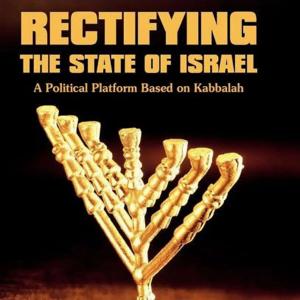


After exploring the realms of Chochmah and Binah, we now enter the world of Da’at—the deep, integrative knowing that connects our intellect to our heart.
Rav Shlomo Katz brings us into the space where ideas become reality, where clarity turns into commitment, and where our inner world begins to take real shape in our lives. Drawing on Rav Ginsburgh’s language of the soul, we learn that Da’at is not just knowing something.It’s being connected to it. It’s the part of us that says: I’m not just learning truth, I’m bonding with it. I’m making it personal. It’s also the gateway to the emotions. It's the bridge through which our understanding awakens love, awe, compassion, and the ability to reject what is false with natural, holy instinct.
Through stories from the battlefield, the beit midrash, and the heart of Am Yisrael’s struggle, Rav Shlomo invites us to take everything we've learned and live it. Because the Jewish people are not just thinkers. We’re feelers. Movers. Builders. And when Da’at is alive, it’s the pulse of redemption itself.
“Go to the land that I will show you.”
Without those words, Zionism becomes a hollow echo, vulnerable to mockery from both our enemies and our so-called allies.
Rav Shlomo brings us into the heart of shalom—not as a diplomatic slogan, but as the expression of divine shleimut (wholeness). Peace, in Torah, begins with G-d's word and ends with G-d’s will. Anything less is just marketing.
We explore how the nations of the world, even when they show “love,” act out of interest or fear—not recognition of truth. Rav Shlomo warns: if we abandon the foundation of our return—Hashem’s command—we lose not only international respect but our soulfulness.
Rav Shlomo invites us to a new vision of peace. One that begins in the heart, is grounded in Torah, and knows that every inch of Eretz Yisrael is holy, because He gave it to us. Anything else isn’t peace. It’s confusion dressed up in slogans.
There’s no such thing as being “partially” back in the Land. Rav Shlomo Katz and the checra of Shirat David unpack Rav Ginsburgh’s clarity: our return to Eretz Yisrael must be full—geographically, spiritually, and existentially. Giving up even one inch of the Land isn’t just a strategic or political mistake. It’s a betrayal of the gift from Above and a crack in our national soul.
Rav Shlomo brings down the Rebbe’s powerful stance: the argument isn't merely about security (though that's real), it's about emunah. Either the Torah is our only authority, or it isn’t. Either we're truly back in our Land, or we're still in exile—even while living here. That’s the line in the sand.
And yet, it’s not a call for cynicism or judgment. Quite the opposite: it’s a call to love with full vision, with sensitivity, and with uncompromising truth. The vision of redemption isn’t exclusive. It’s complete. But to make it real, we have to be all in.
How could Am Yisrael ever be whole if even one neshama is missing?
Rav Shlomo Katz opens up the deeper mission of our generation: the ingathering of every Jewish soul, from every corner of the world, including the hidden sparks among the nations. Drawing from Rav Ginsburgh’s profound Torah, we see that Shlemut Ha’am—national wholeness—is not just about borders and laws. It's about souls. Converts, returnees, assimilated Jews—we need them all. Not just need—we're incomplete without them.
Rav Shlomo weaves stories, halachic nuance, and chassidic depth into a plea: If we want a geulah that lasts, we must bring back every part of ourselves. That means standing strong on Torah truth, yes—but doing so with endless sweetness, empathy, and love. Because the sparks are returning. And they won’t tolerate exile Judaism anymore.
What does it really mean to be “all in”?
Rav Shlomo Katz dives into the world of Binah—of nurturing, of wholeness, of developing every spark of Emes into full expression. Drawing on Rav Ginsburgh's deep teachings, we explore how partial commitment to Torah isn’t just incomplete. It actually distorts.
True authority, Rav Shlomo explains, must come from Torah alone. And only when the entirety of Torah is seen as beautiful, relevant, and alive can Am Yisrael—and the nations—truly recognize its glory. This isn’t about extremism. It’s about clarity, courage, and the dance between fear and faith when you’re living with Hashem’s will at the center of your being.
Chochmah begins with the recognition of the one and only authority over my life, and it feels so good.
Rav Shlomo Katz and the chevra of Shirat David enter the world of Chochmah—the soul’s first awakening, the electric moment of truth that says: “I want the Torah to guide every part of my life.” And not just my personal life, but our life as a people.
Rav Ginsburgh’s words land with seismic clarity: every attempt to compromise between Torah and the values of secular democracy has led to pain, confusion, and loss. We revisit moments of national trauma—not to wallow, but to wake up. The soldier following orders. The leader choosing politics over emes. The Jew torn between conscience and command.
And through it all, one seed must be planted deep in the soil of our land: The Torah is the only true authority of the Jewish people.
Rav Shlomo guides us through Rav Ginsburgh’s Torah of clarity—of cultivating the inner chochmah, binah, and daas needed to truly choose our national destiny.
The shiur opens with one foundational axiom: Hashem gave the entire Land of Israel to the Jewish people. From that place of unwavering emunah, the process of Tikkun HaMedinah begins.
But it’s not about politics or slogans. It’s about developing the kind of daas that leads to Havdalah—separation between truth and falsehood, Torah and compromise, light and darkness. It’s about owning that we didn’t decide to be here—God did. Our only task is to let His light shine through us, so brightly that the enemies of that light fall on their own swords.
Through personal stories, honest struggle, and holy fire, this shiur challenges every listener to return to the deepest reason they’re here. Not to act from fear or ideology, but to be vessels of the clear, full, uncompromised truth.
What needs to be done to fix the State of Israel?
Everyone has ideas. Kick out the Arabs, build a Beit HaMikdash, and form a Torah government. But Rav Shlomo Katz asks: what kind of thoughts are these? Are they just emotional reactions, or are they grounded in Torah?
Rav Shlomo breaks down Rav Ginsburgh’s teaching on the difference between the “father” and “mother” forms of intellect. One gives the spark. The other turns it into something real. One is vision. The other is development. Without both, nothing meaningful can be built—either personally or nationally.
This is about what real, Torah-based thinking looks like—and why the Jewish people can’t afford to keep reacting from the heart without a mind rooted in Torah.
We’ve felt the longing. We’ve tasted the joy. We’ve stirred the will. But what happens next?
Rav Shlomo Katz explores the next step in Rav Ginsburgh’s vision of Tikkun HaMedinah—the role of the intellect. The mind isn’t just for understanding; it’s for sifting. For focusing. For taking that inner fire and making sure it lands in the right place. Without clear thinking, even our deepest desires for redemption can go sideways.
We learn how birur—careful spiritual clarity—is the difference between chaos and creation, between good intentions and lasting impact. And why now, more than ever, the Jewish people and the State of Israel need minds that are clear, steady, and directed toward building something real.
Faith and holy pleasure are not enough. They might open the heart, but only will (ratzon) gets things moving.
Rav Shlomo Katz unpacks Rav Ginsburgh’s third level of the superconscious soul: ratzon, the raw, unstoppable drive of the inner self. It's what takes belief and longing and transforms them into action. We explore how true desire doesn't just yearn. It recruits every power of the self to manifest redemption. But even holy desire can destroy if it’s not channeled. That's why it must be filtered through intellect, formed into vessels, and deployed with clarity.
The question isn't whether you believe in the Geulah. The question is: how badly do you want it, and what are you doing about it?
From the publisher's feed