
Sign up to save your podcasts
Or

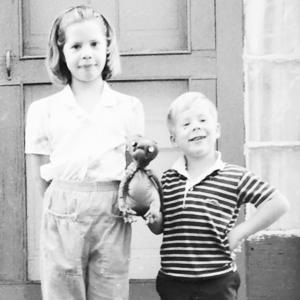


Content Warning: In this episode, we talk about the deliberate murder of infants for profit. Please skip this episode if you'd like to avoid hearing about that subject.
When there's money to be made, there will always be people who will go too far to make it. The practice of "baby farming" - on paper - looks almost like a direct ancestor to adoption agencies or foster care. In reality, it was a way for people to make a lot of money, providing they didn't mind killing infants. It's a horrifying look at a system wherein lack of protection under the law, lack of body autonomy, and lack of option led to inhuman decisions and massive human suffering.
Love the show? Support us on Patreon, at www.patreon.com/RelativeDisastersPodcast.
Sources:
The Baby Farmer (Thames Valley Police Museum)
Regulating sexual behaviour: the 19th century (UK Parliament)
Minutes of Evidence Taken Before The Select Committee on Infant Life Protection Bill
Baby Farming (The Adoption History Project)
"Baby Farming" – a tragedy of Victorian times
Amelia Dyer: The Victorian nurse who strangled babies by Sarah Lee
Victorian baby killer Amelia Dyer evidence found in loft (BBC)
On Christmas Eve, 1953, the North Island of New Zealand was settling in for the holiday when the crater lake on top of Mount Ruapehu abruptly gave way. Within minutes, a six-meter-high wall of mud and rocks was barreling down the Wongaehu River valley, where it knocked out half of a railway bridge...just as the evening Wellington-to-Auckland express train was approaching.
On this episode, we're discussing volcanoes, lahars, British / American train terms, railway bridges, Queen Elizabeth's first royal Commonwealth tour, and a truly incredible rescue effort.
Love the show? Support us on Patreon, at www.patreon.com/RelativeDisastersPodcast.
Sources for this episode include:
The official Ministry of Transportation Inquiry into the Tangiwai Disaster, 1954
"Tangiwai Railway Disaster 1953", a digital collection from Christchurch City Libraries, 2012
“Tangiwai Disaster”, a digital collection from NZ History
Come join us for the day the ocean caught fire. A simple, tiny mistake meant death for over a hundred and sixty people when the Piper Alpha oil rig in the North Sea of Scotland became engulfed in flames. We'll talk about the events of the day, how the safety protocols failed, and how the chain of events likely unfolded.
Love the show? Support us on Patreon, at www.patreon.com/RelativeDisastersPodcast.
Sources:
Piper Alpha: The Disaster in Detail by Fiona Macleod et al.
Piper Alpha: The world’s deadliest offshore oil disaster
Piper Alpha - a timeline of the world's worst offshore disaster by Thomas Durham
July 6, 1988: The Piper Alpha Disaster
The 1988 Piper Alpha explosion
In March of 1979, the worst accident of the American nuclear power industry occurred inside the reactor of TMI 2, a brand-new power plant just outside Middletown, Pennsylvania. The operators knew immediately that the plant had to be shut down, due to leaking radiation, but it wasn't until years later that they - and the public - realized just how close they'd come to a full-scale disaster.
On this episode, we're getting into nuclear power in America, along with the energy crisis of the 1970s, an unusually well-informed President, hydrogen bubbles, airborne radioactivity, and exactly how much radiation the residents of central Pennsylvania might have been exposed to over the last week of March, 1979.
Love the show? Support us on Patreon, at www.patreon.com/RelativeDisastersPodcast.
Main sources for this episode include:
"Three Mile Island: The Inside Story", digital exhibit at the National Museum of American History, 2004
"Three Mile Island Accident" by C. Douglas for Backgrounder, 2022
In 1898, an ambitious railway project intended to connect Kenya and Uganda to the coast ran into trouble when construction hit the Tsavo River valley in Kenya. There, two of the local lions - both oversized, fearless, and very smart - spent nine months terrorizing the labor camps with nighttime attacks, killing between 35 and 135 laborers and injuring dozens more.
On this episode, we're discussing those lions, aka The Tsavo Man-Eaters, aka The Ghost and The Darkness. We'll get into how they behaved, attacked, escaped, and were ultimately hunted down by the project's construction manager, J. H. Patterson (who narrowly escaped being eaten himself).
Love the show? Support us on Patreon, at www.patreon.com/RelativeDisastersPodcast.
Sources:
"The Man Eaters of Tsavo and Other East African Adventures" by J. H. Patterson, 1919
"Tsavo Man Eaters" by A. Black for Atlas Obscura, 2012
"Tsavo Lions: Were bad teeth to blame for these man-eaters’ taste for humans?" Staff writer for the Field Museum blog, 2018
"Man-Eaters of Tsavo", by P. Raffaele for Smithsonian Magazine, 2010
"A Cultural Leap at the Dawn of Humanity" by E. Yong for The Atlantic, 2018
On St. Patrick's Day weekend in 1990, two thieves disguised as police officers broke into Boston's Isabella Stewart Gardner Museum and stole 13 works of art, ranging from a Vermeer masterpiece to a decorative eagle. By dawn the next morning, the thieves and the art had vanished, and clues were few and far between. In the thirty-odd years since the theft, not one piece has been recovered, despite a $10 million reward.
Love the show? Support us on Patreon, at www.patreon.com/RelativeDisastersPodcast.
Sources include:
"The Gardner Heist" by U. Boser, 2009
"This Is a Robbery: The World's Greatest Art Heist", Netflix documentary, 2021
"About Isabella and her Museum", staff writer for ISGM, n.d.
"Isabella Stewart Gardner (1840-1924)", by B. H. Smith for Boston Women’s Heritage Trail, n.d.
"25 Years After Gardner Museum Heist, Video Raises Questions" by T. Mashberg for the New York Times, 2015
"Milton art thief Myles Connor steals scenes in Netflix doc on Gardner museum heist", by D. Barbuto for The Patriot Ledger, 2021
"What to Know About the Gardner Museum Heist", by N. McGreevy for Smithsonian Magazine, 2021
In the late 1760s, rural France was terrorized by a beast. Appearing suddenly out of the rocky, forested hills of Gévaudan province, it would seize a victim and disappear, leaving only blood and mangled bodies behind. With an estimated victim count of at least 60, mostly small children, the Beast of Gévaudan was certainly real; but what exactly was it?
On this episode, we're talking wolves, dogs, and wolf-dogs, along with hyenas, lions, politics, hunting, King Louis XV, and religious fervor in pre-Revolution France.
Love the show? Support us on Patreon, at www.patreon.com/RelativeDisastersPodcast.
Sources:
"When the Beast of Gévaudan Terrorized France" by L. Boissoneault for Smithsonian, 2017
"How The Beast Of Gévaudan Turned The Idyllic French Countryside Into A Place Of Unprecedented Slaughter", by K.Fraga for All That's Interesting, 2021
"The Real Story of the Beast of Gévaudan", by A. Johnson for Museum Hack, 2019
"The Beast of Gevaudan: Hunting the Monster of 18th Century France", by M-M. Renauld for The Collector, 2022
"Solving the Mystery of the 18th-Century Killer “Beast of Gévaudan”" by K-H. Taake for National Geographic Newsroom, 2016
"The Marin Report - Minutes written by Master Etienne Marin, Royal Notary of Langeac", by E. Marin, 1767 (in French)
"Marie-Jeanne Valet vs. the Beast of Gevaudan" by A. Black for Complete France, 2013
"Sherlock Holmes and the Beast of Gevaudan" by C. Andrews for History, 2013
"How An Ancient Volcano Helped A Man-Eating Wolf Terrorize 18th Century France" by D. Bresson for Forbes, 2017
In the summer of 1883, the Indonesian islands of Java and Sumatra were rocked by a volcanic eruption more destructive than any other in recorded human history. When the tiny, uninhabited island of Krakatoa erupted, it sent a plume of ash and gas 17 miles into the sky, created a 2,500-foot-tall pyroclastic cloud, and wiped out settlements thirty miles away with a series of deadly tsunamis. The eruption was so loud it was heard 5,000 miles away, and it sent so much debris into the atmosphere that it created a four-year-long global volcanic winter.
On this episode, we're talking plate tectonics, the Dutch East Indies, disaster reporting, the B-52s, and the unsettling behavior of Krakatoa's current incarnation, Anak Krakatau.
Love the show? Support us on Patreon, at www.patreon.com/RelativeDisastersPodcast.
Sources for this episode include:
"Krakatoa: The Day the World Exploded", by S. Winchester, 2003
"The Eruption of Krakatoa (also known as Krakatau) in 1883” by M. R. Morgan for BRANCH: Britain, Representation and Nineteenth-Century History, 2013
"Krakatau: The loudest sound in recorded history", by B. B. Johnson and D. Russell for WBUR's Endless Thread, 2022
"Krakatoa: Devastating Explosion", episode of How the Earth Was Made (S1, E3), produced for the History Channel, 2009
In the first quarter of the twentieth century, the city engineers of Ottowa, Ontario, designed a sewer line that was so full of combustible material and so poorly ventilated it blew up twice, causing injuries and property damage each time.
This week, we're talking 'dark waterfalls' (so much worse than it sounds), exploding streets, DIY water piping, service station waste, natural gas on the loose, and dangerous laundry habits.
Love the show? Support us on Patreon, at www.patreon.com/RelativeDisastersPodcast.
Sources:
"The Ottawa Sewer Explosions", by J. Powell for the Historical Society of Ottawa, n.d.
"May 29, 1929: The day that manhole covers rained down on Ottawa" by B. Deachman for the Ottawa Citizen newspaper, 2018
"The Ottawa Sewer Explosions", by staff writer, Sandy Hill History blog, n.d.
"The Good Sewer: Why Ottawa’s $232-million sewage storage tunnel is both an engineering marvel and an act of contrition" by A. Duffy for the Ottawa Citizen, 2020
On a hot June night in 1969, the New York police raided a gay club called the Stonewall Inn. They planned to seize some under-the-counter liquor, arrest some 'loiterers', and and close down the club for a day or so. Instead, they became the catalyst for a riot that lasted for six days and sparked a massive movement towards equality for LGBTQ+ Americans.
On this episode, we're talking Joseph McCarthy, sodomy and loitering laws, the Mattachine Society's 'sip-in' protest, the Mafia, Marsha P Johnson, and what we celebrate when we celebrate Pride Month. (And happy Pride from us both!)
Love the show? Support us on Patreon, at www.patreon.com/RelativeDisastersPodcast.
Sources for this episode include:
"Remembering Stonewall", produced by D. Isay for NPR / All Things Considered, 1989
"Why Sodomy Laws Matter", by staff writer, ACLU.Com, n.d.
"The Stonewall Riots: A Documentary History", by M. Stein, 2019
"Behind the Halloween Mask: Power, Identity, and the Law in New York", by J. Gutierrez for New York Historical Society, 2020
"Stonewall Inn and Christopher Park" page, NYC LGBT History Sites
"Articles That Sparked a Final Night of Rioting", by various for the Village Voice, 1969
"Milestones in the American Gay Rights Movement" by staff writer, WGBH / PBS, 2015
"Life Story: Marsha P. Johnson (1945-1992): Transgender Activist" by staff writer, Women and the American Story / New York Historical Society, n.d.
"Seymour Pine Dies at 91; Led Raid on Stonewall Inn" by D. Hevesi for the New York Times, 2010
From the publisher's feed

78,389 Listeners
28,924 Listeners

171,970 Listeners

11,951 Listeners

111,874 Listeners

56,435 Listeners

369,570 Listeners

99,793 Listeners
46,926 Listeners
3,379 Listeners

15,917 Listeners
197 Listeners
1,895 Listeners

6 Listeners
1,807 Listeners