
Sign up to save your podcasts
Or

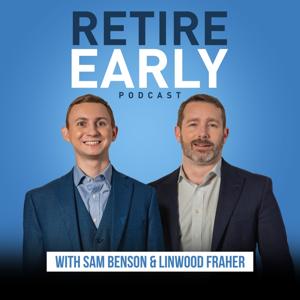


In this episode of the Retire Early Podcast, financial advisors and retirement planners Sam Benson & Linwood Fraher of Martin Wealth Solutions discuss one of the biggest transitions retirees face: replacing the steady paycheck that stops once you leave the workforce.
Sam and Linwood explain why retirement planning shifts from accumulation to income generation and how retirees can structure their assets to create reliable cash flow. They walk through the importance of diversification, withdrawal strategies, and coordinating income sources like Social Security, investments, and other assets to replicate the consistency of a working paycheck.
This episode provides practical insights for anyone planning an early retirement and looking for a strategy that provides both stability and long-term sustainability.
http://retirewithmartin.com/ ← Learn about working with us
www.planwellretirehappy.com
00:00 Introduction: The paycheck challenge in retirement
Disclaimer
Opinions expressed herein are solely those of Martin Wealth Solutions, unless otherwise specifically cited. Material presented is believed to be from reliable sources, but no representations are made by our firm as to another parties’ informational accuracy or completeness. Content provided herein is for informational purposes only and should not be used or construed as investment advice or a recommendation regarding the purchase or sale of any security. There is no guarantee that any statements, opinions or forecasts provided herein will prove to be correct. All information or ideas provided should be discussed in detail with an advisor, accountant or legal counsel prior to implementation. Past performance may not be indicative of future results. Indices are not available for direct investment. Any investor who attempts to mimic the performance of an index would incur fees and expenses which would reduce returns. Securities investing involves risk, including the potential for loss of principal. There is no assurance that any investment plan or strategy will be successful.
In this episode of the Retire Early Podcast, financial advisors and retirement planners Sam Benson & Linwood Fraher of Martin Wealth Solutions tackle a common question for pre-retirees and early retirees: What should you do with excess cash?
Sam and Linwood explain why holding too much cash can quietly erode purchasing power due to inflation — but also why having too little liquidity can create unnecessary stress and risk. They walk through how to evaluate emergency reserves, opportunity costs, investment timing, and risk tolerance when deciding how to deploy excess cash.
This episode provides practical guidance for striking the right balance between safety and growth — especially for those pursuing early retirement.
http://retirewithmartin.com/ ← Learn about working with us
00:00 – Introduction: The excess cash dilemma
Disclaimer
Opinions expressed herein are solely those of Martin Wealth Solutions, unless otherwise specifically cited. Material presented is believed to be from reliable sources, but no representations are made by our firm as to another parties’ informational accuracy or completeness. Content provided herein is for informational purposes only and should not be used or construed as investment advice or a recommendation regarding the purchase or sale of any security. There is no guarantee that any statements, opinions or forecasts provided herein will prove to be correct. All information or ideas provided should be discussed in detail with an advisor, accountant or legal counsel prior to implementation. Past performance may not be indicative of future results. Indices are not available for direct investment. Any investor who attempts to mimic the performance of an index would incur fees and expenses which would reduce returns. Securities investing involves risk, including the potential for loss of principal. There is no assurance that any investment plan or strategy will be successful.
In this episode of the Retire Early Podcast, financial advisors and retirement planners Sam Benson & Linwood Fraher of Martin Wealth Solutions tackle one of the biggest threats to long-term investing success: emotional decision-making driven by market headlines.
Sam and Linwood discuss how news cycles, political narratives, and social media commentary can influence investor behavior — often in ways that hurt long-term results. They explain why reacting emotionally to short-term volatility can derail early retirement plans and how disciplined strategy, diversification, and perspective help investors stay on track.
This episode provides practical guidance for tuning out the noise, focusing on long-term goals, and making rational financial decisions even during uncertain times.
http://retirewithmartin.com/ ← Learn about working with us
00:00 – Introduction: Why headlines influence investors
Disclaimer
Opinions expressed herein are solely those of Martin Wealth Solutions, unless otherwise specifically cited. Material presented is believed to be from reliable sources, but no representations are made by our firm as to another parties’ informational accuracy or completeness. Content provided herein is for informational purposes only and should not be used or construed as investment advice or a recommendation regarding the purchase or sale of any security. There is no guarantee that any statements, opinions or forecasts provided herein will prove to be correct. All information or ideas provided should be discussed in detail with an advisor, accountant or legal counsel prior to implementation. Past performance may not be indicative of future results. Indices are not available for direct investment. Any investor who attempts to mimic the performance of an index would incur fees and expenses which would reduce returns. Securities investing involves risk, including the potential for loss of principal. There is no assurance that any investment plan or strategy will be successful.
In this episode of the Retire Early Podcast, financial advisors and retirement planners Sam Benson & Linwood Fraher of Martin Wealth Solutions break down what they call the Three Ps of Early Retirement: Plan, Practice, and Prevent.
Sam and Linwood explain why retiring early requires more than just hitting a number. They discuss how planning your lifestyle in advance, practicing living on your future retirement income, and preventing major financial mistakes can dramatically improve your chances of success.
This episode provides a practical framework for anyone considering early retirement and helps listeners think beyond investments to build a sustainable and fulfilling retirement plan.
http://retirewithmartin.com/ ← Learn about working with us
00:00 – Introduction: Why early retirement requires a strategy
Disclaimer
Opinions expressed herein are solely those of Martin Wealth Solutions, unless otherwise specifically cited. Material presented is believed to be from reliable sources, but no representations are made by our firm as to another parties’ informational accuracy or completeness. Content provided herein is for informational purposes only and should not be used or construed as investment advice or a recommendation regarding the purchase or sale of any security. There is no guarantee that any statements, opinions or forecasts provided herein will prove to be correct. All information or ideas provided should be discussed in detail with an advisor, accountant or legal counsel prior to implementation. Past performance may not be indicative of future results. Indices are not available for direct investment. Any investor who attempts to mimic the performance of an index would incur fees and expenses which would reduce returns. Securities investing involves risk, including the potential for loss of principal. There is no assurance that any investment plan or strategy will be successful.
In this episode of the Retire Early Podcast, financial advisors and retirement planners Sam Benson & Linwood Fraher revisit timeless finance quotes and lessons that continue to hold true — regardless of market cycles, headlines, or economic conditions.
Sam and Linwood break down well-known financial sayings and ideas, explaining why they’ve endured over time and how they apply to modern retirement planning. From discipline and patience to risk, behavior, and long-term thinking, they connect classic wisdom to practical decisions retirees and pre-retirees face today.
This episode is a reminder that while markets change, the core principles of successful retirement planning remain remarkably consistent.
http://retirewithmartin.com/ ← Learn about working with us
00:00 – Introduction: Why timeless financial wisdom still matters
Disclaimer
Opinions expressed herein are solely those of Martin Wealth Solutions, unless otherwise specifically cited. Material presented is believed to be from reliable sources, but no representations are made by our firm as to another parties’ informational accuracy or completeness. Content provided herein is for informational purposes only and should not be used or construed as investment advice or a recommendation regarding the purchase or sale of any security. There is no guarantee that any statements, opinions or forecasts provided herein will prove to be correct. All information or ideas provided should be discussed in detail with an advisor, accountant or legal counsel prior to implementation. Past performance may not be indicative of future results. Indices are not available for direct investment. Any investor who attempts to mimic the performance of an index would incur fees and expenses which would reduce returns. Securities investing involves risk, including the potential for loss of principal. There is no assurance that any investment plan or strategy will be successful.
In this episode of the Retire Early Podcast, financial advisors and retirement planners Sam Benson & Linwood Fraher of Martin Wealth Solutions walk through one of the most common questions people face as their finances become more complex: When does it actually make sense to hire a financial advisor?
Sam and Linwood discuss why many people start out managing their finances on their own — and why certain life events, retirement timelines, tax complexity, and emotional decision-making can signal it’s time for professional guidance. They explain what a good advisor really does beyond investment selection, how fiduciary advice differs from sales-driven recommendations, and how the right relationship can bring clarity, confidence, and coordination to your retirement plan.
Whether you’re fully DIY, considering outside help, or already working with an advisor, this episode helps you evaluate when professional advice can add meaningful value.
http://retirewithmartin.com/ ← Learn about working with us
00:00 – Introduction: The question of hiring a financial advisor
Disclaimer
Opinions expressed herein are solely those of Martin Wealth Solutions, unless otherwise specifically cited. Material presented is believed to be from reliable sources, but no representations are made by our firm as to another parties’ informational accuracy or completeness. Content provided herein is for informational purposes only and should not be used or construed as investment advice or a recommendation regarding the purchase or sale of any security. There is no guarantee that any statements, opinions or forecasts provided herein will prove to be correct. All information or ideas provided should be discussed in detail with an advisor, accountant or legal counsel prior to implementation. Past performance may not be indicative of future results. Indices are not available for direct investment. Any investor who attempts to mimic the performance of an index would incur fees and expenses which would reduce returns. Securities investing involves risk, including the potential for loss of principal. There is no assurance that any investment plan or strategy will be successful.
In this episode of the Retire Early Podcast, financial advisors and retirement planners Sam Benson & Linwood Fraher of Martin Wealth Solutions continue their asset class series with a conversation around alternative investments — what they are, why they exist, and how (or if) they belong in a retirement plan.
Sam and Linwood explain what qualifies as an alternative investment, including real estate, private investments, and other non-traditional assets. They discuss potential benefits like diversification and income, along with the trade-offs such as liquidity constraints, complexity, and risk. Most importantly, they emphasize why alternatives should be used intentionally and carefully within a broader retirement strategy — not as a silver bullet.
This episode helps listeners understand when alternatives can add value and when they may create unnecessary complications for retirees.
http://retirewithmartin.com/ ← Learn about working with us
00:00 – Introduction: What are alternative investments?
Disclaimer
Opinions expressed herein are solely those of Martin Wealth Solutions, unless otherwise specifically cited. Material presented is believed to be from reliable sources, but no representations are made by our firm as to another parties’ informational accuracy or completeness. Content provided herein is for informational purposes only and should not be used or construed as investment advice or a recommendation regarding the purchase or sale of any security. There is no guarantee that any statements, opinions or forecasts provided herein will prove to be correct. All information or ideas provided should be discussed in detail with an advisor, accountant or legal counsel prior to implementation. Past performance may not be indicative of future results. Indices are not available for direct investment. Any investor who attempts to mimic the performance of an index would incur fees and expenses which would reduce returns. Securities investing involves risk, including the potential for loss of principal. There is no assurance that any investment plan or strategy will be successful.
In this episode of the Retire Early Podcast, financial advisors and retirement planners Sam Benson & Linwood Fraher of Martin Wealth Solutions continue their asset class series with a deep dive into stocks and equities — how they work, why they matter, and the role they play before and during retirement.
Sam and Linwood explain why equities are essential for long-term growth, how volatility should be viewed through a retirement lens, and why avoiding stocks altogether can create just as much risk as owning too much. They discuss diversification, time horizon, sequence-of-returns risk, and how equities fit into a sustainable income strategy.
This episode helps listeners understand how to use stocks intentionally — not emotionally — as part of a balanced retirement plan designed to support both growth and longevity.
http://retirewithmartin.com/ ← Learn about working with us
00:00 – Introduction: Why stocks deserve a place in retirement
Disclaimer
Opinions expressed herein are solely those of Martin Wealth Solutions, unless otherwise specifically cited. Material presented is believed to be from reliable sources, but no representations are made by our firm as to another parties’ informational accuracy or completeness. Content provided herein is for informational purposes only and should not be used or construed as investment advice or a recommendation regarding the purchase or sale of any security. There is no guarantee that any statements, opinions or forecasts provided herein will prove to be correct. All information or ideas provided should be discussed in detail with an advisor, accountant or legal counsel prior to implementation. Past performance may not be indicative of future results. Indices are not available for direct investment. Any investor who attempts to mimic the performance of an index would incur fees and expenses which would reduce returns. Securities investing involves risk, including the potential for loss of principal. There is no assurance that any investment plan or strategy will be successful.
In this episode of the Retire Early Podcast, financial advisors and retirement planners Sam Benson & Linwood Fraher of Martin Wealth Solutions continue their asset class series by taking a deep dive into fixed income — what it is, how it works, and why it plays such a critical role in retirement planning.
Sam and Linwood explain the different types of fixed income investments, how they generate income, and why they behave differently from stocks. They discuss interest rate risk, credit risk, and how fixed income can be used to provide stability, income, and flexibility — especially as you move closer to retirement.
This episode helps listeners understand how fixed income fits into a broader retirement strategy and why using it intentionally matters more than simply “playing it safe.”
http://retirewithmartin.com/ ← Learn about working with us
00:00 – Introduction: Why fixed income matters in retirement
Disclaimer
Opinions expressed herein are solely those of Martin Wealth Solutions, unless otherwise specifically cited. Material presented is believed to be from reliable sources, but no representations are made by our firm as to another parties’ informational accuracy or completeness. Content provided herein is for informational purposes only and should not be used or construed as investment advice or a recommendation regarding the purchase or sale of any security. There is no guarantee that any statements, opinions or forecasts provided herein will prove to be correct. All information or ideas provided should be discussed in detail with an advisor, accountant or legal counsel prior to implementation. Past performance may not be indicative of future results. Indices are not available for direct investment. Any investor who attempts to mimic the performance of an index would incur fees and expenses which would reduce returns. Securities investing involves risk, including the potential for loss of principal. There is no assurance that any investment plan or strategy will be successful.
In this episode of the Retire Early Podcast, financial advisors and retirement planners Sam Benson & Linwood Fraher of Martin Wealth Solutions kick off a deeper conversation around asset classes, starting with one of the most misunderstood: cash.
Sam and Linwood explain why cash is more than just “money in the bank” and how it plays a strategic role in retirement planning. They discuss when holding cash makes sense, when it can quietly hurt long-term outcomes, and how to think about cash as a tool for stability, flexibility, and peace of mind — not just safety.
This episode helps listeners better understand how cash fits into a well-balanced retirement plan, especially during periods of uncertainty, market volatility, and life transitions.
http://retirewithmartin.com/ ← Learn about working with us
00:00 – Introduction: Why cash deserves a closer look
Disclaimer
Opinions expressed herein are solely those of Martin Wealth Solutions, unless otherwise specifically cited. Material presented is believed to be from reliable sources, but no representations are made by our firm as to another parties’ informational accuracy or completeness. Content provided herein is for informational purposes only and should not be used or construed as investment advice or a recommendation regarding the purchase or sale of any security. There is no guarantee that any statements, opinions or forecasts provided herein will prove to be correct. All information or ideas provided should be discussed in detail with an advisor, accountant or legal counsel prior to implementation. Past performance may not be indicative of future results. Indices are not available for direct investment. Any investor who attempts to mimic the performance of an index would incur fees and expenses which would reduce returns. Securities investing involves risk, including the potential for loss of principal. There is no assurance that any investment plan or strategy will be successful.
From the publisher's feed
Ranked by our users in the last 21 days