
Sign up to save your podcasts
Or

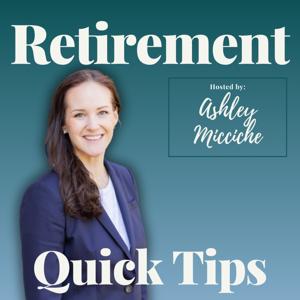


Welcome to a new week here on the Retirement Quick Tips podcast! I’m your host Ashley Micciche, co-owner of True North Retirement Advisors, an independent financial advisory practice managing $340 million in client assets. I’m a Chartered Retirement Planning Counselor and I’m using my 15 years of experience as a financial advisor to help you gain clarity and make a plan for the retirement you envision.
On this podcast, I cover everything from investing, to retirement spending, to taxes in retirement in just a few minutes each day, so if you’re 5-10 years on either side of retirement, and looking for some daily doses of retirement planning wisdom, stick around this week as I talk about Change Your Bad Money Habits With 5 Simple Tweaks
Did you know that 40% of the things you do each day are habits? Our brain needs habits, so we’re not constantly needing to expend energy on relearning things we do regularly. As a result, we just go through the motions on many things we do regularly, without giving it a second thought. Which is fine for good habits, but what about our bad habits?
Because we don't maintain conscious control over our habits, bad ones can be hard to break, including our bad financial habits. So, to make better financial decisions, we need to cultivate good habits.
So this week, I’ll talk about 5 ways you can better recognize and work to improve your bad money habits, and turn them into good habits.
That’s it for today. Thanks for listening! Come on back tomorrow…where I’ll talk about…
My name is Ashley Micciche...and this is the Retirement Quick Tips podcast.
----------
>>> Subscribe on Apple Podcasts: https://apple.co/2DI2LSP
>>> Subscribe on Amazon Alexa: https://amzn.to/2xRKrCs
>>> Visit the podcast page: https://truenorthra.com/podcast/
----------
Tags: retirement, investing, money, finance, financial planning, retirement planning, saving money, personal finance
It’s Sunday, which means...it’s recap time here on the Retirement Quick Tips Podcast
This week the theme was: Maximizing Net After Tax Returns In Your Investment Portfolio
In case you missed any episodes, here’s what we discussed this week…
Maximizing Net After Tax Returns In Your Investment Portfolio
Why You Should Always Consider The Net After Tax Return
Understanding Taxable vs. Tax Sheltered Accounts
3 Considerations When Choosing Investment Account Types
Asset Location 101
Asset Location: Beyond The Basics
The most important takeaway from this week is
Tomorrow, I’m starting a brand new theme: Change Your Bad Money Habits With 5 Simple Tweaks.
I spend a lot of time on YouTube, I mean A LOT of time. More than I care to admit. It’s usually my go to app when I’m bored and I pick up my phone. Especially these days where I’ve been home with a newborn for the last 3 months, and I spend a lot of time snuggling with him while he eats or sleeps.
I recently came across an interesting video on YouTube that talks about money habits. About 40% of the things you do each day are habits. Because we don't maintain conscious control over our habits, bad ones can be hard to break. Many of our financial decisions are based on habits. So, to make better financial decisions, we need to cultivate good habits.
So next week I’ll share with you some of the insights from this video with my own spin, of course, to help you recognize ways you might be sabotaging yourself with bad habits, and how to cultivate a good habit instead.
Thank you so much for listening this week! If you’re enjoying the podcast, chances are someone else you know who is getting close to retirement could also benefit from checking it out, so please share the show with a friend, a neighbor, your sister, or your boss. Just go to your favorite podcasting app, hit the share icon, then text or email the show link to someone you know who is eyeing retirement.
Thanks for sharing the love and spreading the word. I hope you have a blessed Sunday. My name is Ashley Micciche, this is the Retirement Quick Tips Podcast.
----------
>>> Subscribe on Apple Podcasts: https://apple.co/2DI2LSP
>>> Subscribe on Amazon Alexa: https://amzn.to/2xRKrCs
>>> Visit the podcast page: https://truenorthra.com/podcast/
----------
Tags: retirement, investing, money, finance, financial planning, retirement planning, saving money, personal finance
This week’s theme on the Retirement Quick Tips Podcast is: Maximizing Net After Tax Returns In Your Investment Portfolio
Today,
Holding periods for taxable accounts and gains (longer holding period, better return, all else being equal)
Be careful about owning mutual funds in taxable accounts
Understand implications for withdrawals in retirement - which accounts to draw from first
That’s it for today. Thanks for listening! My name is Ashley Micciche and this is the Retirement Quick Tips podcast.
----------
>>> Subscribe on Apple Podcasts: https://apple.co/2DI2LSP
>>> Subscribe on Amazon Alexa: https://amzn.to/2xRKrCs
>>> Visit the podcast page: https://truenorthra.com/podcast/
----------
Tags: retirement, investing, money, finance, financial planning, retirement planning, saving money, personal finance
This week’s theme on the Retirement Quick Tips Podcast is: Maximizing Net After Tax Returns In Your Investment Portfolio
Today, I’m talking about asset location 101.
Asset location, not to be confused with asset allocation, refers to which types of investments you own in different account types.
You would never own a tax free municipal bond in an IRA account, because that negates all the tax free income benefits from that bond. Likewise, you should avoid investing in high turnover mutual funds and REITs (real estate investment trusts) in taxable accounts, since they’re way more inefficient when it comes to how those are taxed. So those are best placed in IRA or Roth accounts, where you won’t be penalized for owning these types of tax inefficient investments.
Asset location also refers to keeping more growth oriented investments inside of Roth accounts. Since those accounts you’ll usually tap into last in retirement, they’ll be invested for the longest period of time. So the Roth should be the most aggressively invested of your accounts, in order to maximize the tax-free growth and the usually long time horizon of that account.
Essentially, asset location is about investing in the right investments within the right accounts. That's because different types of investments have different tax rules, and different types of accounts have different tax treatments as well.
Being tax efficient can increase your lifetime returns significantly, so it’s a very important step when selecting investments that most people, especially most DIY investors fail to consider.
That’s it for today. Thanks for listening! My name is Ashley Micciche and this is the Retirement Quick Tips podcast.
----------
>>> Subscribe on Apple Podcasts: https://apple.co/2DI2LSP
>>> Subscribe on Amazon Alexa: https://amzn.to/2xRKrCs
>>> Visit the podcast page: https://truenorthra.com/podcast/
----------
Tags: retirement, investing, money, finance, financial planning, retirement planning, saving money, personal finance
This week’s theme on the Retirement Quick Tips Podcast is: Maximizing Net After Tax Returns In Your Investment Portfolio
Today, I’m talking about the top 3 considerations when deciding where and how to invest your money, especially when deciding between funding different account types - like a Roth vs. a taxable account, vs. a Traditional 401k.
Tax rates now - marginal, including state taxes
The term "marginal tax rate" refers to the tax rate paid on your last dollar of taxable income
Future tax rates - likely higher or lower when money is needed?
Timeline for needing the funds - 5 years for buying a house or 10 or 20 years for annual income in retirement?
These factors should all help you determine both which accounts you should be prioritizing saving in, and which types of investments you should own in those accounts (more on that tomorrow)
That’s it for today. Thanks for listening! My name is Ashley Micciche and this is the Retirement Quick Tips podcast.
---------
>>> Subscribe on Apple Podcasts: https://apple.co/2DI2LSP
>>> Subscribe on Amazon Alexa: https://amzn.to/2xRKrCs
>>> Visit the podcast page: https://truenorthra.com/podcast/
----------
Tags: retirement, investing, money, finance, financial planning, retirement planning, saving money, personal finance
This week’s theme on the Retirement Quick Tips Podcast is: Maximizing Net After Tax Returns In Your Investment Portfolio
Today, I’m talking about the difference between Taxable vs. Tax-Deferred vs. Tax Free (Roth) Accounts
The reason this matters…is that the net, after tax return, not the gross return matters most.
Net after tax return in a taxable investment account might be a couple % less a year after taxes vs. a Traditional 401k or a Roth, depending on how long you;ll be investing for before you withdraw your money.
That’s it for today. Thanks for listening! My name is Ashley Micciche and this is the Retirement Quick Tips podcast.
----------
>>> Subscribe on Apple Podcasts: httpstr://apple.co/2DI2LSP
>>> Subscribe on Amazon Alexa: https://amzn.to/2xRKrCs
>>> Visit the podcast page: https://truenorthra.com/podcast/
----------
Tags: retirement, investing, money, finance, financial planning, retirement planning, saving money, personal finance
This week’s theme on the Retirement Quick Tips Podcast is: Maximizing Net After Tax Returns In Your Investment Portfolio
Today, I’m talking about why you should always consider the net after tax return, not just the gross returns of your portfolio.
The main reason why you should always consider taxes is that “tax drag” as its commonly known - the impact on taxes on your actual, net returns - is one of the biggest haircuts you’ll take on your investments.
And generally, the higher your income and tax bracket, the more you need to consider the tax drag on your portfolio.
And the more time you have where that money will be invested, the more taxes will matter as well, since that money that went to Uncle Sam in taxes would have stayed invested otherwise, or at least more of it would have been invested. So you lose the accumulated value when the money that was taxed away would have otherwise stayed invested over time, which really adds up.
I’m not talking hundreds or thousands, but for an affluent investor - someone with $500,000 to $2 million in investments - the difference in a portfolio return over your lifetime between someone who reduced the tax drag to the extent they could, and the investor who paid no mind to taxes - the difference in portfolio value over a 25-30 year saving and investment lifetime can easily add up to hundreds of thousands of dollars.
How Taxes Eat Into Your Returns - Case Study Example
Hypothetical value of $6,000 in annual contributions over 30 yearsTax rate = 24%
Annual return = 6%
Even if you liquidated both portfolios after 30 years, you’ll still owe capital gains taxes on the taxable account, and income taxed on the IRA - you’ll still be ahead by a good size margin.
That’s it for today. Thanks for listening! My name is Ashley Micciche and this is the Retirement Quick Tips podcast.
----------
>>> Subscribe on Apple Podcasts: https://apple.co/2DI2LSP
>>> Subscribe on Amazon Alexa: https://amzn.to/2xRKrCs
>>> Visit the podcast page: https://truenorthra.com/podcast/
----------
Tags: retirement, investing, money, finance, financial planning, retirement planning, saving money, personal finance
Welcome to a new week here on the Retirement Quick Tips podcast! I’m your host Ashley Micciche, co-owner of True North Retirement Advisors, an independent financial advisory practice managing $340 million in client assets. I’m a Chartered Retirement Planning Counselor and I’m using my 15 years of experience as a financial advisor to help you gain clarity and make a plan for the retirement you envision.
On this podcast, I cover everything from investing, to retirement spending, to taxes in retirement in just a few minutes each day, so if you’re 5-10 years on either side of retirement, and looking for some daily doses of retirement planning wisdom, stick around this week as I talk about Maximizing Net After Tax Returns In Your Investment Portfolio
The genius Albert Einstein once said "The hardest thing in the world to understand is the income tax." If he doesn’t understand taxes, it should make you and I feel a bit better.
When it comes to taxes on your investments, taxes should never be the primary driver behind investment decisions. In other words, as I tell clients frequently, you should never let the tax tail wag the dog.
Yet, taxes are still a very important consideration with where and how you invest, and how you prioritize savings among different types of accounts like your 401k, Roth, and taxable accounts, all of which are taxed in very different ways.
If you fail to consider taxes, it’s easy to leave 2% or more a year in returns on the table, which over a lifetime of investing can easily add up to hundreds of thousands of dollars that you could have otherwise have saved for retirement, had you been more tax savvy.
So this week, I’ll talk about
That’s it for today. Thanks for listening! Come on back tomorrow…where I’ll talk about…
My name is Ashley Micciche...and this is the Retirement Quick Tips podcast.
----------
>>> Subscribe on Apple Podcasts: https://apple.co/2DI2LSP
>>> Subscribe on Amazon Alexa: https://amzn.to/2xRKrCs
>>> Visit the podcast page: https://truenorthra.com/podcast/
----------
Tags: retirement, investing, money, finance, financial planning, retirement planning, saving money, personal finance
It’s Sunday, which means...it’s recap time here on the Retirement Quick Tips Podcast
This week the theme was: The Downside of Being Wealthy
I really enjoyed talking about this topic, and I want to revisit this theme at some point in the near future, because I didn’t even touch on some of the bigger downsides of being wealthy, especially when it comes to passing along wealth to your heirs. Wealth can destroy people’s lives if not handled well, yet it’s not something that is talked about much in our culture today.
In case you missed any episodes, here’s what we discussed this week…
Pursuing Wealth Is A Good Way To Waste Your Life
How Money Distorts Your Reality & Relationships
Does Being Wealthy Lead To A Boring Life?
The Overly Complicated Lives of Rich People
Fixing The Problem Of Wealth
The most important takeaway from this week is having a higher net worth doesn’t necessarily lead to higher levels of contentment and happiness, and if you’re not careful and thoughtful with how you go about acquiring, investing, and spending wealth, having more has some significant downsides and it can make you miserable.
Tomorrow, I’m starting a brand new theme: Maximizing Net After Tax Returns In Your Investment Portfolio
Few investors consider the tax implications of their investment decisions, and leave a lot of money on the table as a result. So next week, I’ll talk about specific and important ways you can maximize the net, after tax returns of your portfolio.
Thank you so much for listening this week! If you’re enjoying the podcast, chances are someone else you know who is getting close to retirement could also benefit from checking it out, so please share the show with a friend, a neighbor, your sister, or your boss. Just go to your favorite podcasting app, hit the share icon, then text or email the show link to someone you know who is eyeing retirement.
Thanks for sharing the love and spreading the word. I hope you have a blessed Sunday. My name is Ashley Micciche, this is the Retirement Quick Tips Podcast.
----------
>>> Subscribe on Apple Podcasts: https://apple.co/2DI2LSP
>>> Subscribe on Amazon Alexa: https://amzn.to/2xRKrCs
>>> Visit the podcast page: https://truenorthra.com/podcast/
----------
Tags: retirement, investing, money, finance, financial planning, retirement planning, saving money, personal finance
This week’s theme on the Retirement Quick Tips Podcast is: The Downside of Being Wealthy
I’ve talked about a few of the downsides of being wealthy this week and the unexpected problems it can create in life. So I want to turn today on how you can keep a higher net worth from disappointing you and making you unhappier as a result.
The answer to being satisfied and fulfilled is not to be poor instead, but to not let money or the comfort, power, and recognition that comes with it become the center of your life. Many people make the mistake of pursuing more to the detriment of their relationships with others, and sacrifice their own happiness, because they’re chasing the lie that having more money and more of the things that money can buy will bring happiness and lasting joy.
In short, they’ve made wealth and the pursuit of it the center of their life. It’s the God in their lives, and family and friends, hobbies, their health, etc. gets pushed to the outside. So the solution is to first recognize that wealth can never bring fulfillment or lasting joy. It makes life easier in many ways, but it doesn’t satisfy. Having the right priorities in life and keeping money where it belongs (not at the center) is what will lead to lasting satisfaction and fulfillment.
Another important way to avoid some of the downsides of wealth that I’ve already touched on this week are to live below your means and continue saying no to yourself, even when you can afford the bigger house, the better car, the first class plane ticket. This has many benefits - you don’t blow your assets on stupid stuff, and you don’t fall into the trap of trying to keep up with the Joneses. Some of the wealthiest people I know are guarded with their wealth - they don’t flaunt it. They don’t use it to impress their friends and it doesn’t fuel their pride. It’s the millionaire next door mindset.
A third way to prevent a higher net worth from leading to unhappiness is to be generous. Research shows that being generous makes you happier. Focusing on others and their needs and using our resources to bless them is very rewarding and will prevent hoarding, and a toxic focus on just ourselves and our needs.
That’s it for today. Thanks for listening! My name is Ashley Micciche and this is the Retirement Quick Tips podcast.
----------
>>> Subscribe on Apple Podcasts: https://apple.co/2DI2LSP
>>> Subscribe on Amazon Alexa: https://amzn.to/2xRKrCs
>>> Visit the podcast page: https://truenorthra.com/podcast/
----------
Tags: retirement, investing, money, finance, financial planning, retirement planning, saving money, personal finance
From the publisher's feed

1,952 Listeners

450 Listeners

799 Listeners

1,315 Listeners
543 Listeners
753 Listeners

550 Listeners

692 Listeners

612 Listeners

934 Listeners

830 Listeners

197 Listeners
595 Listeners

427 Listeners

1,074 Listeners