
Sign up to save your podcasts
Or

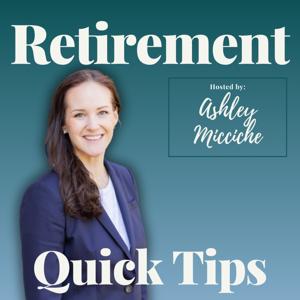


This week I'm going to talk about how retirees can build a portfolio that is better designed to withstand inflation. We'll cover stocks, dividend-paying companies, bonds, Treasury Inflation-Protected Securities, and practical steps you can take to protect your purchasing power.
The question of whether to stop saving for retirement before you actually retire is more nuanced than it might seem, but it is absolutely a legitimate planning strategy for the right person in the right situation.
If you're going to coast and stop contributing, make sure the number you're projecting to end up with at retirement is not the bare minimum. You want to build in a bigger buffer and a bigger safety net so that you could still retire even if the number ended up being less than projected.
Now let's talk about some reasons why you would seriously consider stopping contributions so close to retirement.
Before I get into why you would want to stop contributing or why that might make sense, I first want to talk about why you would want to continue contributing.
For many of you -- and I would put myself in this boat as well -- it would be too scary to sit there and coast and say okay, I think I've built up enough, now I'm going to let compounding take me the rest of the way here to retirement. I like being in more control than that rather than relying on returns.
The point you can stop saving for retirement happens when your current portfolio is large enough that, even with no further contributions, it is projected to grow to your target retirement balance through compounding alone by your goal retirement date.
Did you know there comes a point when you're getting close to retirement that saving more every year or maxing out your 401k no longer matters?
When you reach the point of "coasting" to retirement, the annual returns far outpace your annual savings, making them a drop in the bucket.
For example, I have a client with a 3.5 million portfolio. He has a gain of about 8% this year, which translates to about $254,000 in gains. Any savings he might make on top of these gains, even if he's maxing out his 401k, are just a small portion of his overall dollars growing.
Which begs the question - how do you know when saving for retirement becomes optional, and you can let the returns and math work in your favor and not stress so much about saving as much as possible?
So in this week's podcast, I'll talk about how to recognize when you can stop saving so hard for retirement & relax a little bit, what 'coasting' to retirement actually means, and why this phase can be one of the most freeing (and financially misunderstood!) stages of your retirement planning journey because it can help you achieve other important financial goals as well.
No matter how you feel about Trump - hate him, love him, or if you're among the 12 Americans who are totally indifferent to him, the new Trump accounts for kids are an incredible savings opportunity, and one that you don't want to pass up if you have minor children or grandchildren.
And if that child is eligible for the $1,000 seed contribution because they were born between 2025-2028, then it's definitely a no brainer. About 5 million Americans have already signed up for these accounts, and I will be enrolling all 5 of my own children before they go live on July 4th. And enjoying the free $1000 of seed money for baby number 5, arriving in June.
So in this week's podcast, I'll be breaking down the key things you need to know about Trump accounts:
Who can and should sign up & fund these accounts
Why I like them better than other types of savings and investment accounts for kids
How to sign up
Investment options
How to turn these accounts into millions for your kids or grandkids in retirement
From the publisher's feed

1,956 Listeners

452 Listeners

800 Listeners

1,314 Listeners
543 Listeners
755 Listeners

553 Listeners

693 Listeners

612 Listeners

928 Listeners

830 Listeners

198 Listeners

596 Listeners

425 Listeners
1,073 Listeners