
Sign up to save your podcasts
Or

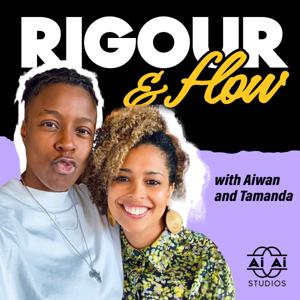


We hand the mic to you. For our first-ever community voicenote episode, we asked you, our listeners, to share what’s stayed with you so far. What you’ve disagreed with. And what you want us to explore more deeply. The result is this moving, funny, and thoughtful collection of reflections that remind us why we make this show in the first place.
From lived experiences of sickle cell and navigating Black British and other migrant identities, to the intersections of queerness and faith, your voices bring new dimensions and fresh truths to the conversation.
We are so grateful to everyone who sent in a voicenote. We received a lot more than we expected and could only feature a small selection here, but we’ll be returning to others across the season as they connect with future themes. Also, since we loved hearing from you directly: we’ve decided to keep our voicenote channel open all season long, so please keep sending your reflections, provocations, and questions as you listen.
Please rate, review and subscribe for weekly episodes.
Connect with us on:
This is an AiAi Studios Production
©AiAi Studios 2025
Hosted on Acast. See acast.com/privacy for more information.
We abandon the serious stuff and dive straight into our love of all things woo-woo: near-death experiences, dodgy mediums, growing up under Satanic Panic, and the paranormal guilty pleasures that make us cry with laughter.
Tamanda sets the scene early: this is not a serious death and grief episode. Instead, it’s a confessional of the strange, terrifying, and sometimes hilarious ways we first encountered the afterlife - from her family cat “Pussy Rosa”, to the endless references to reincarnation and sangomas in her mother’s magazines.
Aiwan recalls growing up under the shadow of debunked Christian writers like Rebecca Brown and Mary K. Baxter, whose lurid books about demons terrified her as a child… and still rack up glowing Amazon reviews. Meanwhile, Tamanda confesses her loyalty to Tyler Henry, the sweating, scribbling “white boy band” medium who claims to chat with the dead.
Between the crying-laughing fits, we ask ALLLLLL the serious-unserious questions: are near-death experiences brain glitches, or proof of the great beyond? Are mediums for real, or do they just make really great TV? And is it better to chase the afterlife — or focus on the here and now?
In this episode:
🎧 Listen wherever you get your podcasts
🎥 Watch the full episode on YouTube
📲 Follow us on TikTok
🔁 Share with someone who secretly loves bad paranormal TV
Please rate, review and subscribe for weekly episodes.
Connect with us on:
This is an AiAi Studios Production
©AiAi Studios 2025
Hosted on Acast. See acast.com/privacy for more information.
We step into the tangled, deeply personal politics of body image - and the fat and skinny shaming scripts that shape how we see ourselves, each other, and the people we love.
We open with a conversation about what it means to be two women in a relationship with entirely different body types; each of us shaped by radically different cultural beauty standards in our own homes. From Lagos to London, Malawi to the Midlands, we unpack how the same body can be celebrated in one place and critiqued in another - and sometimes by the very same people!
Tamanda shares her lifelong entanglement with weight, the childhood humiliations that stuck, and how growing up in southern Africa taught her that a bigger body could be a symbol of health, wealth, and desirability. Meanwhile, Aiwan reflects on the flip side: the invisibility and dismissal that can come with being naturally slim, the “chicken bone legs” taunts of school, and why she’s had to defend the legitimacy of skinny shaming as real harm.
Along the way, we trace the food rules and body scripts we inherited: from family kitchens lined with SlimFast boxes, to the public weigh-ins of Weight Watchers, to today’s Ozempic era. We unpack how those scripts collide in our relationship, how they shape intimacy, and what it takes to stop policing each other’s bodies when the culture won’t.
In this episode:
Please rate, review and subscribe for weekly episodes.
Connect with us on:
This is an AiAi Studios Production
©AiAi Studios 2025
Hosted on Acast. See acast.com/privacy for more information.
We step into the messy truth about adulthood, rites of passage, and why so many of us hit 40 feeling… not quite grown.
Aiwan opens with Kendra Lindsay’s viral post - a rallying call to join the “Council of Elders” instead of clinging to youth - which ultimately ruffled the feathers of a legion of women in their 40s. From there, we dive into the uncomfortable question: Where did we get the idea that 40 isn’t old? And who exactly benefits from allowing us to believe that, at 40, we are still really youthful?
The conversation spirals into Blindboy’s take on the infantilisation of millennials - from the deregulation of children’s advertising in the 1980s, to the way nostalgia and “adult baby” culture can soothe us… while distracting us from demanding what we deserve.
Tamanda shares her own feelings about approaching a milestone age: how she carries all the responsibilities of an adult, but none of the financial security promised to us if we worked hard and played by the rules. Aiwan reflects on getting past the big 40, growing up outside of commercial youth culture, the rites of passage she did experience, and why she believes adulthood is something we should step into rather than avoid.
Together, we ask what happens when capitalism needs to keep us “forever young”, just so it can hold on to its happy and willing consumers - and what it takes to claim your place as a fully-fledged adult in a system that keeps moving the goalposts.
In this episode:
Please rate, review and subscribe for weekly episodes.
Connect with us on:
This is an AiAi Studios Production
©AiAi Studios 2025
Hosted on Acast. See acast.com/privacy for more information.
One of the most emotionally charged and quietly policed questions in the politics of race - a question so fraught, it’s almost unsayable: Are mixed race people “properly Black”?
This time, the question’s unquestionably personal…!
This isn’t just a discussion between two Black women. It’s a conversation between two queer women in love - building a life, a business, and a podcast together - while navigating complex and sometimes uncomfortable truths about race, desire, identity, and proximity.
Tamanda shares what it meant to grow up mixed race in Botswana with a Black mother and a white British father - and the deep shame and silences that often surrounded her identity. From being told she wasn’t “properly Black” to the experience of not speaking the language of her homeland, she traces the painful dissonance between cultural belonging and bloodlines.
Aiwan speaks with her usual candour about never imagining she’d be in a relationship with a mixed-race person. She reflects on the distrust and resentment she once held towards mixed-race people, shaped by the realities of colourism, social hierarchy, and the unspoken rules of blackness in the UK.
Together, we explore how narratives of race shift across borders and generations, how identity is shaped by more than just skin tone, and why mixed identity is neither a bridge nor a middle ground - but its own terrain, shaped by history, pride, shame, and longing.
In this episode:
Please rate, review and subscribe for weekly episodes.
Connect with us on:
This is an AiAi Studios Production
©AiAi Studios 2025
Hosted on Acast. See acast.com/privacy for more information.
We’re unpacking what our algorithms say about us, whether business can cure poverty across the continent of Africa, and why women are so obsessed with true crime as a genre.
Tamanda opens with a late-night spiral about the politics of platform recommendations: what do your YouTube and Instagram feeds reveal about your identity? And are you really who you think you are? Or does the algorithm tell a different story?
Aiiwan follows with a deep dive into African economic development, reflecting on the new Dangote oil refinery in Nigeria and why some argue that business - and not Western aid - is the real key to the continent’s future.
Finally, in our segment, we wrestle with a question sparked through a recent meeting with @Duncan Barber at Audible: What explains the huge gender skew in true crime fandom, and is it possible that watching violent stories helps survivors feel safe?
This episode moves through algorithm data, development, and the darkest corners of the entertainment industry - with rambling side steps into South London in the '80s, postcolonial theory, YouTube survivalists and off-grid dwellers, and Netflix serial killers. It's warm, strange, expansive and surprising… just how we like it!
In this episode:
Please rate, review and subscribe for weekly episodes.
Connect with us on:
This is an AiAi Studios Production
©AiAi Studios 2025
Hosted on Acast. See acast.com/privacy for more information.
We take you inside one of the most joyful, radical, and hard-won celebrations of Black queer life: UK Black Pride. As the movement gets ready to mark another year, we reflect on Aiwan’s work on the UK Black Pride Time Capsule Podcast, what it really means to come into yourself, and the very real challenges of building sustainable spaces that can hold us through every stage of becoming.
Aiwan reflects on her first encounter with UK Black Pride back in 2015, the American YouTubers who shaped her sense of queer embodiment, and how discovering Black queer community changed her life after leaving the Church. Tamanda shares her own rather intellectual coming of age, her pathway into queerness in her mid-thirties, and what it means to find belonging without ever having attended UKBP.
Together, we explore what it takes to build a Black queer movement that lasts, the unexpected role of YouTube in our sexual and emotional education, and what it means to go through a second adolecense - sex education and all - as a full blow adult!
In this episode:
Please rate, review and subscribe for weekly episodes.
Connect with us on:
This is an AiAi Studios Production
©AiAi Studios 2025
Hosted on Acast. See acast.com/privacy for more information.
We dive headfirst into the contradictions and complexities of what it means to raise boys as a lesbian couple… especially when men have caused us so much harm?
Aiwan opens with a striking reflection on The Tin Men, a social media account that toes the line between thoughtful masculinity and, at times, men’s rights rhetoric. From there, she shares more about her own desire for a son, the question of if and how our son would need male role models in their life, and the impacts of growing up in a single parent home without a father figure.
Tamanda builds on this by exploring her own ambivalence about having a son… Admittedly one rooted in a deep mistrust of men, trauma, and jokes that land a little too close to home: “Despite having the most amazing father… I’m basically a misandrist!”
Together, we unpack what happens when women and queer people are expected to raise emotionally literate boys in a system that still rewards domination, silence, and shame. From incel culture and men’s rights memes, to educational programmes for girls and boys in school and Roxy Longworth’s Behind Our Screens campaign, we ask: what are we passing on - and what’s the cost?
In this episode:
Please rate, review and subscribe for weekly episodes.
Connect with us on:
This is an AiAi Studios Production
©AiAi Studios 2025
Hosted on Acast. See acast.com/privacy for more information.
In this three-part episode of Rigour & Flow, we explore how race, gender, and language shape our lives, and how health inequities, queer histories, and identity politics often get erased.
Aiwan opens with a deep dive into sickle cell and other racialised health disparities, reflecting on her own sickle cell trait diagnosis as a child and how the UK’s most common genetic condition continues to be under-researched and underfunded.
Tamanda traces the forgotten queer history of Save the Children’s radical founder, Eglantyne Jebb. Plus the hidden twenty-year love affair that formed the backdrop to the charity’s early vision.
And together, we grapple with a question sparked by Tamanda’s mum, and our wonderful business partner, Travis Baxter: What does the word “queer” really mean, and who gets to claim it?
This episode weaves together personal story, public health, queer history, and language politics - from ringworm and fibroids to possibilities of Save the Children’s “lavender marriage”. It's a curious, surprising, and emotionally rich ride through the margins of health, history, and identity.
In this episode:
On misnaming, identity policing, and why language still carries weight in Black and queer communities.
Please rate, review and subscribe for weekly episodes.
Connect with us on:
This is an AiAi Studios Production
©AiAi Studios 2025
Hosted on Acast. See acast.com/privacy for more information.
We dig into the complicated world of entrepreneurship - from childhood side hustles and early money lessons to investment readiness culture, the “cult of startups”, and what it takes to grow a business without losing yourself.
Aiwan shares how her grandma in Nigeria shaped her business mindset growing up on a council estate in London - and how visiting her Auntie Margaret’s market stall in Balham inspired her to pursue a “work for herself” path that would eventually lead to founding her creative media production company, AiAi Studios. Tamanda reflects on earning £400 a day in her early twenties, and why she still walked away from traditional career paths to build something on her own terms.
We wrestle with the big questions: Would you take a million pounds from Steven Bartlett? What if education doesn’t work - especially for Black and working class communities? Why are Black women still the least likely to get funding and investment? Can you scale a business without selling out — or burning out?
This episode is about ambition, agency, and building something real in a world that still doesn’t expect us to succeed.
In this episode:
Please rate, review and subscribe for weekly episodes.
Connect with us on:
This is an AiAi Studios Production
©AiAi Studios 2025
Hosted on Acast. See acast.com/privacy for more information.
From the publisher's feed
The show where business meets love, and culture meets critique. We’re Aiwan and Tamanda, two Black women with 20 years each in entertainment, research, and social justice. We’re also a married…
We'll talk about the realities of running a business, making creative work that matters, and navigating research with integrity.
What You’ll Find:
If you’re navigating business, love, and the messiness of life while trying to do meaningful work, you’re in the right place.
Episodes drop every Tuesday!
Hosted on Acast. See acast.com/privacy for more information.