
Sign up to save your podcasts
Or

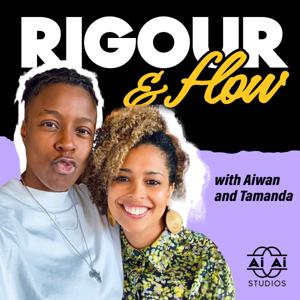


Divorce is sheer grief. It pulls apart your routines, your identity and the story you believed you were living. In this episode of Rigour and Flow, we open up with one of our most private conversations.
Tamanda shares the long road from confusion to clarity in her first marriage. She reflects on growing up with parents who modelled peace but not conflict, and how that silence left her without the tools to navigate a hint of difficulty in her own relationship. She talks about sexless partnership, emotional distance, shrinking herself, and the quiet moment she realised she could not live another decade in a marriage that looked calm but felt empty.
She shares about rings coming off, crying in public, the support of older women and the slow, steady work of starting again. We also walk through the identity collapse that follows and the loneliness of losing not only your spouse but the entire community that forms around a marriage.
We then explore dating after divorce, stepping back into a world that feels unfamiliar and the gradual rebuilding of confidence, boundaries and desire.
Ultimately, we wrap up reflecting as a couple on how Tamanda found the courage to marry again. Then we get to how Aiwan’s certainty in proposing grounded Tamanda… and how conflict resolution, honesty and growth have reshaped the meaning of love the second time around.
🎧 In this episode:
🎥 Watch the full episode on YouTube
🔁 Share with someone navigating heartbreak, healing or hard decisions
#RigourAndFlow #Divorce #Relationships #LoveAndLoss #IdentityRebuild #GriefWork #DiasporaDialogues #AiAiStudios
Please rate, review and subscribe for weekly episodes.
Connect with us on:
This is an AiAi Studios Production
©AiAi Studios 2025
Hosted on Acast. See acast.com/privacy for more information.
We take education to task. Asking who it serves, what it leaves out and what it means for boys growing up in an age of algorithms and Andrew Tate.
Aiwan opens with a question many 18-year-olds are asking today: "Is university still worth it?" She shares what she gained from structured learning in music technology and what 20 years in a creative industry taught her that a degree never could. We talk debt, discipline and the difference between education and enlightenment. And, dare we say, even wisdom.
Then Tamanda brings to the surface a story that’s hard to ignore: the rise of the Black Red Pill bros. She introduces Kelvin Frimpong, a Ghanaian-born ex-Red Piller, whose viral TikTok lays bare how young men can be groomed through isolation, resentment and the promise of belonging. We hear his cut-through voicenotes on education as prevention, and the role that adults can and must play in creating spaces where boys can question safely without being shamed.
Finally, we hear from our dear friend, Dr Alex Blower, whose academic work explores the most critical and urgent of questions: “What can we do about the issue of boys, men and toxic masculinity?” Alex adds a dose of compassion that’s informed by his work on boys, schooling and masculinity. And he offers a roadmap for teachers, parents and communities to become “trusted adults”, i.e. mentors who can protect and honour the emotional lives of boys in a world that too often forgets them.
🎧 In this episode:
🎙️ Listen wherever you get your podcasts
🎥 Watch the full episode on YouTube
🔁 Share with a parent, teacher or friend raising a boy in 2025
📬 Reflections or stories to share? [email protected]
Please rate, review and subscribe for weekly episodes.
Connect with us on:
This is an AiAi Studios Production
©AiAi Studios 2025
Hosted on Acast. See acast.com/privacy for more information.
In this episode of Rigour & Flow, we step into the tender terrain of family business: where bedrooms and boardrooms can potentially become interleading doors. From millennia-old trading families to today’s co-founder couples, we ask what it takes to build something together without breaking each other.
Our conversation starts with a question we hear often: “How do you run a business with your spouse?” To get to the heart of it, we trace our journey of running two entities side by side: AiAi Studios and Roots & Rigour. Plus building out this podcast from scratch!
Aiwan reflects on her childhood fascination with families running their corner-shops and the powerful influence of prosperity preachers - like TD Jakes - passing on their mega-gospel empires to their kids so that wealth and work were kept in the family. Tamanda offers a counter-portrait of her parents’ co-op working farm in Botswana, a familial partnership built on hard work and a whole lot of unforgettable produce.
After covering this ground, we walk through another door and consider why our modern workplaces have become so loveless. Why are they places where we “leave ourselves at the door”, and how has capitalism cut emotion out of work relations?
Then we turn the key and confront the paradox of partnership: that business can strengthen love, or test it to breaking point. From succession plans to Succession-style dramas, from grant-making films to hard working farms, there’s no holding back in getting to the realities of what it means to turn shared purpose into shared prosperity within a single family unit.
🎧 In this episode:
🎧 Listen wherever you get your podcasts
🎥 Watch the full episode on YouTube
🔁 Share with someone thinking about love, work and legacy
📬 Reflections or stories to share? [email protected]
⚠️ Content note: discussion includes references to domestic violence and workplace inequality.
#RigourAndFlow #FamilyBusiness #FamilyLegacy #BusinessPartners #BlackBusinessGrowth #WorkMarriage #WorkAndLove #Entrepreneurship #WorkCulture #RelationshipGoals #AiAiStudios #BlackPodcast #DiasporaDialogues #BlackWomenPodcasters #RootsAndRigour
Please rate, review and subscribe for weekly episodes.
Connect with us on:
This is an AiAi Studios Production
©AiAi Studios 2025
Hosted on Acast. See acast.com/privacy for more information.
We turn our gaze to the glittering world of Africa’s super rich - and ask what wealth really means in a world built on inequality.
Beginning with the BBC documentary From Lagos to London: The Rise of Nigeria’s Super Rich, we unpack the rise of “soft-life” culture, the myth of meritocracy, and the emotional price of Black excellence. From oil money and old elites to Instagram entrepreneurs and Dubai Bling escapism, we explore how class divides shape not only who gets to live well - but whose stories get told as success.
From there, we widen the lens. Tamanda reflects on growing up between Botswana, South Africa, and Britain - seeing wealth, domestic work, and dignity collide inside her own family history. Aiwan recalls her first reaction to the From Lagos to London BBC documentary in 2016 - the thrill of representation, the absurdity of diamond-encrusted phones, and the unease of celebrating excess while living through austerity.
Together, we map the fault-lines between aspiration and accountability, asking how we can enjoy the good life without reproducing the hierarchies we claim to resist.
Along the way, we confront the paradox of privilege: the soft-life that depends on someone else’s hard one; the excellence that excludes; the success that can’t always look itself in the mirror.
🎧 In this episode:
🎧 Listen wherever you get your podcasts
🎥 Watch the full episode on YouTube
🔁 Share with someone thinking about wealth, class or “soft-life” culture
📬 Reflections or stories to share? [email protected]
⚠️ Content note: discussion includes class inequality, elitism, and structural violence.
Please rate, review and subscribe for weekly episodes.
Connect with us on:
This is an AiAi Studios Production
©AiAi Studios 2025
Hosted on Acast. See acast.com/privacy for more information.
The original African Bad Gal gets us going, Kenyan MP and activist Millie Odhiambo Mabona, whose fearless voice and legendary one-liners have cut through flaccid politics with candour. From calling out men on the parliamentary floor on decisions, periods (!), to publishing her book Rig or Be Rigged, Millie embodies the unapologetic role needed for women to step into power.
From there, we pivot to the plains, asking why the wildlife stories of Africa are still told through a White lens. Where are the Black filmmakers in natural history and conservation media? From Botswana’s Tourism Board to BBC studios, we trace the complex landscape of access, ancestral knowledge and representation in this important space.
Finally, we turn the lens inward for a segment that’s equal parts rigour and self-reflection: After an anonymous comment called out a previous episode on Black Britishness, Tamanda and Aiwan unpack what happens when class and accountability collide in our own communities - and why words absolutely DO matter in a world that too easily wants to delete them (after rightfully expressing them).
🎧 In this episode:
🎧 Listen wherever you get your podcasts
🎥 Watch the full episode on YouTube
🔁 Share with a Bad Gal who speaks the truth and rewrites respectability rules
📬 Reflections or stories to share? Email us: [email protected]
Please rate, review and subscribe for weekly episodes.
Connect with us on:
This is an AiAi Studios Production
©AiAi Studios 2025
Hosted on Acast. See acast.com/privacy for more information.
We travel back to the glossy pages that raised us - the agony-aunt columns, gossip spreads, and advice pages that shaped girlhood across Africa and beyond.
At the centre of the story is Dear Dolly - an advice column that captured the hearts of readers across the continent of Africa, answering questions about love, shame, and desire. What few people knew was that, in the early days at least, “Dolly” wasn’t a woman at all, but a group of men writing under her name.
Reading directly from the Drum magazine archives, we dive into real letters from the 1960s and 70s - from women asking about cheating husbands and body image, to queer readers cautiously revealing their desires in a deeply heteronormative world. We sit with the tenderness, the absurdity, and the harm in those pages: the empathy that sometimes peeked through, and the patriarchy printed between the lines.
Together we ask what these columns reveal about love, morality, and modernity in post-colonial Africa - and how their logics still echo today, from tabloid talk shows to TikTok advice culture.
🎧 In this episode:
🎧 Listen wherever you get your podcasts
🎥 Watch the full episode on YouTube
🔁 Share with someone raised on the magazines that taught us who to be
📬 Reflections or stories to share? Email us: [email protected]
⚠️ Content note: discussion includes gendered violence, body shaming, and references to mental health.
Please rate, review and subscribe for weekly episodes.
Connect with us on:
This is an AiAi Studios Production
©AiAi Studios 2025
Hosted on Acast. See acast.com/privacy for more information.
We step into the charged terrain of land, power, and belonging - and ask who really gets to claim ownership of land in Africa. Beginning with a screening of The Battle for Laikipia at Hyde Park Picture House, we trace the tensions between Indigenous Samburu pastoralists and fourth-generation white settlers in Kenya - and unravel how the logic of private property, colonial inheritance, and climate crisis continue to shape who eats, who survives, and who gets fenced out.
From there, we widen the lens. Tamanda connects the film’s themes to her own family history across Botswana, South Africa, and Britain - from childhood memories of “the boy” on white relatives’ farms to a recent, real-life story of stolen oranges and guinea fowl that became a parable of modern policing versus ancestral justice. Aiwan brings a filmmaker’s eye to the ethics of empathy and the politics of whose pain is centred, then flips the frame to Yellowstone and the global story of land as commodity - whether in Montana, Laikipia, or the post-colonial south.
Along the way, we confront the colonial hangover that refuses to die: white settlers who never left, governments that compensate the oppressor before the oppressed, and a climate emergency exposing the same old inequalities in new forms.
In this episode:
🎧 Listen wherever you get your podcasts
🎥 Watch the full episode on YouTube
🔁 Share with someone thinking about land, identity, or climate justice
📬 Reflections or stories to share? Email us: [email protected]
⚠️ Content note: discussion includes colonial violence, racist language, and murder/death.
Please rate, review and subscribe for weekly episodes.
Connect with us on:
This is an AiAi Studios Production
©AiAi Studios 2025
Hosted on Acast. See acast.com/privacy for more information.
FGM, cultural silence, and women’s rights in Britain today.
In this feedwarmer - and our very first Rigour & Flow On The Go - we take our podcast out of the studio and into community spaces. Live from Climb25 in Leeds, Aiwan reflects on the intimacy of podcasting, how deep conversations can cut through even in a noisy public space, and the art of capturing sound in the moment. From the clang of a circus game in the background to the warmth of our signature African textile on the table, this is Rigour & Flow out in the real world.
At the centre of this episode is Dorcas, founder of Peacemaker International and Women in Safe Hands. Dorcas shares her experience as a survivor of female genital mutilation (FGM), the cultural superstitions that sustain the practice - including the belief that a newborn could be harmed by touching a woman’s clitoris - and her fight to protect other women and girls. She speaks about underfunding, being surveilled in the building her organisation carries out its work, and the “quiet sacrifices” she has made to keep her work going, from personally funding Christmas gifts for families to running culturally-sensitive food banks stocked with African produce.
We close with reflections on what Dorcas’ story reveals about women’s rights, cultural taboos, and the resilience of grassroots activists working against the odds.
In this episode:
🎧 Listen wherever you get your podcasts
🎥 Watch the full episode on YouTube: https://youtu.be/mWTOfcjwnvs
🔁 Share with someone who needs to be in this conversation
📬 Leave us a voicenote for Season 3: https://telbee.io/channel/_lea4tltbwrlyfaymnucla/
⚠️ Content note: This episode contains discussion of female genital mutilation (FGM) and violence against women and girls (VAWG).
Please rate, review and subscribe for weekly episodes.
Connect with us on:
This is an AiAi Studios Production
©AiAi Studios 2025
Hosted on Acast. See acast.com/privacy for more information.
Trans rights, migrant labour, and the hidden lives of domestic workers in Britain.
In this feedwarmer, we shine a light on Our Place Is Here - a powerful three-part podcast series created in partnership with the Our Place Is Here campaign produced by Aiwan and AiAi Studios in collaboration with gal-dem. The Filipino Domestic Workers Association, and campaign partners fighting for migrant workers’ rights including Kanlungan Filipino Consortium, The Voice of Domestic Workers, Kalayaan, and Purpose. Visit gal-dem.com to read the essays in both English and Tagalog, and find out what you can do to support the campaign.
At the centre of our conversation is Nina’s story: a trans woman navigating life as an undocumented domestic worker in the UK. Her essay, read in both English and Tagalog, unpacks the intersection of gender, migration status, and labour - revealing what it means to survive, resist, and find dignity while working behind closed doors.
We reflect on the broader campaign, the dual-language production process, and what this project teaches us about trauma-informed storytelling, the politics of translation, and the role of podcasting as a tool for research and systems change.
In this episode:
Our Place Is Here was created with and for the community it represents - centring the voices of domestic workers themselves, in their own words.
Listen, reflect, and ask yourself: who gets to be seen, and whose labour remains invisible?
Our Place Is Here was produced by Aiwan Obinyan with production and sound design by AiAi Studios. The Executive Producers for gal-dem were Suyin Haynes, Cici Peng and Katie Goh.
The Executive Producer for the Our Place Is Here campaign was Francesca Humi, supported by the Filipino Domestic Workers Association, Kanlungan and The Voice of Domestic Workers.
With graphics produced by Karis Pierre and artwork produced by Khadija Said.
Please rate, review and subscribe for weekly episodes.
Connect with us on:
This is an AiAi Studios Production
©AiAi Studios 2025
Hosted on Acast. See acast.com/privacy for more information.
In this final episode of Season 2, we return to our signature Unfinished Business format, bringing together the conversations that refused to be neatly stitched up.
We open with reflections on the mixed reactions to our episode on mixed race identity, which sparked far more commentary than we anticipated on social media - including a sharp intervention from the brilliant BBC 1Xtra presenter and commentator Richie Brave, who stepped in with timely analysis just as things were getting hot in the kitchen.
From there, we weave together three of the season’s most urgent themes to ask: What links queer domestic violence, the raising of boys, and the anger directed at migrants and asylum seekers?
Aiwan reflects on the silence around queer relationships in DV spaces - why they’re rarely addressed in mainstream narratives - and the frustration of being asked to speak on the issue in professional spaces when her expertise lies elsewhere. Tamanda builds on this by connecting anti-immigrant rhetoric to violence against women and girls, drawing on the recent statement by 100 women’s rights groups that challenges far-right attempts to scapegoat migrants and asylum seekers.
Along the way, we share stories from ourselves and our listeners: being caught in Millwall football crowds on matchday, facing down misogyny from schoolboys, and healing from trauma as a teacher. The through-line is patriarchy and masculinity - how harm is taught, inherited, and weaponised from the playground to the political stage.
As Season 2 closes, we carry forward the reflections of two teachers who sent us a powerful voicenote exchange: Who teaches men to harm, where are we right now, and what would it take to break the cycle?
In this episode:
Please rate, review and subscribe for weekly episodes.
Connect with us on:
This is an AiAi Studios Production
©AiAi Studios 2025
Hosted on Acast. See acast.com/privacy for more information.
From the publisher's feed
The show where business meets love, and culture meets critique. We’re Aiwan and Tamanda, two Black women with 20 years each in entertainment, research, and social justice. We’re also a married…
We'll talk about the realities of running a business, making creative work that matters, and navigating research with integrity.
What You’ll Find:
If you’re navigating business, love, and the messiness of life while trying to do meaningful work, you’re in the right place.
Episodes drop every Tuesday!
Hosted on Acast. See acast.com/privacy for more information.