
Sign up to save your podcasts
Or

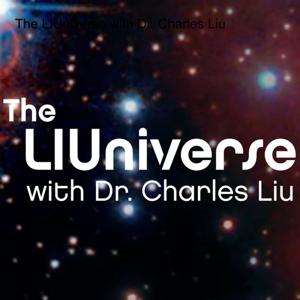

How do planetary ring systems rings form, and what keeps them in line? What exactly is the Dragon Cloud of Saturn? And what’s up with quasi moon 2025 PN7? To find out, Dr. Charles Liu and co-host Allen Liu welcome Cornell University’s dynamical astronomer Dr. Phil Nicholson for a refresher course in orbital mechanics.
As always, though, we start off with the day’s joyfully cool cosmic thing, which is right up Phil’s alley: the recent discovery of quasi moon 2025 PN7. Phil unpacks the orbital mechanics to explain the critical differences between quasi moons and regular moons, and also 2025 PN7’s strange relationship to Earth’s orbit. He also explains the dynamics of the sun’s tidal forces and Earth’s Hill Sphere.
For our first question from the audience, Jameson asks, “Are meteorites smaller copies of planets. Are all of them the same?” Rather than discuss meteorites, which are the tiny survivors that have crashed on Earth, Phil pivots to where many of them come from in the first place: asteroids. Really big asteroids share some characteristics with planets, like being spherical in shape, whereas the smaller ones can be highly irregular, like the dumbbell-shaped asteroid 216 Kleopatra, or Arrokoth, previously known as Ultima Thule. Chuck asks Phil about the different shapes large asteroids can come in, and Phil points out 433 Eros, the second largest Near Earth Object, which is banana shaped.
The ensuing brief discussion of the “is it a long, skinny asteroid or an interstellar starship?” debate, like the one sparked by Oumuamua, leads to a conversation about Arthur C. Clarke’s “Rendezvous with Rama”, which described just such a starship back in 1973. Somehow, we end up looking at the “face” on Mars and the “Death Star,” aka, Saturn’s moon Mimus as it was imaged by the Cassini spacecraft.
Phil actually worked on the Cassini mission, and Chuck asks him to talk about his experience peering hundreds of miles deep into Saturn’s atmosphere with the spacecraft’s Visible and Infrared Mapping Spectrometer (VIMS). Along with other instruments run by other teams, the mission changed our perception of Saturn’s “boring” atmosphere, documenting aurora, lightning, and giant storms like the “Dragon Cloud of Saturn.”
Our next student question comes from Marvin, who asks, “What exactly is a Shepherd moon?” To answer, Phil describes what Saturn’s rings are made of, how they form, and how they’re structured. He explains what happens when particles that make up the rings collide, why some rings spread over time, while others stay very narrow, and the role Shepherd satellites play in the process.
We end with Chuck soliciting a few classic sci-fi recommendations from Phil, who suggests anything by Arthur C. Clarke, the Foundation Trilogy by Isaac Asimov, and almost anything by Larry Niven, including Ringworld, his most famous series.
We hope you enjoy this episode of The LIUniverse, and, if you do, please support us on Patreon at https://www.patreon.com/theliuniverse.
Credits for Images Used in this Episode:
#LIUniverse #CharlesLiu #AllenLiu #SciencePodcast #AstronomyPodcast #DynamicalAstronomy #PhilNicholson #OrbitalMechanics #Rings #SpaceStorms #QuasiMoons #2025PN7 #HillSphere #433Eros #Asteroid #216Kleopatra #Arrokoth #UltimaThule #Cassini #VisibleAndInfraredMappingSpectrometer #VIMS #DragonCloudOfSaturn #ShepherdMoon
 View all episodes
 By theliuniverse

4.8
7373 ratings
How do planetary ring systems rings form, and what keeps them in line? What exactly is the Dragon Cloud of Saturn? And what’s up with quasi moon 2025 PN7? To find out, Dr. Charles Liu and co-host Allen Liu welcome Cornell University’s dynamical astronomer Dr. Phil Nicholson for a refresher course in orbital mechanics.
As always, though, we start off with the day’s joyfully cool cosmic thing, which is right up Phil’s alley: the recent discovery of quasi moon 2025 PN7. Phil unpacks the orbital mechanics to explain the critical differences between quasi moons and regular moons, and also 2025 PN7’s strange relationship to Earth’s orbit. He also explains the dynamics of the sun’s tidal forces and Earth’s Hill Sphere.
For our first question from the audience, Jameson asks, “Are meteorites smaller copies of planets. Are all of them the same?” Rather than discuss meteorites, which are the tiny survivors that have crashed on Earth, Phil pivots to where many of them come from in the first place: asteroids. Really big asteroids share some characteristics with planets, like being spherical in shape, whereas the smaller ones can be highly irregular, like the dumbbell-shaped asteroid 216 Kleopatra, or Arrokoth, previously known as Ultima Thule. Chuck asks Phil about the different shapes large asteroids can come in, and Phil points out 433 Eros, the second largest Near Earth Object, which is banana shaped.
The ensuing brief discussion of the “is it a long, skinny asteroid or an interstellar starship?” debate, like the one sparked by Oumuamua, leads to a conversation about Arthur C. Clarke’s “Rendezvous with Rama”, which described just such a starship back in 1973. Somehow, we end up looking at the “face” on Mars and the “Death Star,” aka, Saturn’s moon Mimus as it was imaged by the Cassini spacecraft.
Phil actually worked on the Cassini mission, and Chuck asks him to talk about his experience peering hundreds of miles deep into Saturn’s atmosphere with the spacecraft’s Visible and Infrared Mapping Spectrometer (VIMS). Along with other instruments run by other teams, the mission changed our perception of Saturn’s “boring” atmosphere, documenting aurora, lightning, and giant storms like the “Dragon Cloud of Saturn.”
Our next student question comes from Marvin, who asks, “What exactly is a Shepherd moon?” To answer, Phil describes what Saturn’s rings are made of, how they form, and how they’re structured. He explains what happens when particles that make up the rings collide, why some rings spread over time, while others stay very narrow, and the role Shepherd satellites play in the process.
We end with Chuck soliciting a few classic sci-fi recommendations from Phil, who suggests anything by Arthur C. Clarke, the Foundation Trilogy by Isaac Asimov, and almost anything by Larry Niven, including Ringworld, his most famous series.
We hope you enjoy this episode of The LIUniverse, and, if you do, please support us on Patreon at https://www.patreon.com/theliuniverse.
Credits for Images Used in this Episode:
#LIUniverse #CharlesLiu #AllenLiu #SciencePodcast #AstronomyPodcast #DynamicalAstronomy #PhilNicholson #OrbitalMechanics #Rings #SpaceStorms #QuasiMoons #2025PN7 #HillSphere #433Eros #Asteroid #216Kleopatra #Arrokoth #UltimaThule #Cassini #VisibleAndInfraredMappingSpectrometer #VIMS #DragonCloudOfSaturn #ShepherdMoon
14,353 Listeners
1,356 Listeners
321 Listeners
838 Listeners
2,882 Listeners
566 Listeners
544 Listeners
231 Listeners
1,065 Listeners
4,167 Listeners
2,367 Listeners
323 Listeners
384 Listeners
151 Listeners
572 Listeners