
Sign up to save your podcasts
Or

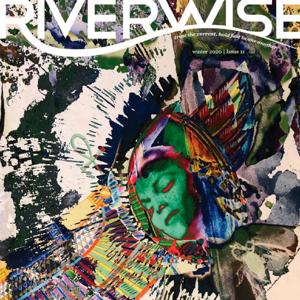


Here in Detroit and across the country, people are self-organizing around the American legacy of police brutality. The call to defund police is being made and people around the world are responding.
Rallies and community meetings are occurring outside of the Detroit Police Headquarters prior to sustained protest actions. The democratic process emerging in these spaces has led to a list of vital demands from the City and Police Chief. Behind the scenes, organizers are holding the Mayor and City Council accountable for allocating city funds according to basic needs— according to a 'people's budget.'
The questions that have surfaced in the streets of America are bringing together young emerging activists and longtime radical thinkers to collectively reassess the oppressive role of police in Black communities.
In this latest episode of the Riverwise podcast, recorded on day thirteen of worldwide protests, PG Watkins of Green Light Black Futures helps us understand that abolition, for entrenched oppressive systems, is both "a long-term stretegy and a daily practice." We are seeing a radical shift in that greater numbers of people seem prepared to make the necessary sacrifices.
Thanks for joining us.
To follow up on PG Watkins's commentary, visit:
The Riverwise Podcast is bringing together Detroit citizens to consider new and forms of resistance to continuing economic and political marginalization in communities of color. For over three years now, the Riverwise collective has created media that depicts local activism and the profound new work being done in Detroit neighborhoods. Through the quarterly Riverwise magazine, Riverwise community conversations, and the Riverwise Writing Workshop, we're developing our collective voice.
In this fourth installment of the Riverwise podcast, Yolanda Jackson of the Coalition for Property Tax Justice reminds us that, leading up to the COVID-19 pandemic, Detroiters were already in crisis. Due to inflated property assessments made by the City of Detroit during the years 2013-2019, property owners were overtaxed by an estimated $600 million. As a result, thousands of homes were unconstitutionally and illegally foreclosed due to nonpayment of property taxes.
Prior to the onset of COVID-19, academic studies had uncovered the depths of a foreclosure epidemic that also preys on the most vulnerable. Jackson joins hosts Amas Muhammed and Riverwise Editor Eric Campbell to discuss how community organizing is working to repair the overwhelming damage.
The Riverwise Podcast is bringing together Detroit citizens to consider new and forms of resistance to continuing economic and political marginalization in communities of color. For over three years now, the Riverwise collective has created media that depicts local activism and the profound new work being done in Detroit neighborhoods. Through the quarterly Riverwise magazine, Riverwise community conversations, and the Riverwise Writing Workshop, we're developing our collective voice.
In this third installment of the Riverwise Podcast, Eric and Amas talk with Reverend Joan Ross from the North End Woodward Community Coalition, WNUC community radio, and the radio show, 'My Block, My Hood, My City'.
Ross shares with us the vital work being done in the North End— providing aid services during the COVID-19 health crisis; battling the disproportionate effects of the pandemic in a majority-black neighborhood; and showing how community media is a resource for mutual well-being.
Self-determination is at the root of all the initiatives Ross has pursued, and through her accomplishments, we begin to see how divergent initiatives form a holistic approach to uplifting the community.
(Recorded on April 28, 2020 on Ringr)
Thank you for listening.
To submit story ideas for the Riverwise Podcast
The Riverwise Podcast is bringing together Detroit citizens to consider new and forms of resistance to continuing economic and political marginalization in communities of color. For over three years now, the Riverwise collective has created media that depicts local activism and the profound new work being done in Detroit neighborhoods. Through the quarterly Riverwise magazine, Riverwise community conversations, and the Riverwise Writing Workshop, we're developing our collective voice.
In Riverwise podcast number two, Amas and Eric converse with longtime activist Maureen Taylor around her family-support role at Detroit Community High and the potential of their makerspace to build a community around the ongoing water crisis affecting Brightmoor residents. Taylor's up-close perspective helps us understand the transformation taking place in DCH students as they realize their skills in a setting that promotes real problem-solving. Recorded on February 5, 2020 at the Detroit Is Different podcast studio.
Thank you to Maureen and all the Detroiters fighting for universal access to clean water.
The Riverwise Podcast is bringing together Detroit citizens to consider new and forms of resistance to continuing economic and political marginalization in communities of color. For over three years now, the Riverwise collective has created media that depicts local activism and the profound new work being done in Detroit neighborhoods. Through the quarterly Riverwise magazine, Riverwise community conversations, and the Riverwise Writing Workshop, we're developing our collective voice.
While city leaders are trying to sell us on surveillance technology that is costly and ineffective, are we missing the greater opportunity to openly discuss the economic factors that lead to so-called criminal activity in the first place? Join hosts Amas Muhammed, Deangelus Garcia and Riverwise Managing Editor Eric T. Campbell as they talk to guests, Whitley Granberry (Detroit Justice Center), PG Watkins (BYP100 Detroit) and Rodd Monts (ACLU Michigan) about where more cameras put us as already over-policed, yet emerging communities.
The Riverwise Podcast is bringing together Detroit citizens to consider new and forms of resistance to continuing economic and political marginalization in communities of color. For over three years now, the Riverwise collective has created media that depicts local activism and the profound new work being done in Detroit neighborhoods. Through the quarterly Riverwise magazine, Riverwise community conversations, and the Riverwise Writing Workshop, we're developing our collective voice.
From the publisher's feed
9 Listeners
30 Listeners

47 Listeners
6 Listeners
4 Listeners

5 Listeners

2 Listeners