
Sign up to save your podcasts
Or

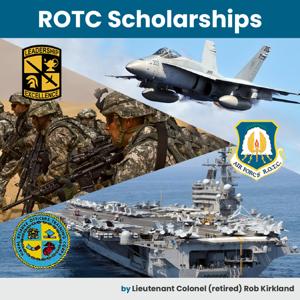


An Army ROTC ROO, or recruiting operations officer, is often the one person on campus who connects a high school student to the whole program. LTC Kirkland talks with LTC (Ret) John Bautch, who spent over 20 years as an Army ROTC ROO at the University of Cincinnati, Middle Tennessee State University and Vanderbilt University.
John explains when to first reach out to a ROO, why a short and realistic school list works better, where to do the professor of military science interview, what a local ROO can and cannot influence, and how to make a campus visit count. The second half covers what scholarship winners must finish before contracting (DoDMERB medical qualification, fitness and body composition) and what to do if a national scholarship does not come through.
Timelines and figures mentioned reflect the speakers' experience. Confirm current rules with Cadet Command and each program.
If you want to know where your student stands for ROTC scholarship competitiveness, schedule an ROTC Scholarship Blueprint. Link is in the description.
https://rotcconsulting.com/blueprint
The Army ROTC CBEF is an online survey inside the national scholarship application, and it is worth 250 of the 1,400 points on the scholarship score, about 18 percent (U.S. Army Cadet Command Pamphlet 145-1). In this solo episode, LTC Kirkland explains what the Cadet Background and Experiences Form is, why the Army built it, and what the Army Research Institute's studies say it predicts.
He then raises the question the published research leaves open: what happens when some applicants arrive with advance knowledge of the survey, coaching, or AI help, and others see it for the first time? The research figures he cites are his reading of published reports, not official Cadet Command guidance.
Families will learn what the CBEF measures, why there is no magic set of correct answers, and what a serious revalidation of the survey should test.
If you want to know where your student stands for ROTC scholarship competitiveness, schedule an ROTC Scholarship Blueprint. Link is in the description.
https://www.rotcconsulting.com/pb/B6MQH1BA230C/blueprint
If your family is navigating DoDMERB for an ROTC scholarship, one of the biggest mistakes you can make is working the process the wrong way.
In this episode, LTC (Ret.) Rob Kirkland and COL (Ret.) Dr. Arthur Cajigal break down Mr. Larry Mullen’s well-known Applicant Reference Guide—the practical DoDMERB “do’s and don’ts” that help ROTC applicants and families work with the system instead of against it.
You’ll learn why the applicant should lead the process, how parents can support without taking over, what strong medical documentation actually looks like, why summary letters often fall short, how to think about DoDMETS vs. DMACS 2.0, and what families should avoid if they want to keep their case moving.
In this episode:
📄 Download Mr. Mullen’s memo here:
If this episode helped, subscribe, share it with another ROTC family, and send us your DoDMERB questions for future episodes.
If DoDMERB says "Disqualified," it can feel like the door just slammed shut. But for many competitive ROTC scholarship applicants, that DQ is the start of the waiver review, not the end.
In this episode, LTC (Ret.) Rob Kirkland and COL (Ret.) Dr. Arthur Cajigal (former DoDMERB staff and Army ROTC Cadet Command surgeon) break down the waiver process from start to finish: who actually grants waivers, why documentation matters, what conditions tend to be waived, and what families can control to avoid delays.
WHAT YOU'LL LEARN:
What DoDMERB does (and doesn't do)
What a waiver really is, and who decides it
Why being "considered for a waiver" is a big deal
The questions waiver reviewers ask behind the scenes (deployment risk, recurrence, monitoring, sudden incapacitation)
What "good medical documentation" actually looks like
What to do (and what NOT to do) to keep your waiver timeline moving
BOOK A CONSULT:
If this helped: Subscribe, share with a parent/applicant who needs it, and send us topics you want covered next.
If your student sees “Disqualified” on DoDMERB, that doesn’t automatically mean the ROTC dream is over.
In this episode, Former DoDMERB Physician Dr. Arthur Cajigal breaks down what DoDMERB actually does, who makes decisions, and what happens next when a candidate is marked Qualified, Remedial, or Disqualified.
What you’ll learn today:
Next episodes in this series: We’re going deep on WAIVERS—who grants them, how services assess risk, what families can/can’t control, and why two similar cases can have different outcomes.
Drop your DoDMERB question in the comments (asthma, ADHD, vision, ortho injuries, etc.). We’ll use your questions to guide the waiver episodes.
BOOK A CONSULT:
If this helped, subscribe and share with another family navigating DoDMERB.
Military values like honor, integrity, and courage don’t matter much when everything is calm, supervised, and low-risk.
They matter when you’re tired, frustrated, authority is real, and nobody’s watching.
Today LTC Kirkland breaks down why military values only hold under pressure if they’ve been trained as habits, using Aristotle’s practical ethics as the framework. Aristotle didn’t treat virtue as a personal identity or something you “believe in.” He treated it like training: repetition, discipline, and practiced reps that show up automatically when stress hits.
We’ll also look at what military history shows happens when ethical discipline erodes over time—and why leaders don’t “rise to the occasion,” they default to habit.
What you’ll learn today:
If this helped, subscribe for ROTC scholarship mentorship, leadership development, interviews, and application strategy.
The first ROTC scholarship boards (Army, Navy, Air Force) were extremely competitive this cycle, and many strong candidates did not get picked up early. In this episode, we break down what we’re seeing from board results, what profiles were most successful, and what applicants should do right now to improve their odds on upcoming boards. We cover:
Concerned about the ROTC scholarship process with this year's government shutdown?
Here’s the truth. ROTC programs are strained but operational. Cadre are backfilling furloughed civilian roles, Army slid its October board about two weeks, Navy is pushing candidates to later boards, and Air Force is largely on schedule with fewer boards. If you’re applying, you need facts, not panic.
What you’ll learn
"The red flag you're looking for is 'complete and on hold.' If you're not paying attention, you could be in this status for MONTHS..."
The new DoDMERB medical qualification process for ROTC Scholarships has rolled out, and frankly, it's causing a lot of confusion and delays. With two separate systems, DMACS 2.0 and DODMETS, candidates are getting stuck in bottlenecks without realizing it.
In this deep dive, we break down the new 8-step process, expose the critical disconnects between the systems, and give you the exact steps to take to stay on track. We'll show you how to be proactive, advocate for yourself, and avoid the common pitfalls that will sideline other applicants.
In This Video, You'll Learn:
➡️ RESOURCES
Work with us: We’ve helped hundreds get qualified or win waivers. Planning session & full-service options: DoDMERBQualified.com
From the publisher's feed
ROTC scholarships, explained by the officers who ran the programs. LTC Robert Kirkland (USA, Ret) led Army ROTC programs at Claremont McKenna College and USC and was named Army ROTC Instructor of the Year. With CAPT Matthew Roberts (USN, Ret), a 30-year Navy officer and former Professor of Naval Science, and the ROTC Consulting team, he covers how Army, Navy, Marine Corps, and Air Force ROTC scholarship boards actually score candidates, what the interview is really measuring, how the DoDMERB medical review works, and what changes each cycle. Written for parents first, with the board data behind every claim.
The paid first step with us is the ROTC Scholarship Blueprint, a one-hour, officer-led evaluation of where your student stands and what must improve. Schedule your ROTC Scholarship Blueprint at rotcconsulting.com/blueprint.

20,177 Listeners

112,250 Listeners

370 Listeners

25,962 Listeners
2,022 Listeners

8,967 Listeners
2,498 Listeners
66 Listeners