
Sign up to save your podcasts
Or

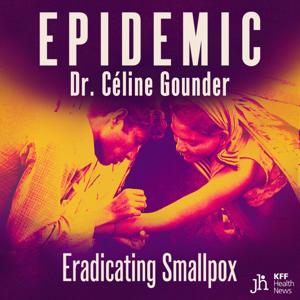

Global fears of overpopulation in the ’60s and ’70s helped fuel India’s campaign to slow population growth. Health workers tasked to encourage family planning were dispatched throughout the country and millions of people were sterilized: some voluntarily, some for a monetary reward, and some through force.
This violent and coercive campaign — and the distrust it created — was a backdrop for the smallpox eradication campaign happening simultaneously in India. When smallpox eradication worker Chandrakant Pandav entered a community hoping to persuade people to accept the smallpox vaccine, he said he was often met with hesitancy and resistance.
“People's bodies still remember what was done to them,” said medical historian Sanjoy Bhattacharya.
Episode 6 of “Eradicating Smallpox” shares Pandav’s approach to mending damaged relationships.
To gain informed consent, he sat with people, sang folk songs, and patiently answered questions, working both to rebuild broken trust and slow the spread of smallpox.
To conclude the episode, host Céline Gounder speaks with the director of the global health program at the Council on Foreign Relations, Thomas Bollyky. He said public health resources might be better spent looking for ways to encourage cooperation in low-trust communities, rather than investing to rebuild trust.
In Conversation With Host Céline Gounder:
Voices From the Episode:
Find a transcript of this episode here.
“Epidemic” is a co-production of KFF Health News and Just Human Productions.
To hear other KFF Health News podcasts, click here.
Subscribe to “Epidemic” on Apple Podcasts, Spotify, Google Podcasts, Pocket Casts, or wherever you listen to podcasts.
Hosted by Simplecast, an AdsWizz company. See pcm.adswizz.com for information about our collection and use of personal data for advertising.
 View all episodes
 By KFF Health News and JUST HUMAN PRODUCTIONS

4.6
10051,005 ratings
Global fears of overpopulation in the ’60s and ’70s helped fuel India’s campaign to slow population growth. Health workers tasked to encourage family planning were dispatched throughout the country and millions of people were sterilized: some voluntarily, some for a monetary reward, and some through force.
This violent and coercive campaign — and the distrust it created — was a backdrop for the smallpox eradication campaign happening simultaneously in India. When smallpox eradication worker Chandrakant Pandav entered a community hoping to persuade people to accept the smallpox vaccine, he said he was often met with hesitancy and resistance.
“People's bodies still remember what was done to them,” said medical historian Sanjoy Bhattacharya.
Episode 6 of “Eradicating Smallpox” shares Pandav’s approach to mending damaged relationships.
To gain informed consent, he sat with people, sang folk songs, and patiently answered questions, working both to rebuild broken trust and slow the spread of smallpox.
To conclude the episode, host Céline Gounder speaks with the director of the global health program at the Council on Foreign Relations, Thomas Bollyky. He said public health resources might be better spent looking for ways to encourage cooperation in low-trust communities, rather than investing to rebuild trust.
In Conversation With Host Céline Gounder:
Voices From the Episode:
Find a transcript of this episode here.
“Epidemic” is a co-production of KFF Health News and Just Human Productions.
To hear other KFF Health News podcasts, click here.
Subscribe to “Epidemic” on Apple Podcasts, Spotify, Google Podcasts, Pocket Casts, or wherever you listen to podcasts.
Hosted by Simplecast, an AdsWizz company. See pcm.adswizz.com for information about our collection and use of personal data for advertising.

43,898 Listeners

43,528 Listeners

2,055 Listeners

340 Listeners

87,529 Listeners

111,948 Listeners

496 Listeners

16,975 Listeners

9,370 Listeners

4,480 Listeners

386 Listeners

3,353 Listeners
8,203 Listeners

31,752 Listeners

7,020 Listeners