
Sign up to save your podcasts
Or

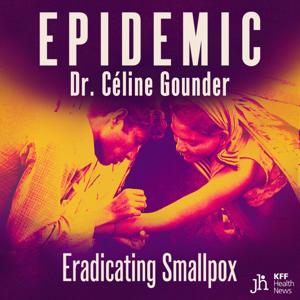

The 1970s was the deadliest decade in the “entire history of Bangladesh,” said environmental historian Iftekhar Iqbal. A deadly cyclone, a bloody liberation war, and famine triggered waves of migration. As people moved throughout the country, smallpox spread with them.
In Episode 7 of “Eradicating Smallpox,” Shohrab, a man who was displaced by the 1970 Bhola cyclone, shares his story. After fleeing the storm, he and his family settled in a makeshift community in Dhaka known as the Bhola basti. Smallpox was circulating there, but the deadly virus was not top of mind for Shohrab. “I wasn’t thinking about that. I was more focused on issues like where would I work, what would I eat,” he said in Bengali.
When people’s basic needs — like food and housing — aren’t met, it’s harder to reach public health goals, said Bangladeshi smallpox eradication worker Shahidul Haq Khan.
He encountered that obstacle frequently as he traveled from community to community in southern Bangladesh.
He said people asked him: “There's no rice in people's stomachs, so what is a vaccine going to do?”
To conclude this episode, host Céline Gounder speaks with Sam Tsemberis, president and CEO of Pathways Housing First Institute.
He said when public health meets people’s basic needs first, it gives them the best shot at health.
In Conversation With Host Céline Gounder:
Voices From the Episode:
Find a transcript of this episode here.
“Epidemic” is a co-production of KFF Health News and Just Human Productions.
To hear other KFF Health News podcasts, click here.
Subscribe to "Epidemic” on Apple Podcasts, Spotify, Google Podcasts, Pocket Casts, or wherever you listen to podcasts.
Hosted by Simplecast, an AdsWizz company. See pcm.adswizz.com for information about our collection and use of personal data for advertising.
 View all episodes
 By KFF Health News and JUST HUMAN PRODUCTIONS

4.6
10051,005 ratings
The 1970s was the deadliest decade in the “entire history of Bangladesh,” said environmental historian Iftekhar Iqbal. A deadly cyclone, a bloody liberation war, and famine triggered waves of migration. As people moved throughout the country, smallpox spread with them.
In Episode 7 of “Eradicating Smallpox,” Shohrab, a man who was displaced by the 1970 Bhola cyclone, shares his story. After fleeing the storm, he and his family settled in a makeshift community in Dhaka known as the Bhola basti. Smallpox was circulating there, but the deadly virus was not top of mind for Shohrab. “I wasn’t thinking about that. I was more focused on issues like where would I work, what would I eat,” he said in Bengali.
When people’s basic needs — like food and housing — aren’t met, it’s harder to reach public health goals, said Bangladeshi smallpox eradication worker Shahidul Haq Khan.
He encountered that obstacle frequently as he traveled from community to community in southern Bangladesh.
He said people asked him: “There's no rice in people's stomachs, so what is a vaccine going to do?”
To conclude this episode, host Céline Gounder speaks with Sam Tsemberis, president and CEO of Pathways Housing First Institute.
He said when public health meets people’s basic needs first, it gives them the best shot at health.
In Conversation With Host Céline Gounder:
Voices From the Episode:
Find a transcript of this episode here.
“Epidemic” is a co-production of KFF Health News and Just Human Productions.
To hear other KFF Health News podcasts, click here.
Subscribe to "Epidemic” on Apple Podcasts, Spotify, Google Podcasts, Pocket Casts, or wherever you listen to podcasts.
Hosted by Simplecast, an AdsWizz company. See pcm.adswizz.com for information about our collection and use of personal data for advertising.

43,898 Listeners

43,528 Listeners

2,055 Listeners

340 Listeners

87,529 Listeners

111,948 Listeners

496 Listeners

16,975 Listeners

9,370 Listeners

4,480 Listeners

386 Listeners

3,353 Listeners

8,203 Listeners

31,752 Listeners

7,020 Listeners