
Sign up to save your podcasts
Or

By Dn. Jerome Atherholt, and Ancient Faith Ministries


4.8
139139 ratings


The podcast currently has 7,825 episodes available.
The most played episodes among Podcast App listeners.
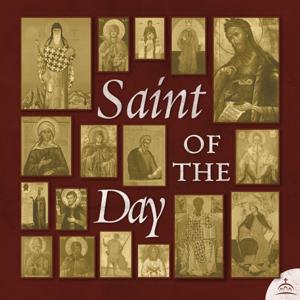
"Bassa was the wife of a pagan priest, but she was secretly a Christian and brought her sons up in a Christian spirit. Her husband hated her for her faith, and handed her over to the judge for torture, together with her sons. After harsh torture, her sons were beheaded (it is thought, in Edessa in Macedonia). Bassa was filled with joy to see her sons thus gloriously finish their martyr's course for Christ, and herself went with yet greater desire from torture to torture. When she was thrown into the sea, angels appeared to her and took her to an island in the Sea of Marmara, where she was slain with the sword under Maximian. Thus holy Bassa was in a twofold manner made worthy of the Kingdom of Christ: as a martyr and as the mother of martyrs." (Prologue)

The Third "Feast of the Savior" in August While the Lord was preaching in Palestine, his fame reached a king Avgar of Edessa, who suffered from leprosy. Avgar sent a messenger named Ananias to ask whether the Lord could heal his illness. The king also charged Ananias, if he was unable to bring back Jesus Himself, to bring back a likeness of Him. When Ananias found Jesus, the Lord told him that he could not come to Edessa since the time of His passion was at hand. But he took a cloth and washed His face, miraculously leaving a perfect image of His face on the cloth. Ananias brought the holy image back to the king, who reverently kissed it. Immediately his leprosy was healed, save for a small lesion that remained on his forehead. Later the Apostle Thaddeus came to Edessa, preaching the gospel, and Avgar and his household were baptized, at which time his remaining leprosy vanished. The king had the holy likeness mounted on wood and displayed above the city gate for all to revere. But Avgar's grandson returned to idolatry, and the Bishop of Edessa had the image hidden in the city wall to prevent it from being defiled. Many years later, when the Persian king Chosroes besieged Edessa, the Bishop Eulabius was told in a vision to find the sealed chamber, whose location had been forgotten. The holy icon was found, completely incorrupt, and by its power the Persian army was driven off. In the year 944 the image was brought to Constantinople and enshrined in the Church of the Theotokos called the Pharos. This is the event commemorated today.
They were three sisters, raised in the Christian faith in Bithynia. Together they withdrew from the world and lived together in virginity on a lonely mountain, devoting themselves to prayer, fasting and labor. Though they wished only to live unknown to the world, their wonderworking gifts were discovered, and many people began to come to them for healing of ailments. In this way word of them reached the governor Fronton, who had them arrested and brought before him. Struck by their beauty (which had only increased despite their fasting and hard labor), the governor tried to flatter them, promising that he would send them to the Emperor to be given in marriage to noblemen. When he saw that this had no effect, the governor threw the sisters into prison. First he had Menodora tortured to death, then brought her two sisters to view her mutilated body, commanding them to deny Christ or meet the same fate. When they refused, they were subjected to the same fate. Christians recovered and buried the bodies of the three holy martyrs.
Before baptism he was a renowned military commander under Trajan. While hunting in the woods, he met a great stag with a shining Cross between his antlers. Through the stag, the Lord spoke to Placidas (his pagan name) and told him to find a priest and be baptized into Christ. Returning home, he found that his wife Tatiana had also had a vision in which she was told to become a Christian. They were baptized, Placidas receiving the name Eustathius, and Tatiana the name Theopiste; their two sons were baptized with them. Eustathius and his family were almost immediately subjected to a series of grievous trials, in which all were separated from one another. After years of hardship they were re-united, and returned to Rome with honor when the Emperor sought out Eustathius to command his army once again. But when the Emperor Hadrian (who had succeeded Trajan) commanded them to worship the idols, all of them refused. They were put together into a large bronze ox which was heated white-hot in a fire. When their bodies were removed, they were found to be dead but intact. The Prologue concludes, 'Thus this glorious general gave to Caesar that which is Caesar's, and to God that which is God's, and entered into the eternal Kingdom of Christ our God.
Dometian, a prince and a fierce persecutor of Christians, was hunting in the mountains when he came upon an old man surrounded by wild beasts, who were as gentle and tame as lambs in his presence. When asked who he was, the old man answered that he was Zosimas, a Christian who had left the persecutors in the city to live among the beasts instead. Dometian, hearing that Zosimas was a Christian, ordered him seized and bound, and subjected him to many tortures. When the holy man was wounded and beaten all over, the prince tied a rock around his neck and hanged him from a tree, mocking him with the words 'Command a wild beast to come, then we will all believe!' Zosimas prayed, and at once a large lion appeared, came up to Zosimas, and took the weight of the rock on its head to ease the martyr's sufferings. The terrified prince freed Zosimas, who died of his wounds not long afterward.
The podcast currently has 7,825 episodes available.
105 Listeners
108 Listeners
551 Listeners
61,809 Listeners
193 Listeners
1,207 Listeners